
Investing in an indoor playground is a significant decision for any business owner, from family entertainment centers to shopping malls and schools. The wrong choice of playground structures can lead to underutilized space, safety concerns, and a poor return on investment, directly impacting your bottom line and reputation. Without a clear understanding of the diverse options and their commercial implications, businesses risk costly mistakes that deter customers and compromise long-term viability.
Choosing the right indoor playground structures is crucial for maximizing engagement, ensuring safety, and achieving a strong ROI. This comprehensive guide will explore the primary types of indoor playground structures, detailing their unique benefits, target age groups, and key considerations for business owners. We will cover everything from classic soft play to innovative interactive zones, delve into critical material choices, and provide strategic advice for different commercial contexts, ensuring your investment creates a thriving, safe, and profitable play environment.
The Business of Play: Why Structure Choice Dictates ROI
For commercial indoor playgrounds, the selection of play structures goes beyond mere aesthetics; it’s a strategic business decision that directly influences customer flow, dwell time, repeat visits, and ultimately, profitability. Understanding the diverse options available allows operators to create targeted experiences that cater to specific demographics and operational goals . A well-designed play area with appropriate structures can become a significant draw, differentiating your business in a competitive market and fostering a loyal customer base. The initial capital outlay for indoor playground equipment is substantial, making informed decisions about structure types paramount for long-term financial success.
Multi-Level Soft Contained Play Systems (SCPS): The Industry Standard
Soft Contained Play Systems (SCPS), often referred to as jungle gyms or modular play structures, are the cornerstone of many indoor playgrounds. These large, multi-level structures feature a variety of elements such as slides, tunnels, climbing nets, and ball pits, all designed with soft materials to ensure safety . SCPS are highly versatile, catering to a broad age range, typically from 3 to 12 years old, and can be customized to fit various space configurations and themes. Their ability to accommodate many children simultaneously makes them excellent for high-traffic venues, directly contributing to higher throughput and revenue. When planning an SCPS, consider factors like clear sightlines for supervision, modularity for future expansion, and ease of cleaning to maintain hygiene standards.
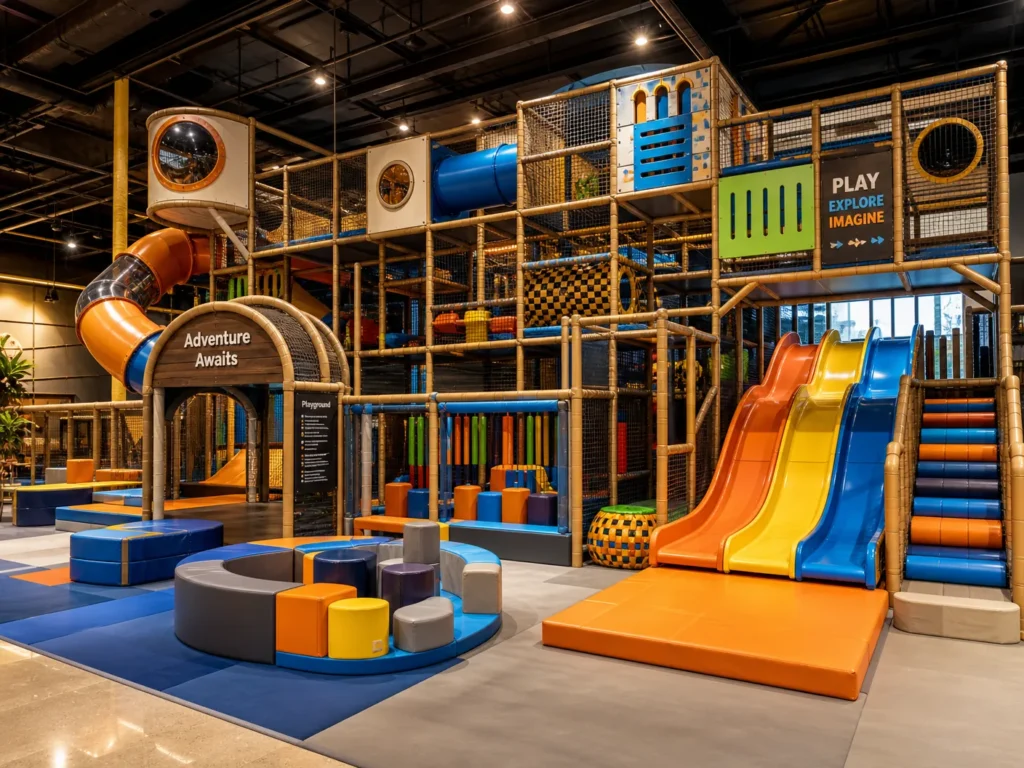
Multi-level soft contained play systems are designed for high engagement and safety, making them a central attraction in many indoor playgrounds.
Toddler-Specific Soft Play Areas: Nurturing Early Development
Recognizing the unique developmental needs and safety requirements of younger children, dedicated toddler soft play areas are essential. These zones are typically designed for children aged 0-3 years and feature smaller, softer, and more accessible equipment. Elements often include mini slides, gentle ramps, soft blocks, ball pits with fewer balls, and sensory play panels . The focus here is on encouraging exploration, fine motor skill development, and safe interaction in a controlled environment, often separated from older children’s play areas to prevent accidental collisions. Investing in a well-designed toddler area can significantly broaden your customer base, attracting families with very young children and encouraging longer visits, as parents seek safe and stimulating environments for their infants and toddlers.
Educational Role-Play Villages and Pretend-Play Structures: High Dwell Time Strategy
Role-play villages and pretend-play structures offer a different kind of engagement, focusing on imaginative and social development. These areas often mimic real-world environments like supermarkets, hospitals, fire stations, or cafes, equipped with child-sized props and costumes. They encourage cooperative play, storytelling, and the development of social skills . While seemingly less physically demanding than SCPS, role-play areas are crucial for extending dwell time and appealing to parents who value cognitive and social learning alongside physical activity. They can be particularly effective in play cafes and educational centers, offering a unique value proposition that encourages repeat visits and positive word-of-mouth. The quality of materials and thematic detail in these areas significantly impacts their appeal and longevity.
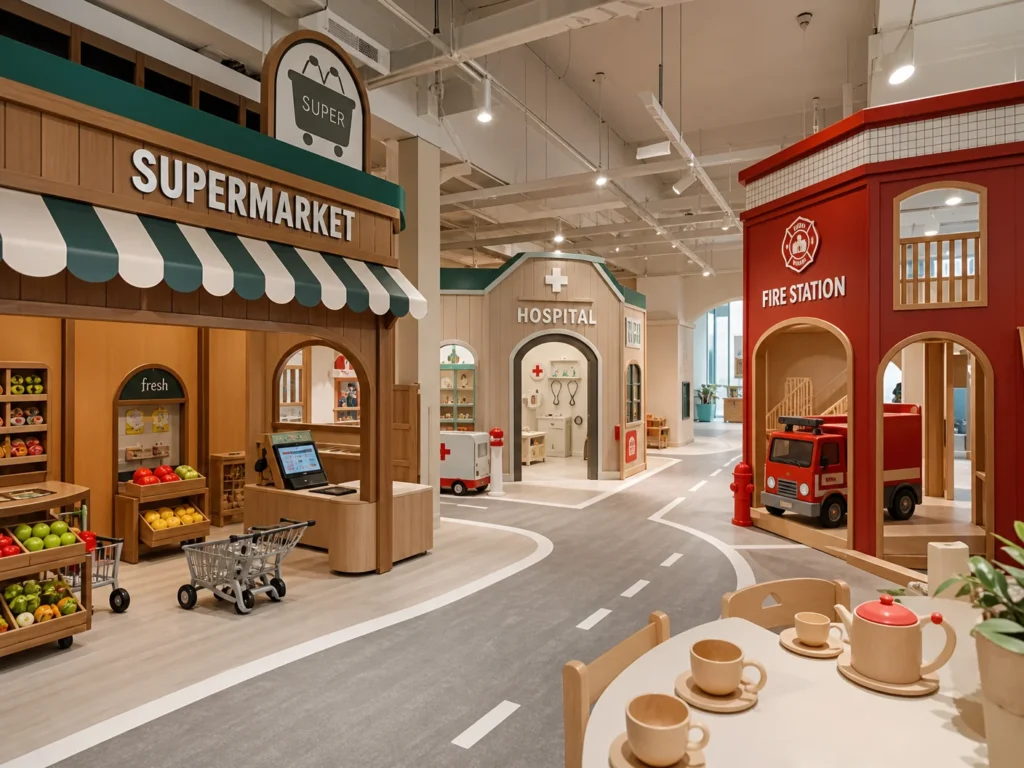
Role-play villages foster imagination and social skills, providing a unique draw for families seeking enriching play experiences.
Adventure and High-Energy Structures (Ninja & Climbing): Attracting Older Kids
To cater to older children and teenagers, adventure-oriented structures like ninja warrior courses, climbing walls, and high ropes courses are gaining popularity. These structures challenge participants physically and mentally, promoting agility, strength, balance, and problem-solving skills. They often feature obstacles like warped walls, cargo nets, swinging rings, and bouldering sections. Integrating these high-energy elements can attract a wider age demographic, including school groups and corporate team-building events, thereby expanding revenue streams beyond traditional younger family markets. Safety surfacing and professional supervision are paramount in these areas, requiring careful planning and adherence to stringent safety standards . The design should allow for varying difficulty levels to engage a broad range of skill sets.
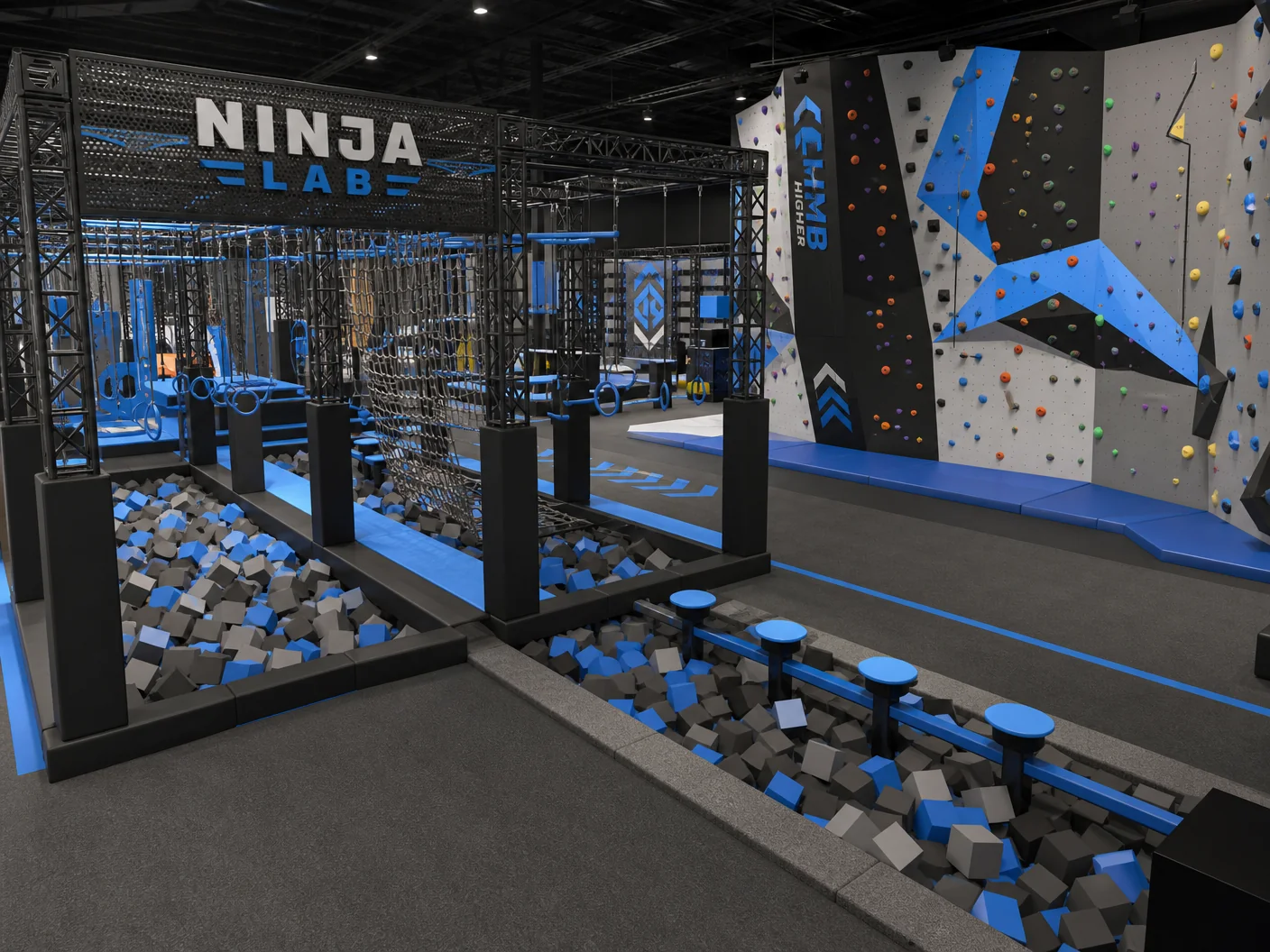
Ninja courses and climbing walls offer high-energy challenges, appealing to older children and fostering physical and mental development.
Interactive Digital-Hybrid Structures: The”Wow” Factor
The integration of digital technology into playground structures creates interactive experiences that blend physical activity with virtual engagement. These can include projection games on floors or walls, interactive touch screens, augmented reality (AR) experiences, and responsive light and sound elements. Digital-hybrid structures offer a novelty factor that can attract and retain visitors, particularly those accustomed to digital entertainment. They provide opportunities for collaborative play and can be easily updated with new content, ensuring a fresh experience. While the initial investment might be higher, their innovative appeal can justify the cost through increased visitor numbers and premium pricing options. These structures are excellent for creating unique selling propositions and enhancing the overall modern appeal of an indoor playground.
Thematic Design and Visitor Engagement: Crafting Immersive Worlds
Beyond the individual structures, the overarching thematic design of an indoor playground plays a pivotal role in visitor engagement and repeat business. A well-executed theme—be it a jungle adventure, an underwater world, a space odyssey, or a medieval castle—transforms a collection of play equipment into an immersive experience. Thematic design influences everything from color palettes and wall murals to the specific types of equipment chosen and even the names of different play zones. A strong theme enhances storytelling, encourages imaginative play, and creates memorable photo opportunities, which are invaluable for social media marketing. Businesses should consider themes that resonate with their target demographic and offer a unique escape from everyday life, thereby increasing perceived value and encouraging longer visits.
Material Selection and Maintenance Costs: A Long-Term Investment Perspective
The choice of materials for indoor playground structures is a critical factor influencing durability, safety, hygiene, and long-term maintenance costs. Commercial-grade equipment typically utilizes robust materials such as galvanized steel frames, high-density polyethylene (HDPE) plastics, durable PVC vinyl, and specialized foam padding. Each material has specific properties that affect its resistance to wear and tear, ease of cleaning, and compliance with safety standards .
| Material Type | Advantages | Disadvantages | Maintenance Considerations |
| Galvanized Steel | High strength, corrosion-resistant, long lifespan | Heavy, requires professional installation | Regular inspection for rust, secure connections |
| HDPE Plastic | Durable, UV-resistant, non-toxic, vibrant colors | Can scratch, may fade over time | Easy to clean, occasional polishing |
| PVC Vinyl | Soft, easy to clean, customizable colors | Can tear or puncture, sensitive to extreme temperatures | Regular cleaning, prompt repair of tears |
| Foam Padding | Impact absorption, safety, comfort | Can compress over time, absorbs moisture | Regular cleaning, replacement when compressed or damaged |
| Wood (Treated) | Natural aesthetic, sustainable options | Requires sealing, susceptible to rot/splinters | Regular inspection for splinters, re-sealing |
Understanding the maintenance requirements associated with each material is crucial for budgeting and operational planning. For instance, soft play elements require frequent cleaning and occasional repair of tears, while steel components need regular checks for structural integrity. Investing in high-quality, easily maintainable materials upfront can significantly reduce operational costs and extend the lifespan of your playground, ensuring a better return on investment.
Strategic Placement: Mall vs. Standalone Play Centers
The optimal selection and configuration of indoor playground structures also depend heavily on the commercial context—whether the facility is located within a shopping mall, a dedicated family entertainment center, or a standalone play cafe. Each setting presents unique opportunities and constraints.
• Shopping Mall Locations: Playgrounds in malls often serve as attractions to increase foot traffic and dwell time for shoppers. They typically benefit from high visibility and existing infrastructure. Structures here might prioritize novelty and quick engagement, such as interactive digital games or compact multi-level systems, to capture impulse visits. The design should also consider noise levels and integration with surrounding retail environments.
• Standalone Family Entertainment Centers (FECs): FECs are destinations in themselves, allowing for larger, more diverse, and often more elaborate installations. Here, the focus is on maximizing play value, offering a wide range of activities to encourage longer stays and repeat visits. This is where comprehensive SCPS, extensive ninja courses, and detailed role-play villages can truly shine, providing a full-day experience. The design can be more adventurous and less constrained by external factors.
• Play Cafes: These venues often combine a cafe experience with a play area, targeting parents with younger children. Toddler-specific soft play areas and well-designed role-play zones are paramount here, offering a safe and stimulating environment for children while parents relax. The emphasis is on comfort, hygiene, and a relaxed atmosphere, with structures that facilitate easy supervision.
Compliance and Safety Standards (ASTM F1918): A Non-Negotiable Foundation
Safety is paramount in indoor playground design and operation. Adhering to recognized safety standards is not only a legal requirement but also crucial for building trust with parents and ensuring the well-being of children. In North America, the primary standard for soft contained play equipment is ASTM F1918-12: Standard Safety Performance Specification for Soft Contained Play Equipment . This standard covers design, construction, installation, maintenance, and operation to minimize hazards. For broader public playground equipment, ASTM F1487-21: Standard Consumer Safety Performance Specification for Playground Equipment for Public Use also applies . In Europe, the EN 1176 series of standards governs playground equipment and surfacing .
Compliance involves selecting materials that are non-toxic and durable, ensuring proper fall surfacing, maintaining adequate clear zones around equipment, and conducting regular inspections and maintenance . Business owners must partner with manufacturers who demonstrate a deep understanding of these regulations and provide certified equipment. This commitment to safety not only protects children but also safeguards your business from liability and enhances its reputation. Regular safety audits and staff training are also vital components of a comprehensive safety program.
Learn more about ASTM certification and its importance for indoor playground equipment safety.
Conclusion: Maximizing Your Indoor Playground Investment
Selecting the appropriate indoor playground structures is a multifaceted decision that requires careful consideration of your target audience, business model, budget, and unwavering commitment to safety. From the broad appeal of multi-level soft play systems to the niche engagement of role-play villages, the high-energy challenge of adventure structures, and the innovative draw of digital-hybrid installations, each type offers distinct advantages. By understanding these differences, prioritizing thematic design, making informed material choices, and ensuring strict compliance with safety standards, business owners can create engaging, safe, and highly profitable play environments that attract families and foster lasting memories. Partnering with an experienced manufacturer like Koalaplay ensures that your investment translates into a thriving business, built on a foundation of quality, safety, and strategic foresight.
Frequently Asked Questions about indoor playground features
What is the most popular type of indoor playground structure?
Multi-level soft contained play systems (SCPS) are generally the most popular due to their broad appeal to children aged 3-12, high capacity, and diverse play elements like slides, tunnels, and ball pits. They offer a comprehensive play experience that encourages physical activity and exploration.
How do I choose the right playground structure for my business?
Consider your target audience (age group), available space, budget, and desired return on investment. Evaluate each structure type based on its durability, capacity, maintenance requirements, and the unique benefits it offers to your customers. Consulting with experienced playground manufacturers can also provide valuable insights.
Are there specific safety standards for indoor playground equipment?
Yes, in North America, ASTM F1918-12 is the primary safety standard for soft contained play equipment. For general public playground equipment, ASTM F1487-21 also applies. In Europe, the EN 1176 series of standards is used. Adhering to these standards is crucial for safety and compliance.
Can indoor playground structures be customized?
Absolutely. Most reputable manufacturers offer extensive customization options for indoor playground structures. This includes tailoring the size, theme, color scheme, and specific play elements to fit your unique space, brand identity, and target demographic. Customization helps create a distinctive and engaging play environment.
What are the key factors for long-term profitability in an indoor playground?
Long-term profitability hinges on several factors: strategic equipment selection that caters to your target demographic, effective thematic design for enhanced visitor engagement, robust material choices for durability and reduced maintenance, strict adherence to safety standards to build trust, and a clear understanding of your operational context (e.g., mall vs. standalone FEC) to optimize layout and offerings.
References
[1] Galaxy Multi Rides. (2024). Types of Play Structures in Indoor Children’s Playgrounds.
[2] NinescapeLand. (2024). The Ultimate Guide to Unveiling Commercial Indoor Play Area.
[3] Pro Playgrounds. (2024). Indoor Playground Equipment Buyers Guide.
[5] U.S. Consumer Product Safety Commission (CPSC). (2015). Public Playground Safety Handbook.
[9] Dreamland Playground. (n.d.). Indoor Playground Equipment Safety Standards.
[10] Nido Early School. (2024). 4 Benefits of Indoor Play in Early Childhood Development.
 English
 Spanish
 German