
Rope course attractions turn vertical space into a structured adventure experience. They add challenge, movement, and strong visual impact to family entertainment centers, indoor adventure parks, mall playgrounds, and larger indoor playground attractions projects.
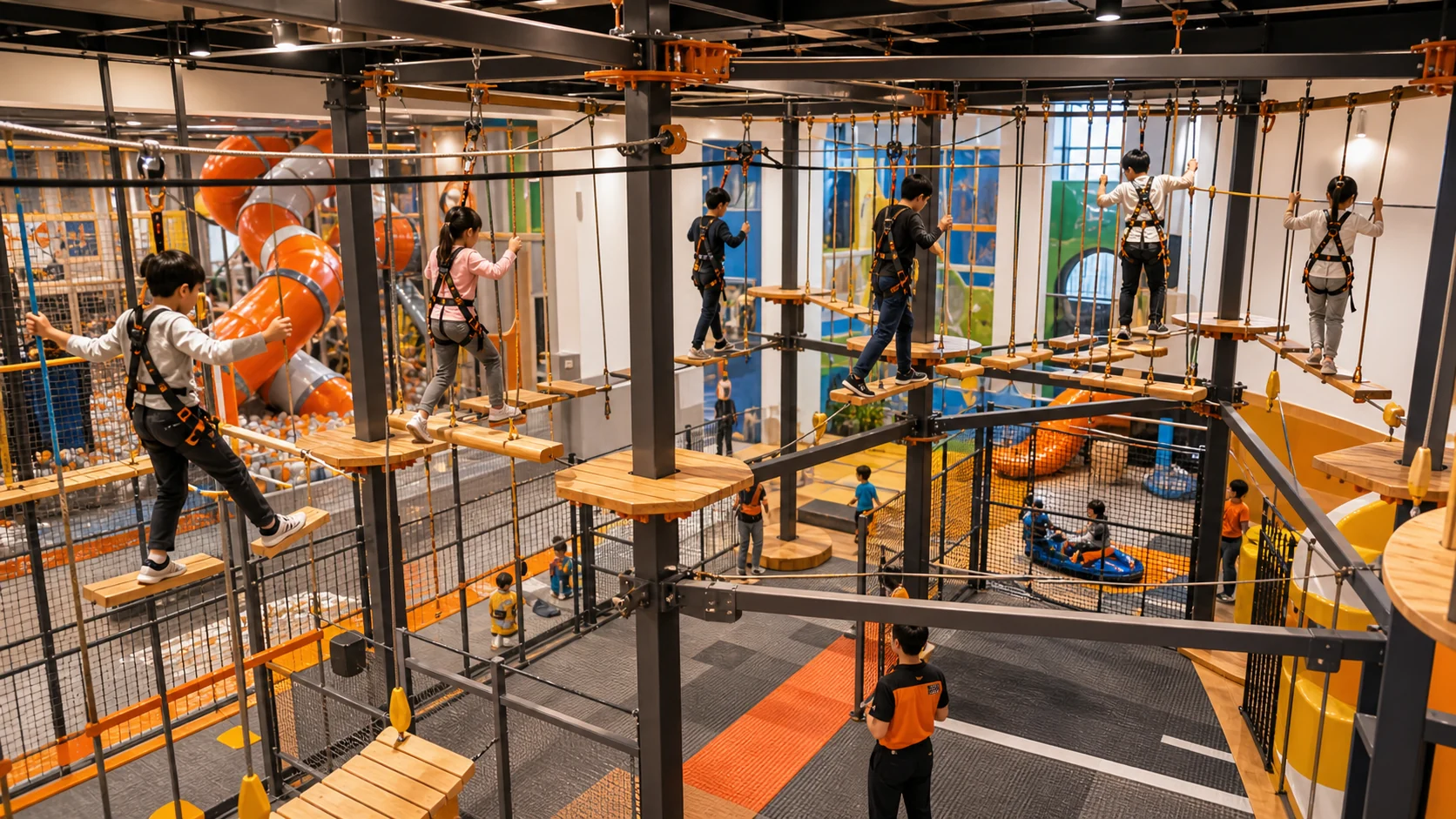
What Is a Rope Course Attraction?
A rope course attraction is an elevated or low-height adventure route made of bridges, balance beams, cargo nets, swinging steps, platforms, and other challenge elements. In commercial indoor venues, it is usually built with a steel support frame, safety lines, harness systems, controlled entry points, and staff supervision.
Unlike a simple climbing structure, a rope course creates a guided challenge path. Children move from one element to the next, which makes the attraction feel purposeful and easy to operate as part of a larger commercial indoor playground equipment plan.
Why Add a Rope Course to an Indoor Playground?
Uses Vertical Space
A rope course can add play capacity above the floor, which is valuable when the venue has good ceiling height but limited ground area.
Creates Visible Adventure
Elevated bridges and platforms are easy for families to notice from across the venue, helping the attraction become a visual anchor.
Supports Older Children
Rope courses give school-age children and teens a more challenging activity than toddler play, soft play, or simple slides.
Encourages Repeat Visits
Different routes, difficulty levels, and confidence-building challenges make the activity replayable for returning guests.
Main Types of Indoor Rope Course Attractions
Rope courses can be designed for different ages, ceiling heights, and venue concepts. The key is matching challenge level with supervision, safety system, and expected traffic flow.
| Type | Best Use | Planning Notes |
|---|---|---|
| Low rope course | Younger children, compact indoor playgrounds | Lower height, easier supervision, often paired with soft flooring or net protection. |
| Elevated rope course | FECs, malls, adventure parks | Requires strong structure, clear height, harness operation, staff control, and protected fall zones. |
| Net course | Mixed-age family venues | Uses enclosed nets to create a freer climbing and crossing experience with less harness handling. |
| Adventure tower course | Large indoor sports or adventure centers | Combines multiple levels, climbing, ropes, platforms, and sometimes slides or zipline-style exits. |
Key Design Considerations
The first planning question is height. A rope course needs enough clear height for the structure, platforms, safety line, participant movement, and lighting or sprinkler clearance. If the rope course is part of a larger project, it should be reviewed together with the overall custom indoor playground design.
- Confirm clear ceiling height, beams, ducts, lighting, and sprinkler locations.
- Separate entry, harness fitting, waiting, and exit paths from main circulation.
- Choose element difficulty based on target age, height, and confidence level.
- Plan staff sightlines so operators can monitor the full route.
- Reserve space for harness storage, inspection, and daily operating checks.
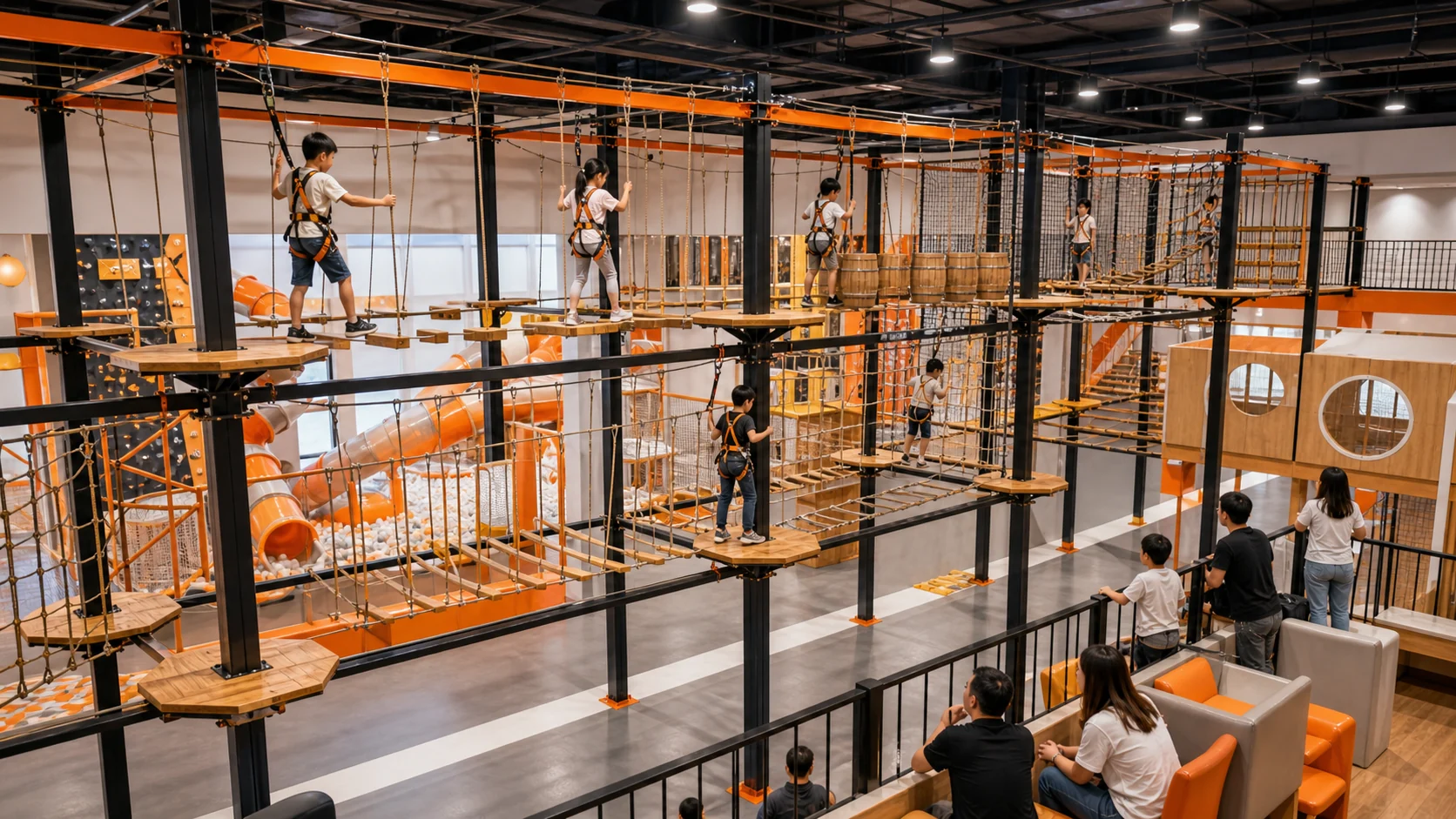
Best Venue Types for Rope Course Attractions
Rope courses work best in venues that want a stronger adventure identity and have enough height to build upward. They are especially useful for family entertainment centers, mall playgrounds, indoor adventure parks, and larger indoor sports park concepts.
How to Combine Rope Courses With Other Attractions
Rope course attractions work well as a bridge between traditional soft play and higher-energy adventure activities. They can sit beside climbing walls, ninja courses, trampoline zones, slides, or multi-level play structures.
- Pair rope courses with indoor playground structures to create layered play and stronger visual depth.
- Add climbing walls or cargo nets for a more athletic adventure route.
- Use a net course or low rope trail near younger zones when harness operation is not suitable.
- Place parent viewing below or beside the course so the attraction feels safe and easy to supervise.
What to Plan Before Buying
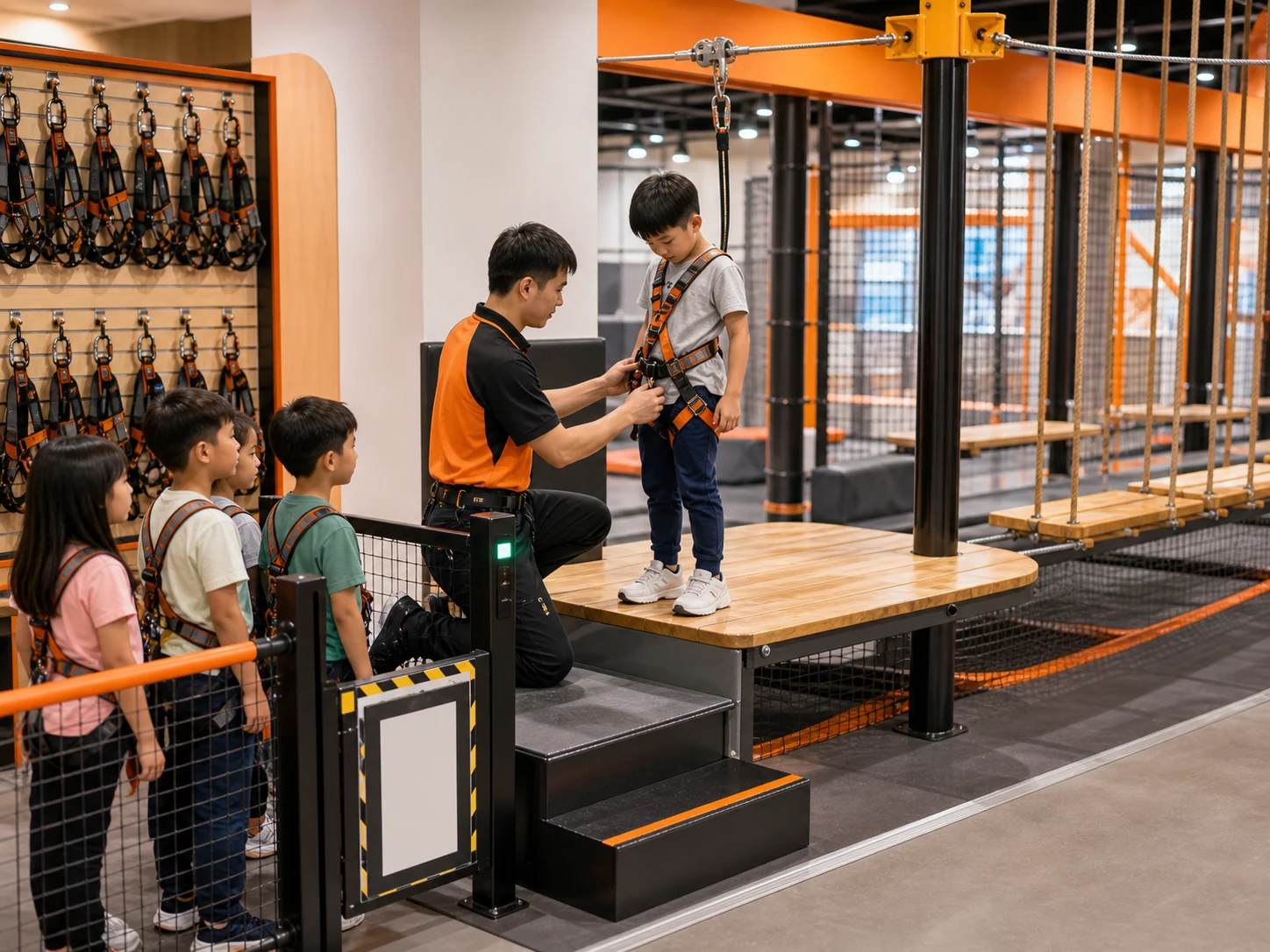
Before choosing the structure, operators should confirm ceiling height, target age range, challenge level, route capacity, safety system, staffing workflow, and inspection needs. Defining these requirements early in the service process makes layout, production, and installation smoother.
- Clear height and structural support conditions
- Low course, harness course, net course, or adventure tower format
- Entry platform, exit point, queue, and parent viewing area
- Harness system, safety line, staff operation, and inspection routine
Safety and Operation Checklist
A rope course is a supervised attraction, so daily operation matters as much as the structure itself. For padding, netting, surface materials, and quality documentation, review the supplier’s material and quality information before confirming production.
Check Harness Fit
Staff should confirm size, fit, buckles, connection points, and participant readiness before entry.
Control Entry Flow
Limit the number of participants on each route so platforms and challenge elements do not become crowded.
Inspect Elements Daily
Check ropes, nets, bolts, platforms, cables, padding, and visible wear before opening the attraction.
Train Rescue Procedures
Operators need a clear plan for helping nervous participants, handling stops, and closing the route safely.
Common Questions About Rope Course Attractions
Do all rope courses need harnesses?
No. Elevated challenge courses usually use harness systems, while some low rope trails or enclosed net courses may use other protection methods.
What age group is best?
Most full rope courses suit school-age children, teens, and family users. Younger children usually need low-height, simpler elements.
Is a rope course good for ROI?
It can be strong when the venue has enough height, good supervision, visible placement, and a ticket or package model that supports staff cost.
Where can I check broader project questions?
For ordering, shipping, installation, warranty, and after-sales questions, review the Koalaplay FAQ.
Related Planning Resources
If you are comparing adventure attractions, these pages can help you plan the full venue mix before finalizing the rope course.
Plan a Rope Course Attraction for Your Venue
Share your floor plan, clear height, target age group, and preferred attraction mix. A custom layout can show whether a rope course fits your space and how it can connect with climbing, soft play, trampoline, or adventure zones.
Contact Us for a Custom Layout
 English
 Spanish
 German