
Master the essentials of toddler soft play—from developmental benefits to safety standards, design principles, and ROI optimization for your facility.
Toddler soft play equipment refers to specially designed play structures made from soft foam, padded materials, and rounded components specifically engineered for children ages 0-3. These structures prioritize safety while providing developmentally appropriate challenges that support physical, cognitive, social, and sensory development.
Unlike equipment for older children, toddler soft play features low heights (typically 2-3 feet maximum), generous padding, entrapment prevention, and gentle angles designed for emerging motor skills and limited coordination.
Successful toddler areas combine multiple soft play components strategically. Each component serves specific developmental purposes while working together to create comprehensive play experiences that keep toddlers engaged safely.
Toddler soft play is not just about entertainment—it's critical infrastructure for child development and business success.
Ages 0-3 represent the most critical period for physical and cognitive development. Children's brains develop 90% of their adult capacity during these years. Quality play experiences directly impact neural development and future learning capacity.
Parents of toddlers prioritize safety above all else. Dedicated toddler areas with age-appropriate equipment, clear supervision, and compliance with safety standards build parent confidence and encourage repeat visits.
Toddler areas attract a high-value customer segment: parents with multiple children. These families often book birthday parties, extended memberships, and special events—generating significant recurring revenue.
Many facilities neglect the toddler market, focusing on older children. Comprehensive toddler soft play areas differentiate you from competitors and capture underserved market segments.
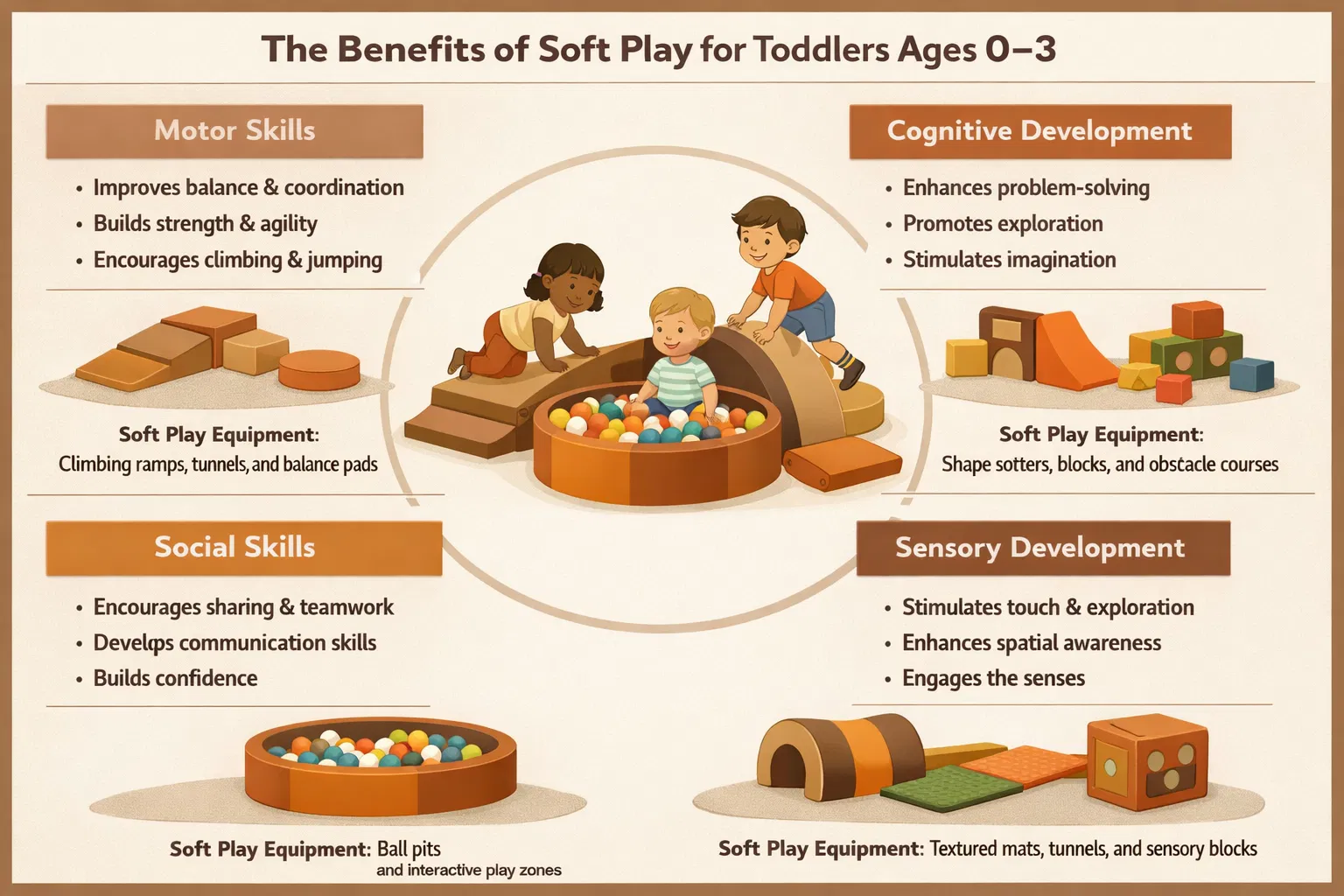
Gross Motor Skills: Climbing, jumping, sliding, and balancing develop large muscle groups and coordination. Toddlers build strength and confidence in their physical abilities.
Fine Motor Skills: Grasping, manipulating blocks, and touching textured surfaces develop hand-eye coordination and dexterity.
Balance & Proprioception: Navigating varied surfaces develops body awareness and balance—critical for preventing falls and injuries.
Problem-Solving: Figuring out how to climb, navigate obstacles, and reach goals develops early problem-solving skills.
Spatial Reasoning: Understanding heights, distances, and body position in space develops spatial awareness crucial for later learning.
Cause & Effect: Interactive elements teach cause-and-effect relationships fundamental to cognitive development.
Confidence Building: Successfully completing challenges builds self-efficacy and confidence in physical abilities.
Social Interaction: Multi-user equipment encourages parallel play and early social skills.
Emotional Regulation: Play provides safe outlets for emotions and energy release.
Tactile Stimulation: Different textures (foam, fabric, textured panels) stimulate touch receptors and sensory development.
Visual Stimulation: Colors, patterns, and moving elements engage visual development.
Auditory Stimulation: Sounds from interactive elements support auditory processing development.
| Age Range | Key Milestones | Ideal Equipment | Safety Considerations |
|---|---|---|---|
| 0-12 Months | Crawling, sitting, standing with support | Sensory panels, soft blocks, low ramps, textured mats | Max 1-2 feet height, constant supervision, soft padding |
| 12-24 Months | Walking, climbing, increased coordination | Soft climbers, small slides, ball pits, tunnels | Max 2-3 feet height, multiple handholds, secure padding |
| 24-36 Months | Running, jumping, problem-solving | Multi-level climbers, foam blocks, interactive panels | Max 3 feet height, varied challenges, clear supervision |
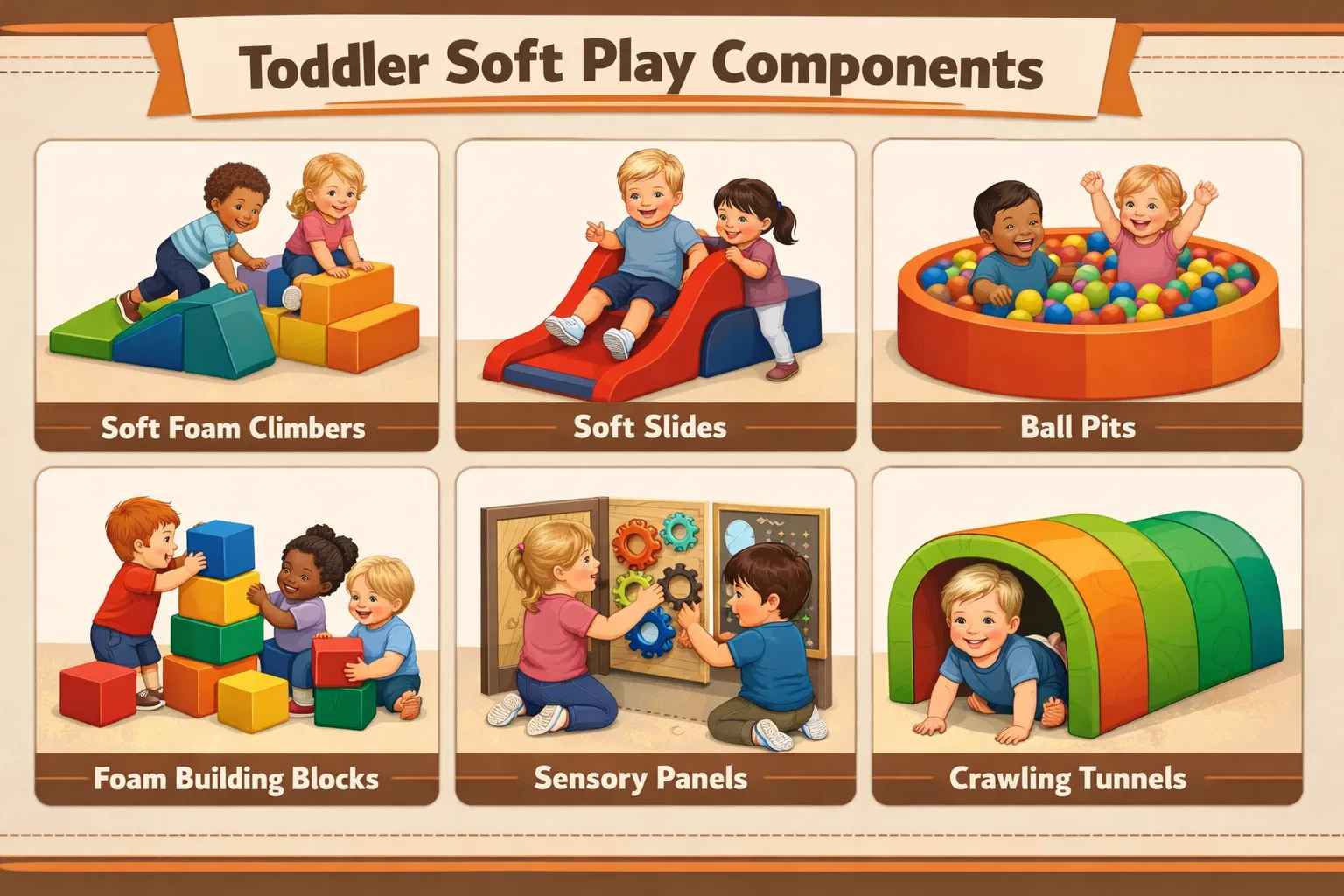
Successful toddler areas integrate multiple components, each serving specific developmental purposes.
Modular foam structures with gentle angles and multiple climbing paths for developing gross motor skills and confidence.
Age Range: 12-36 months
Key Benefits: Strength, coordination, confidence
Learn MoreLow, gentle slides (2-4 feet) with soft surfaces providing thrilling play experiences safely.
Age Range: 12-36 months
Key Benefits: Excitement, motor skills, confidence
Learn MoreSoft enclosures filled with colorful balls providing sensory stimulation and active play.
Age Range: 6-36 months
Key Benefits: Sensory play, motor skills, social interaction
Learn MoreLarge, lightweight foam blocks for stacking, building, and creative play.
Age Range: 12-36 months
Key Benefits: Cognitive development, creativity, motor skills
Learn MoreInteractive wall panels with textures, sounds, and visual elements stimulating sensory development.
Age Range: 0-36 months
Key Benefits: Sensory stimulation, cognitive development, engagement
Learn MoreSoft foam tunnels encouraging crawling, climbing through, and spatial awareness development.
Age Range: 6-24 months
Key Benefits: Motor skills, spatial awareness, confidence
Learn MoreAge Focus: Are you targeting infants (0-12 months), toddlers (12-24 months), or preschoolers (24-36 months)?
Primary Use: Open play, daycare groups, birthday parties, or combination?
Parental Preferences: What do parents in your market value most—safety, development, entertainment?
Square Footage: Toddler areas typically require 500-1,500 sq ft depending on component count.
Ceiling Height: 8-10 feet is typically sufficient for toddler equipment (max 3-4 feet tall).
Layout: Separate toddler areas from older children's equipment for safety and supervision efficiency.
| Component | Investment | Dwell Time | Age Appeal | Priority |
|---|---|---|---|---|
| Soft Climbers | $$$ | Very High | 12-36 mo | 🔴 Priority 1 |
| Ball Pits | $$ | Very High | 6-36 mo | 🔴 Priority 1 |
| Soft Slides | $$ | High | 12-36 mo | 🟡 Priority 2 |
| Sensory Panels | $ | Medium | 0-36 mo | 🟡 Priority 2 |
| Foam Blocks | $$ | Medium | 12-36 mo | 🟢 Priority 3 |
| Crawling Tunnels | $ | Medium | 6-24 mo | 🟢 Priority 3 |
Arrange components to maximize supervision sight lines. Avoid tall structures or enclosed areas that obstruct views. Ensure clear boundaries between toddler and older children's areas. Plan for adequate staff supervision ratios (typically 1 staff per 4-6 toddlers).
Maximum heights of 2-3 feet ensure safe falls and age-appropriate challenges. Toddlers lack the coordination and judgment of older children, so conservative height limits are critical.
Include easy, medium, and challenging routes so toddlers of different abilities can participate and experience success. This encourages repeat visits as skills develop.
Design the space so staff can see all play areas from designated supervision stations. Avoid tall structures or enclosed areas that obstruct views. Good supervision is critical for toddler safety.
Create distinct toddler areas physically separated from older children's equipment. This prevents collisions, allows focused supervision, and ensures age-appropriate play experiences.
Combine different play types: active (climbing, jumping), sensory (textures, sounds), and social (multi-user features). This appeals to diverse developmental needs and play preferences.
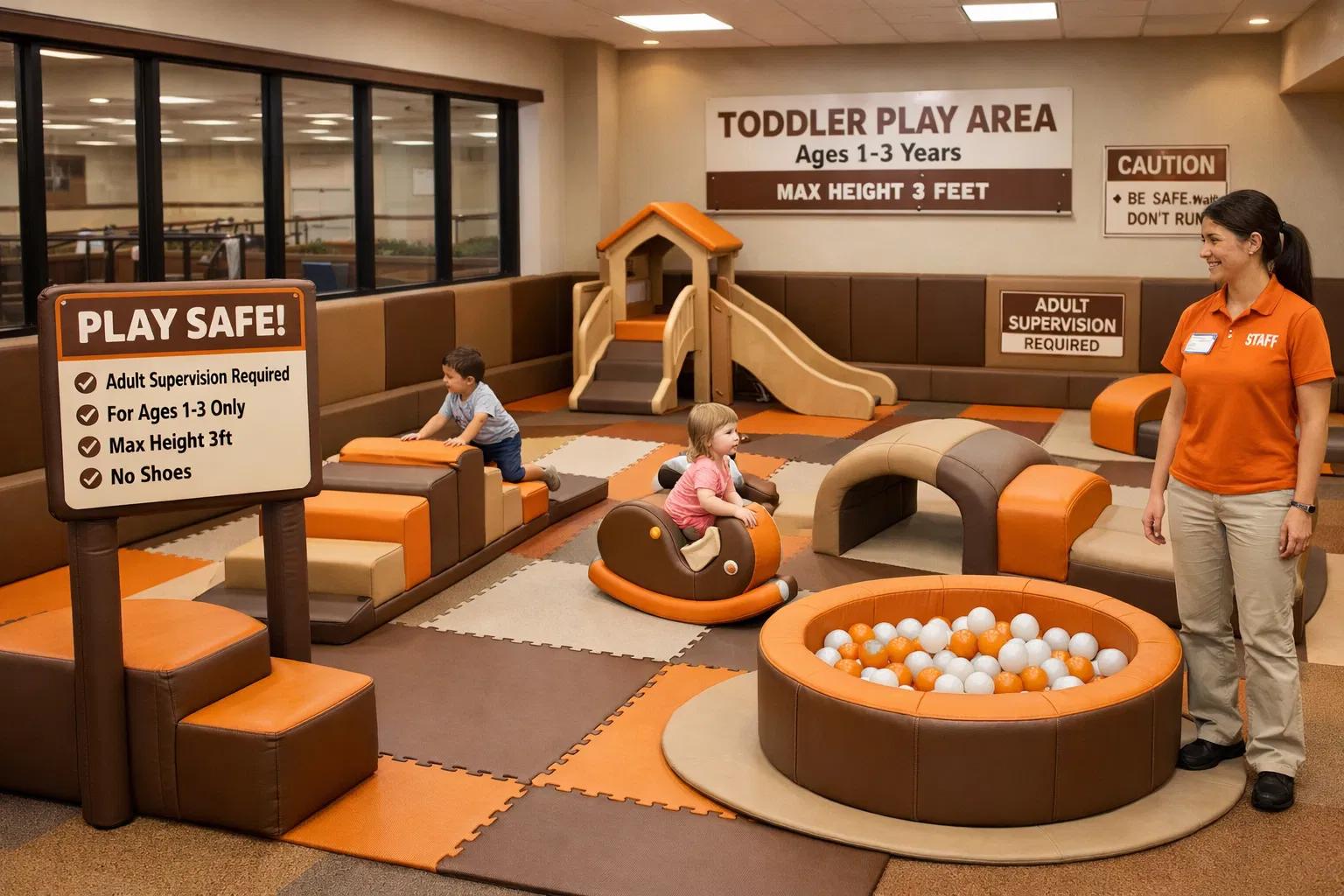
Toddler equipment must meet the highest safety standards due to the vulnerability of this age group.
Extended Dwell Time: Toddlers with engaged parents spend 1.5-2.5 hours in facilities with comprehensive soft play areas.
Higher Admission Prices: Parents of toddlers prioritize safety and development, justifying premium pricing.
Birthday Parties: Toddler birthday parties command premium pricing ($300-$600+) with high booking frequency.
Daycare Partnerships: Regular daycare group visits generate predictable recurring revenue.
Membership Programs: Toddler-focused memberships encourage frequent visits and predictable revenue.
Investment: $80,000 in comprehensive toddler soft play components
Space: 1,000 sq ft dedicated toddler area
Annual Revenue Increase:
ROI: Equipment pays for itself in ~10 months, then generates pure profit
A: A basic toddler area with essential components (climber, ball pit, sensory panels) typically costs $40,000-$80,000. A comprehensive area with all 6 components may cost $80,000-$150,000. Start with priority components and expand as revenue allows.
A: Not recommended. Separate toddler areas are safer and more developmentally appropriate. Older children's play can injure toddlers, and supervision is more efficient with age-separated zones.
A: Daily cleaning is essential due to toddlers' tendency to mouth equipment. Weekly deep cleaning and monthly sanitization are industry best practices. Use antimicrobial-treated materials to reduce cleaning frequency needs.
A: Quality equipment lasts 8-12 years with proper maintenance. Foam components may need replacement every 5-7 years. Budget 5-10% of equipment cost annually for maintenance and repairs.
A: Industry standards recommend 1 staff member per 4-6 toddlers. For safety-critical areas, 1:4 ratios are preferable. Staff should be trained in first aid, CPR, and child development.
A: Yes! Many successful facilities start with core components (climber, ball pit) and add components as revenue allows. Plan your layout to accommodate future expansion.
Our experts specialize in toddler facility design, equipment selection, and safety compliance. We'll help you create a profitable, developmentally appropriate toddler play area that parents love.
Get Your Toddler Area ConsultationReady to dive deeper into specific equipment? Our detailed guides cover everything you need to know:
 English English
 Spanish
 German