If you’re planning a family entertainment venue, play café, or paid-entry indoor playground, your children’s indoor amusement park supplier will shape more than the look of your space—they will determine how safely you operate, how smoothly you pass inspections, and how reliably you convert foot traffic into repeat visits. A supplier is not just a factory that ships equipment. The right partner helps you translate a business model into a buildable layout, selects materials that hold up under daily use, and delivers an installation plan that reduces delays and rework.
At Koalaplay, we work with operators who need a clear path from concept to opening day. This guide explains what to evaluate, what to ask, and what “good” looks like—so you can choose a children’s indoor amusement park supplier with confidence.

What a Professional Kid Indoor Amusement Park Supplier Should Actually Provide
A serious supplier supports the full chain: design, engineering, manufacturing, delivery, installation guidance, and lifecycle support. In practical terms, you should expect:
- Site-aware design: zoning based on your ceiling height, column grid, entrances/exits, and customer flow.
- Age-layered play planning: toddler zones separated from high-energy zones; clear sightlines for caregivers.
- Engineering documentation: drawings, part lists, anchoring logic, and installation sequencing.
- Material specification: not “soft play,” but foam density ranges, cover materials, structural thickness, fastener types, and wear parts.
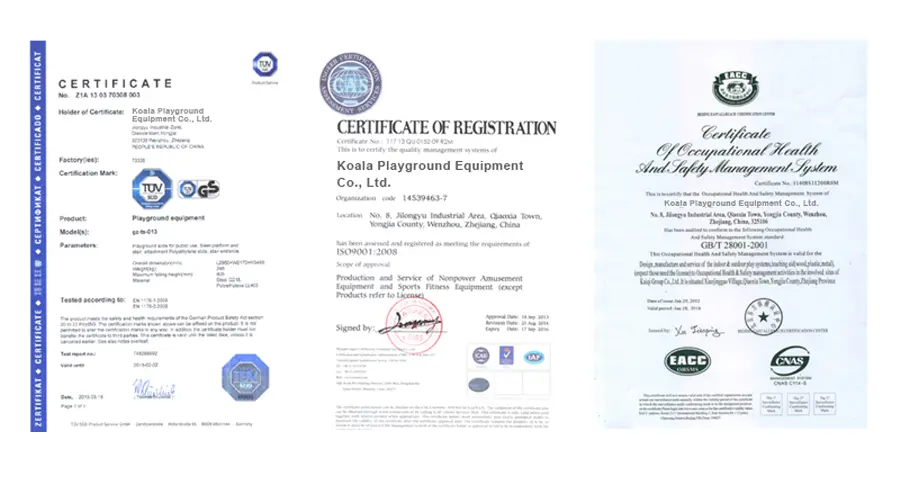
- Safety and compliance guidance: a supplier who understands the standards relevant to your market and how they translate into design decisions.
- Commercial lead-time discipline: production schedules, packaging lists, and shipment readiness that match your build timeline.
A children’s indoor amusement park supplier that only sells “standard sets” without checking your site constraints often creates hidden costs later—especially when you hit MEP conflicts, fire safety requirements, or circulation bottlenecks.
Safety Standards and Compliance: What Buyers Should Know (and Ask For)
Indoor amusement equipment sits at the intersection of product safety and building/operations safety. Requirements vary by country, but a capable supplier should be fluent in major frameworks and how they affect design.
Commonly referenced standards include:
- EN 1176 / EN 1177 (Europe): playground equipment safety and impact-attenuating surfacing.
- ASTM standards (North America): several standards may apply depending on equipment type; indoor contained play often references ASTM frameworks and local codes.
- Local fire and building codes: flame resistance requirements, egress widths, occupancy limits, and sprinkler/alarms constraints.
What to ask your supplier:
- Which standards are you designing to—and why? A good answer ties standards to your venue type and market.
- How do you handle fall height and surfacing selection? You want a supplier who talks in measurable terms (fall height ranges, surfacing performance, and maintenance).
- What’s your approach to pinch points, entrapment hazards, and netting specs? These details separate “looks safe” from “is safe.”
- Do you provide documentation to support inspection readiness? Not every market requires the same paperwork, but a supplier should have structured technical files, material lists, and installation guidance.
Koalaplay’s approach is simple: we design with safety logic first, then theme and aesthetics on top—so the fun is built on a defensible foundation.
Design That Supports Revenue: Zoning and Flow That Increase Repeat Visits
Operators often focus on “more features,” but the best-performing venues are built around flow and dwell time.
A well-planned layout typically includes:
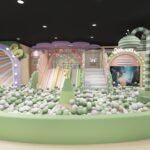
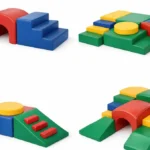
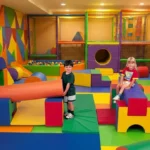
- Toddler & soft play zone: contained, calmer, and physically separated to avoid collisions.
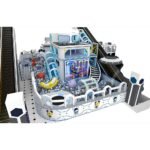
- Core indoor play structure: multi-level climbing, slides, obstacles, and crawl paths with controlled entry/exit points.
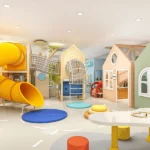
- Role play / pretend play corner: lower-height, high-engagement stations that photograph well and suit mixed ages.
- Parent lounge café zone: seating positioned for supervision, with clear sightlines and predictable circulation.
A professional children’s indoor amusement park supplier should explain why each zone is placed where it is:
- High-energy areas should be away from entrances to prevent crowding.
- Party rooms should be easy to reach but not disrupt core circulation.
- Seating should anchor supervision, not block walkways.
- Paid-entry control points should prevent “leakage” in and out of play zones.
At Koalaplay, we often start with your operating model (ticketing, café revenue, party packages, memberships) and design the zoning to support it—because layout is not decoration; it is operations.
Materials and Build Quality: The Items That Decide Your Maintenance Costs
Two venues can look similar on day one and perform very differently after 12 months. The difference is usually hidden inside the bill of materials.
Key build-quality indicators:
- Structural system: steel frame thickness, rust protection, and connection design that withstands vibration and daily movement.
- Soft play foam and covers: foam density that resists collapse; covers with durable seams and abrasion resistance; easy-clean surfaces for hygiene routines.
- Netting and ropes: tension stability, knotting/termination method, and replacement planning.
- High-wear components: slide surfaces, ball pit liners, step pads, and handholds—these should be specified for commercial use, not home-grade.
Ask your supplier for:
- A wear-parts list (what needs replacement, typical cycle, and cost range).
- A cleaning and maintenance guide tailored to your materials.
- Photos or videos of equipment after long-term operation, not just fresh installs.
Koalaplay designs with maintenance reality in mind. We prefer components that can be replaced without dismantling half the structure, because downtime is a revenue problem.
Timeline Planning: How to Avoid Delays That Push Back Opening Day
Most delays come from late changes and missing coordination, not from manufacturing alone. Your children’s indoor amusement park supplier should help you connect the chain:
Site measure → layout approval → 3D concept → engineering drawings → production → QC → packing list → shipping → installation → inspection readiness
Practical tips:
- Freeze layout early. Late zoning changes ripple into drawings, parts, and packaging.
- Confirm MEP constraints (sprinklers, HVAC diffusers, lighting, exits) before final engineering.
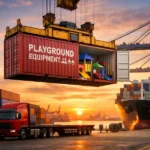
- Align shipping method to your site realities: receiving hours, forklift access, storage space, and installation schedule.
- Decide installation method: your local contractor, your team, or supplier-supervised installation—each affects risk and speed.
Koalaplay supports structured milestone approvals so you don’t discover conflicts on-site when changes are most expensive.
Supplier Due Diligence Checklist: Questions That Reveal Capability
Before you choose a children’s indoor amusement park supplier, ask:
- Can you show recent projects similar to my venue type and size? Look for evidence of repeatable delivery, not one-off showcases.
- What is your engineering process and drawing package include? You want clarity on anchoring, sequencing, and parts.
- How do you handle QC? Ask for QC checkpoints and what gets inspected.
- What’s included in after-sales support? Response time, spare parts process, and documentation matter.
- How do you package for shipping and reduce damage risk? Poor packaging becomes installation delays.
A supplier who answers with specifics—materials, drawings, lead times, and risk controls—is usually the supplier who performs well after you sign.
Why Operators Choose Koalaplay as Their Children’s Indoor Amusement Park Supplier
Koalaplay focuses on indoor play spaces where safety, traffic flow, and brand experience must work together. We support:
- Indoor play structures designed for commercial durability and smooth circulation
- Custom theme design that fits your brand without creating inspection headaches
- Role play zones that drive engagement and photo-friendly moments
- Toddler & soft play areas built for separation, supervision, and calm play
- Parent lounge café integration that improves supervision and increases dwell time
If you’re comparing suppliers, we’re happy to review your site plan and share practical feedback on zoning, safety logic, and timeline risks—so you can make a decision based on buildability, not just visuals.
Final Takeaway
Choosing a children’s indoor amusement park supplier is a risk-management decision disguised as a design purchase. Prioritize suppliers who can prove engineering discipline, material transparency, and installation readiness. The best venues are the ones that open on schedule, operate smoothly, pass inspections without drama, and stay fresh and reliable after months of real traffic.
If you want Koalaplay’s input on your project, share your site basics (area, ceiling height, target age range, and whether you operate a café/party model). We’ll help you map a clear route from concept to opening.