
Attraktionen im Hochseilgarten verwandeln den vertikalen Raum in ein strukturiertes Abenteuererlebnis. Sie bieten Herausforderungen, Bewegung und eine starke visuelle Wirkung für Familienunterhaltungszentren, Indoor-Abenteuerparks, Spielplätze in Einkaufszentren und größere Indoor-Spielplatz-Attraktionen Projekte.
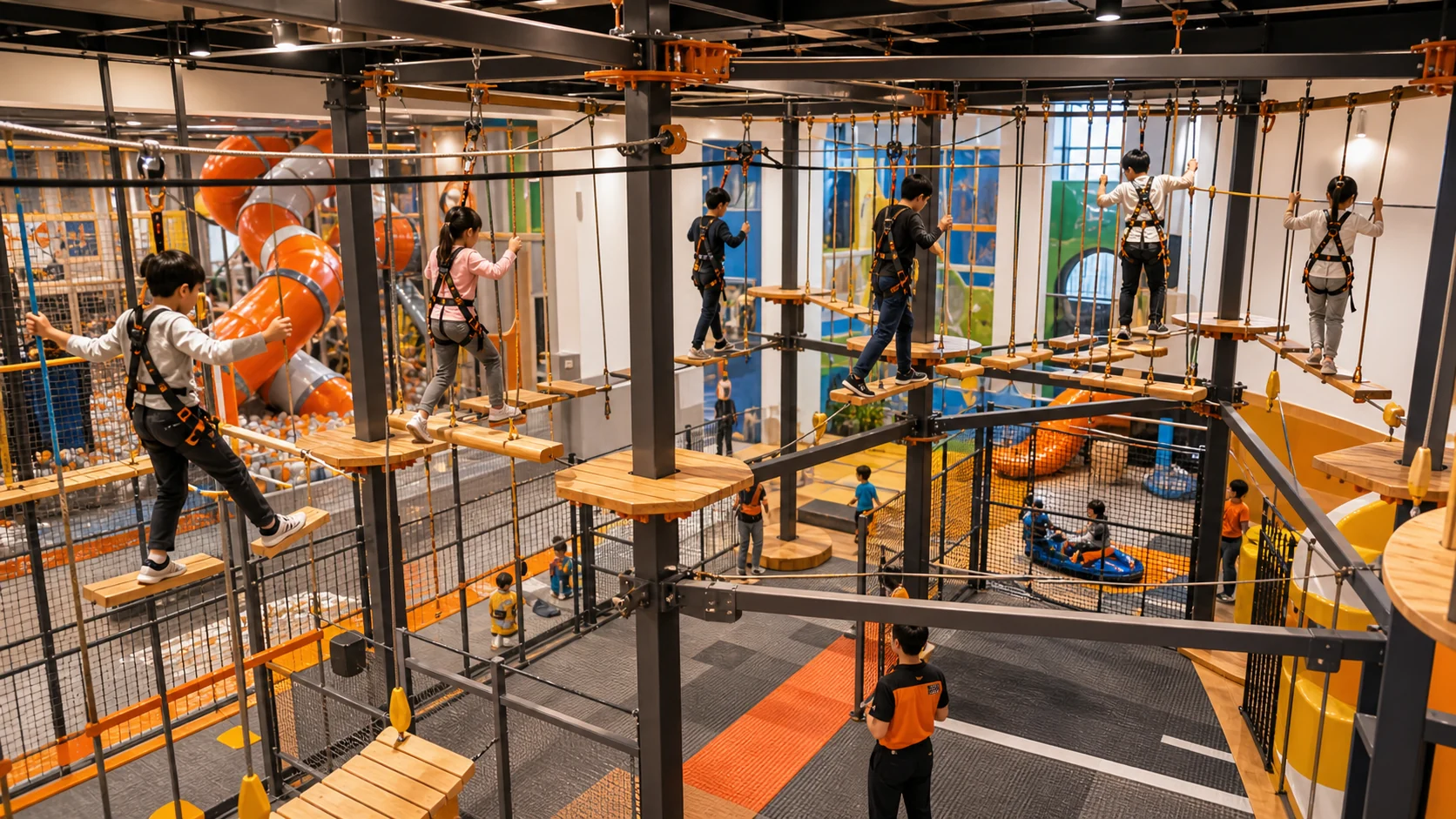
Was ist eine Seilgartenattraktion?
Eine Seilgartenattraktion ist ein erhöhter oder niedrig gelegener Abenteuerparcours mit Brücken, Balancierbalken, Netzen, schwingenden Stufen, Plattformen und anderen Elementen. In kommerziellen Indoor-Anlagen wird er in der Regel mit einem Stahlgerüst, Sicherheitsleinen, Gurtsystemen, kontrollierten Einstiegspunkten und Personalaufsicht gebaut.
Im Gegensatz zu einer einfachen Kletterstruktur bietet ein Seilgarten einen geführten Parcours. Die Kinder bewegen sich von einem Element zum nächsten, wodurch sich die Attraktion zielgerichtet anfühlt und als Teil eines größeren Ganzen leicht zu bedienen ist. kommerzielle Indoor-Spielplatzgeräte Plan.
Warum einen Seilgarten in einen Indoor-Spielplatz einbauen?
Nutzt vertikalen Raum
Ein Seilparcours kann die Spielkapazität über dem Boden erhöhen, was von Vorteil ist, wenn der Veranstaltungsort eine gute Deckenhöhe, aber eine begrenzte Bodenfläche hat.
Schafft sichtbare Abenteuer
Erhöhte Brücken und Plattformen sind für Familien vom gesamten Gelände aus leicht zu erkennen und tragen dazu bei, dass die Attraktion zu einem visuellen Anker wird.
Unterstützt ältere Kinder
Hochseilgärten bieten Kindern und Jugendlichen im Schulalter eine anspruchsvollere Beschäftigung als Kleinkinderspiele, Soft Play oder einfache Rutschen.
Ermutigt zu wiederholten Besuchen
Verschiedene Routen, Schwierigkeitsgrade und vertrauensbildende Herausforderungen machen die Aktivität für wiederkehrende Gäste wiederholbar.
Haupttypen von Indoor-Seilgarten-Attraktionen
Seilgärten können für unterschiedliche Altersgruppen, Deckenhöhen und Veranstaltungskonzepte konzipiert werden. Der Schlüssel dazu ist die Abstimmung des Schwierigkeitsgrads mit der Aufsicht, dem Sicherheitssystem und dem erwarteten Verkehrsfluss.
| Typ | Beste Verwendung | Planungshinweise |
|---|---|---|
| Niedrigseilgarten | Jüngere Kinder, kompakte Indoor-Spielplätze | Geringere Höhe, leichtere Beaufsichtigung, oft in Verbindung mit einem weichen Bodenbelag oder Netzschutz. |
| Hochseilgarten | FECs, Einkaufszentren, Erlebnisparks | Erforderlich sind eine stabile Struktur, eine freie Höhe, die Verwendung von Sicherheitsgurten, die Kontrolle durch das Personal und geschützte Absturzbereiche. |
| Netto-Kurs | Altersgemischte Familientreffpunkte | Verwendet geschlossene Netze, um ein freieres Klettern und Überqueren mit weniger Handhabung des Gurtes zu ermöglichen. |
| Abenteuerturm-Parcours | Große überdachte Sport- oder Erlebniszentren | Kombiniert mehrere Ebenen, Klettern, Seile, Plattformen und manchmal Rutschen oder Ausgänge im Stil einer Seilbahn. |
Wichtige Designüberlegungen
Die erste Planungsfrage ist die Höhe. Ein Hochseilgarten braucht genügend freie Höhe für die Struktur, die Plattformen, die Sicherheitsleine, die Bewegung der Teilnehmer und die Beleuchtung bzw. die Sprinkleranlage. Wenn der Seilgarten Teil eines größeren Projekts ist, sollte er zusammen mit dem Gesamtprojekt geprüft werden. individuelle Gestaltung von Indoor-Spielplätzen.
- Bestätigen Sie die lichte Deckenhöhe, Träger, Leitungen, Beleuchtung und Sprinkleranlagen.
- Trennen Sie den Eingang, die Anprobe, das Warten und den Ausgang vom Hauptverkehr.
- Wählen Sie den Schwierigkeitsgrad der Elemente je nach Alter, Größe und Selbstvertrauen der Zielgruppe.
- Planen Sie die Sichtlinien des Personals so, dass die Bediener die gesamte Strecke überwachen können.
- Reservieren Sie Platz für die Aufbewahrung des Gurtzeugs, die Inspektion und die täglichen Betriebskontrollen.
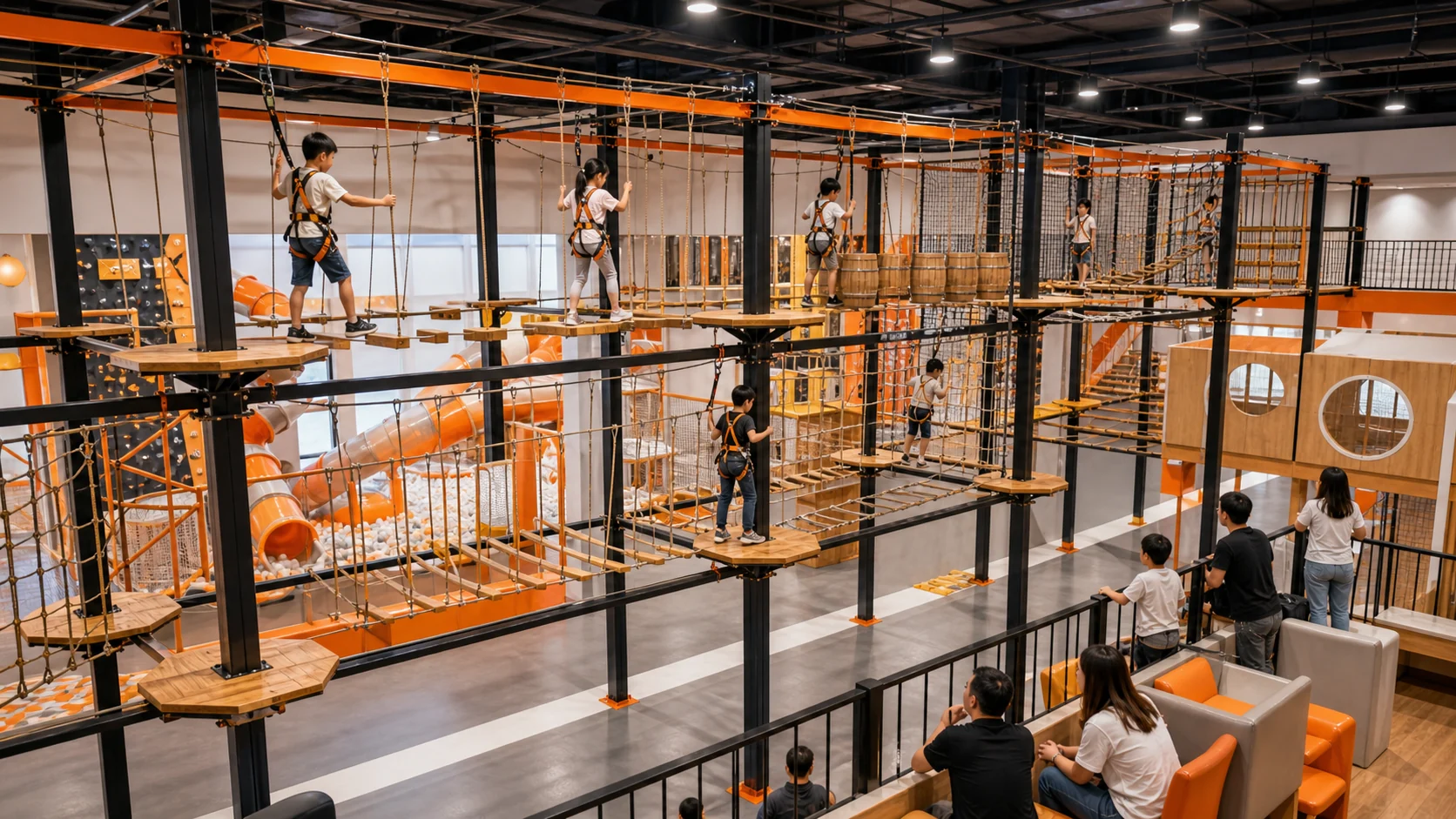
Beste Veranstaltungsorte für Hochseilgartenattraktionen
Seilparcours eignen sich am besten für Einrichtungen, die eine stärkere Abenteueridentität anstreben und über genügend Höhe verfügen, um nach oben zu bauen. Sie sind besonders nützlich für Familienunterhaltungszentren, Spielplätze in Einkaufszentren, Indoor-Abenteuerparks und größere Indoor-Sportpark Konzepte.
Wie man Seilgärten mit anderen Attraktionen kombiniert
Seilgartenattraktionen eignen sich gut als Brücke zwischen traditionellem Soft Play und energiereicheren Abenteueraktivitäten. Sie können neben Kletterwänden, Ninja-Parcours, Trampolinzonen, Rutschen oder mehrstufigen Spielstrukturen aufgestellt werden.
- Koppeln Sie Seilgärten mit Indoor-Spielplatzstrukturen um ein vielschichtiges Spiel und eine größere visuelle Tiefe zu schaffen.
- Fügen Sie Kletterwände oder Netze für eine sportliche Abenteuerroute hinzu.
- Benutzen Sie einen Netzparcours oder einen Niedrigseilparcours in der Nähe jüngerer Zonen, wenn der Einsatz von Klettergurten nicht möglich ist.
- Platzieren Sie die Sicht der Eltern unter oder neben dem Parcours, damit sich die Attraktion sicher anfühlt und leicht zu beaufsichtigen ist.
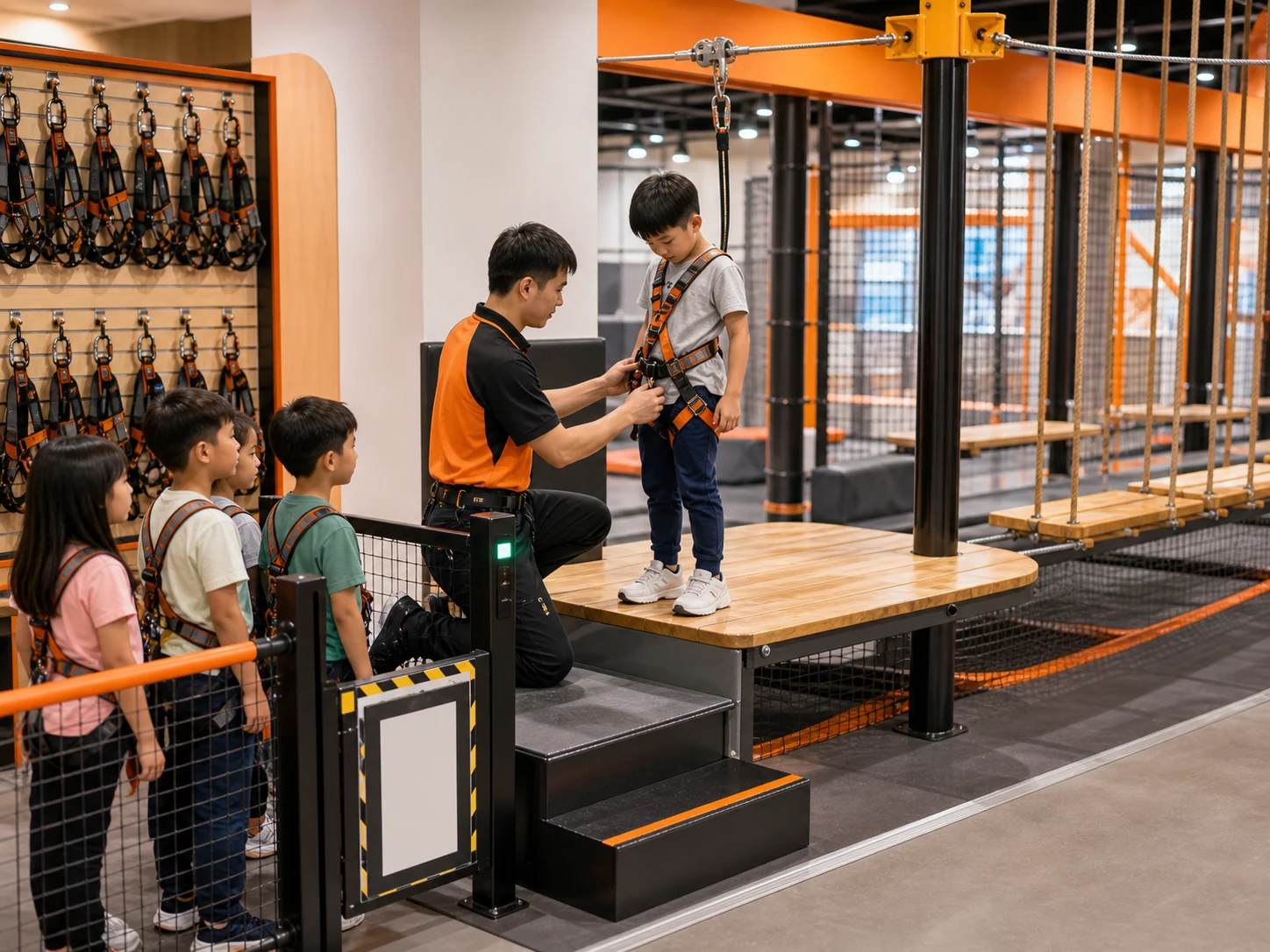
Was vor dem Kauf zu planen ist
Vor der Auswahl der Struktur sollten die Betreiber die Deckenhöhe, die angestrebte Altersgruppe, das Schwierigkeitsniveau, die Streckenkapazität, das Sicherheitssystem, die Arbeitsabläufe des Personals und den Inspektionsbedarf prüfen. Die Festlegung dieser Anforderungen in einer frühen Dienstleistungsprozess macht Layout, Produktion und Installation reibungsloser.
- Lichte Höhe und strukturelle Unterstützungsbedingungen
- Niedrigparcours, Trapezparcours, Netzparcours oder Abenteuerturmformat
- Einstiegsplattform, Ausstiegsstelle, Warteschlange und Sichtbereich für Eltern
- Gurtsystem, Sicherheitsleine, Personaleinsatz und Inspektionsroutine
Checkliste für Sicherheit und Betrieb
Ein Hochseilgarten ist eine überwachte Attraktion, daher ist der tägliche Betrieb ebenso wichtig wie die Konstruktion selbst. Prüfen Sie die Unterlagen des Lieferanten für Polsterung, Netze, Oberflächenmaterialien und Qualitätsdokumentation. Material und Qualität Informationen, bevor Sie die Produktion bestätigen.
Sitz des Gurtzeugs prüfen
Das Personal sollte sich vor dem Eintritt von Größe, Passform, Schnallen, Verbindungspunkten und der Bereitschaft der Teilnehmer überzeugen.
Kontrolle des Eingangsflusses
Begrenzen Sie die Anzahl der Teilnehmer auf jeder Strecke, damit die Plattformen und Aufgabenelemente nicht überfüllt werden.
Elemente täglich inspizieren
Überprüfen Sie Seile, Netze, Bolzen, Plattformen, Kabel, Polsterungen und sichtbare Abnutzung, bevor Sie die Attraktion öffnen.
Zugrettungsverfahren
Die Betreiber brauchen einen klaren Plan, wie sie nervösen Teilnehmern helfen, Stopps abwickeln und die Strecke sicher beenden können.
Häufige Fragen zu Seilgartenattraktionen
Braucht man in allen Hochseilgärten einen Klettergurt?
Nein. Bei Parcours in höheren Lagen werden in der Regel Gurtsysteme verwendet, während bei einigen Niedrigseilparcours oder geschlossenen Netzparcours andere Sicherungsmethoden zum Einsatz kommen können.
Welche Altersgruppe ist am besten geeignet?
Die meisten Vollseilgärten sind für Kinder im Schulalter, Jugendliche und Familien geeignet. Jüngere Kinder benötigen in der Regel niedrigere, einfachere Elemente.
Ist ein Hochseilgarten gut für die Rentabilität?
Sie kann stark sein, wenn der Veranstaltungsort über eine ausreichende Höhe, eine gute Aufsicht, eine sichtbare Platzierung und ein Ticket- oder Paketmodell verfügt, das die Personalkosten trägt.
Wo kann ich umfassendere Projektfragen prüfen?
Für Fragen zu Bestellung, Versand, Installation, Garantie und Kundendienst lesen Sie bitte die Koalaplay FAQ.
Verwandte Planungsressourcen
Wenn Sie Abenteuerattraktionen vergleichen, können diese Seiten Ihnen helfen, den gesamten Veranstaltungsort zu planen, bevor Sie sich für einen Seilgarten entscheiden.
Planen Sie eine Hochseilgarten-Attraktion für Ihren Veranstaltungsort
Teilen Sie uns Ihren Grundriss, die lichte Höhe, die Altersgruppe und den bevorzugten Attraktionsmix mit. Ein individuelles Layout kann zeigen, ob ein Seilgarten in Ihren Raum passt und wie er mit Kletter-, Softplay-, Trampolin- oder Abenteuerbereichen verbunden werden kann.
Kontaktieren Sie uns für ein individuelles Layout
 English
 Spanish
 German