A trampoline park is more than just a fun place for kids—it’s a serious business opportunity. According to a NASA report, just 10 minutes of trampoline jumping provides better cardiovascular benefits than 30 minutes of running. That means trampoline parks combine fitness, recreation, and profitability.
As a business owner, investing in a trampoline park allows you to serve multiple markets: families, schools, corporate events, fitness enthusiasts, and casual visitors. The industry has grown rapidly, proving that trampoline parks are not only enjoyable but also financially rewarding ventures.
So, how much does it actually cost to build a trampoline park? Depending on your vision, the initial investment typically ranges between $100,000 and $500,000. Let’s break down why the industry is booming, what costs to expect, and how you can make your trampoline park a success.
Why Is the Trampoline Park Industry Growing So Quickly?
The rise of trampoline parks reflects the global demand for active entertainment. Consider the following:
- Trampolining became an official Olympic sport in 2000, raising its global visibility.
- In 2011, there were only around 40 trampoline parks worldwide; today, there are over 700, making it one of the fastest-growing segments in location-based entertainment.
- Trampoline parks appeal to all ages: surveys show that children aged 6–10 make up the largest group of jumpers (about 35%), followed by teenagers aged 11–15, while adults in their 20s and 30s are increasingly frequent visitors.
Beyond recreation, trampoline parks are now used for fundraising events, corporate team-building, fitness classes, and community activities, making them versatile, profitable, and resilient investments.
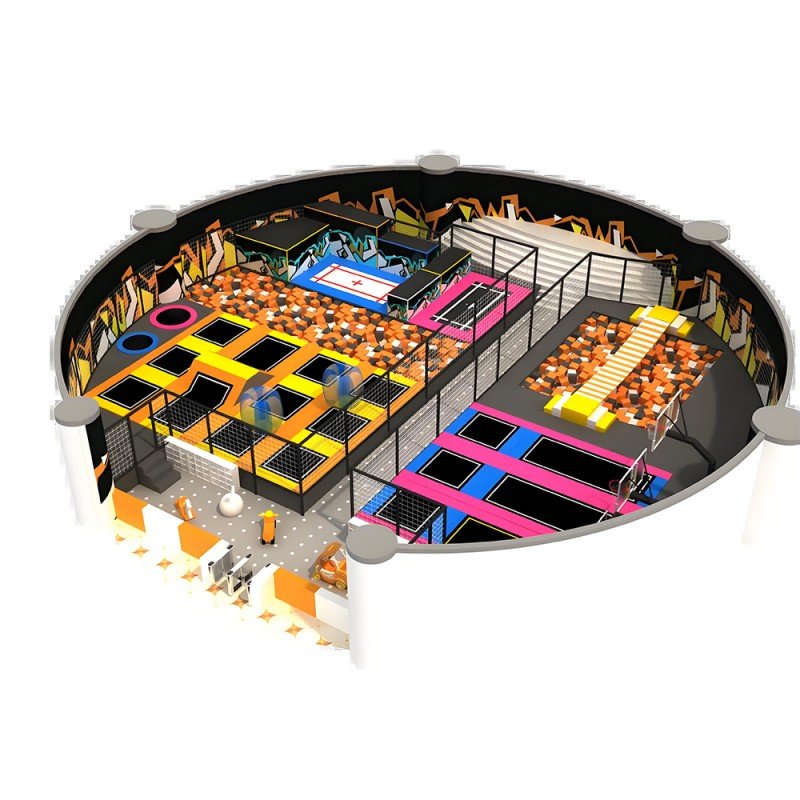
Detailed Overview of Trampoline Park Costs
Every trampoline park project is unique, but the following list offers a realistic breakdown of common expenses:
- Franchise Fee: $5,000–30,000 (if you join an established franchise)
- Lease & Deposit: $10,000–50,000
- Building Improvements: $10,000–100,000
- Signage: $5,000–30,000
- Furniture: $5,000–10,000
- Equipment & Supplies: $40,000–120,000
- Licenses & Utilities: $1,000–3,000
- Inventory: Around $5,000
- Professional Fees: $1,000–5,000
- Insurance Deposit: Around $7,000
- Pre-Opening Salaries: $8,000–30,000
- 3-Month Operating Costs: $8,000–20,000
- Advertising: $5,000+
The biggest cost driver is equipment—especially if you include attractions such as ninja courses, climbing walls, or themed zones. On average, a 30,000 sq. ft. trampoline park requires $100,000–120,000 worth of equipment alone.
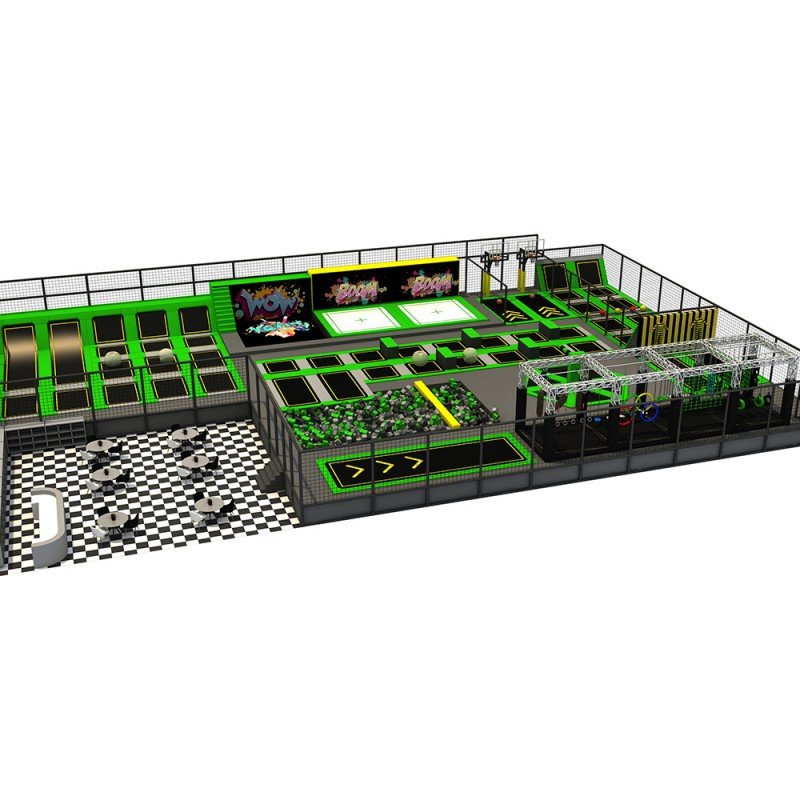
Location Costs
Your location significantly influences startup costs and revenue potential. Consider:
- Square Footage: 25,000 sq. ft. is typical to accommodate jumping zones, waiting areas, cafés, and party rooms.
- Rental Costs: $2–8 per sq. ft., or $50,000–200,000 annually.
- Ceiling Height: High ceilings (18–24 ft.) are critical for safe trampoline layouts.
Pro Tip: Dedicate around 50–55% of your space to trampolines, reserving the rest for seating, concessions, and reception.
Cost of Themed Equipment
Themes make trampoline parks more engaging and attract repeat customers. Examples include:
- Disco Nights & Date Nights – appealing to adults.
- Toddler Times – safe hours for young children.
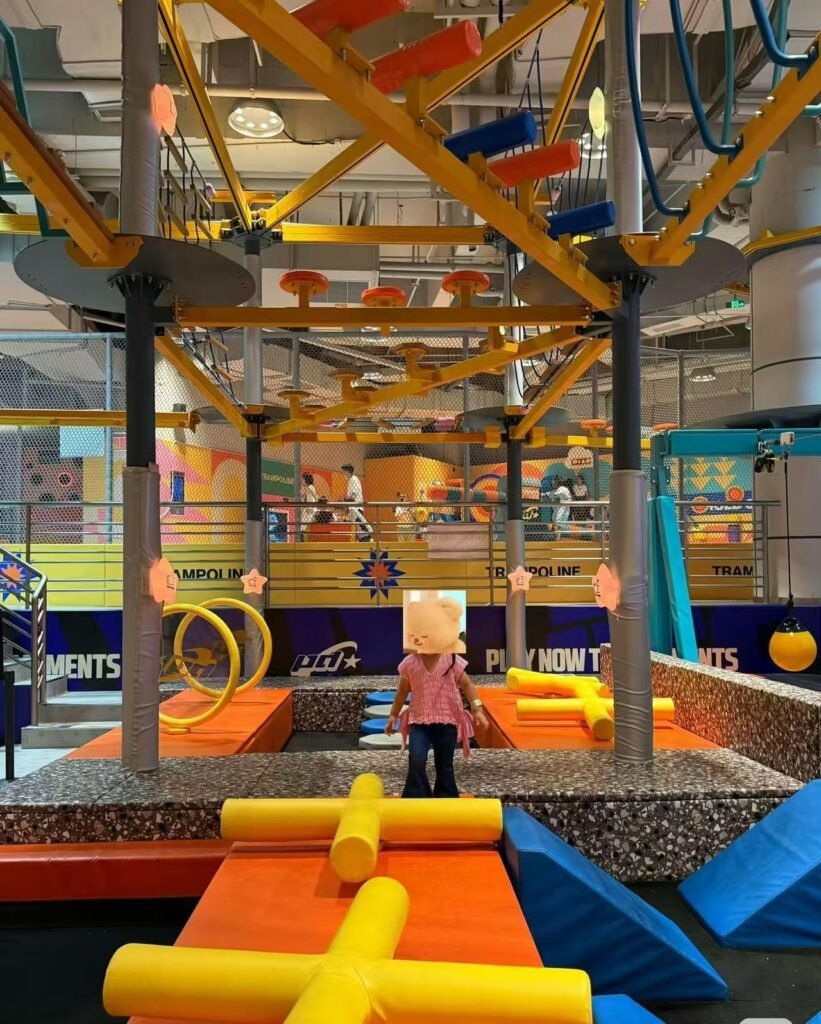
- Adventure Zones – ninja courses and climbing walls.
For a 1,000 sqm trampoline area, themed equipment can cost up to $120,000. Larger areas require consulting with your equipment supplier for accurate budgeting.
Furniture & Equipment Costs
- Furniture: $5,000–10,000 for sofas, benches, reception desks, and seating areas.
- Trampoline Equipment: $60–90 per sqm, or $60,000–90,000 for 1,000 sqm.
- Flooring: Rubber mats, PVC padding, or artificial turf, typically $10–30 per sqm.
- Basketball Hoops: $20–500 each, depending on quality.
- Toys & Accessories: $100–500 for balls, ladders, dartboards, and soft games.
- Trampoline Socks: $0.40–0.60 per pair wholesale; resell to customers at $2–3 per pair.
- Lighting & Sound Systems: $2,000–3,000 (plus music licensing fees).
High-quality equipment is critical—cheap installations wear out quickly and risk safety compliance issues.
Staffing Costs
Most trampoline parks start with 3–5 employees, scaling up as traffic grows. Staff are needed for:
- Safety supervision
- Concessions and reception
- Teaching fitness/jumping classes
General rule: one staff member per 100 sqm of trampoline area.
Refreshments & Concessions
Initial snack bar setup costs: $1,000–2,000, covering drinks, snacks, and light food. Expanding menus (pizza, sandwiches, smoothies) can increase both costs and revenue. Concessions are an important secondary income stream.
Registration, Licensing & Insurance
- Registration & Permits: Mandatory state/local certifications.
- Insurance: Expect deposits around $7,000 and coverage up to $1M for liability.
- Workers’ Compensation: Required if employing staff.
Insurance is essential—not only for compliance but also for protecting your investment.
Marketing Costs
Marketing is critical to attracting families, teens, and adults. Budget at least $5,000+ for:
- Website with ticket booking system
- Social media campaigns (Facebook, Instagram, YouTube, TikTok)
- SEO and Google Ads for local discovery
- Group promotions (schools, corporates, birthdays)
Koalaplay recommends online ticketing systems to reduce queues and increase convenience.
Professional Maintenance & Working Capital
Hiring certified installers and maintenance professionals costs $400–700 per installation, but ensures compliance and longevity.
In addition, plan for 3–6 months of working capital to cover payroll, utilities, and insurance. Expect $8,000–20,000 in operating costs during this period.
How Much Can You Charge Customers?
Most trampoline parks charge $10–15 per hour of jumping, plus extras for socks, refreshments, or party packages.
Revenue boosters include:
- VIP passes and memberships
- Birthday party packages
- Corporate team-building events
- Fitness classes (adults) and after-school clubs (kids)
By diversifying offerings, owners can significantly increase profits.
Profit Margin
Profitability depends on location, competition, and pricing strategy. Industry averages:
- 25–40% net profit margin after expenses.
- Example: A California park owner invested $500,000 and earned $2 million in gross sales, with a 39% profit margin in the first year.
While startup costs are high, returns can be substantial—most operators see profitability within 6–8 months.
How to Make Your Trampoline Park More Profitable
To maximize earnings:
- Offer family packages and group discounts.
- Create seasonal events like glow nights or tournaments.
- Add premium attractions such as ninja courses or climbing walls.
- Upgrade food & beverage offerings.
- Promote via loyalty rewards and social media campaigns.
These strategies extend dwell time, attract repeat visitors, and increase per-guest revenue.
Design Your Trampoline Park with Koalaplay
To thrive in today’s market, you need more than trampolines—you need differentiation, safety, and innovation. At Koalaplay, we deliver exactly that.
We provide:
- High-quality, adult- and child-safe trampoline equipment engineered to international standards (EN, ASTM).
- Custom design services for themed attractions, layouts, and branded experiences.
- Innovative play systems—from ninja courses to interactive games—that keep guests engaged.
- Professional installation and support, ensuring compliance and long-term reliability.
If you want to stand out from competitors, Koalaplay can customize your trampoline park to your vision, helping you attract families, schools, and corporate groups with a one-of-a-kind experience.
📩 Contact Koalaplay today for a free design consultation and project quote. Let’s build a trampoline park that delivers fitness, fun, and profit—together.