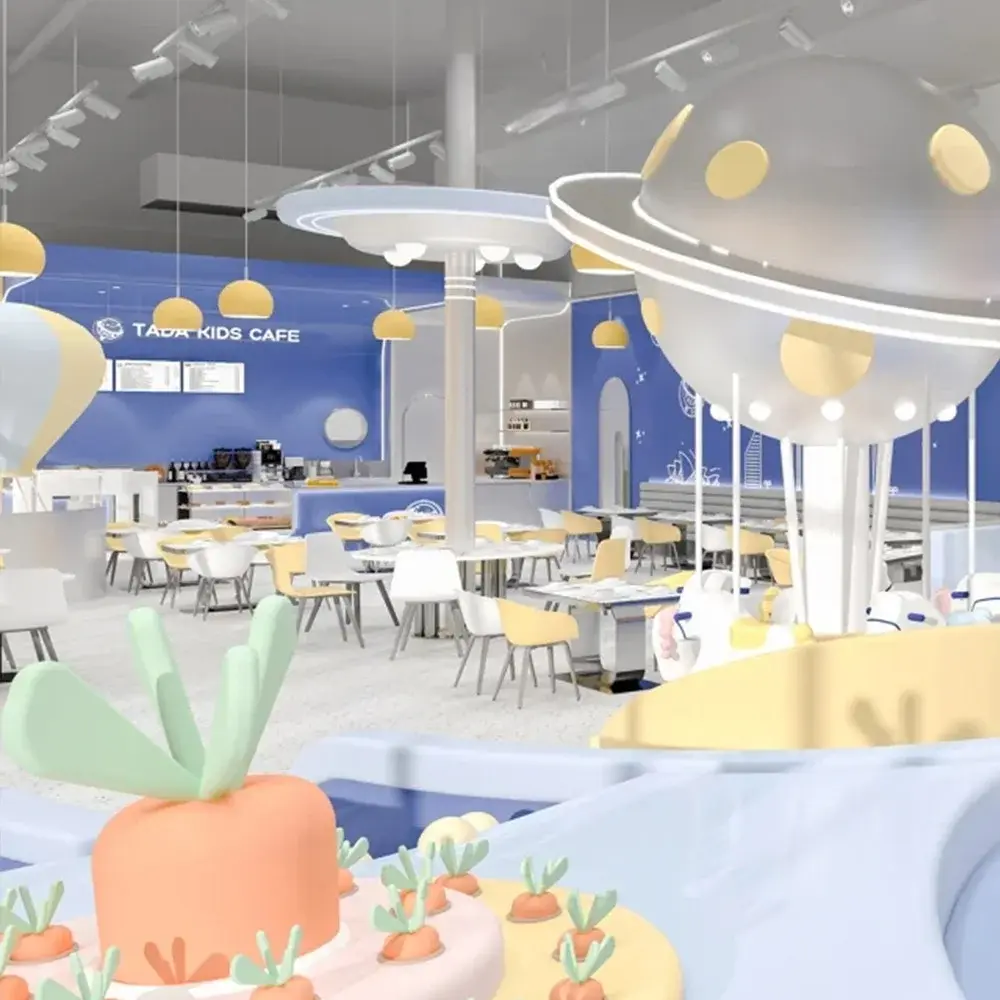
A play café looks simple on paper: a clean play area, good coffee, and happy kids. But the play cafés that stay booked (and keep their reviews strong) aren’t the ones with the most equipment—they’re the ones designed for smooth operations: clear sightlines, controlled capacity, fast cleaning, and an obvious boundary between food and play.
If you’re planning your first location, these eight tips will help you avoid the most expensive mistakes—especially the ones you only discover after opening day.
Tip 1: Choose Your Target Age Group Before Start a Play Cafe Business
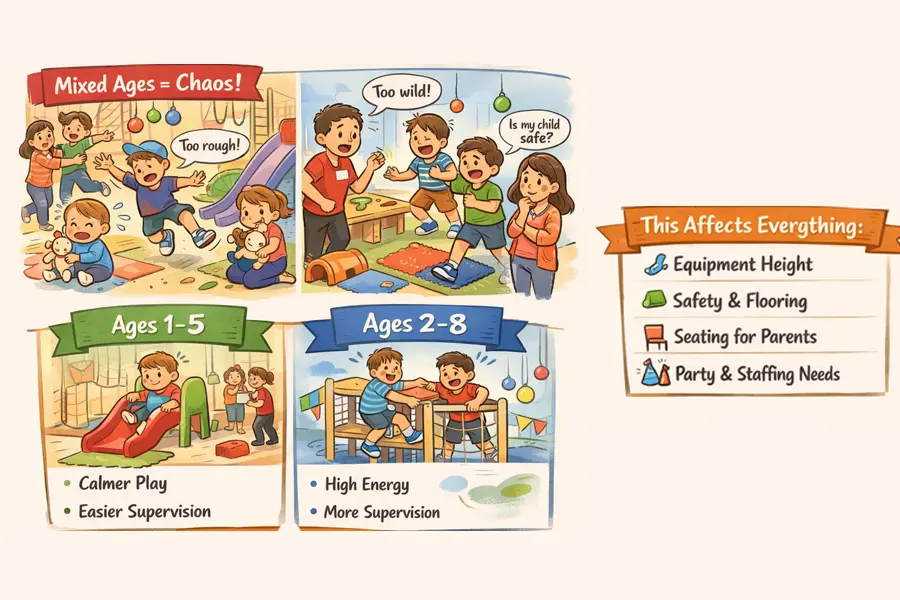
The fastest way to create chaos in a play café is to design for “all ages.” Mixed-age play sounds inclusive, but it often produces the most complaints:
- toddlers get overwhelmed,
- older kids get bored and start running,
- parents feel unsafe,
- staff spend the day refereeing conflicts instead of serving customers.
Pick a core age range and build around it:
- 1–5 years (toddler-first): calmer play, high repeat visits, easier supervision, lower injury risk
- 2–8 years (mixed ages): higher energy, higher wear-and-tear, stricter capacity control required
This decision affects everything:
- equipment height, use zones, and fall-risk profile
- flooring and cleaning requirements
- seating placement (parents of toddlers want to sit close)
- party format and staffing needs
Quick check: If your best customers are parents of toddlers, design your play zone so it feels safe and calm—low structures, clear zones, and fewer “collision hotspots.”
If your audience skews younger, start your planning with role play zones and pretend play corners because they keep children engaged longer without needing tall structures or high-speed features. (See KoalaPlay’s inspiration gallery for Play Café design ideas & layouts and our Role Play solutions.)
Tip 2: Choose your operating model early (timed sessions vs. drop-in)
Many first-time owners make the same mistake: they plan a beautiful space and postpone the hard questions about how it will run. But your business model determines your daily experience more than your theme does.
Timed sessions (recommended for most play cafés)
This model caps the number of children per session and creates predictable flow:
- better crowd control
- better parent experience
- easier cleaning between sessions
- easier to run parties without overlap
Drop-in open play
This can work in specific locations, but it comes with operational risk:
- weekend overcrowding spikes quickly
- staff workload becomes unpredictable
- cleaning becomes harder because there is no reset window
If you’re still validating your concept and pricing model, KoalaPlay’s guide on Play Café concept, business model, and trends is a helpful reference point.
Tip 3: Play Cafe Layout rule #1—design for sightlines, not decoration
Parents don’t just buy play time. They buy peace of mind. If they can’t easily see their child, they won’t relax, they won’t stay long, and they won’t come back.
Before you commit to any layout, imagine the “control point” (usually the counter/café bar) and ask:
- Can staff see most of the play floor from one position?
- Are there blind spots behind playhouses, tall walls, or themed façades?
- Can a staff member reach any point in the play zone quickly?
What works best in real operations
- low partitions instead of tall walls
- open entries (wide doorways) instead of narrow tunnels as the only access
- parent seating positioned to face play zones, not turned away
- clear circulation paths that don’t force parents to walk through play
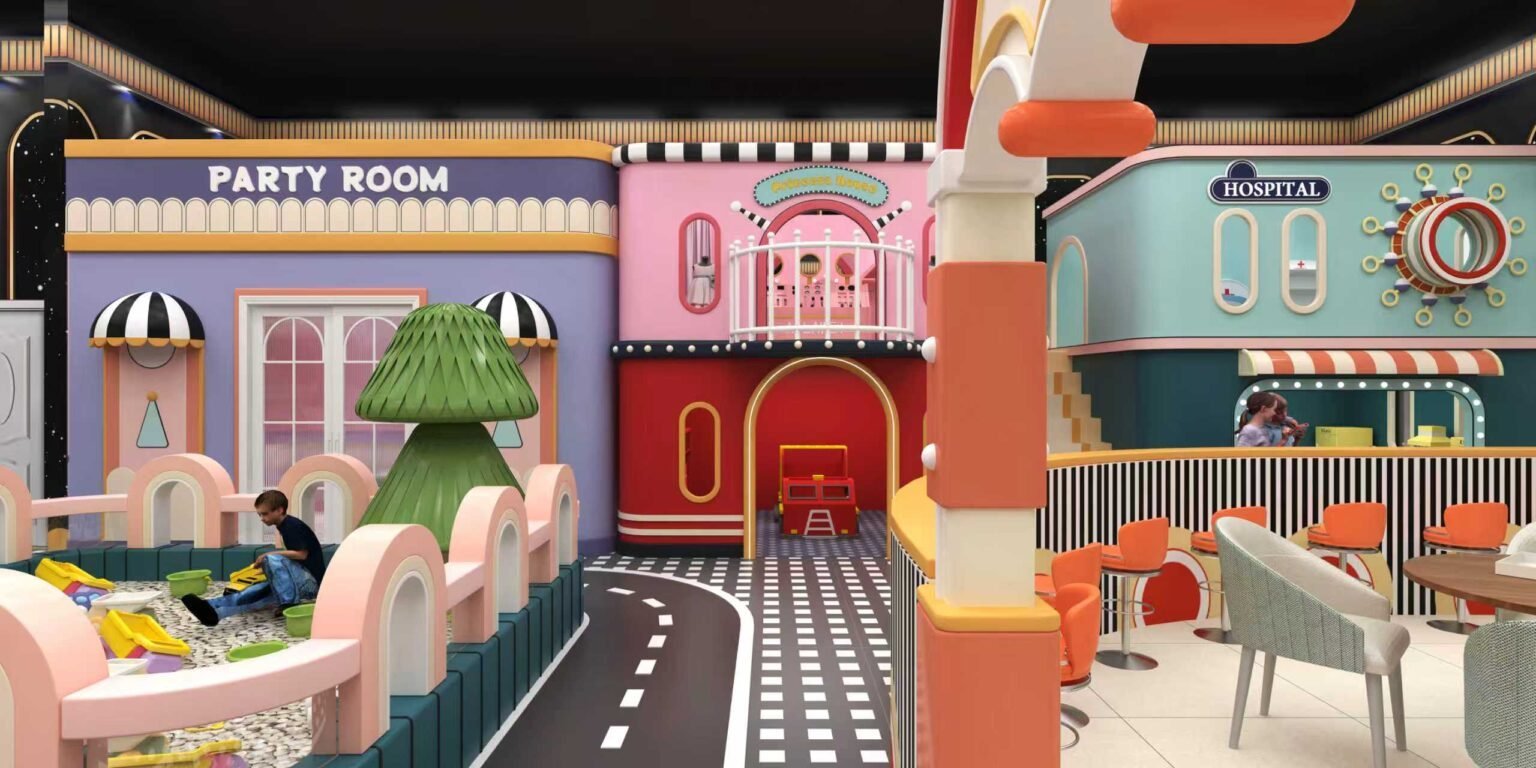
Common failure pattern: A gorgeous themed street with tall façades… that creates hidden corners, conflict points, and staff stress. You can keep the theme—just keep the visibility.
If you want layout references built around visibility and flow, browse KoalaPlay’s Play Café layout gallery and the Role Play Zone & Pretend Play Corner collection.
Or Get a Free Layout Review Now
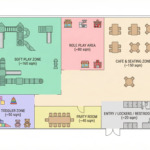
Tip 4: Separate the eating zone and the play entry (this protects hygiene and flow)
This tip is one of the most important—and most ignored—when people rush into design.
If kids move directly from snacks to play equipment, you will see:
- sticky hands on play surfaces
- crumbs and spills inside play areas
- higher cleaning labour
- “this place feels dirty” reviews (even when you clean daily)
The simplest fix: create a clear flow
A reliable play café flow looks like this:
Check-in → rules/socks → play entry → play zone
And the eating experience stays on its own “side” of the venue.
How to create separation without building walls
- use furniture placement to create a boundary
- add a low gate or half fence at the play entry
- provide a visible “shoe/sock zone”
- use signage to set expectations (simple, clear rules work best)
Common failure pattern: The party table is next to the play gate. Kids bounce between cake and play. You spend the next hour cleaning sticky fingerprints off everything. Good zoning prevents this.
Tip 5: Capacity control is your profit protection (and your safety plan)
A crowded room can look like success—until it becomes the reason families don’t return.
Overcrowding causes:
- more collisions and minor incidents
- louder noise, higher stress
- slower cleaning and slower service
- more refunds, complaints, and negative reviews
Capacity is not just about safety. It’s about repeat visits. If you’re selecting a location and want to avoid “looks good, runs badly,” review KoalaPlay’s site selection guide for kids café play areas before signing.
A practical way to set capacity (without overcomplicating it)
Start conservative, then adjust:
1) set a maximum number of children per session (based on layout and age group)
2) test peak hours for two weekends
3) refine based on what you observe: congestion points, supervision needs, cleaning time
Operator mindset: It’s better to be “sold out” with a great experience than “always available” with a chaotic one.
Tip 6: Plan cleaning like a system, not a chore
If your business depends on families with young children, cleanliness is not a “nice to have.” It’s one of your core product features.
The problem is that many owners plan cleaning as a daily closing task. In reality, successful play cafés design for:
- continuous cleaning
- fast resets
- easy inspection
What to plan before you open
- wipeable surfaces and simple corners (avoid designs that trap debris)
- cleaning stations located where staff actually need them
- a zone-based storage system so staff can reset quickly
- fewer tiny loose parts that spread everywhere
The easiest way to keep a venue “always ready”
Build a reset routine into your day:
- quick tidy at the end of each session window
- rotate toys by zone instead of dumping everything out
- store “party items” separately so daily operations stay clean
Common failure pattern: Too many small toys + no storage logic = mess that never fully resets. Parents notice even if you are working hard.
Tip 7: Design your party system before you start selling parties
Birthdays can be your highest-margin revenue stream. They can also destroy your operations if your venue isn’t built for them.
A party-friendly play café needs:
- flexible seating (movable tables + stackable chairs)
- storage upgrades (party supplies, spare wipes, extra props, trash bags)
- clear separation between the eating zone and play entry
- a predictable party flow that staff can repeat without improvisation
A party flow that works in most small venues
Arrival → seating/eating → play time → photo moment → exit → reset
Your goal is not to “host the best party ever.” Your goal is to run parties consistently without exhausting staff or disrupting regular customers.
Common failure pattern: Parties sold early, before you have reset speed and clear zoning. The first busy weekend becomes a stress test you didn’t prepare for.
Tip 8: Choose equipment for repeat play and operational reality (not novelty)
Equipment decisions are where money disappears. Many first-time owners buy what looks impressive, not what performs best under real traffic.
High-ROI equipment (common in successful play cafés)
- role-play zones (clinic, market, café, police station, service station)
- sensory wall panels (high engagement, almost no floor footprint)
- low-height soft play for toddlers (safer and calmer)
- simple building areas (only if you have storage + reset routines)
These options support:
- longer engagement per child
- fewer conflicts
- easier supervision
- better repeat visits
Equipment traps to be cautious with (especially early on)
- tall structures that create blind spots
- too many loose toys that slow cleaning
- complex features that break and require specialist maintenance
- anything that creates a “bottleneck” (one narrow entrance for everything)
A smart buying checklist (ask vendors these questions)
- How is this cleaned quickly and safely?
- What parts wear first in commercial use?
- How are replacements handled and how fast can they be shipped?
- Can the layout be adjusted to improve flow and sightlines?
- What documentation supports commercial safety expectations?
Operator mindset: In a play café, the best equipment is the equipment that stays attractive after months of real use.
Quick pre-launch checklist (use this before you sign the lease)
If you want the shortest route to a stable, review-proof opening, confirm these:
- Core age: Who are we built for (1–5 or 2–8)?
- Operating model: Timed sessions, drop-in, or hybrid?
- Sightlines: Can staff and parents see most of the play zone?
- Zoning: Is the eating zone separated from play entry?
- Capacity: Do we have a clear max number of children per session?
- Cleaning system: Where are reset stations and storage zones?
- Party readiness: Do we have party flow, furniture, and storage?
- Equipment logic: Are we buying for repeat play and easy operations?
If you can answer these confidently, you’re already ahead of most first-time operators.
Tell us your space and we’ll recommend a practical starter package
If you want an equipment list that matches your audience and budget (without guessing), send us:
- venue size (sq ft or m²)
- target age range
- ceiling height + any columns/constraints
- whether parties will be a major revenue stream
Contact KoalaPlay to request a brochure and a tailored quote:
Request Brochure / Get a Quote
FAQ About Play Cafe Business
Is a timed-session model better for a play café?
For many play cafés, yes—especially on weekends. Timed sessions help prevent overcrowding, create reset windows for cleaning, and protect the parent experience. A hybrid model (timed weekends, flexible weekdays) can work well during the first months.
What is the biggest mistake new play café owners make?
Designing for aesthetics first and operations second. Poor sightlines, no capacity control, and weak zoning (food + play mixing) are the most common reasons for complaints and slow repeat visits.
How do you keep a play café clean during busy hours?
Design for continuous cleaning: wipeable surfaces, fewer small loose parts, strong storage systems, and quick reset routines between session windows.
What equipment works best for repeat visits?
Role-play zones, sensory wall panels, and toddler-safe soft play structures usually deliver high repeat value without overwhelming a small footprint.
Final takeaway
If you treat your play café like a “cute room with toys,” operations will eventually break your business. But if you design it like a system—age focus, visibility, zoning, capacity control, cleaning workflow, and repeat-play equipment—you’ll create a venue that feels calm, looks clean, and earns repeat visits.