

You watch your child “make coffee” with a toy cup, or turn a block into a phone, and it can look like cute nonsense. Then a worried thought shows up: **Is this actually doing anything? Should I be teaching something more “real”?
Here’s the practical answer: pretend play is one of the simplest ways kids practice language, social skills, and self-control—without a worksheet.** It’s where they rehearse “how to be a person” in a low-stakes way: taking turns, coping with feelings, solving small problems, and telling stories.
In my perspective, pretend play is not a break from learning. For many kids, it’s the engine that powers it.
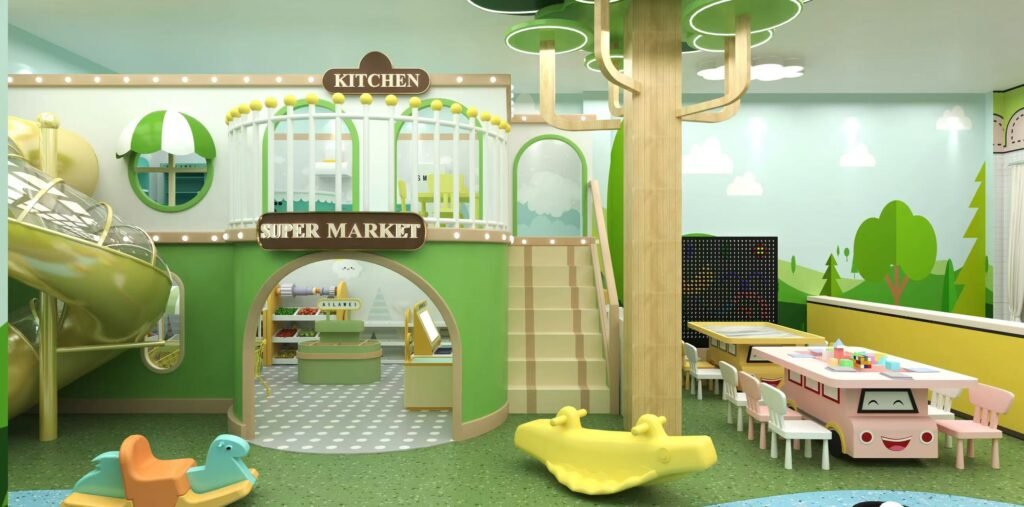
What pretend play is (and what it’s not)
Pretend play (also called imaginative or make-believe play) is when a child:
- uses symbols (a block becomes a phone),
- takes on roles (doctor, chef, parent, superhero),
- builds a “story” (even a tiny one like “the baby is sick, we help it”).
It’s different from other important play types. This quick comparison helps parents and educators spot it fast:
| Play type | What it looks like | Why it matters | How it connects to pretend |
| Functional play | pushing cars, stacking blocks | motor skills, cause-effect | becomes pretend when the car “goes to the store” |
| Constructive play | building towers, puzzles | planning, persistence | becomes pretend when the tower is “a castle” |
| Physical play | running, climbing, jumping | strength, coordination | becomes pretend when kids “race to the rescue” |
| Pretend play | role + story + symbols | language, social skills, self-regulation | grows into longer stories and shared play |
Pretend play doesn’t replace these. It builds on them.
Why pretend play matters: 5 benefits you can actually see
1) Language grows because pretend play is “symbol practice”
When a child treats a doll as a baby or a block as a phone, they’re practicing symbolic thinking—the same mental skill behind using words and later, reading and math concepts.
What you can observe
- more “dialogue” (kids talk for characters),
- more descriptive words (“hot,” “sticky,” “tiny,” “broken”),
- more story structure (“first… then… because…”),
- better retelling (“what happened” becomes clearer).
2) Social skills improve because pretend play forces negotiation
The moment two kids try to play “restaurant,” they have to agree on:
- who is the chef,
- who is the customer,
- what happens next,
- what to do when they disagree.
This builds cooperation, perspective-taking, and conflict repair—skills kids can’t learn from solo activities alone.
What you can observe
- more turn-taking and role switching,
- kids using “let’s,” “you can be,” “my turn next,”
- fewer “mine!” moments over time (not instantly).
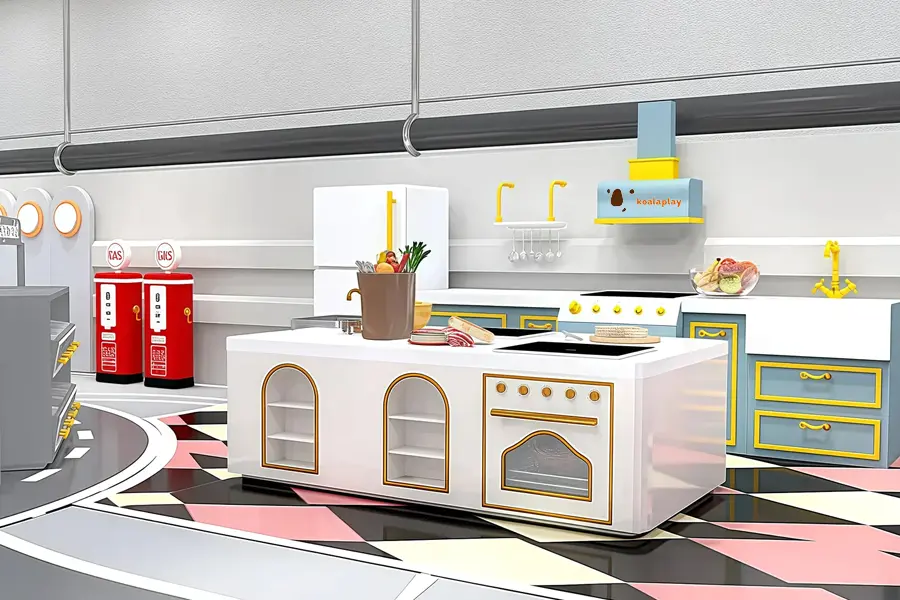
3) Self-regulation strengthens because roles have rules
Pretend play has built-in rules: if I’m the doctor, I examine first; if I’m the baby, I “wait” to be fed. Following a role helps kids practice inhibiting impulses and staying with a plan.
Research and expert reviews commonly describe mature pretend play as a context that supports self-regulation development in early childhood.
What you can observe
- a child pauses and waits for the “next step,”
- they tolerate small frustration (“the store is closed—let’s open it!”),
- they can return to the game after a brief conflict.
4) Executive function gets practice: planning, switching, remembering
Pretend play asks kids to hold information in mind (“you’re the cashier”), switch roles (“now I’m the baby”), and plan sequences (“first we cook, then we serve”). Child development experts often link pretend play with skills like flexible thinking and working memory.
Some experimental work also suggests that certain types of pretense interventions can influence executive function outcomes, though effects can vary by context and population.
What you can observe
- longer attention during play they chose,
- more “multi-step” play (not just one action repeated),
- smoother transitions between ideas.
5) Emotional processing becomes safer and more manageable
Pretend play lets kids “try on” feelings:
- being scared (monster game),
- being caring (nurse game),
- being angry (toy conflict),
- dealing with change (new baby, goodbye, doctor visit).
It can be a gentle way for kids to rehearse situations they don’t fully control in real life.
What you can observe
calmer reactions over time because they’ve rehearsed the story.
kids repeating the same theme after a big event (“doctor” after a clinic visit),
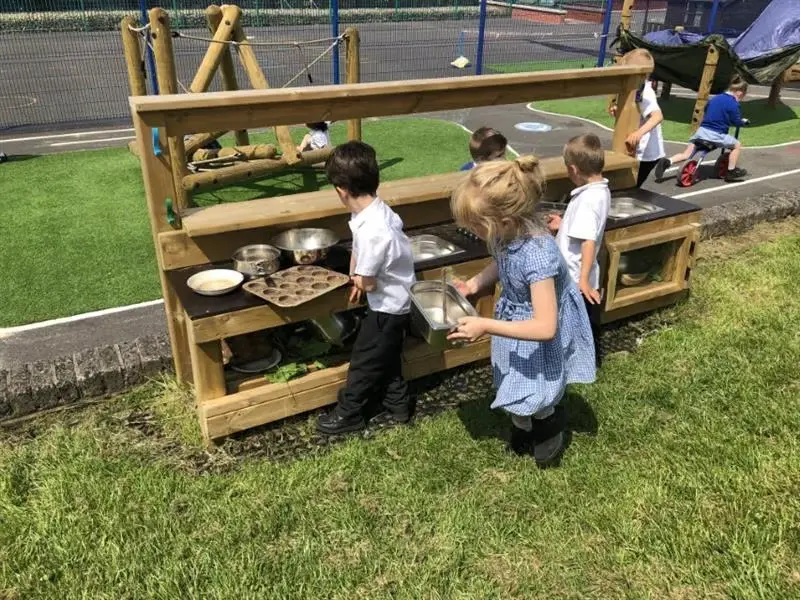
A practical view: what I observe by age
I like to map pretend play into age ranges, because expectations matter. A 2-year-old does not “role-play a restaurant” like a 5-year-old. The environment should match what that age group can actually do.
| Age range | What pretend play looks like | What they need in the zone | Common mistake I avoid |
|---|---|---|---|
| 18–30 months | Copying actions (feed doll, push cart) | Simple props, open shelves, big items | Too many tiny pieces and too many rules |
| 3–4 years | Short story loops (cook → serve → pay) | Clear stations, role cues, repeatable steps | Over-designed sets with no “do” actions |
| 5–7 years | Longer stories, team roles, rules | Multi-role scripts, more tools, more “jobs” | Mixing with toddler traffic without separation |
In our projects at KoalaPlay, I treat pretend play as a skill-building zone, not a decoration zone. This is why I often connect it to a full play café layout and supervision plan, not as an afterthought. If you want a clear reference structure, I usually point people to our play café overview and zoning logic on the our site: Play Café solutions and layouts and our Role Play Area category.
How Do I Set Up a Pretend Play Zone That Kids Actually Use?
A pretend play zone can look perfect in photos and still fail in real life. I have seen it happen. The set is beautiful, but kids walk past it. Or they touch it once, then leave. Most of the time, the reason is simple: the zone is designed for adults to admire, not for kids to operate.
A pretend play zone works when the actions are obvious and the props are reachable. Children need clear “what to do next” steps. They also need enough duplicates to avoid fights. When I design pretend play for a commercial venue, I focus on flow, reset speed, and durability. If staff cannot reset it quickly, the zone will degrade fast.
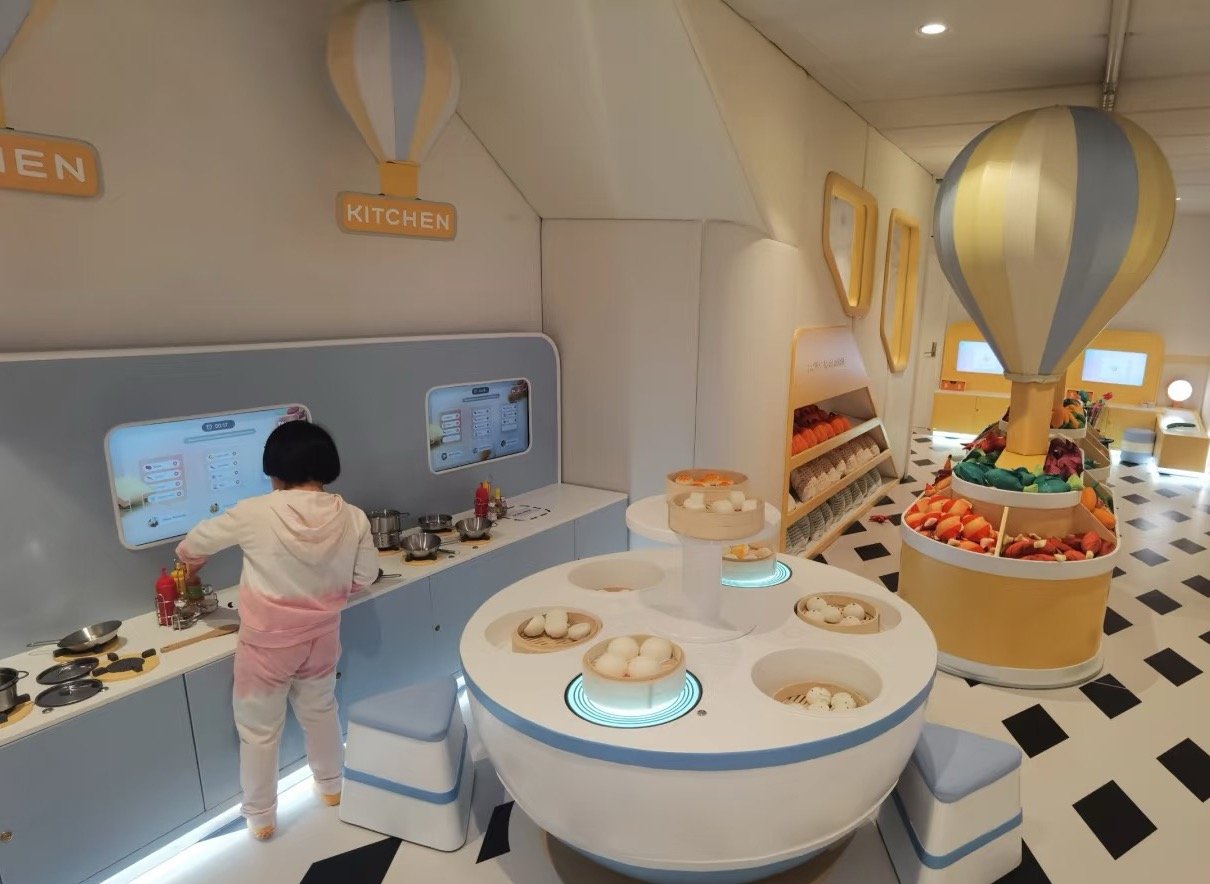
Start with one “loop” that repeats
I plan pretend play like a simple loop. Restaurant is a loop. Grocery store is a loop. Clinic is a loop. A loop is easy to repeat, so kids stay longer.
- Restaurant loop: order → cook → serve → pay
- Grocery loop: shop → scan → bag → pay
- Clinic loop: check-in → exam → treat → goodbye
If a theme does not have a loop, it often turns into random touching. That is not wrong, but it does not hold attention as well.
Use stations, not one big set
Stations reduce conflict. Stations also allow multiple kids to play at once. I often break a theme into 3–5 stations so kids can enter from different points.
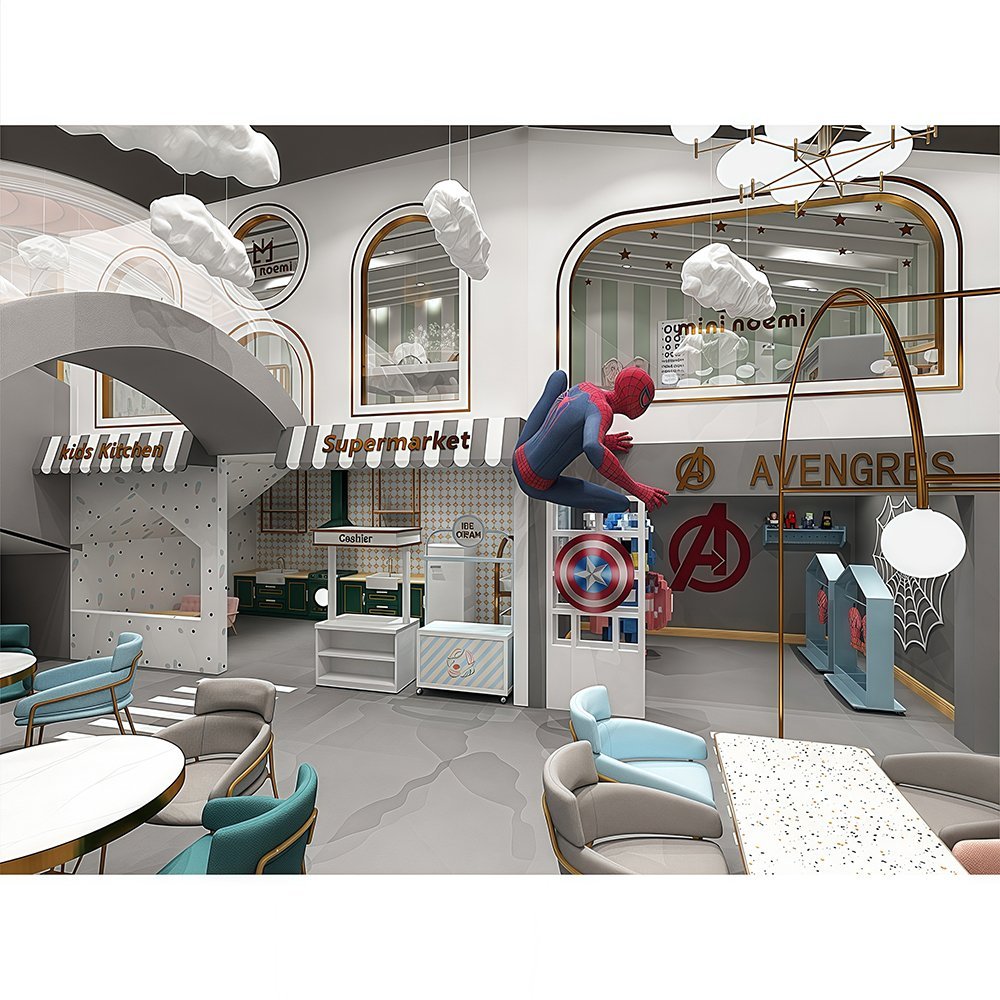
Example: mini supermarket
- Shelf station (shopping)
- Produce station (sorting and weighing)
- Checkout station (scanning and paying)
- Bagging station (packing and carrying)
Choose props that survive commercial use
In commercial venues, props must handle daily impact and daily cleaning. I prefer fewer, tougher props over many fragile pieces. I also avoid props that are impossible to sanitize or that constantly disappear.
| Prop type | Why it works in commercial play | What I watch for |
|---|---|---|
| Large plastic food sets | Easy to clean, hard to lose | Avoid tiny pieces for toddler overlap |
| Fixed pretend appliances | Always available, fast reset | Round edges, secure mounting |
| Soft role outfits (limited) | Adds immersion and photos | Cleaning plan and duplicates |
| Magnetic / velcro pieces | Easier pickup than loose items | Replaceable parts and spare sets |
| Realistic tools (toy) | Strong “job” signal for kids | No sharp edges, no pinch points |
Place the zone where parents can see it
Pretend play is social. Parents like watching it. Also, kids stay longer when adults feel safe. I place role play where sightlines are strong, near seating, and away from the highest-speed zones.
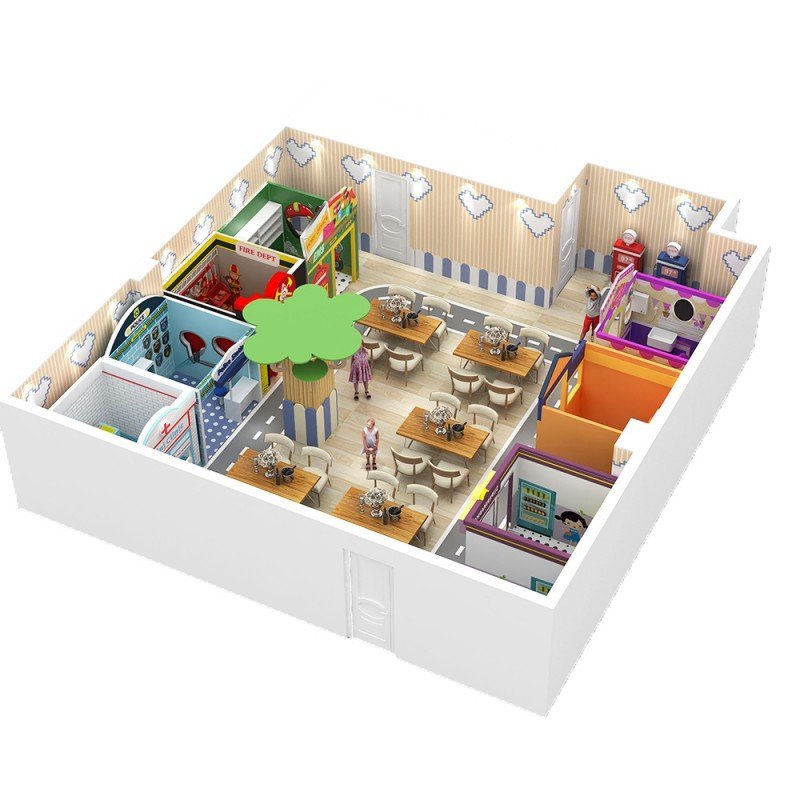
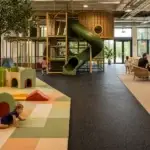
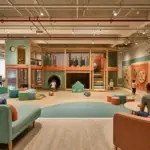
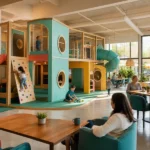
In play cafés, I often integrate role play with the family flow: check-in → café seating → toddler area → role play corner → larger structure. This makes the venue feel organized. If you are planning a play café, this page shows how we think about role play inside the bigger system: Role Play Zone & Pretend Play Corner for Play Cafés.
Make cleanup part of the design
A zone fails when staff hate maintaining it. I design for cleanup like I design for play:
- Open shelves, not deep bins
- Clear labels, so kids can help reset
- Limited prop categories, so sorting is fast
- Storage inside the zone, not across the room
This is also why I like commercial-grade role play houses and fixed scenes in indoor playgrounds. They reduce loose items and speed up resets. If you want examples of theme scenes and how they connect to traffic flow, I often share this guide: Design and Creation of Theme Parks for Children’s Role Playing.
How Can Pretend Play Improve a Play Café’s Business Performance?
When a venue owner asks me about pretend play, the first question is often “Is it worth the floor space?” I understand that question because space is expensive. But I look at pretend play the same way I look at seating, storage, or circulation. It is not only about fun. It is also about operations and revenue stability.
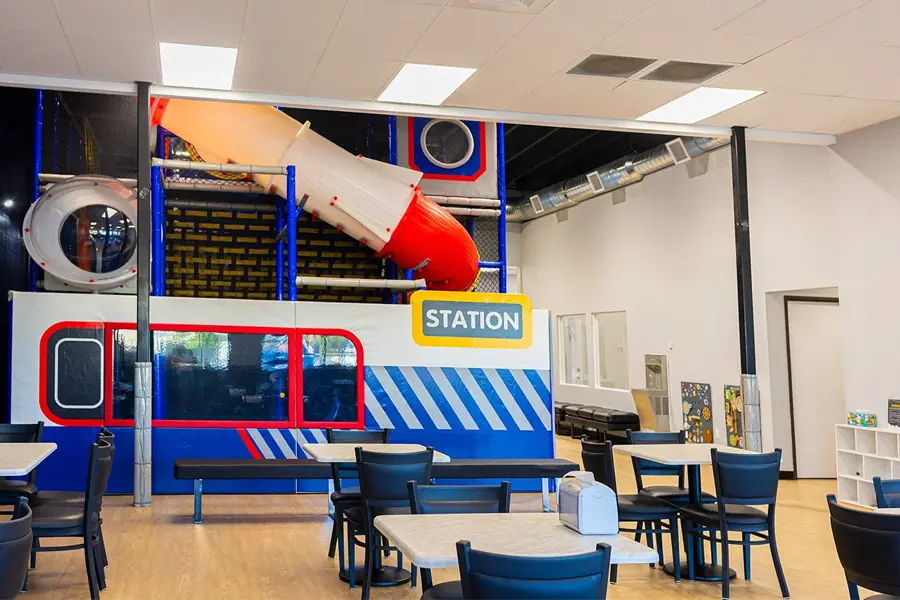
Pretend play improves a play café because it increases dwell time and repeat visits while reducing chaos. Parents stay longer when kids are calmly engaged. They buy more when the experience feels controlled. And they come back when the venue feels like a “smart place” for development, not only a place to burn energy.
Longer dwell time without higher injury risk
High-energy zones can extend time, but they can also raise risk and require stricter supervision. Pretend play extends time with lower speed and lower fall height. That matters in play cafés where families want a relaxed rhythm.
Better mixed-age flow
In many venues, the hardest moment is mixed-age conflict. Older kids move fast. Toddlers move slow. Pretend play solves some of this because it naturally separates play styles. A 6-year-old can stay in a complex story. A 2-year-old can copy actions. Both can share the same “theme” without fighting for the same physical challenge.
Clear “learning value” that parents can describe
Parents talk. They recommend venues using simple language: “My kid learned,” “It is so clean,” “It is organized,” “It is perfect for toddlers.” Pretend play supports that story because it looks like learning in public. It creates the kind of photos that show purpose, not only movement.
A realistic view of revenue impact
I do not like vague promises. So I think in practical business levers:
| Business lever | How pretend play helps | What I do in design to support it |
|---|---|---|
| Repeat visits | Kids form attachment to scenes | Rotate small props, keep core set stable |
| Membership value | Parents see “more than a playground” | Add multi-theme micro zones, not only one |
| Party upsell | Themed photos + calmer activity | Create a “party-friendly” story zone near rooms |
| Food and drink sales | Calm play = longer seating time | Keep sightlines to café seating, reduce conflicts |
| Staffing pressure | Lower-speed play needs fewer interventions | Stations, duplicates, clear boundaries |
If you are building a play café from scratch, it helps to connect pretend play to the full venue model. I usually link people to our broader planning guide because it covers the business logic, not only the equipment: The Complete Guide to Play Cafes: Concept, Business Model, and Future Trends. If you are already operating and want to adjust your zones, this post is a practical read: How a Play Cafe Supplier Helps You Create Safe, Fun Zones.
Where pretend play fits best in a commercial layout
I like pretend play in three common placements:
1) Near toddler soft play
This supports early childhood needs. It also reduces toddler traffic into big-kid structures. If you are building this area, our structure is here: Toddler & Soft Play Area.
2) As a “buffer zone” between café seating and active play
This creates a calmer entry into the play floor and makes supervision easier.
3) As a “high-photo-value” corner near party circulation
This supports birthday content and helps families feel the venue is special.
When I design these layouts at KoalaPlay, I use the same professional fundamentals I use across the whole venue: clear sightlines, age separation, durable materials, and installation-ready logic. That is part of our end-to-end workflow and safety-minded approach.
10 pretend-play scenarios you can use tonight (with mini-scripts)
Each one is designed to be low effort and easy to repeat.
Coffee shop
Roles: barista, customer
Lines: “What would you like?” “That will be two coins.”
Mini-problem: “We spilled—how do we clean?”
Roles: doctor, patient
Lines: “Where does it hurt?” “Let’s check your temperature.”
Mini-problem: “The patient is scared—what helps?”
Roles: cashier, shopper
Lines: “Next in line.” “Do you have a bag?”
Mini-problem: “We forgot milk—where do we find it?”
Pet clinic
Roles: vet, pet owner
Lines: “Your puppy needs rest.” “Let’s wrap a bandage.”
Mini-problem: “The pet won’t sit still—what now?”
Construction site Role Play Area
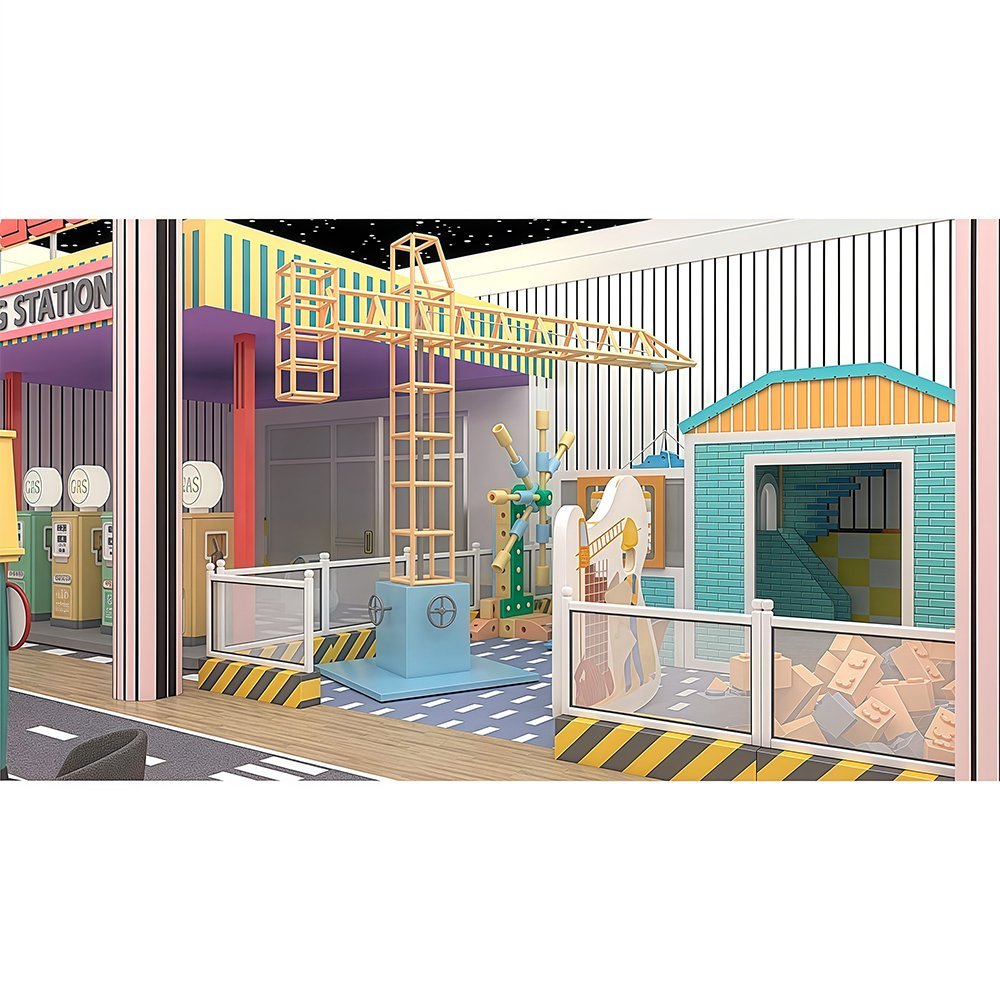
Roles: builder, inspector
Lines: “We need a plan.” “This wall is too wobbly.”
Mini-problem: “We ran out of blocks—what can replace them?”
Airport / travel
Roles: pilot, passenger
Lines: “Boarding now.” “Fasten your seatbelt.”
Mini-problem: “We missed the flight—what’s our backup?”
Fire station
Roles: firefighter, dispatcher
Lines: “We got a call.” “We’re on our way.”
Mini-problem: “The ladder is too short—what else can we do?”
School
Roles: teacher, students
Lines: “Today we read a book.” “Raise your hand.”
Mini-problem: “A student is upset—what helps?”
Birthday party
Roles: host, guest
Lines: “Welcome!” “Time for cake.”
Mini-problem: “We need more chairs—what can we use?”
Space mission
Roles: astronaut, mission control
Lines: “Fuel check.” “We’re landing now.”
Mini-problem: “The rocket broke—how do we fix it?”
Tip: Repeat the same theme for a week. Repetition is not “boring”—it’s how kids deepen skills.
Conclusion
Pretend play is not a small detail. It is a system that builds language, empathy, and self-control while making commercial spaces calmer and easier to run. When I design a pretend play zone, I focus on simple story loops, clear stations, durable props, and strong parent sightlines. This is how pretend play becomes both meaningful for kids and practical for operators.
FAQ About Pretend Play
When does pretend play start?
Early pretend actions can appear around the second year, and the 24–36 month window often shows rapid growth in symbolic play and imagination.
Do I need to play pretend with my child every day?
No long sessions required. Even a few minutes of child-led play can be meaningful, especially when you follow their lead and keep the tone positive.
Is pretend play “just for fun,” or is it academic?
It’s fun—and that’s the point. Pretend play builds symbolic thinking, language, and planning skills that support later learning.
Is superhero play bad?
Not automatically. If it turns into unsafe rough play, set clear boundaries (“No hitting bodies. You can hit the pillow.”). Keep it safe and it can still support storytelling and self-regulation.



 English
 Spanish
 German