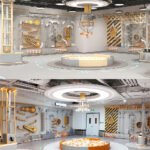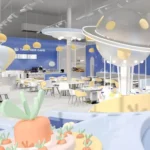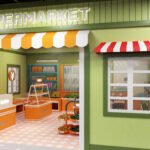
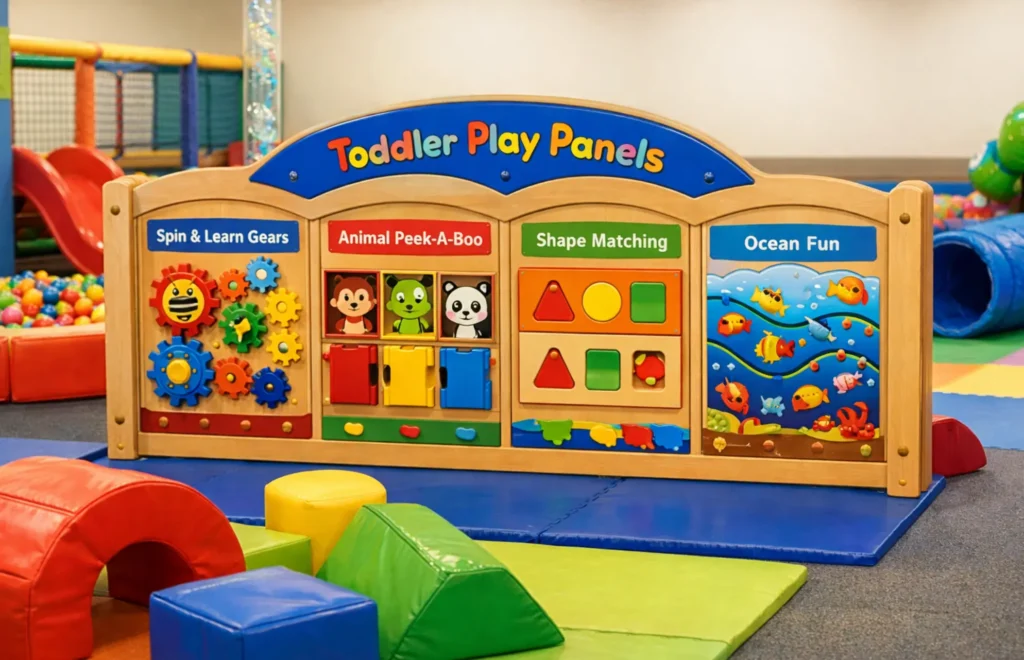
Toddler play panels are one of the most practical “small-footprint, high-engagement” features you can add to an indoor play venue. They help younger children stay busy without high-speed running, and they make supervision and daily resets easier for operators.
This page explains what toddler play panels are, why they matter for play cafés and toddler zones, how to plan the layout, and what to check for safety
What Are Toddler Play Panels?
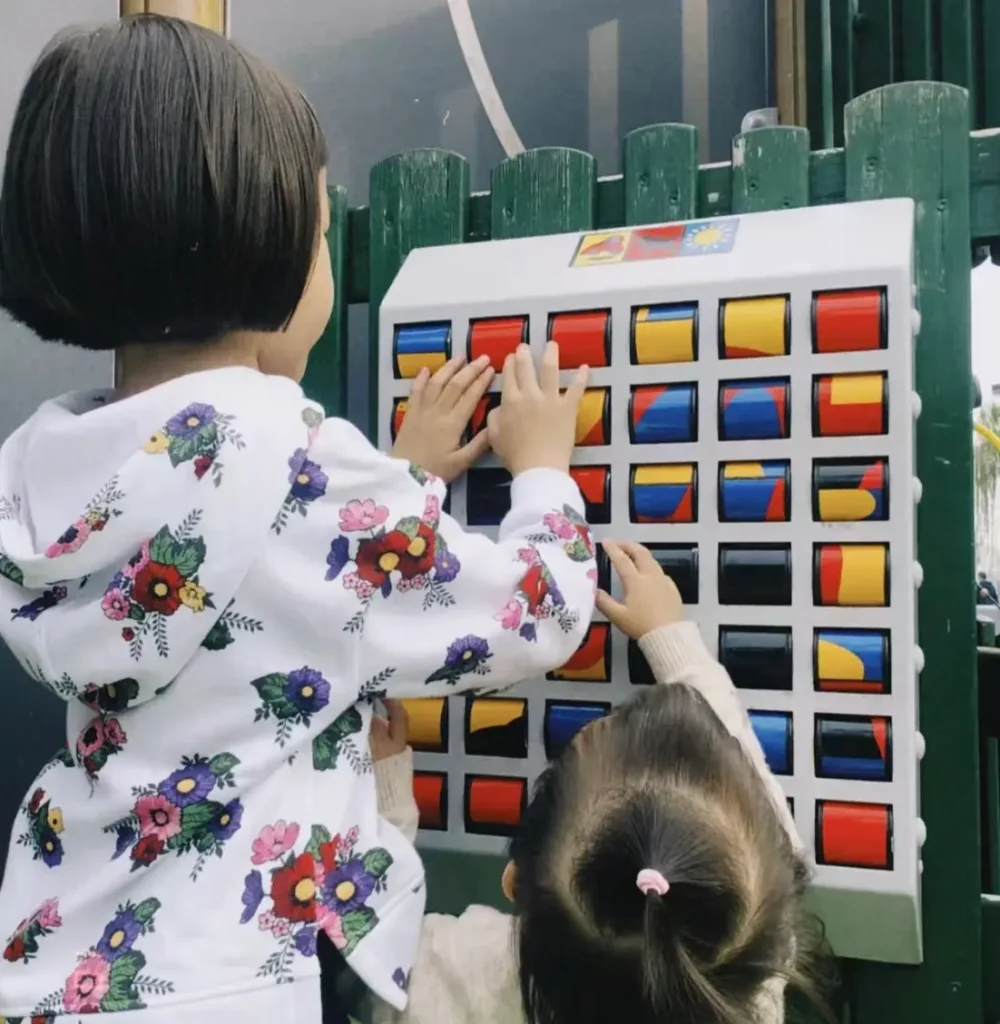
Toddler play panels are interactive play surfaces designed for early learners—usually ages 1–5—that children explore with hands and eyes. They’re often mounted on a wall or integrated into a low divider, and they include sensory or mechanical activities such as spinning gears, sliders, mazes, bead tracks, mirrors, textures, or simple matching tasks.
Play panels vs. large equipment (what’s different?)
Large structures (frames, slides, climbers) are designed for gross motor play and higher throughput. Panels are designed for contained, low-height interaction:
- Lower movement speed (less running and fewer collisions)
- Lower fall-risk profile (no climbing height required)
- Higher “engagement per sq ft” (kids stay busy in a small area)
- Easier supervision (open sightlines along walls and edges)
Why panels specifically for toddlers?
Toddlers learn through repetition, sensory feedback, and short “loops” of success (spin → watch → repeat). They also need play that feels safe to parents. Toddler panels are designed to be:
- low-height and accessible
- simple to understand immediately
- safe for small hands
- calm enough for toddler-first environments
Toddler play panels are a wall-mounted or freestanding sensory play feature that creates safe, low-height engagement—ideal for ages 1–5.
Why Toddler Play Panels Matter
From an operational perspective, toddler play panels solve common problems in play cafés and indoor playgrounds:
Problem: toddlers have short attention spans
A toddler may move on quickly if a play item has only one action. Panels are built around repeatable micro-interactions—small actions that naturally loop—so toddlers stay engaged longer without needing staff direction.
Problem: parents want safe play they can trust
Parents often judge a venue in seconds: “Is this safe? Can I see my child? Is it clean?” Panels support:
- calmer play near the perimeter
- fewer collisions than free-running zones
- visible play that parents can monitor easily
Problem: operators need contained play and fast resets
Loose toys and scattered props increase labour. Panels are attached, wipeable, and predictable—so resets are faster and the space looks “under control” throughout the day.
Operational value: Toddler play panels create contained play + sensory engagement + independent exploration, which improves traffic flow and reduces supervision pressure.
Key Benefits for Early Childhood Development
Search engines and parents both respond well to clear development benefits. Toddler play panels support multiple early-learning domains:
Sensory development
Panels offer tactile, visual, and movement feedback—turning, sliding, tracing, touching textures—helping children process sensory input in a safe, predictable way.
Fine motor skills
Activities like rotating gears, moving sliders, turning knobs, or following tracks strengthen:
- finger strength and control
- hand-eye coordination
- bilateral coordination (using both hands together)
Cognitive learning
Panels naturally teach early cognitive skills through play:
- cause and effect (turn → movement happens)
- problem solving (how to move from start to finish)
- pattern recognition (shapes, sequences, matching)
Social interaction
When panels are designed for side-by-side play, toddlers practice:
- sharing space
- waiting for turns
- simple communication (“my turn,” “look,” “help”)
Independent play
Panels give toddlers a way to stay engaged without constant adult participation, which is valuable in public venues where parents may be ordering coffee or supervising siblings.
Where Toddler Play Panels Work Best
This is the section most manufacturers skip—but it’s often the deciding factor for buyers. Toddler play panels perform best in locations where you need calm engagement with strong visibility.
Play Cafés
Panels support a toddler-first model by keeping play quieter and reducing running. They also help parents relax because children are occupied in visible zones.
Role Play Areas
Panels complement role play houses by adding “activity density” without adding more props. For example, a “kitchen” role play corner can include a wall panel for food matching, turning knobs, or sequence play.
Toddler Zones (inside larger venues)
A toddler zone needs safe play options that don’t rely on climbing height. Panels provide “play value” even when you limit tall equipment.
Restaurants with Play Areas
Restaurants want play that is:
- quiet
- contained
- easy to clean
Panels deliver a better guest experience without turning the restaurant into a noisy playground.
Waiting Areas (clinics, malls, service centres)
Waiting areas need compact, durable features that can occupy children without high risk. Panels are a strong fit because they use wall space and keep movement speed low.
Design & Layout Ideas
Toddler play panels work best when you plan them as part of the layout—not as an afterthought.
Wall integration
Place panels along perimeter walls to:
- keep the centre open for circulation
- reduce cross-traffic
- maintain clear sightlines
Corner placement (calm zones)
Corners can become “quiet activity zones” when you pair:
- 1–2 panels
- a soft mat or toddler-safe flooring
- one small seat for parents nearby (optional)
Zoning ideas
Panels help define transitions between areas:
- Entry buffer → toddler zone
- Café seating → play area
- Role play → soft play
Visibility for parents
Good placement allows parents to supervise without standing in walkways. Avoid locations where adults will cluster and block sightlines.
Spacing tips (simple commercial rules)
- Avoid placing panels directly opposite narrow pathways (reduces congestion).
- If you use multiple panels, distribute them to prevent “one crowded wall.”
- Keep panels within obvious supervision zones rather than behind tall structures.
Safety Considerations for Toddler Play Panels
Buyers will evaluate panels like equipment, not like toys. A safe commercial panel setup should consider:
Rounded edges and safe geometry
- Rounded corners and smooth surfaces reduce impact points.
- No sharp edges, exposed fasteners, or easily detachable small pieces.
Non-toxic, child-safe materials
Look for materials and finishes that support commercial hygiene routines:
- wipe-clean surfaces
- durable coatings
- child-safe adhesives and paints
Low-height standards
Panels should be positioned for toddler access:
- low enough for 1–3-year-olds to reach
- high enough to avoid unsafe climbing temptations
A toddler-first venue typically prioritises low-height play to reduce fall risk.
Supervision visibility
Panels should not create blind spots. A good layout keeps panels in open view so staff and parents can monitor behaviour quickly.
How Toddler Play Panels Improve the Play Café Experience
This is where panels become a business advantage, not just a “nice feature.”
A quieter play option
Panels naturally reduce high-speed play behaviours. In play cafés, that often means:
- less noise
- fewer collisions
- fewer parent complaints
Keeps toddlers engaged without constant staff intervention
Panels provide repeatable play loops that toddlers can explore independently. This helps staff stay focused on:
- check-in flow
- café service
- cleaning routines
Allows parents to relax
When children are safely occupied in visible zones, parents are more likely to:
- sit down
- order food and drinks
- stay longer
Increases dwell time (and supports repeat visits)
A calmer toddler environment usually leads to:
- longer average visit time
- better perceived value
- stronger word-of-mouth from parents of young children
Example Play Panel Types (Not a Catalogue)
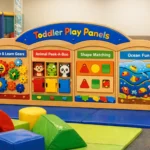
Here are common panel types that work well in commercial toddler zones:
- Gear panels (spin and link motion)
- Maze panels (trace paths, move sliders)
- Sensory boards (textures, tactile elements, simple switches)
- Mirror panels (self-recognition and curiosity)
- Shape or colour matching panels (simple cognitive play)
- Latch / lock panels (fine motor + problem solving, toddler-safe versions)
The best panel mix usually combines:
- one “movement” panel (gears/maze)
- one “sensory” panel (textures/mirror)
- one “learning” panel (match/sequence)
Related Play Features
Toddler play panels perform best as part of a complete toddler-first package. If you’re planning your feature set, these related categories often pair well:
- Sensory Play Elements (calm engagement, tactile learning)
- Soft Play Modules (low-height gross motor support)
- Role Play Houses (dramatic play + social interaction)
A well-balanced toddler area typically includes:
one low-height active element + one role play theme + one panel wall for calm engagement.
Frequently Asked Questions (FAQ)
What age are toddler play panels for?
Most toddler play panels are designed for ages 1–5, with peak engagement around 2–4. Older children may still interact briefly, but the value is strongest in toddler-first zones.
Are toddler play panels safe for commercial use?
They can be—if built for commercial durability and installed correctly. Prioritise rounded edges, secure mounting, wipe-clean materials, and designs without pinch points or small detachable parts.
How much space is required?
Very little. Panels mainly use wall space, so they are ideal for compact venues. You still need clear circulation nearby so children can play without blocking walkways.
Can panels be customised?
Yes. Panels are commonly customised by theme, colour palette, and activity mix to match a venue’s branding or storytelling zones (e.g., ocean, forest, city role play).
Are they suitable for play cafés?
Yes—especially for toddler-first play cafés where calm, contained play improves parent comfort and supports longer stays.
Reference
- American Academy of Pediatrics. (2021, December 21). Power of play in early childhood.
- https://www.aap.org/en/patient-care/early-childhood/early-childhood-health-and-development/power-of-play
- American Academy of Pediatrics. (2026, January 2). The importance of play (First 1000 Days Knowledge Center).
- https://publications.aap.org/first1000days/module/33712/The-Importance-of-Play
- Centers for Disease Control and Prevention. (2026, February 16). CDC’s developmental milestones: Learn the signs. Act early.
- https://www.cdc.gov/act-early/milestones/index.html
- Head Start (U.S. Department of Health & Human Services). (2024, April 1). The importance of play in early childhood.
- https://headstart.gov/curriculum/article/importance-play-early-childhood
- National Association for the Education of Young Children. (2022). The power of playful learning in the early childhood setting.
- https://www.naeyc.org/resources/pubs/yc/summer2022/power-playful-learning
- National Association for the Education of Young Children. (n.d.). Play (topic hub).
- https://www.naeyc.org/resources/topics/play
- Raising Children Network. (2025, October 17). Play ideas for toddler imagination and creativity.
- https://raisingchildren.net.au/toddlers/play-learning/play-toddler-development/imagining-play-toddlers
- ZERO TO THREE. (n.d.). Stages of play from 24–36 months: The world of imagination.
- https://www.zerotothree.org/resource/stages-of-play-from-24-36-months-the-world-of-imagination
- ZERO TO THREE. (n.d.). Play activities for 12 to 24 months.
- https://www.zerotothree.org/resource/play-activities-for-12-to-24-months
Plan Your Toddler Play Area With Our Design Team
If you’re planning a toddler-first play café or upgrading a toddler zone, toddler play panels are one of the most efficient ways to increase play value without increasing noise and chaos.
Share your:
- venue size (sq ft or m²)
- target age range (1–5 or 2–8)
- preferred theme (optional)
- whether you run timed sessions or drop-in
and our team can recommend:
- how many panels to use
- where to place them for best flow and supervision
- a balanced feature mix with soft play modules and role play zones


-150x150.jpeg)