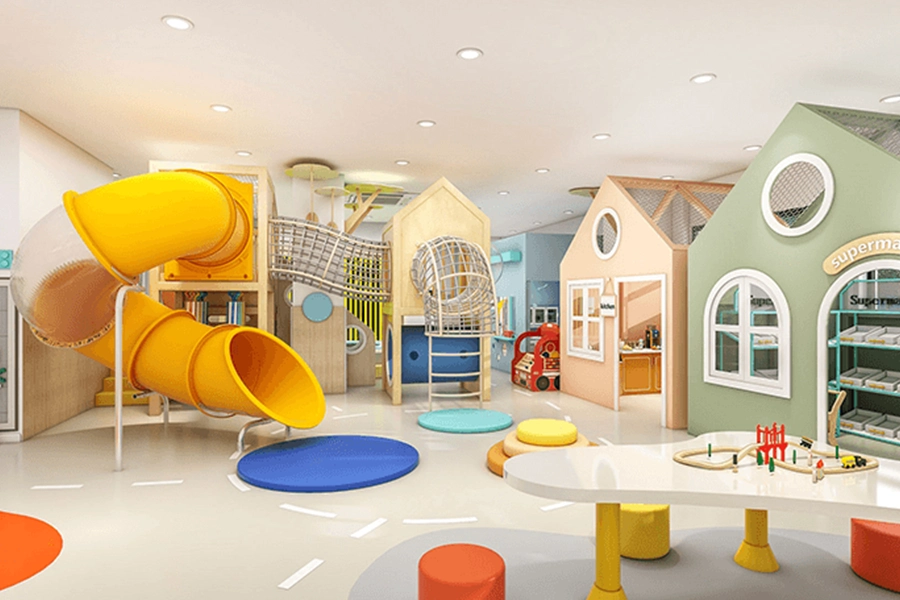
When people search “play café” in the UK, they are usually not looking for a big, noisy soft play centre. They want a calmer place where young children can play safely and parents can sit down with a decent coffee—without constant chasing, arguing, or stress.
In this blog, we share six popular UK play café / indoor playground cases that are repeatedly recommended by parent guides and review platforms. The goal is simple: learn what makes them popular, and summarise what a “good” play café indoor playground design and business model looks like.
You will see the same themes again and again:
- Clear age focus (often under-5 / under-6)
- Timed sessions and capacity control
- A play concept that keeps kids engaged (sand play, role-play “mini town”, curated play stations)
- Parent comfort and sightlines (parents can actually relax)
Where it helps, we also include official promo links, review highlights, and image sources you can reference when planning your own concept.
Top 6 UK Play Café Indoor Playground Cases Table (Top 6)
| Case | City / Area | What it’s known for | Review themes people praise | Promo link |
|---|---|---|---|---|
| Sandscape Kids Play & Café | Finsbury Park, London | Large sand play zone | “Kids stay focused”, “parents can enjoy coffee” | Sandscape site / Time Out |
| Cheeky Chops Play Café | Twickenham, London | Modern play frames + adult-friendly café | “Great coffee”, “beautiful interiors”, “friendly owners” | Official site |
| Apple Tree Children’s Café | Herne Hill & Peckham Rye, London | Under-5 play café next to parks | “Kids always in sight”, “safe and clean”, “light and airy” | Official site |
| Dreami Play Café | Hackney Road, London | Curated toys + events (bilingual storytelling) | “Lovely”, “beautiful”, “calm vibe”, “good quality toys” | Official site |
| Little Street (Role Play Centres) | Multiple UK locations | Role-play “mini town” model | “Very clean”, “friendly staff”, “numbers limited—book ahead” | Little Street site |
| Mini Valley Kids | Stratford-upon-Avon | Role-play village + low-capacity sessions | “Welcoming staff”, “food stands out”, “low capacity” | Official site |
Case 1: Sandscape Kids Play & Café (London) — a Play Café Built Around Sand Play
Sandscape feels like it was designed from a single parent truth: toddlers don’t need more equipment — they need a play material that keeps them focused. That’s why the centre of the room is sand.
On Instagram, a parent sums it up in everyday language: “My kid’s had lots of fun and I think 1 hour is enough!”

Why the indoor playground design works
Sand play is a “high dwell-time” activity. Children can:
- scoop, pour, dig, build
- repeat the same activity without needing constant new stimulation
That reduces chaos and creates a calmer room. It also means the operator does not need a huge structure to keep kids entertained.
Business model pattern you can copy
Sandscape is a good example of: single hero play feature + timed sessions. Time Out even references the one-hour slot format.
Timed sessions make cleaning and capacity control easier, and they protect the experience—this is a big reason parents trust the venue.
Case 2: Cheeky Chops Play Café (Twickenham) — “Adults Matter” as Much as Kids
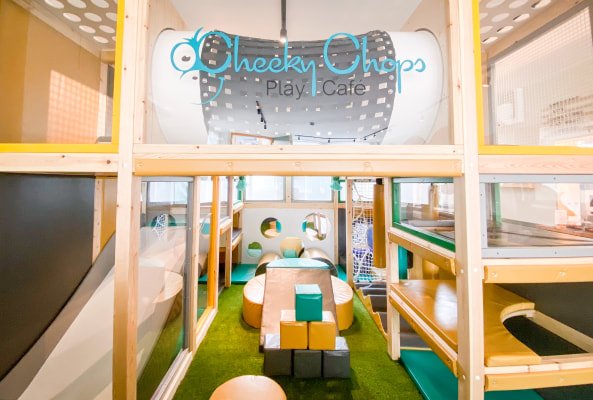
Cheeky Chops became popular because it treats parents like real customers, not “people waiting on a bench.” They are very direct about the offer: two modern play frames for ages 0–5, plus a comfortable café serving great coffee.
A review highlight on Wanderlog praises the party experience and says: “The coffee… is great,” and “really reasonably priced for London.”
Bablands describes the grown-up side even more clearly: you get “a decent coffee while it’s still hot,” with décor that’s “just as dreamy as the soft play.”
Why the indoor playground design works
From a design logic perspective, Cheeky Chops is not “maximum equipment”. It is “right-sized equipment” for under-5s plus adult comfort.
That means:
- play frames are challenging enough for toddlers
- adults can sit close, see the play, and stay longer
- the atmosphere feels premium, so the price feels acceptable
Business model pattern you can copy
Cheeky Chops clearly offers private hire for parties on weekends.
That is not just a marketing feature—it changes how you should design the venue:
- party seating and food flow
- storage for party supplies
- easy reset between sessions
Case 3: Apple Tree Children’s Café (London) — Under-5 Play Café with Strong Sightlines
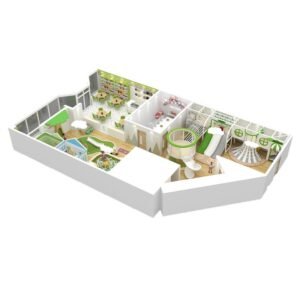
Parent seating facing play zones + controlled toddler-friendly environment = lower stress.Apple Tree’s story is simple: a place where parents can relax because the layout is built for supervision. Day Out With The Kids says it offers a “safe play environment… within full view of the parents’ seating area,” and with kids “always in sight,” you can “enjoy your tea without worries.”
That line is basically their design philosophy. It’s not about being flashy; it’s about being watchable. When a play café nails sightlines, parents feel safe — and safety drives repeat visits.
This is a classic example of “design for supervision”:
- seating placed to face play areas
- zones that reduce mixed-age conflict (baby sensory room helps)
A 1.5-hour session is also a smart operational choice: it is long enough for food + play, but still structured for cleaning and turnover.
Business model pattern you can copy
The official site also mentions private hire at weekends.
So Apple Tree runs a hybrid model:
- weekday sessions (repeat visits)
- weekend private hire (high-margin blocks)
If you are also interested in open a play cafe with toddler area, Contact Koalaplay to get a deisgn and business plan.
Case 4: Dreami Play Café (Hackney) — A Play Café That Sells “Activities”, Not Just Space
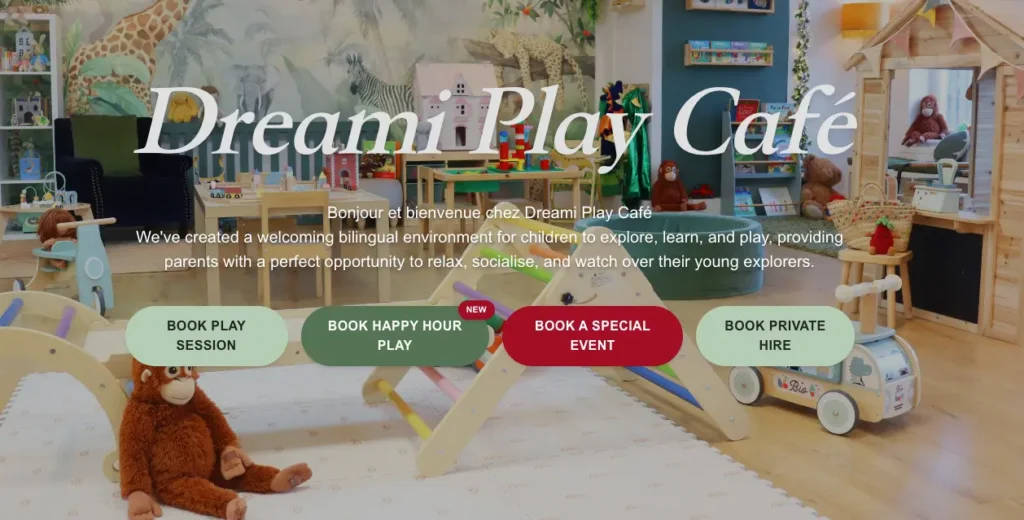
Dreami’s popularity is strongly tied to curation:
- it is presented as “a new kind of play café” with events and community
- parents talk about it being a lovely place to go
- the brand message focuses on play + parent relaxation, not big equipment
Why the indoor playground design works
This is not a “run-and-jump” venue. It looks more like:
- toy stations
- calm corners (reading / imagination play)
- event-friendly setup
That design supports structured programming: storytelling, themed events, seasonal activities. It keeps families coming back even when kids “already know the space”.
Business model pattern you can copy
Dreami shows a model many new play cafés in mature markets use:
- base revenue from sessions
- growth from events, classes, and parties
Case 5: Little Street Role Play Centres (UK Chain) — The “Mini Town” Model That Scales
Little Street’s popularity is built on one scalable idea: a child-sized “mini town” where kids role-play daily life. The brand frames it as “a little world for big imaginations.” (site content)
What’s more important is how reviews describe the operational discipline. A Tripadvisor review says it’s “very clean and friendly,” and adds: “They limit numbers so you need to book.”
That single sentence explains why the chain works: limit numbers, protect the experience, keep the room clean, make parents trust you — then expand.
This is one of the clearest review patterns in this list:
- “very clean”
- “friendly welcoming staff”
- “they limit numbers so you need to book” Their own review page also echoes the same themes, especially for parties: clean facilities, attentive staff, and “stress free”.
Why the indoor playground design works
Role-play centres work because they create many “micro worlds”:
- kids move from station to station (shop, clinic, construction, etc.)
- each station has props, costumes, and tasks
This keeps kids busy without needing high-risk climbing structures. It also supports:
- better behaviour (kids are “doing a job”)
- longer engagement time
- easier supervision
Business model pattern you can copy
Little Street is a strong example of a repeatable format:
- structured sessions
- controlled capacity
- party packages
- a clear theme that can be reproduced across locations
Case 6: Mini Valley Kids (Stratford-upon-Avon) — Low Capacity + Strong Café Experience
Mini Valley feels like the type of venue parents recommend as “a gem,” because it signals care in small but meaningful ways.
A parent review on Instagram says: “The staff were so lovely and welcoming,” and “the real standout… the food,” praising “healthy, well thought-out kids’ options.”
On the official site, Mini Valley states it offers low capacity sessions and inclusive aids like ear defenders and fidget toys.
And their session rules show operational clarity: sessions are 90 minutes, and “our cafe closes at the end of each session” so the team can turn the space around for the next slot.
Why the indoor playground design works
Low capacity is not only about comfort. It reduces:
- safety risk
- noise
- cleanliness pressure
- parent stress
It also makes “premium calm” a brand identity. This is increasingly important as parents compare venues online.
Business model pattern you can copy
Mini Valley shows a realistic operational discipline:
- 90-minute sessions
- clear end-of-session reset rules
- menu as part of the product
Internal link suggestion (Koalaplay): Link “low capacity play café sessions” to a page about capacity planning and layout sizing (example: /play-cafe-capacity-planning/).
What Makes These Play Café Indoor Playground Cases Popular (Simple Summary)
After reviewing these UK play café indoor playground cases, one thing is very clear: this is only a small sample of popular venues, but it is already enough to teach us a lot. Even though their themes look different (sand play, role-play towns, curated toy stations), the reasons parents love them are surprisingly similar.
When you read the reviews, you realise that “popular” is not about having the biggest playground. Popular play cafés usually feel easier—easier to supervise, easier to enjoy, easier to return to. Below is the simple summary of what these popular play café indoor playground cases do well.
1) A clear age focus (often under-5 / under-6)
Most successful play cafés do not try to serve “all ages.” They choose a core group, usually toddlers and preschoolers, and design everything around that. You can see this clearly in venues that openly position for ages 0–5 or under-5. When the age range is focused, the play stays calmer, safety risks drop, and parents feel more confident. (For example, Cheeky Chops states it is designed for ages 0–5. (cheekychopsplaycafe.co.uk)
2) One “hero play concept” that keeps kids engaged
The best venues don’t rely on endless equipment. Instead, they build around one strong concept that naturally holds attention:
- Sand play (kids stay focused longer)
- Role-play mini towns (kids “do jobs” and move between stations)
- Curated toy stations and calm corners (less running, more imaginative play)
This is why places like Sandscape get recommended: reviewers and media highlight how toddlers stay “transfixed” by sand, and parents can enjoy coffee. (timeout.com)
3) Layout designed for parent sightlines and comfort
When parents say a place is “great,” they often mean: I can actually sit down.
Popular play cafés design the seating area as part of the product. A key pattern is clear sightlines—parents can see most of the play zones from their tables. Apple Tree is described as being within “full view” of the parents’ seating area, so parents can relax.
4) Timed sessions + capacity control to protect the experience
A big reason these venues keep strong reviews is that they do not let the space become overcrowded. Many use:
- timed sessions (60–90 minutes is common)
- booking systems
- limited numbers
- reset / cleaning time between slots
Parents actually notice this. For example, Little Street reviews mention that they “limit numbers so you need to book,” and they praise cleanliness. (tripadvisor.com)
5) Cleanliness is treated like a brand feature, not a chore
Cleanliness shows up again and again in positive comments. It is not just about hygiene—it signals professionalism and care, and it makes parents feel safe bringing toddlers. Timed sessions and capacity control make cleanliness achievable at scale. (Little Street reviews repeatedly praise that it is “very clean.” (tripadvisor.com)
6) The café experience is genuinely good (not “soft play coffee”)
Cheeky Chops and Mini Valley both show a simple truth: people will forgive smaller play spaces if the café experience is excellent. Good coffee, decent food, comfortable seating, and a calm atmosphere turn “one visit” into “our weekly place.” Cheeky Chops is frequently praised for coffee quality and the adult-friendly feel.
7) A second revenue stream: parties, private hire, or programming
Most popular venues don’t rely only on entry tickets. They usually add at least one of:
- birthday parties / private hire
- workshops, storytelling, themed sessions
- memberships or repeat-visit passes
Dreami is a clear example of positioning around activities and themed experiences, not only open play. (dreami.uk)
FAQ: Play Café Indoor Playground Design and Business Model
1) What is the best age range for a play café in the UK market?
Most successful play cafés in these cases focus on under-5 / under-6. It simplifies safety, makes the play calmer, and matches what parents search for when they want a play café instead of a big soft play centre.
2) Why do reviews often mention cleanliness and “calm” atmosphere?
Because parents treat a play café as a repeat weekly habit. Cleanliness and calm are the difference between “we will come back” and “never again”. Booking systems and capacity limits make that possible, and reviews clearly notice it (e.g., Little Street).
3) Which play concepts create the longest engagement time for toddlers?
Two concepts stand out in these cases:
- Sand play (open-ended, repetitive, focus-friendly)
- Role play mini towns (many stations, costumes, “jobs” to do) Both reduce running chaos and increase parent satisfaction.
4) What session length works best for play cafés?
Common “sweet spots” are 60–90 minutes for toddler-focused venues, and 90 minutes / 1.5 hours for venues that want stronger food + social time. Apple Tree uses 1.5-hour sessions, and Mini Valley clearly runs 90-minute sessions with turnaround rules.
5) Do play cafés really need birthday parties / private hire to be profitable?
Many popular venues offer private hire because it is a high-margin revenue block. Cheeky Chops and Apple Tree both promote private hire options, and Little Street reviews repeatedly mention parties.
If parties are part of your plan, design for it early: seating, food flow, storage, and fast reset.
6) What is one design mistake these cases avoid?
They do not try to “serve everyone”. The strongest venues choose a clear focus (age, vibe, concept), then build a layout that protects that promise—especially sightlines and capacity control.

-150x150.jpeg)