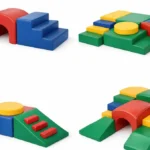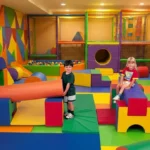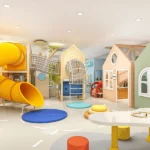
A 1,000 sq ft play café is a small-format venue. If you pick the wrong equipment, you’ll feel it immediately: crowding, noise complaints, chaotic supervision, and slow cleaning that kills your session turnover.
The good news is that small spaces can be highly profitable when you build around two things:
1) predictable parent supervision (clear sightlines + controlled flow), and
2) repeatable play value (one strong “hero” play zone + several small “reset” activities).
This guide gives you a priority-ranked equipment list for a 1,000 sq ft play café, plus why each item matters, how it affects operations, and what to skip.
The “1,000 Sq Ft Play Cafe Reality Check” (Before You Buy Anything)
In a compact venue, equipment must solve business problems, not just “look fun”:
- Sightlines beat novelty. Low partitions and clear visibility reduce conflicts and keep parents comfortable.
- Surfacing and fall protection are part of your equipment plan. Impact attenuation is a safety requirement, not a décor choice.
- Accessibility affects layout and flooring decisions. ADA play area guidance and ASTM-linked surface accessibility matter even in indoor commercial venues.
If you want a play café that runs smoothly, treat “equipment” as a full system:
play structures + surfacing + barriers + seating + storage + cleaning workflow.
Before You Finalise Your Shopping List: Check the Budget Logic
A priority-ranked equipment list tells you what to buy first—but the smarter move is to pair it with a realistic investment range, because flooring, fit-out, MEP work, and seating often cost as much as (or more than) the play modules themselves. If you’re planning numbers right now, use this cost breakdown as your next step: 1,000 SQM Play Café Investment Cost Guide. It helps you estimate where the money typically goes and which choices change the budget most, so you can lock your equipment plan without surprise spend.
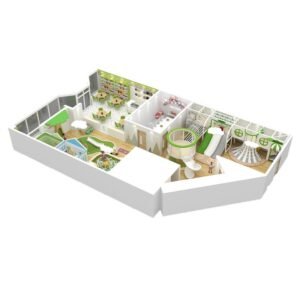
Recommended Space Split for 1,000 Sq Ft Play Cafe (Practical + Proven)
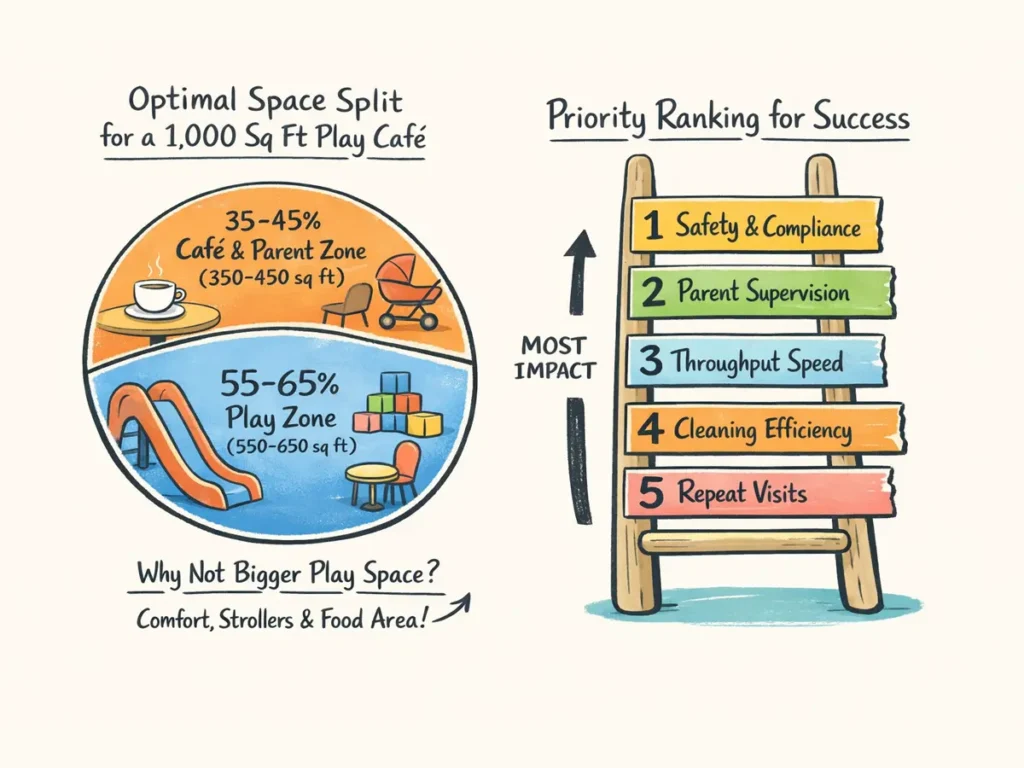
There’s no perfect split, but most small play cafés work best with:
- 55–65% play zone (≈ 550–650 sq ft)
- 35–45% café + parent zone (≈ 350–450 sq ft)
Why not bigger play space?
Because parents need comfortable seating, stroller parking, and a clean food boundary—or they won’t stay, book parties, or return.
Priority Ranking Rules (How This List Is Built)
Each item is ranked by how strongly it impacts:
1) Safety + compliance readiness (surfacing, clear use zones, controlled entry)
2) Parent supervision + flow (visibility, congestion control)
3) Throughput + reset speed (how fast a child “finishes” and rotates)
4) Cleaning + staffing efficiency (surfaces, loose parts, sanitizing)
5) Repeat visits (variety without needing more square footage)
The 1,000 Sq Ft Play Café Equipment List (Priority Ranked)
Tier 1 — Must-Haves (Build These First)
These are the items that make your small venue work operationally.
Priority #1: Certified Safety Flooring / Surfacing System (Play Zone)
What it is: Commercial-grade soft flooring, rubber surfacing, or turf + shock pad system designed for indoor play.
Why it matters in 1,000 sq ft:
- Falls happen more often when spaces feel crowded.
- Safe surfacing reduces injury risk and panic incidents.
- Your floor decides cleaning speed and daily labor.
What to check before buying:
- Is the surfacing tested for impact attenuation (ASTM F1292)?
- Is the accessible route surface compliant with ASTM F1951 (used in ADA standards for play areas)?
Common failure pattern (and recovery):
- Failure: Cheap foam tiles separating or curling at seams → tripping and constant repairs
- Fix: Use commercial interlocking systems + heat-welded seams or professionally installed finishes in high-traffic lanes
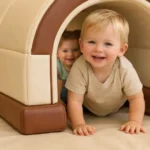
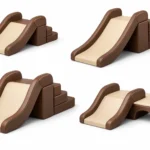
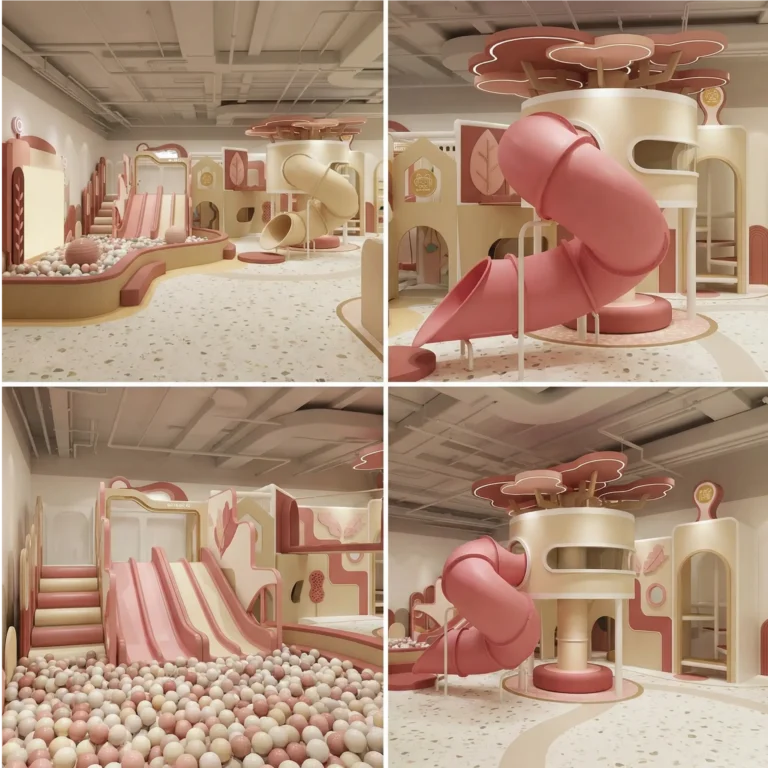
Priority #2: Compact “Hero” Play Structure (Toddler-Focused)
Best format for 1,000 sq ft: A low-height soft play structure with:
- 1 small slide (short)
- crawl tunnel
- gentle steps/ramps
- small platform
- interactive wall panel(s)
Why it’s essential:
This is the anchor that makes families feel “it’s worth the visit.”
Safety note:
Public-use play equipment safety requirements are commonly aligned with ASTM F1487 (for public playground equipment).
Practical sizing:
For a 1,000 sq ft venue, the hero structure is typically 150–250 sq ft footprint, not bigger.
Bigger than that and you lose circulation + café seating, and congestion rises.
Priority #3: Entry Control + Low Barrier System
What it includes:
- Check-in gate / controlled entry
- Low safety barriers (soft fence / half-wall / acrylic panels)
- Shoe/sock policy signage zone
Why it matters:
Small venues fail when the play zone becomes “free-flow chaos.”
Controlled entry improves:
- supervision
- cleanliness perception
- toddler safety (2–5 vs older kids)
This aligns with common play café design logic: clear boundaries + visibility.
Priority #4: Parent Seating With Direct Sightlines (Not an Afterthought)
Minimum requirement:
You need seating facing the play zone with clean pathways, not hidden corners.
Recommended equipment:
- Bench seating along perimeter
- 2–4 café tables
- 6–12 chairs total (depending on session limits)
Why it’s a “must-have”:
No seating = shorter stays.
Shorter stays = lower secondary spend and weaker membership retention.
Priority #5: Storage + Reset Stations (To Keep the Space “Always Ready”)
In small spaces, mess spreads faster than fun.
Get these early:
- Cubby storage for loose toys
- Closed storage for overflow inventory
- Cleaning/sanitiser station (staff-only)
- Toy rotation bins (labeled)
Operator logic:
If your team spends 10 minutes per hour sorting toys, you lose your profit margin.
Tier 2 — High-Impact Add-Ons (Choose 2–4 Only)
These are the best “extra value” items that don’t overwhelm your footprint.
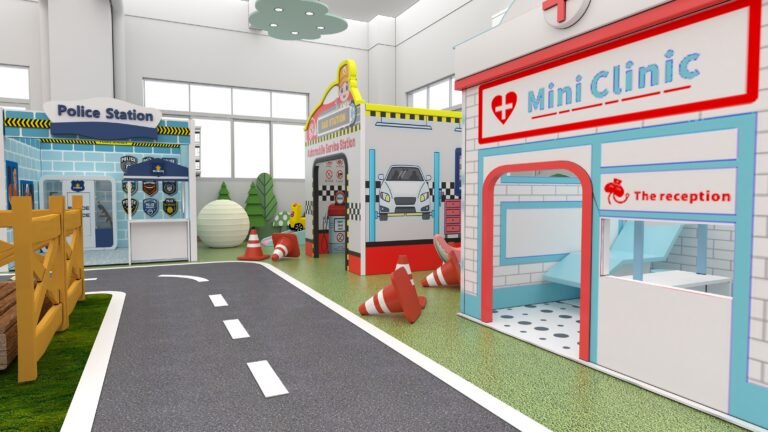
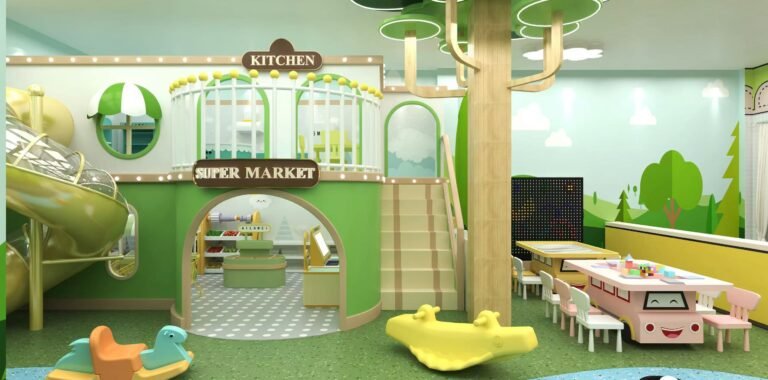
Priority #6: Role-Play Micro Zone (Kitchen / Market / Mini House)
Why it works in small spaces:
- Low risk activity (reduces running)
- High imagination time per square foot
- Great photo value for parents
Best setup:
- 1 compact playhouse wall (not a full room)
- 1 mini kitchen counter
- 1 market shelf + fake food set
- 1 stroller-sized “parking” area nearby
Avoid: full-size dollhouse builds that block visibility or create blind spots.
Priority #7: Sensory / Busy Wall Panels (2–4 Panels)
Why it’s worth it:
- High engagement with almost zero floor footprint
- Keeps toddlers calm while parents order coffee
- Easy to clean compared to loose toys
Smart placements:
- along circulation edges
- next to parent seating
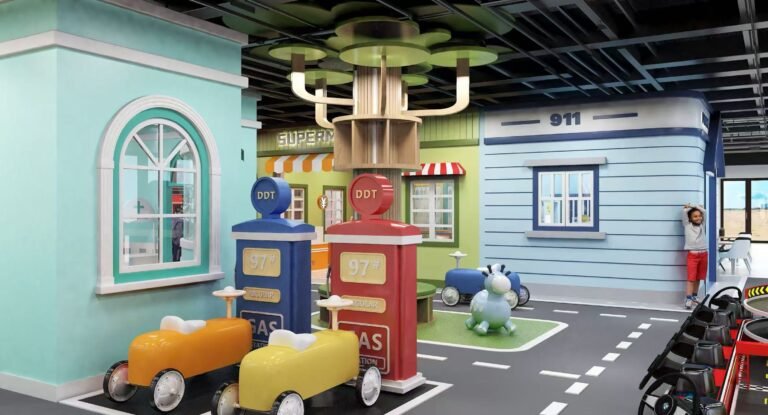
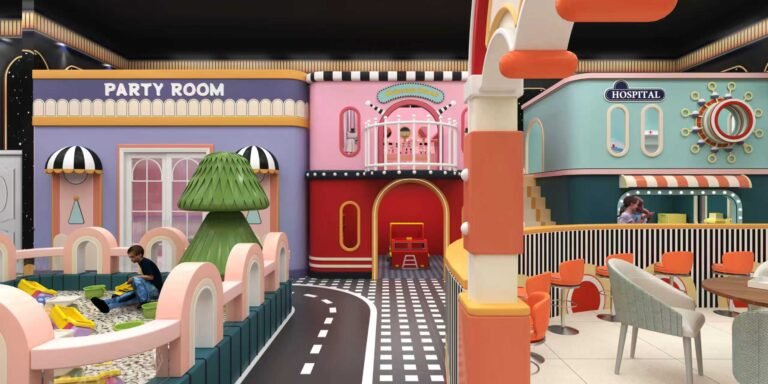
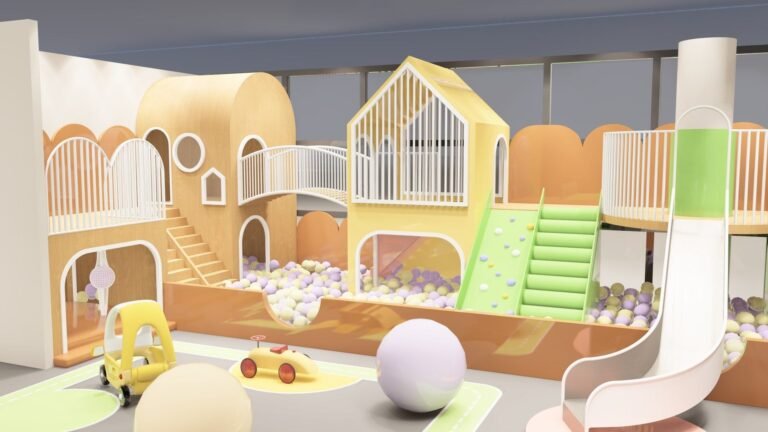
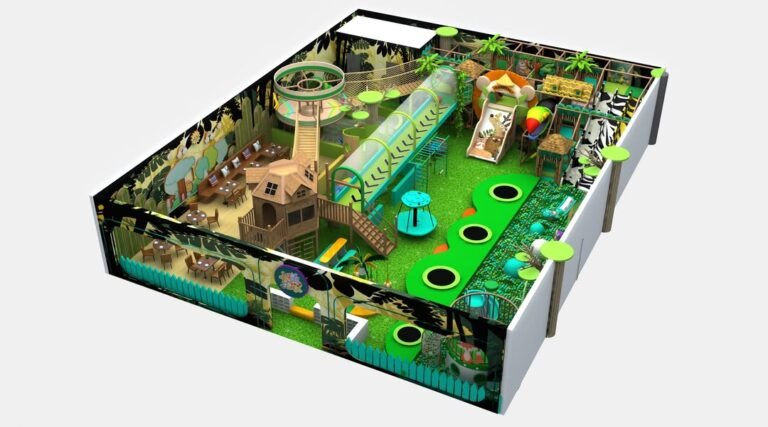
If you want, KoalaPlay can create a free layout draft based on your floor plan and target age group, so you can validate your equipment plan before you buy.


Priority #8: Soft Climber / Foam Mountain (Low Height)
A low foam climbing piece adds “movement” without making the venue dangerous.
Good for:
- balance practice
- gentle physical challenge
- quick reset play (kids rotate quickly)
Bad use case:
If your audience includes many 6–8-year-olds, they’ll overpower it and create collisions.
Priority #9: Mini Building Zone (Magnetic Tiles / Large Foam Blocks)
Why it works:
- Great for mixed ages
- Encourages group play and parent participation
But here’s the catch:
Blocks are mess multipliers.
Only choose this if you have strong storage and a reset routine.
Priority #10: “Calm Corner” Reading Nook
Equipment:
- low bookshelf
- 10–20 board books
- soft rug / beanbag (washable cover)
This reduces overstimulation and helps parents with multiple kids.
Tier 3 — Optional (Only If Your Model Supports It)
These can be great, but they also fail easily in a small venue.
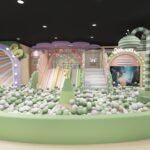
Priority #11: Ball Pit (Small + Contained Only)
Ball pits look amazing in photos, but they:
- trap debris
- increase daily cleaning
- encourage throwing
If you install one:
Keep it small, enclosed, and paired with strict rules.
Priority #12: Interactive Projection / Digital Play Wall
Works well for:
- older toddler groups (3–6)
- birthday events
- rainy-season demand
But it adds:
- tech maintenance
- higher capex
- downtime risk
Priority #13: Mini Trampoline / Jump Spot
In compact venues, bouncing zones can spike:
- noise
- collision risk
- parent complaints
If you want movement play, a soft climber is usually safer.
The Ranked Equipment Table (Fast Buying Reference)
| Priority | Equipment | Typical Footprint | Best For | Why It’s High Priority |
|---|---|---|---|---|
| 1 | Impact-attenuating play flooring | 300–650 sq ft | All ages | Injury risk + compliance readiness (ASTM F1292 / ADA links) |
| 2 | Toddler hero play structure | 150–250 sq ft | 2–6 | Your main attraction + repeatability |
| 3 | Entry gate + low barriers | 30–80 sq ft | Operations | Controls chaos + improves supervision |
| 4 | Parent seating w/ sightlines | 120–250 sq ft | Parents | Increases dwell time + comfort |
| 5 | Storage + reset stations | 30–80 sq ft | Staff | Keeps venue clean + fast turnover |
| 6 | Role-play micro zone | 50–120 sq ft | 2–6 | High engagement, low risk |
| 7 | Sensory wall panels | 0–15 sq ft | 1–5 | Zero footprint entertainment |
| 8 | Soft climber (low) | 40–100 sq ft | 2–6 | Movement play without height risk |
| 9 | Building zone (blocks/tiles) | 40–120 sq ft | 2–8 | Great play value, but needs storage discipline |
| 10 | Reading nook | 20–60 sq ft | 1–6 | Calms the room + supports families |
| 11 | Small ball pit | 40–100 sq ft | 2–6 | High photo value, high cleaning |
| 12 | Projection wall | 0–30 sq ft | 3–8 | Great for parties, higher tech risk |
| 13 | Mini trampoline spot | 20–60 sq ft | 3–8 | Noise + collisions in small rooms |
3 Sample Equipment Packages (Based on Your Audience)
Package A: “Toddler-First” (Best for repeat sessions)
Choose this if your core audience is 1–5 years old.
Buy:
- Tier 1 must-haves
- Role-play micro zone
- 2–4 sensory wall panels
- reading nook
Skip:
- trampoline
- large climbing nets
- tall slides
This package keeps behavior calmer and makes parents feel safe.
Package B: “Mixed Ages” (2–8 years old)
Choose this if you expect siblings and weekend crowding.
Buy:
- Tier 1 must-haves
- soft climber
- building zone (large blocks)
- small projection wall (optional)
Important operational rule:
Set session capacity and keep circulation wide, or the space will feel “overfull.”
Package C: “Party-Friendly” (Higher spend per booking)
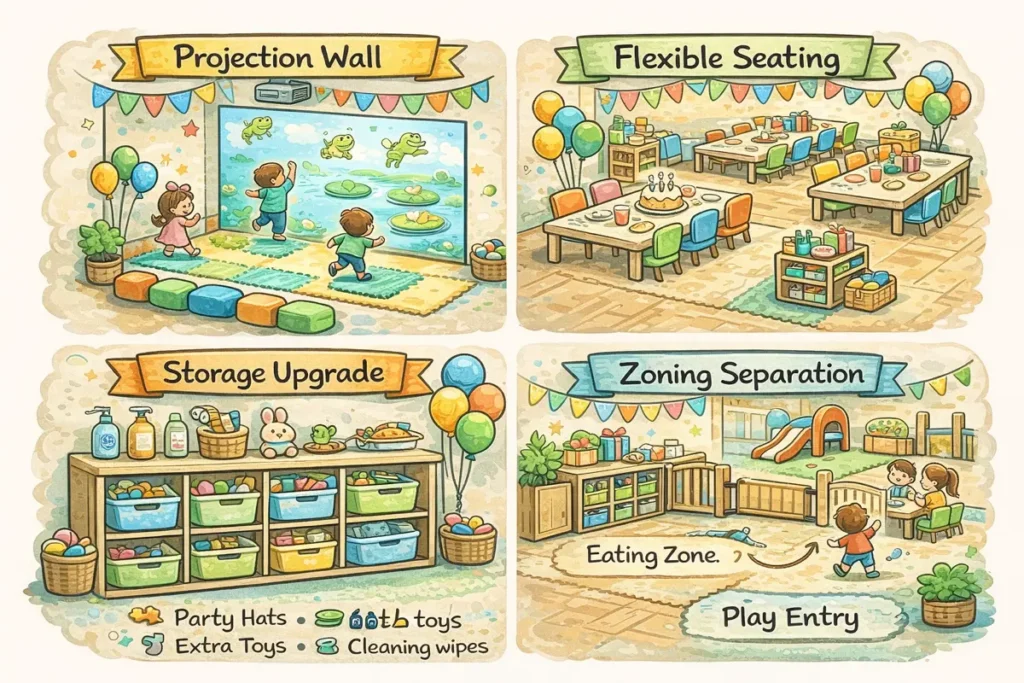
Choose this setup if birthdays and group bookings are a major revenue driver. The goal isn’t to cram more play equipment into a small footprint—it’s to run parties without chaos, keep parents comfortable, and reset the room fast between bookings.
Buy (party-ready essentials)
- Tier 1 must-haves (safe surfacing, hero play structure, entry control, parent seating, storage)
- Projection wall / interactive game wall
A high-energy “party moment” that keeps kids engaged as a group—great for warm-up games, transitions, and photo moments.
- Flexible seating (movable tables + stackable chairs)
You need furniture that can shift between daily sessions and party layouts in minutes.
- Storage upgrade (fast-reset stations)
Party traffic multiplies clutter. Dedicated bins and shelves for party supplies, cleaning, and toy rotation protect your turnover speed.
Design warning: don’t mix “Eating Zone” with “Play Entry”
Party layouts fail when food traffic and play traffic overlap. In a 1,000 sq ft space, that overlap creates:
- bottlenecks at the gate
- sticky hands entering play equipment
- louder conflict points (kids rushing back and forth)
- slower cleaning after each booking
The fix: build a clear “party flow”:
Check-in → Seating/Eating → Play Entry
Use low barriers, signage, and furniture placement to create separation so staff can manage the room with fewer interventions.
Best practice: build for fast transitions
A party-friendly play café wins on transitions, not just equipment.
Design your space so these moments are easy:
- arrival + shoe/sock rules
- food serving + cake time
- group photo moment
- clean-up and reset
If you can reset the venue quickly and keep play entry clean, you can run more bookings per weekend without burning out your team.What NOT to Buy for a 1,000 Sq Ft Play Café
These are the most common expensive mistakes:
Over-tall structures
They create:
- blind spots
- higher fall risk
- bigger use zones you can’t afford in small rooms
Too many loose toys
Loose toys add:
- cleaning time
- trip hazards
- lost items and parent frustration
Equipment that requires long “use zones”
Play equipment designed for public use often needs clearance and proper use zone planning (safety logic embedded in standards like ASTM F1487).
In 1,000 sq ft, oversizing kills flow.
Plan Your 1,000 Sq Ft Play Café With KoalaPlay
If you’re building a 1,000 sq ft play café, the hardest part isn’t choosing equipment—it’s making everything work together: safe surfacing, clean zoning, parent sightlines, and a layout that stays calm during peak hours.
KoalaPlay helps operators design small-format play cafés that feel bigger, run smoother, and reset faster—whether you’re targeting toddlers, mixed-age traffic, or birthday-heavy operations.
Want a practical equipment + layout plan for your space?
Talk to KoalaPlay for a tailored recommendation based on your target age group, business model, and local safety requirements.