
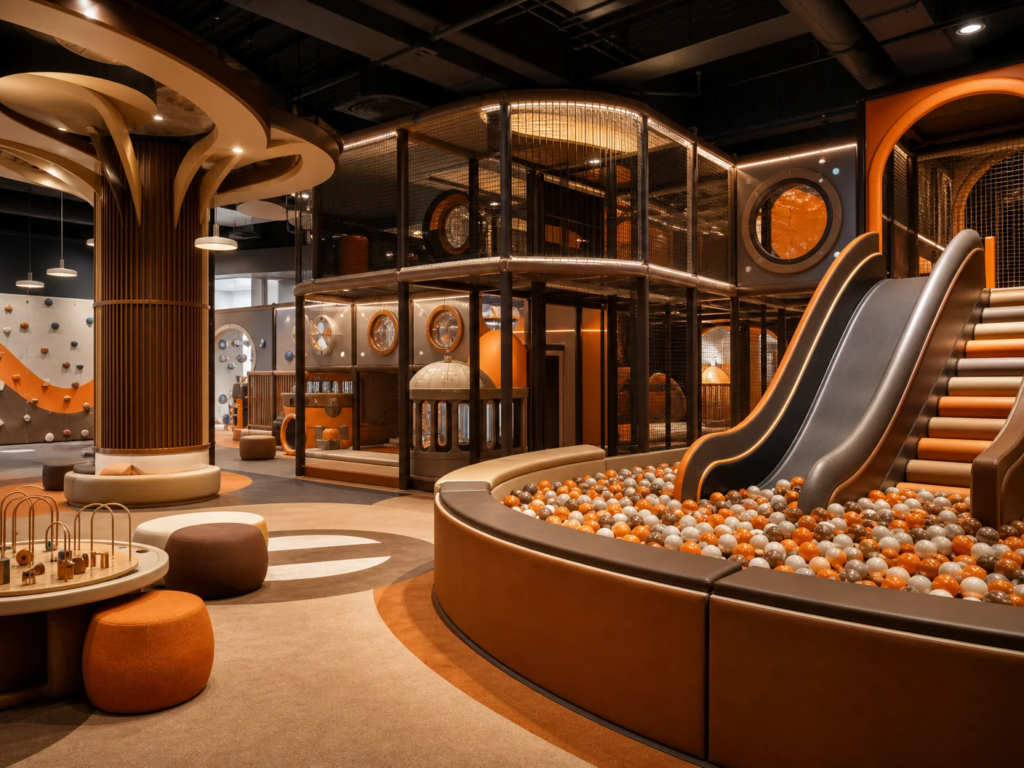
The decision to open an indoor playground often begins with a vibrant vision of colorful slides, sprawling ball pits, and energetic children. However, for astute commercial operators, the journey from concept to profitability is far more nuanced than simply “buying equipment.” It demands a strategic curation of attractions that not only captivates young visitors but also drives repeat visits, optimizes operational efficiency, and maximizes revenue per square foot. Selecting the wrong mix can lead to operational bottlenecks, prohibitive maintenance costs, or a facility that fails to resonate with its target demographic, ultimately jeopardizing the entire investment.
Indoor playground attractions are not merely static pieces of equipment; they are dynamic experiences categorized into physical play (e.g., multi-level soft structures, slides), sensory play (e.g., interactive ball pits, tactile walls), interactive digital play (e.g., AR/VR experiences), and imaginative role-play zones. A truly successful commercial facility achieves a delicate balance, integrating high-energy physical challenges with quieter, enriching sensory areas. This balance is meticulously tailored to specific age groups, from toddlers (0-3 years) to school-age children (6-12+ years), ensuring broad appeal and maximizing both throughput and return on investment (ROI). By gaining a comprehensive understanding of the diverse indoor playground equipment solutions available, operators can design a space that is not only safe and engaging but also exceptionally profitable.
What Are Indoor Playground Attractions?
In the commercial play industry, the term “attractions” extends far beyond individual pieces of equipment. It encompasses the entire ecosystem of individual components, themed zones, and integrated experiences that collectively define the guest journey and facility’s appeal. While a standalone slide is a piece of equipment, a “volcano slide” seamlessly integrated into a jungle-themed environment, complete with sound effects and lighting, transforms into a compelling attraction. This distinction is critical for investors and operators aiming to create a truly memorable and marketable play space.
To construct a modern, high-performing facility, operators must adopt a sophisticated classification system that moves beyond generic “soft play” descriptions. This framework helps in strategic planning and ensures a diverse offering:
• Physical Play (Gross Motor): Challenges children’s physical abilities, promoting motor skill development, strength, and agility (e.g., climbing walls, ninja courses).
• Sensory Play (Tactile/Visual/Auditory): Engages the five senses, crucial for early childhood development and inclusive design (e.g., tactile walls, LED ball pools).
• Interactive Play (Tech-Enhanced): Blends physical movement with digital technology for immersive “phygital” experiences (e.g., projection games, AR/VR zones).
• Role-Play (Social/Imaginative): Fosters social development and imagination through “mini-town” environments (e.g., mini supermarket, doctor clinic).
• Educational Play (STEM/Cognitive): Integrates STEM concepts into play, appealing to schools and daycares (e.g., puzzles, interactive exhibits).
Main Types of Indoor Playground Attractions: A Deep Dive
Selecting the optimal mix requires a thorough understanding of each category’s unique features, target age groups, business advantages, and operational considerations. Here, we explore the primary attraction types defining the indoor play industry in 2026.
1. Soft Play Structures: The Enduring Foundation
Soft play structures are the quintessential element of almost any indoor playground, forming multi-level, padded mazes universally loved by younger children. They are the commercial playground equipment parents most often associate with indoor play.
• What it is: Expansive, multi-story structures from soft, padded materials, featuring crawl tunnels, foam climbers, soft obstacles, padded slides, and mini jungle gyms. Designed for safe, active play.
• Best Age Group: Primarily toddlers (2-3 years) and preschoolers (4-6 years), engaging children up to 8 years old.
• Business Advantages: High capacity and throughput; serves as a primary “anchor” attraction. Relatively low supervision intensity.
• Safety Considerations: Regular inspection of padding, netting, and structural integrity. Clear sightlines for supervision. Materials must be fire-retardant and non-toxic.
• Best Applications: FECs, Play Cafes, Mall Playgrounds, Daycare Play Areas.
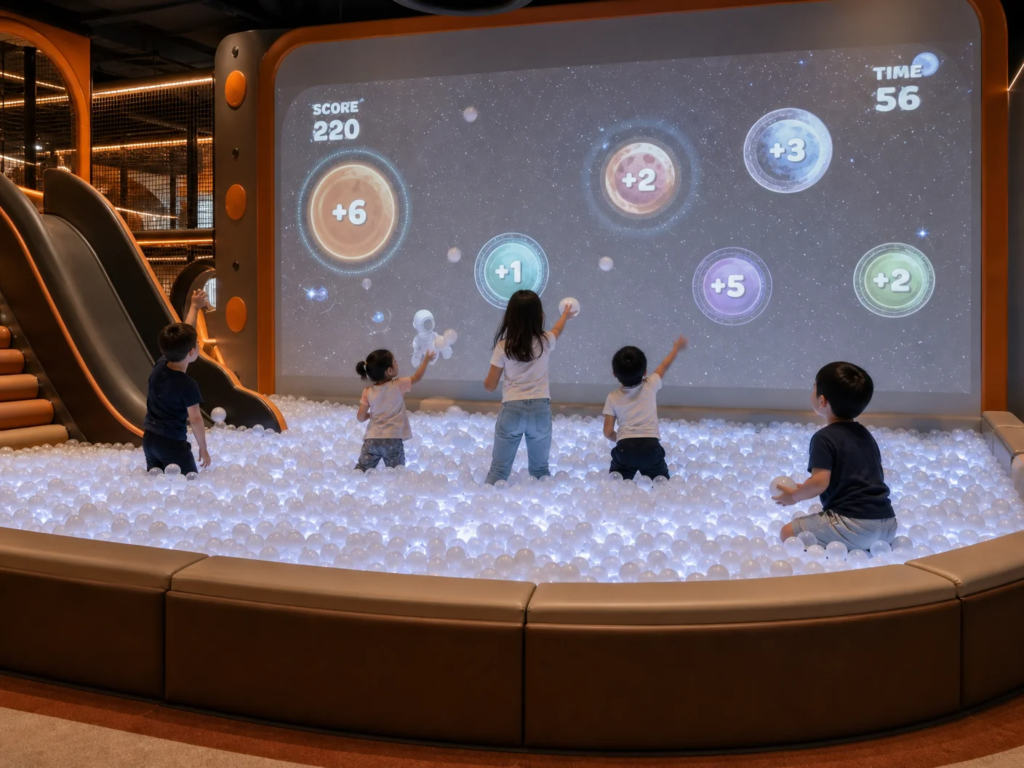
2. Ball Pits: Classic Fun, Modern Twists
Once a simple basin of plastic balls, the ball pit has evolved into a dynamic and interactive attraction.
• What it is: A contained area filled with thousands of lightweight, hollow plastic balls. Modern versions incorporate technology.
• Best Age Group: Toddlers (1-3 years) for basic play; children up to 10 years for interactive versions.
• Typical Features: Traditional immersion and throwing. Advanced versions include interactive projection ball pits (images respond to movement) and LED ball pools (color-changing lights).
• Business Advantages: Extremely high “play value” for compact footprint. Highly photogenic, generating social media engagement. Interactive versions offer novelty and encourage repeat visits.
• Safety Considerations: Regular cleaning and sanitization of balls. Adequate depth for safe play and soft edges. Supervision essential.
3. Slides: The Thrill of Descent
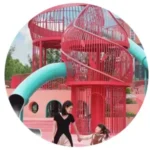
Slides remain an undeniable crowd-pleaser, consistently ranking as one of the most requested attractions. Their appeal lies in the simple, exhilarating thrill of descent, with designs expanding dramatically.
• What it is: Inclined surfaces for rapid descent, from gentle slopes for toddlers to multi-story, high-speed structures for older children and adults.
• Best Age Group: All ages, depending on type (Toddler 1-3, Standard 4-8, Thrill 8+).
• Typical Features: Spiral, tube, wave, volcano, and racing slides. Durable fiberglass or plastic construction.
• Business Advantages: High throughput, especially multi-lane racing slides. Visually impressive, acting as a strong draw and photo opportunity.
• Safety Considerations: Proper run-out lengths, soft landing mats, clear entry/exit points. Regular inspection for wear. Strict rules for use.
4. Climbing Attractions: Reaching New Heights
Climbing attractions are fundamental for developing gross motor skills, coordination, balance, and problem-solving. They embody “challenge play.”
• What it is: Structures for vertical and horizontal ascent, engaging muscles and spatial awareness.
• Best Age Group: Primarily 5–12 years, with specialized toddler climbing elements available.
• Typical Features: Climbing walls (traditional or auto-belay), rope courses, net playgrounds, spider towers.
• Business Advantages: Utilizes vertical space; appeals to older children seeking challenges. Promotes physical fitness.
• Safety Considerations: High-quality harnesses/belay systems. Robust netting and secure anchor points. Soft fall surfacing. Trained staff for supervision.
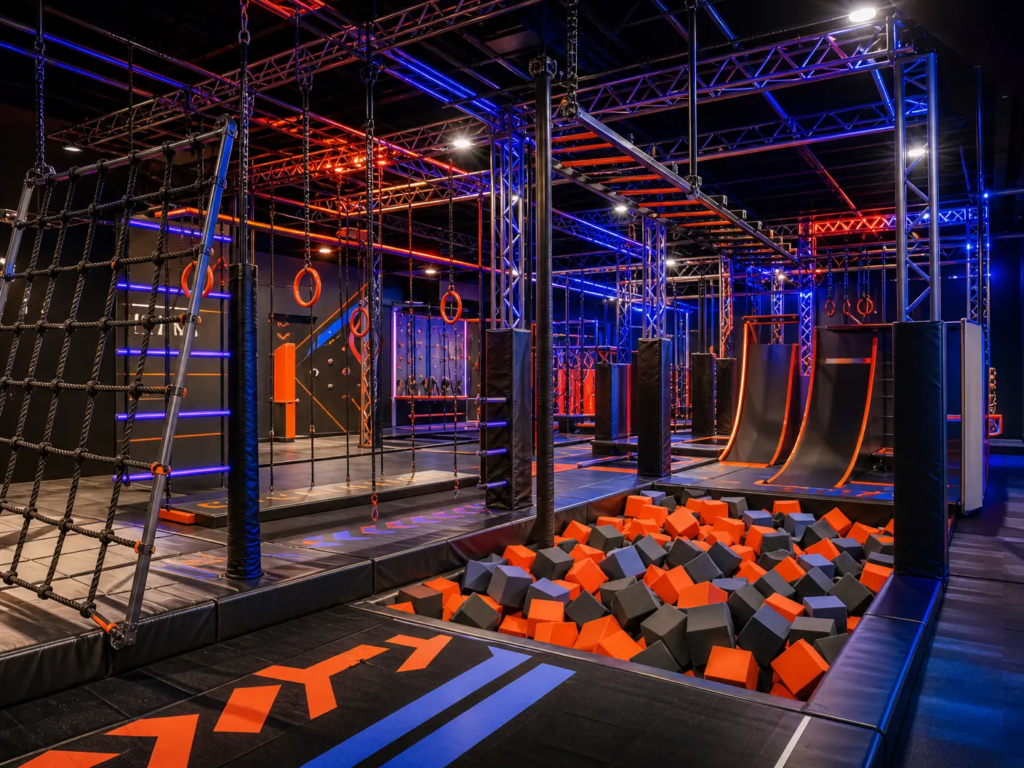
5. Ninja Courses & Obstacle Challenges: The “Sportainment” Revolution
This category is one of the fastest-growing in indoor play, blending physical activity with competitive fun.
• What it is: A series of physical obstacles testing strength, agility, balance, and endurance. Inspired by TV shows.
• Best Age Group: Primarily 6–12 years, with advanced courses appealing to teenagers and adults.
• Typical Features: Warrior courses (warped walls, salmon ladders, swinging rings), agility courses (hurdles, tunnels), parkour elements.
• Business Advantages: High engagement for 6–12+ age bracket. Excellent for competitive events, parties, driving premium revenue.
•Safety Considerations: Professional design and installation. High-quality padding and soft landing pits (foam pits/airbags). Strict rules and trained staff for supervision.
6. Trampoline Attractions: Bouncing Towards Profitability
Trampoline attractions are high-energy, high-revenue generators, a staple in modern FECs, demanding meticulous safety and insurance management.
• What it is: Dedicated areas with interconnected trampolines for various jumping activities.
• Best Age Group: 6+ years, with specific zones for younger children.
• Typical Features: Trampoline arena, air bag jump, dodgeball zone, foam pit jump.
• Business Advantages: High hourly throughput; strong appeal to teenagers and adults. Commands premium pricing, excellent for group bookings.
•Safety Considerations: Higher insurance premiums. Rigorous safety protocols (waivers, grip socks, rules enforcement). Dedicated, trained staff for constant supervision. Regular maintenance.
7. Interactive Digital Attractions: The Future of Play
The future of indoor play is increasingly digital, bridging traditional physical activity and engaging screen-based entertainment. These high-tech installations offer novel experiences and strong SEO value.
• What it is: Combines physical play with digital technology using sensors, projectors, and augmented/virtual reality.
• Best Age Group: 4–14 years, with some VR experiences for older teens/adults.
• Typical Features: Projection games (interactive floors/walls), AR playgrounds, VR attractions, motion sensing walls.
• Business Advantages: High perceived value and novelty. Content updates without hardware replacement. High SEO value.
• Safety Considerations: Clear instructions. Regular cleaning of touch surfaces/headsets. Adequate space to prevent collisions.
8. Role Play & Pretend Play Areas: Cultivating Imagination
Role-play areas are vital for fostering social skills, creativity, and emotional development, effective in environments seeking longer, quieter, imaginative play.
• What it is: Themed zones mimicking real-world environments, encouraging imaginative and cooperative play.
• Best Age Group: 2–8 years.
• Typical Features: Miniature settings like mini supermarkets, doctor clinics, fire stations, kitchen play.
• Business Advantages: Encourages extended dwell time, boosting secondary F&B revenue. Promotes cooperative play. Relatively low maintenance.
• Safety Considerations: Non-toxic, durable, child-safe props. Regular cleaning of costumes/props. Clear pathways.
9. Sensory Play Zones: Designing for Inclusivity
Inclusive design is a fundamental expectation. Sensory play zones provide enriching experiences for all children, including those with special needs.
• What it is: Dedicated areas stimulating or calming senses through textures, lights, sounds, and tactile elements.
• Best Age Group: All ages, particularly beneficial for toddlers and children with sensory processing differences.
• Typical Features: Sensory walls, tactile play bins, quiet rooms (soft lighting, fiber-optic strands), autism-friendly designs.
• Business Advantages: Positions facility as inclusive, attracting broader demographic. Enhances overall play experience. Strong SEO entry point for “inclusive playground” searches.
• Safety Considerations: Non-toxic, hypoallergenic materials. Securely fastened elements. Accessibility design. Staff training on sensory needs.
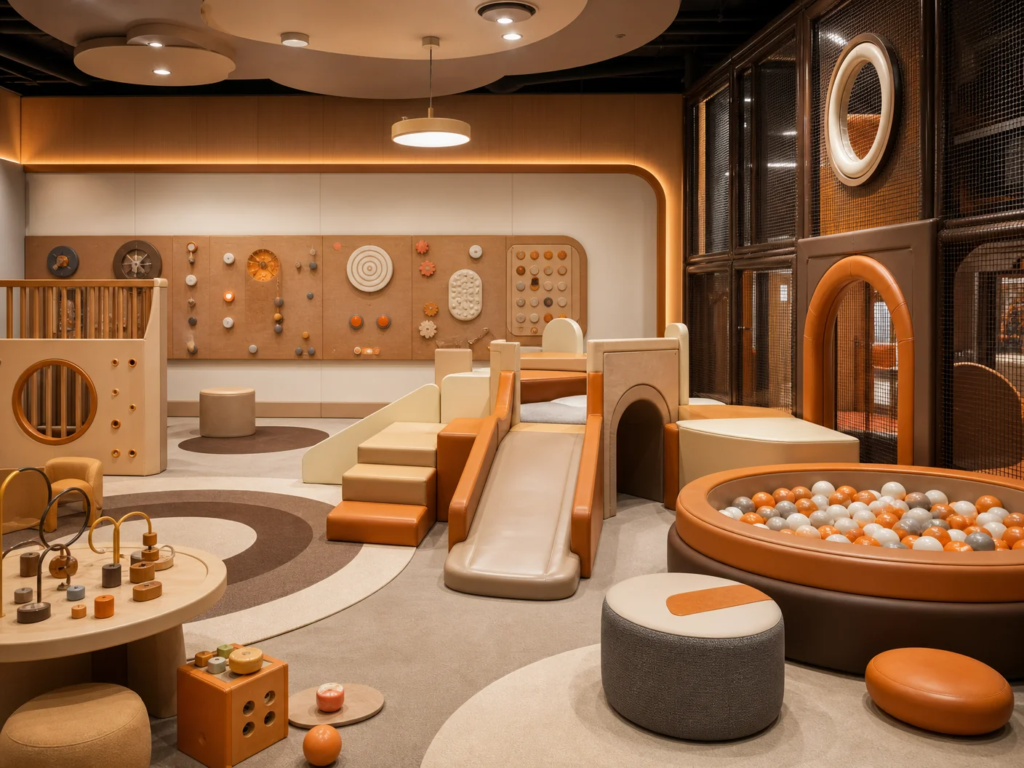
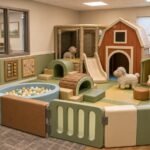
10. Toddler Areas: Safety-First Zones for the Youngest Explorers
A dedicated, well-designed toddler area is a non-negotiable component, providing peace of mind for parents of the youngest visitors.
• What it is: Physically separated, self-contained play zone for children typically under 3 years old, with age-appropriate equipment.
• Best Age Group: 0–3 years (infants and toddlers).
• Typical Features: Toddler soft play equipment, mini slides, soft foam climbers, crawling tunnels, sensory play panels. Heavily padded for safety.
• Business Advantages: Attracts families with multiple children. Encourages weekday visits, boosting off-peak revenue. High search volume for “toddler play areas.”
• Safety Considerations: Age-appropriate, non-toxic equipment. Excellent padding. Constant parent supervision encouraged. Regular cleaning and sanitization.
How to Choose the Right Indoor Playground Attractions: A Strategic Framework
The most common and costly mistake is selecting equipment based on personal preference. A successful attraction mix is data-driven and strategically aligned with your business goals, target demographic, and operational realities. Your selection should be guided by a comprehensive framework considering age groups, business type, space constraints, and budget.
| Factor | Strategic Focus |
| Age Group | Balance 0-3 (Toddlers), 4-7 (Preschool), and 8+ (School-age) to avoid alienating siblings. |
| Business Type | A Play Cafe needs high-visibility role-play; a Mall FEC needs high-thrill, high-capacity slides. |
| Space Size | Small spaces (under 200sqm) should focus on verticality; large spaces can afford “sprawl” attractions like trampolines. |
| Budget | Allocate 60% to “Anchor” attractions and 40% to “Signature” pieces that drive marketing. |
For a deeper look at financial planning and equipment costs, refer to our comprehensive guide on indoor playground equipment cost in 2026.
Most Profitable Indoor Playground Attractions
Profitability in an indoor playground is a function of initial investment, maintenance costs, throughput capacity, and “play value.” The goal is to maximize “stay time” and encourage repeat visits, impacting secondary revenue.
Based on industry analysis, the following attractions consistently demonstrate high profitability:
1.Interactive Ball Pits: Low maintenance, high social media “shareability,” strong novelty.
2.Multi-level Soft Play Structures: Highest capacity per square foot, universal appeal, simplifies supervision.
3.Role Play Towns/Areas: Encourages extended dwell time, boosting secondary revenue (cafe sales, parties).
4.Ninja Courses & Obstacle Challenges: High perceived value, justifies premium pricing, excellent for group bookings.
5.Interactive Digital Attractions: High novelty, content updates without hardware replacement, strong buzz.
Indoor Playground Design Trends in 2026
The industry is dynamic, evolving to meet consumer expectations and tech advancements. Key design trends shaping play spaces:
• Immersive Themes: Moving beyond generic colors to narrative-driven environments (forests, space, cyberpunk).
• Space-Saving Structures: Maximizing play value in compact footprints (multi-story vertical play, modular components).
• Interactive Projection & AR/VR Integration: Blending physical and digital play (phygital) for dynamic scenarios.
• Inclusive Design: Accessible and enjoyable for all abilities (sensory zones, quiet rooms, accessible pathways).
• Educational Entertainment (Edutainment): Integrating STEM elements (puzzles, interactive learning games).
• Sustainable Materials & Biophilic Design: Eco-friendly, durable, non-toxic materials; natural elements for calming environments.
You might also interested in our recent research article :
Common Mistakes When Selecting Indoor Playground Attractions
Critical errors during attraction selection can undermine profitability and guest satisfaction. Avoid these pitfalls:
- Ignoring Sightlines and Supervision: Poor sightlines lead to parental anxiety, reduced dwell time, and safety risks. Prioritize open layouts.
- Overcrowding the Space: Leads to poor flow, bottlenecks, increased collisions, and unpleasant experiences. Less can be more.
- Poor Age-Zoning: Older children overwhelming younger ones creates safety concerns. Dedicated, well-defined zones are essential.
- Underestimating Maintenance and Operational Costs: Factor in long-term expenses (cleaning, spare parts, technical support) beyond initial purchase.
- Lack of Theming or Cohesion: Disjointed equipment feels unmemorable. A strong, consistent theme enhances brand identity.
- Neglecting Parent Amenities: Comfortable seating, good Wi-Fi, quality F&B, clean restrooms, and clear visibility are crucial for parental satisfaction.
Conclusion
Building a successful indoor playground in 2026 is a sophisticated endeavor. It requires strategic curation, thoughtful design, and a deep understanding of child development and commercial viability. By meticulously balancing high-energy physical attractions with imaginative role-play, enriching sensory experiences, and cutting-edge interactive digital elements, you can create a dynamic destination that serves the entire family and fosters community engagement.
Whether you are planning an intimate boutique play cafe or a sprawling family entertainment center, the judicious selection of attractions—from children’s role-playing playhouse equipment to multi-level soft play structures—is the foundational step toward establishing a thriving, profitable, and beloved business. Investing in a well-researched and expertly designed attraction mix ensures not only immediate appeal but also long-term sustainability and growth.
Ready to design your attraction mix? Don’t leave your investment to chance. Contact the Koalaplay team today for a custom layout and equipment consultation tailored to your local market, ensuring your vision translates into a vibrant and profitable reality.
Frequently Asked Questions about indoor playground attractions
What are the most popular indoor playground attractions for toddlers?
For children under 3, soft-contained play areas are the most popular. These include foam climbers, mini ball pits, and sensory wall panels. Parents prioritize safety and visibility, so attractions that allow for close supervision while providing gentle physical challenges are ideal for this age group.
How do I choose the right mix of attractions for a small space?
In facilities under 200 sqm, focus on verticality and multi-functional equipment. Multi-level soft play structures that incorporate slides and climbing elements offer the highest play value per square meter. Avoid sprawling attractions like trampoline arenas and instead opt for wall-mounted interactive digital games or compact role-play corners.
Which indoor playground attractions offer the best ROI?
Interactive ball pits and multi-level soft play structures typically offer the best ROI due to their high capacity and relatively low maintenance costs. Role-play areas also drive high profitability by increasing guest dwell time, which correlates directly with secondary spending on food, beverages, and party bookings.
What are the safety standards for commercial indoor playground equipment?
In the US, equipment should comply with ASTM F1918 standards for soft contained play equipment. Operators should also refer to the CPSC Public Playground Safety Handbook. Regular professional inspections and daily maintenance checks are essential to ensure ongoing compliance and child safety.
How often should indoor playground attractions be cleaned?
High-touch surfaces like slides, ball pits, and soft play padding should be sanitized daily. Ball pits require a deep clean and ball sanitization at least once a month using specialized ball-washing machines. Costumes and props in role-play areas should be laundered weekly or as needed based on usage.
Can I add interactive digital attractions to an existing playground?
Yes, many digital attractions like floor projectors or wall-mounted motion sensors can be retrofitted into existing spaces. These “phygital” upgrades are an excellent way to refresh a facility’s appeal without the cost of a full renovation, often driving a significant increase in repeat visits.
What is “Sportainment” in the context of indoor playgrounds?
Sportainment is the fusion of sports and entertainment. In indoor playgrounds, this is represented by attractions like Ninja courses, professional-grade climbing walls, and competitive trampoline zones. These attractions appeal to older children (6-12+) and even adults, expanding the facility’s target market.
How do I make my indoor playground more inclusive?
Incorporate sensory play zones that feature tactile walls, quiet rooms, and adjustable lighting. Ensure that pathways are wide enough for wheelchairs and that some equipment is accessible at ground level. Inclusive design not only serves children with special needs but also enhances the play experience for everyone.
What are the insurance implications for trampoline attractions?
Trampoline zones generally carry higher insurance premiums due to the increased risk of injury. To manage these costs, operators must implement strict safety protocols, including mandatory waivers, grip socks, constant staff supervision, and rigorous equipment maintenance schedules.
How do immersive themes impact business performance?
Immersive themes (like space or jungle) create a cohesive brand identity that makes the facility more memorable and “Instagrammable.” This drives organic social media marketing and justifies premium entry pricing. A well-themed environment also enhances the child’s imaginative play experience, leading to longer stay times.
References
2.CPSC – Public Playground Safety Handbook
3.IAAPA – State of the Industry: Family Entertainment Centers 2025-2026
4.Playground Professionals – The Impact of Sensory Play on Early Childhood Development
5.Koalaplay – Top 8 Popular Indoor Playground Themes in 2026
6.Forbes – The Rise of ‘Sportainment’: How Fitness and Fun are Merging in 2026
7.World Health Organization – Physical Activity Guidelines for Children and Adolescents
8.National Association for the Education of Young Children (NAEYC) – The Power of Playful Learning




 English
 Spanish
 German