
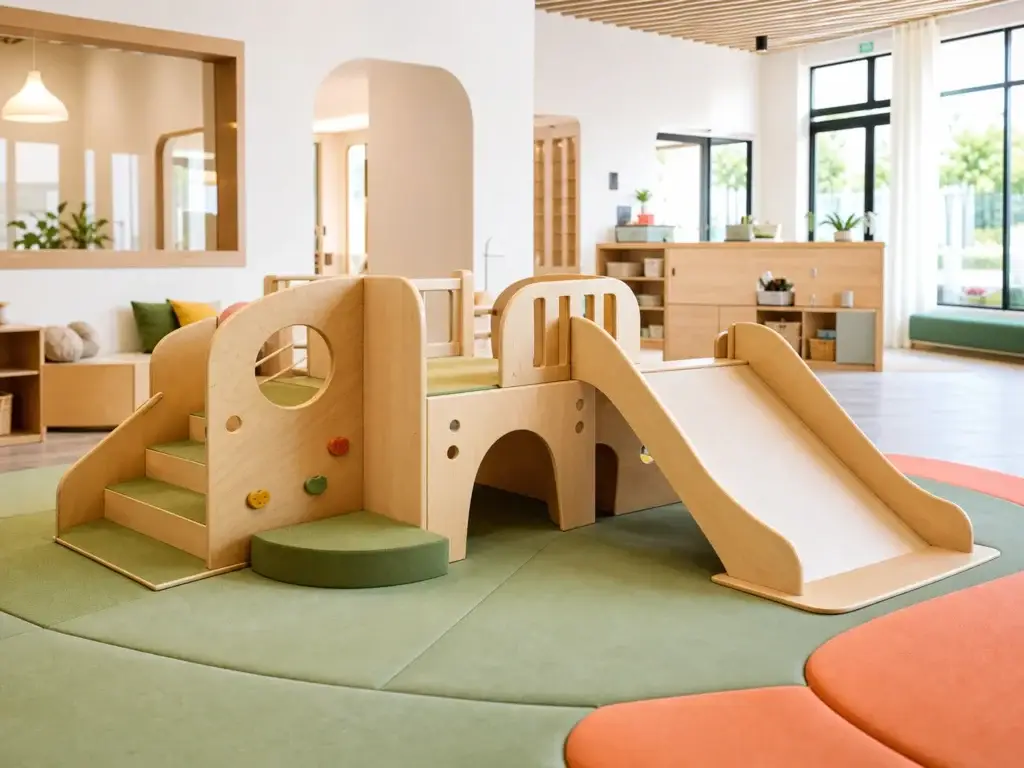
A wood playground climber can become the anchor of a daycare indoor playroom, but only if it is chosen as part of the whole room. The right climber is not simply the prettiest wooden structure in a catalog. It has to match the children’s age range, ceiling height, supervision needs, floor protection, cleaning routine, and daily traffic flow.
For most daycare and preschool operators, the best choice is a low-height, commercial-grade wooden indoor playground climber with rounded edges, controlled routes, soft landing areas, open sightlines, and enough play value to support climbing, crawling, sliding, balancing, and pretend play. A home-style toy may look similar online, but a commercial playroom needs stronger planning, clearer documentation, and easier long-term maintenance.
This guide explains how to evaluate a wood playground climber before you approve a design or request a quote.
Start With the Children Who Will Use It
The first question is not “Which climber looks best?” It is “Who will climb on it every day?”
Toddlers, preschoolers, and mixed-age daycare groups need different challenge levels. Children aged 1-3 usually need very low platforms, gentle steps, soft ramps, crawl openings, and constant caregiver visibility. Children aged 3-5 can usually handle more varied climbing routes, short bridges, low slides, balance elements, and simple role play features. If the room serves both groups, the climber should not invite faster preschoolers to run through a toddler zone.
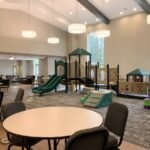
Koalaplay often treats a wooden climber as one element within a broader preschool indoor playground design plan. That matters because age zoning, fall areas, quiet play, storage, entry control, and staff positions all affect whether the climber works in real operation.
Ask your team:
- What age group will use the climber most often?
- Will children play freely, in scheduled class groups, or during parent-supervised visits?
- How many children may use the room at one time?
- Do you need toddler-only play, preschool challenge play, or both?
If the answer is “mixed ages,” plan physical separation instead of relying only on rules.
Measure the Room Before Choosing the Structure
Wood climbers look compact in product photos, but the real footprint includes entry points, slide exits, fall zones, staff access, storage, and circulation around the equipment.
Before comparing designs, collect these measurements:
| Measurement | Why it matters |
|---|---|
| Room length and width | Defines the maximum equipment footprint and walking paths |
| Ceiling height | Limits platform height, roof features, and decorative elements |
| Door and window positions | Affects entry flow, emergency routes, daylight, and visibility |
| Columns or fixed furniture | May require a custom layout instead of a standard module |
| Existing flooring | Determines whether additional safety surfacing is needed |
| Staff and parent positions | Helps protect supervision sightlines |
Koalaplay’s play features categories can help owners think beyond one product and compare the climber with slides, bridges, sensory panels, crawl tunnels, and surrounding activity features. In a daycare room, the climber should earn its footprint by supporting several types of movement, not just one climb up and one slide down.
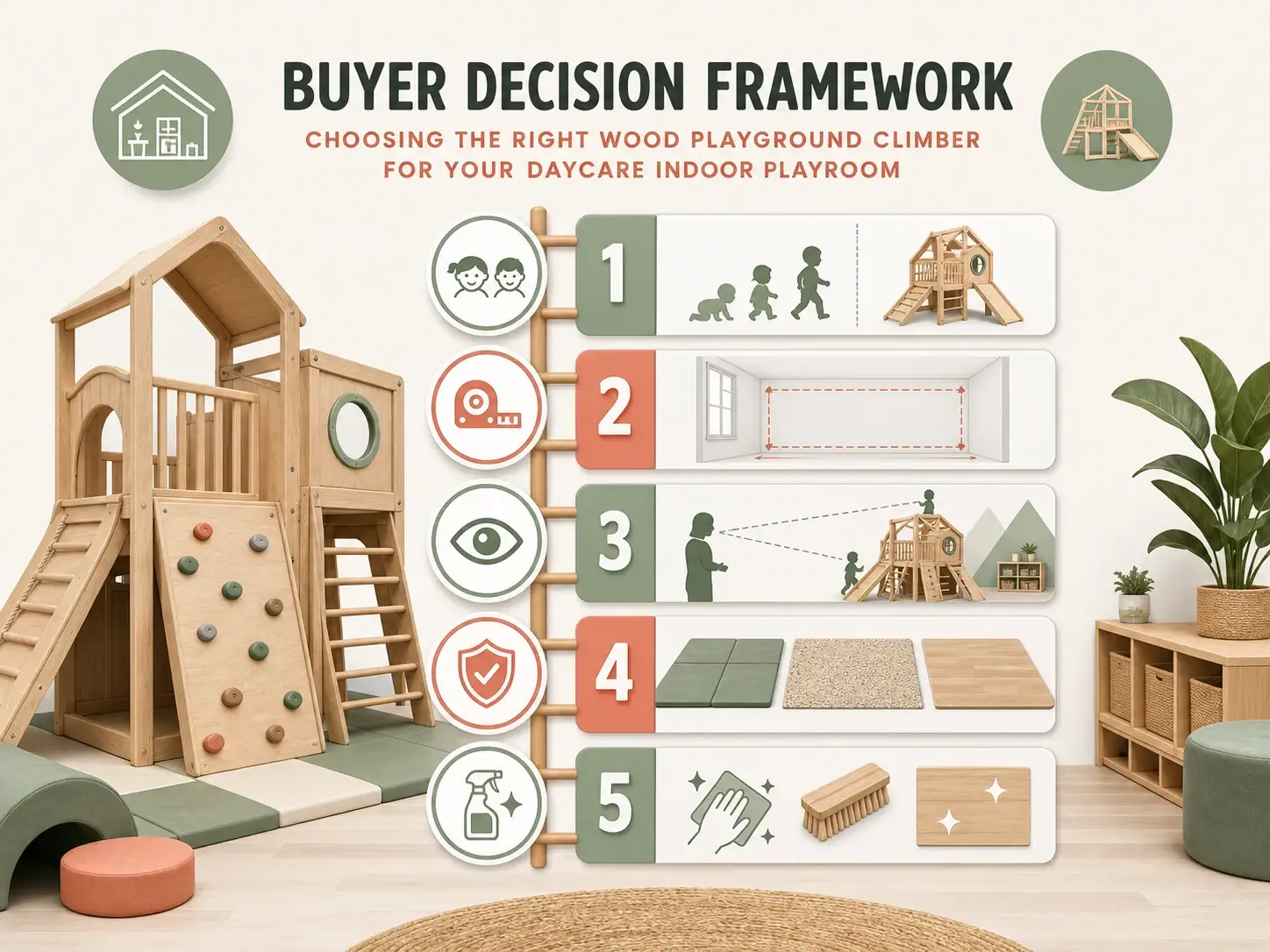
Choose the Right Climber Type
Most daycare indoor playrooms need one of three climber approaches.
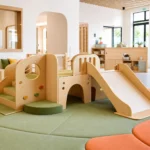
Low toddler climber. This is best for younger children and rooms where staff want simple, visible gross-motor play. It may include soft steps, a small ramp, crawl-through openings, and a very gentle slide.
Preschool activity climber. This works for ages 3-5 when the room can support more movement. It may include a short bridge, low platform, climbing board, balance route, window panels, and integrated slide.
Custom wooden climbing frame. This is useful when the room has unusual dimensions, columns, a specific theme, or needs to combine climbing with pretend play, seating visibility, and storage. For commercial projects, a custom climber feature can be designed around the floor plan instead of forcing the room to fit a fixed product.
The safest-looking option is not always the best operational option. A very small climber may become boring quickly. A tall or complex climber may create blind spots and supervision stress. The best design usually sits between those extremes: low, rich, visible, and easy to reset.
Plan the Layout Around Sightlines and Flow
A daycare climber should never block supervision. Adults need to see the platform, slide entrance, slide exit, crawl openings, and surrounding floor from normal staff positions.
Head Start’s active supervision guidance emphasizes positioning adults to see and hear children, scanning and counting, listening, anticipating behavior, and engaging when needed. A commercial playroom layout should support that same behavior. If adults must constantly walk around a tall wall, deep tunnel, or hidden corner, the equipment is making supervision harder.
Place the climber so children naturally move in one direction:
- Enter from a calm side, not the main doorway.
- Climb away from the busiest walking path.
- Slide into a soft, open landing area.
- Leave the landing area without crossing another child’s climbing route.
- Keep a pause zone between the slide exit and nearby shelves, seating, or gates.
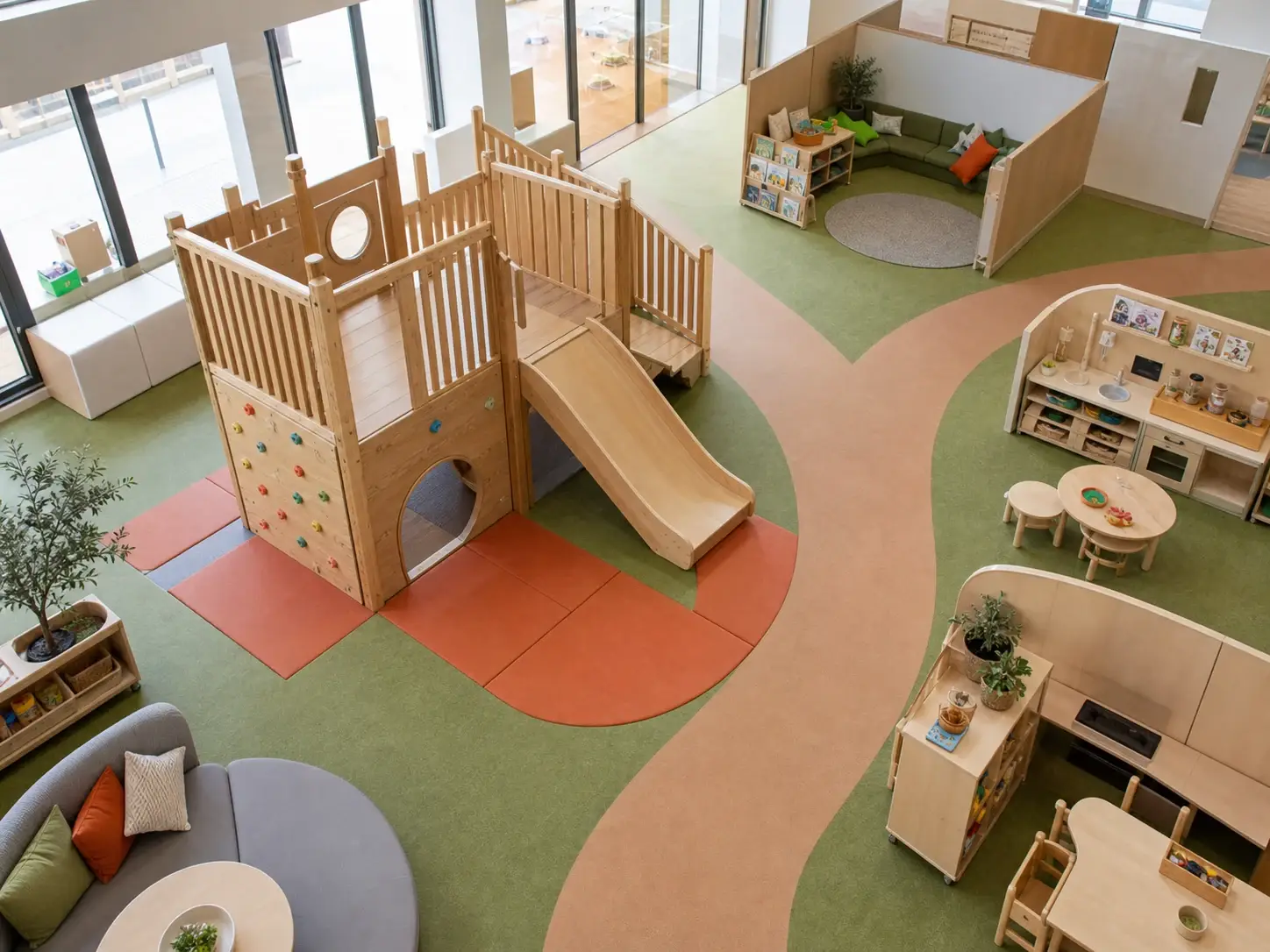
In a play cafe or parent-stay daycare model, the climber also needs to work with adult seating. Koalaplay’s play cafe planning approach connects child movement, parent visibility, cafe flow, and cleaning access because these decisions affect repeat visits as much as equipment appearance.
Check Surfacing, Fall Areas, and Edges
Wood can feel warm, natural, and premium, but it is still a hard material. The surrounding safety system matters.
Review the floor under and around the climber. Ask whether the surfacing is appropriate for the platform height and the expected play behavior. In many daycare rooms, padded mats, commercial soft flooring, or other impact-attenuating surfaces are planned around the climber and slide exit. Avoid thin decorative mats that shift, curl, or leave hard edges exposed.
Also check:
- Rounded wood edges and corners.
- Smooth sealed surfaces without splinters or rough touch points.
- Handholds sized for young children.
- Openings that avoid head, neck, or limb entrapment risks.
- Non-slip steps, ramps, and platforms.
- Stable fixing points and hardware protection.
- Slide exits with enough clear landing space.
The U.S. Consumer Product Safety Commission’s public playground guidance and soft contained play checklist both highlight surfacing, use zones, openings, slide exits, maintenance, and age separation as important safety topics. Requirements vary by country and project type, so operators should confirm local rules and inspection needs before opening.
Compare Materials and Finish Quality
Not all wooden climbers are built for the same environment. A daycare indoor playroom may use the same equipment every weekday, clean it frequently, and expose it to shoes, socks, spills, toys, and repeated impact.
Ask your supplier what wood or engineered wood is used, how surfaces are sealed, how edges are rounded, what hardware is exposed or covered, and which parts can be replaced later. For mixed-material designs, review the mats, foam, vinyl, connectors, plastic windows, ropes, and anti-slip surfaces too. Koalaplay’s material quality information is useful when comparing the frame, padding, surface, connector, and finishing decisions behind commercial indoor playground equipment.
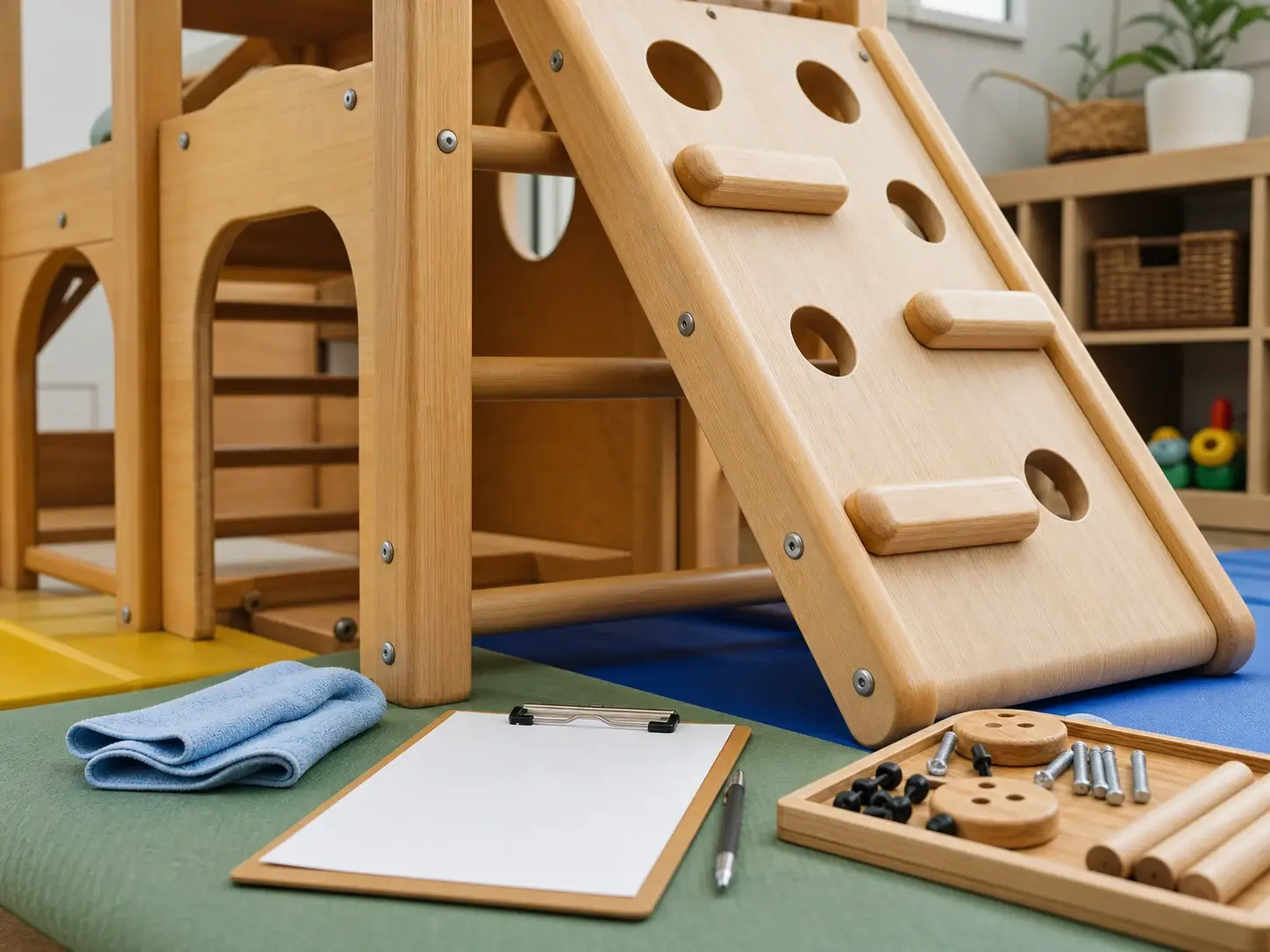
Good commercial quality is often visible in small details: protected screw heads, consistent finish, solid handrails, clean seams, rounded cutouts, firm mats, and accessible parts. These details affect both safety and daily confidence for staff.
Add Play Value Around the Climber
A climber alone may not hold children’s attention for long. The surrounding zone should support different play speeds and developmental needs.
Useful add-ons include:
- A small slide or ramp for repeated movement.
- Crawl holes or low tunnels for body awareness.
- Sensory wall panels near the climber, not hidden behind it.
- Balance steps or soft pods beside the main route.
- A quiet reading corner for children who need a break.
- Pretend play shelves, kitchen, market, clinic, or animal-care corner.
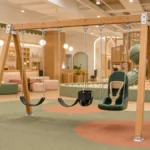
This is where the climber becomes part of a complete daycare environment. Koalaplay’s daycare playground equipment planning can connect gross-motor play with softer preschool activities, while a nearby role play zone can add calmer social play and stronger repeat-visit value.
Think About Cleaning Before You Buy
Cleaning should be planned into the design, not solved after installation. Daycare equipment needs smooth surfaces, reachable corners, limited dust traps, and enough access for staff to inspect under platforms and around slide exits.
CDC childcare cleaning guidance distinguishes cleaning, sanitizing, and disinfecting because each serves a different purpose. For equipment buying, the practical point is simple: choose materials and layouts that match the cleaning routine your staff can actually maintain.
Before approving the climber, ask:
- Can staff wipe the main touch surfaces quickly?
- Are there hidden corners under platforms or behind panels?
- Can mats be lifted, replaced, or cleaned without closing the whole room?
- Are loose accessories limited and easy to store?
- Can damaged parts be isolated and replaced?
- Is there a written maintenance and inspection routine?
Wooden surfaces should be smooth and sealed for indoor use, but operators should still follow the supplier’s cleaning instructions. Harsh chemicals, standing moisture, or abrasive tools may damage finishes over time.
Supplier Questions Before Requesting a Quote
A serious supplier should ask for your floor plan before recommending a wood playground climber. If they only ask which model you like, the design may miss important operational details.
Send these inputs:
- Room size and ceiling height.
- Photos or drawings showing doors, windows, columns, and fixed furniture.
- Target age range and expected capacity.
- Country or region where the playroom will operate.
- Preferred theme, color direction, and brand style.
- Flooring condition and installation constraints.
- Whether you need shipping, installation guidance, or on-site installation support.
Then ask the supplier:
| Question | What you are checking |
|---|---|
| What age range is this climber designed for? | Age fit and challenge level |
| What surfacing do you recommend around it? | Fall protection planning |
| How are sightlines protected? | Staff and parent supervision |
| Which parts are wood, foam, plastic, or metal? | Material quality and maintenance |
| What standards or documents can you provide? | Local review and buyer confidence |
| What is included in installation support? | Setup accuracy and long-term service |
| Which parts can be replaced later? | Repair planning and operating cost control |
During Koalaplay’s service process, these details can be reviewed before manufacturing starts. That is the best time to adjust platform height, layout direction, slide exit, colors, surrounding play features, installation needs, and long-term maintenance access.
Common Mistakes to Avoid
The first mistake is buying a home-use wooden climber for a commercial daycare room. Home products may not be designed for the intensity, documentation, cleaning, or installation needs of a business environment.
The second mistake is choosing height over play value. Preschoolers often benefit more from low, varied routes than from a tall structure that creates fear, collisions, or blind spots.
The third mistake is ignoring the landing area. A beautiful climber with a crowded slide exit will create daily friction.
The fourth mistake is separating the climber from the rest of the room. A daycare playroom also needs calm play, storage, supervision positions, shoe control, cleaning access, and clear age boundaries.
The fifth mistake is asking for a quote before sharing the room details. A wood playground climber is easier to price and design responsibly when the supplier understands the space.
FAQ
Is a wood playground climber suitable for a daycare indoor playroom?
Yes, if it is commercial-grade, age-appropriate, low enough for the target children, supported by suitable surfacing, and planned with clear supervision sightlines. The full layout matters as much as the climber itself.
What age group is best for a wooden indoor playground climber?
Wooden indoor climbers can work for toddlers and preschoolers, but the design should change by age. Younger children need lower, gentler routes. Older preschoolers can use more varied climbing, balancing, crawling, and sliding features.
Should a daycare choose a wood climber or soft play climber?
Both can work. Wood creates a warm, natural, structured look, while soft play is especially useful for younger children and impact-heavy play. Many commercial daycare rooms use a hybrid plan: wood structure, soft mats, padded details, and nearby soft play elements.
How much space does a wood playground climber need?
It depends on the climber footprint, platform height, slide direction, fall area, circulation path, and room capacity. Measure the full room and plan landing zones before choosing a model.
What should I ask a supplier before buying?
Ask about age range, materials, finish, surfacing, hardware, replacement parts, installation documents, safety references, cleaning guidance, and how the design protects staff and parent visibility.
Plan a Daycare Wood Climber With Koalaplay
If you are planning a daycare indoor playroom, preschool gross-motor area, play cafe toddler zone, or commercial family venue, Koalaplay can help turn your room dimensions into a practical wooden climber concept.
Share your floor plan, ceiling height, target age range, country, budget range, preferred theme, installation needs, and photos of the room. Koalaplay can support layout planning, custom theme design, equipment manufacturing, shipping coordination, installation guidance, and after-sales service so the finished playroom is easier to supervise, clean, and operate.
References
- U.S. Consumer Product Safety Commission: Public Playground Safety Handbook
- U.S. Consumer Product Safety Commission: Soft Contained Play Equipment Safety Checklist
- ASTM International: ASTM F1918-21 Soft Contained Play Equipment
- Head Start ECLKC: Active Supervision
- CDC: Cleaning, Sanitizing, and Disinfecting in Child Care
- U.S. Access Board: Play Areas








 English
 Spanish
 German