
Your clubhouse has a room that sits empty most of the week. Meanwhile, families in your community pile into cars and drive twenty minutes to a paid play cafe every time it rains, snows, or hits 100 degrees outside. The amenity they actually want is one you could put right inside your own walls.
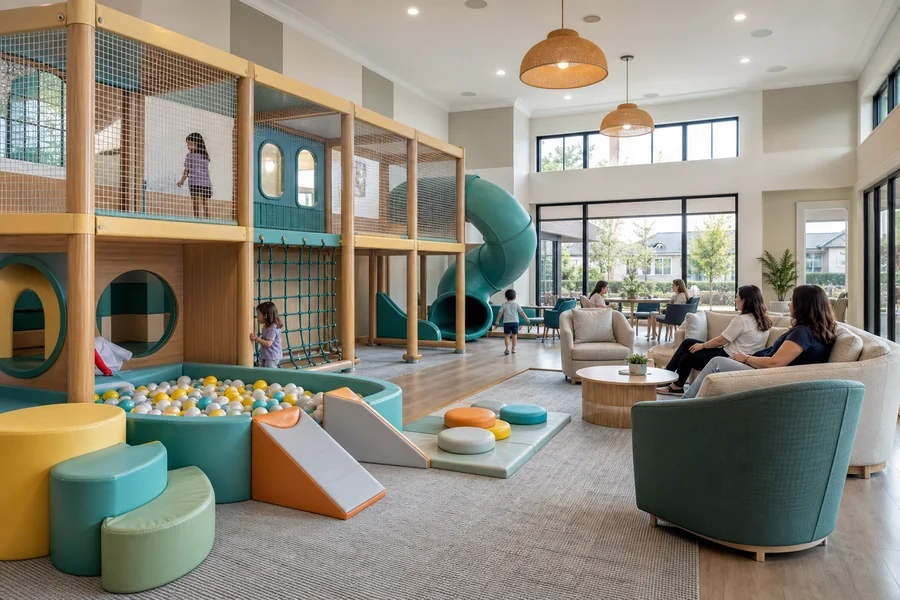
An indoor playground for HOA communities turns underused clubhouse or amenity space into a year-round, weatherproof draw for families — and it’s one of the highest-return investments a residential community can make. Unlike an outdoor playground that goes unused half the year, an indoor play area works in any weather, stays protected from sun damage and vandalism, and keeps children within a supervised, controlled space. This guide walks HOA boards, property managers, and developers through everything that matters before you commit: where it fits, what it costs, the safety standards involved, how to handle liability and insurance, and how the amenity pays you back through property values and resident retention.
HOA Playground Planning Guide
A Practical Guide for HOA Boards Planning Indoor Playground Amenities
For HOA communities, an indoor playground is more than a children’s play area. It can become a family-friendly amenity that improves resident satisfaction, supports community value, and makes shared spaces more attractive year-round.
KoalaPlay has over 10 years of experience in indoor playground design and project implementation, helping clients plan safe, durable, and visually appealing play spaces from early concept to final installation.
Why Indoor? Indoor vs. Outdoor Playgrounds for HOAs
Most HOA playground guides assume you’re building outdoors. But an indoor play area solves problems an outdoor structure can’t:
- Year-round, all-weather use. Rain, snow, extreme heat, and poor air-quality days don’t close an indoor playground. In hot-summer or cold-winter climates especially, that can mean the difference between an amenity used 4 months a year and one used 12.
- Less weather wear and vandalism. Equipment kept indoors avoids UV fading, rust, storm damage, and after-hours misuse — which lowers long-term maintenance and replacement costs.
- Controlled, supervised space. Access can be limited to residents via key-fob or clubhouse hours, and the enclosed layout keeps children in clear sightlines of parents.
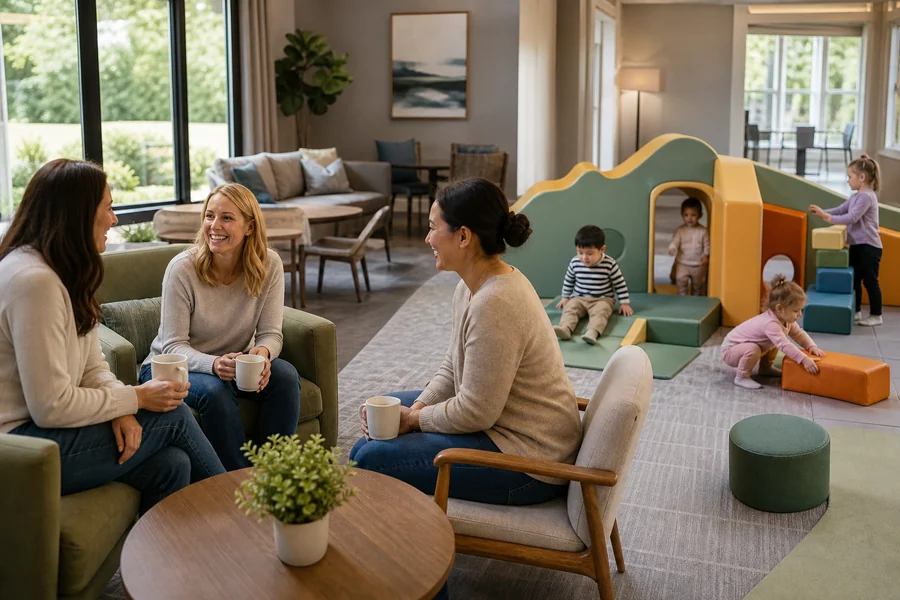
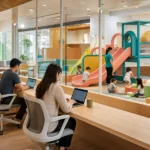
- A social hub that extends clubhouse use. Pairing the play area with seating turns it into a gathering space, driving more day-to-day foot traffic to an amenity building that might otherwise sit idle.
Outdoor playgrounds still have their place, and many communities run both. But for an HOA weighing where to put limited amenity dollars, the indoor option delivers usable days per year that an outdoor structure simply can’t match.
The Benefits Your Board Cares About
When you present this to the board, lead with the outcomes that move a vote:
Property values and competitive listings. Family-friendly amenities are a documented driver of home value, and the National Recreation and Park Association has long noted that proximity to quality recreational amenities raises what families are willing to pay. For an HOA competing against newer developments down the road, a standout indoor amenity helps your listings stand out.
Resident retention and satisfaction. Families with young kids are among the most likely to move when their needs aren’t met. A safe, convenient, free place for children to play — without leaving the community — is a tangible reason to stay and renew.
Community building. Play areas become natural gathering points where parents meet, neighbors connect, and the community feels more like one. That social glue is hard to buy any other way.
A reason to use the clubhouse. Many HOAs struggle to justify the upkeep on amenity buildings. A playground gives families a daily reason to walk through the door.
Where It Fits: Space & Location Options
You rarely need to build new. Most communities adapt space they already have:
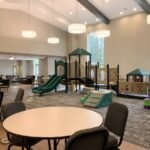
- Underused clubhouse rooms — a multipurpose room, old game room, or oversized lobby.
- Amenity or community buildings that are booked only occasionally.
- Vacant commercial-zoned units in larger mixed-use developments.
A few planning factors to check before you fall in love with a room:
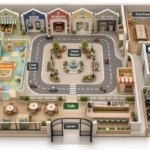
- Floor area. A compact toddler zone can work in a few hundred square feet; a mixed-age area with climbing structures, slides, and a ball pit benefits from more open floor. Have a manufacturer assess the specific room rather than guessing.
- Ceiling height. Multi-level structures, climbing, and slides need vertical clearance — confirm it early.
- Adjacency to restrooms. Families stay longer when bathrooms (and ideally a water fountain) are close by.
- Parent seating and sightlines. Reserve room for a seating area where adults can supervise comfortably.
- Flooring and access. A flat, prep-ready floor and an accessible entrance keep installation simpler and meet ADA expectations.
Design & Equipment Ideas by Age Zone
The best HOA play areas serve a range of ages and abilities rather than one. Common building blocks:
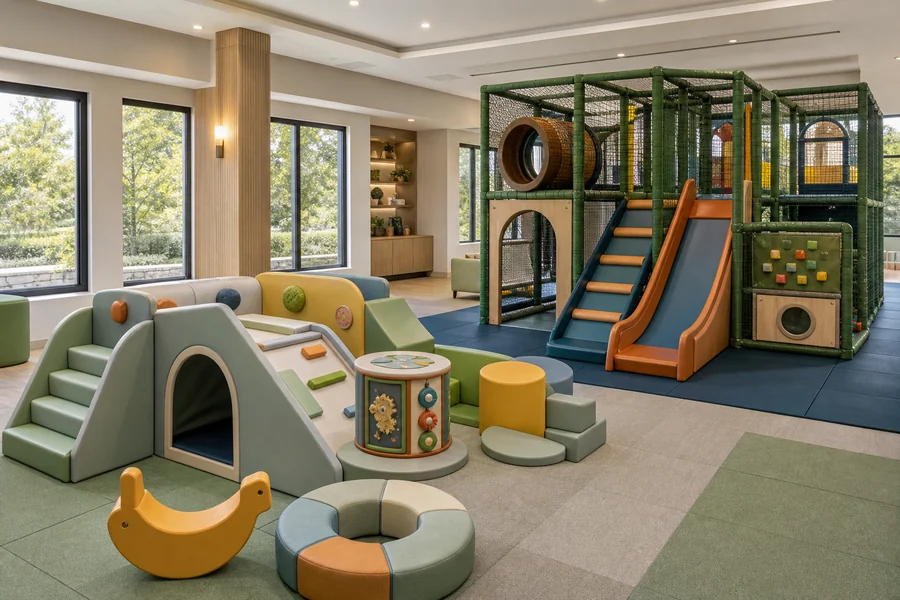
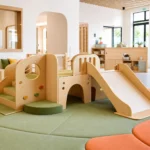
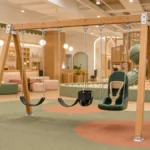
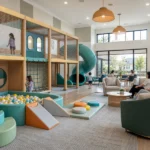
- Toddlers (roughly 1–4): soft-play foam shapes, low padded climbers, a small ball pit, sensory panels, and rounded, low-height features.
- Older kids (roughly 5–10): multi-level play structures, tube slides, climbing elements, interactive walls, and active components that burn energy.
- Inclusive & sensory play: ADA-accessible entry and components, ground-level activity panels, and quieter sensory zones so children of all abilities can join in.
- Themed and role-play corners (optional): a small pretend-play nook — a mini kitchen, store, or fire-station corner — adds imaginative play and makes the space more memorable.
- Parent lounge: comfortable seating, a few tables, and clear sightlines turn the room from a drop-off into a destination where adults actually want to spend time.
Browse complete configurations on KoalaPlay’s indoor playground and role-play solutions for ideas you can adapt to your room.
Cost & Budgeting of Indoor playground for HOA Communities
Indoor playground costs vary widely with size, structure complexity, safety flooring, and customization, so treat any single number with caution and get a quote scoped to your actual room. As a frame of reference, residential community play installations generally range from modest single-structure setups into the tens of thousands for larger multi-element builds with safety surfacing and site amenities. Indoor projects carry their own variables — flooring, soft-play volume, and ceiling-dependent structures — so a site-specific quote is essential.
What drives the number:
- Square footage and how densely it’s filled
- Structure height and complexity (single play unit vs. multi-level system)
- Safety surfacing and padding
- Customization and theming
- Installation and site prep
How HOAs typically fund it:
- Reserve funds earmarked for capital improvements
- Operating budget for smaller phased additions
- Special assessment when residents support a larger amenity upgrade
- Phased builds — start with a core toddler zone and expand as budget allows
Frame the spend against the return: a one-time amenity investment that supports property values, retention, and clubhouse usage for years.
What Should HOA Boards Consider Before Investing?
Before approving an indoor playground project, HOA boards usually need to consider space size, target age groups, safety standards, maintenance needs, installation cost, and long-term value for residents.
Related Readings:
Safety, Standards & Surfacing
Safety is non-negotiable, and it’s also what protects the HOA. Insist on:
- Commercial-grade, certified equipment meeting recognized standards such as ASTM and CPSCguidelines (not residential/backyard equipment).
- Impact-absorbing flooring appropriate to fall heights, with cushioned padding under and around structures.
- Rounded edges, secure anchoring, and flame-retardant, easy-to-clean soft-play materials.
- Clear age separation so toddlers and older children aren’t competing in the same space.
- Hygiene and cleanability — surfaces that wipe down easily and a maintenance routine to keep them sanitary.
Ask any prospective manufacturer for documentation of compliance and warranty coverage before you buy.
Liability & Insurance Considerations
This is the question that stalls more HOA play projects than cost — and most competitors skip it entirely, so address it head-on with your board.
Practical risk-management measures to discuss:
- Posted rules and supervision signage (e.g., “children must be supervised by an adult at all times,” age and capacity limits).
- Defined hours of operation and controlled access, such as key-fob entry limited to residents.
- Clear use policies covering supervision responsibility, footwear/sock rules, and food/drink restrictions.
- Regular inspection and maintenance logs to demonstrate due diligence.
- Coordination with your insurance carrier to confirm coverage and any required endorsements before opening.
A quick but important note: this is general guidance, not legal or insurance advice. Every community’s governing documents, state laws, and policy terms differ, so review your specific plan with the HOA’s attorney and insurance provider before moving forward.
How to Get Board Approval
A clear process makes approval far easier:
- Gauge demand. Survey residents (online forms, meetings, or community forums) to document interest — boards approve what residents clearly want.
- Build the ROI case. Present the property-value, retention, and clubhouse-usage benefits alongside the budget.
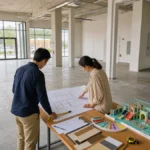
- Gather quotes. Get site-specific proposals from one or more qualified manufacturers so the numbers are real.
- Address liability up front. Bring the insurance and safety plan to the meeting so the board’s first objection is already answered.
- Plan the timeline. Outline design, approval, lead time, and installation so expectations are set.
Need a Playground Plan for Your HOA Community?
Contact KoalaPlay for Indoor Playground Design Ideas
KoalaPlay offers hundreds of indoor playground design cases for reference. Contact us to get layout ideas, theme options, cost planning support, and one-stop project guidance for your HOA community amenity space.
Contact KoalaPlayChoosing a Manufacturer or Installer
Not all playground suppliers are equal. Look for:
- Commercial-grade certification and documented ASTM/CPSC compliance
- Customization to fit your specific room and age mix
- Experience with indoor and commercial installations (not just backyard sets)
- Warranty and after-sale support
- Realistic lead times and installation support
KoalaPlay specializes in indoor playground and play-area equipment for commercial and community spaces, with customizable designs built to fit your footprint. See related planning resources on the types of play cafe and explore role-play and themed zones you can adapt for an HOA clubhouse.
Frequently Asked Questions
How much does an indoor playground for an HOA cost?
It depends heavily on the size of the space, the complexity and height of the structures, safety flooring, and any customization. Smaller single-zone setups cost considerably less than large multi-element builds. The only reliable way to budget is a quote scoped to your specific room.
How much space do we need?
A compact toddler zone can work in a few hundred square feet, while a mixed-age area with climbing structures and a ball pit benefits from a larger, open room with adequate ceiling height. A manufacturer can assess a specific space and recommend a layout.
What about liability and insurance?
Manage risk with posted rules, supervision requirements, controlled access, defined hours, and routine maintenance — then confirm coverage with your insurance carrier and review the plan with your HOA attorney before opening.
Does the equipment need to meet specific safety standards?
Yes. Use commercial-grade equipment that meets recognized standards such as ASTM and CPSC, paired with impact-absorbing flooring. Avoid residential/backyard-grade products in a shared community setting.
Is it ADA accessible?
It should be. Plan for an accessible entrance and include inclusive, ground-level components so children of all abilities can participate.
Who maintains it?
The HOA typically handles routine cleaning and inspection, often through its existing maintenance staff or management company. Choose durable, easy-to-clean equipment to keep upkeep manageable.
How long does installation take?
Timelines vary by project size and customization. Factor in design, board approval, manufacturing lead time, and installation when planning — your supplier can give a project-specific schedule.
Turn Empty Clubhouse Space Into Your Most-Used Amenity
An indoor playground is one of the few amenities that pays a community back on every front — property values, resident satisfaction, and daily use of a building you’re already maintaining. The key is planning it right: the correct space, certified equipment, a sound safety and insurance plan, and a clear case for the board.
If you’re ready to see what would fit your clubhouse, contact KoalaPlay for a space assessment and quote tailored to your community’s room, age mix, and budget.
Reference
- AAA State of Play. (n.d.). Playground equipment for HOAs & apartment complexes. https://www.aaastateofplay.com/playground-equipment-for-hoas/
- Cedar Management Group. (n.d.). 9 HOA amenities you must have in your HOA community. https://www.cedarmanagementgroup.com/hoa-amenities-must-have/
- Little Tikes Commercial. (n.d.). Commercial playground equipment. https://littletikescommercial.com/our-products/commercial-playground-equipment/
- MRC Recreation. (n.d.). Revitalizing neighborhoods: An HOA’s guide to community park and playground amenities. https://mrcrec.com/blog/hoa-guide-to-community-park-and-playground-amenities
- USA Shade. (n.d.). HOA playground planning 101. https://www.usa-shade.com/blog/hoa-playground-planning-101/



 English
 Spanish
 German