
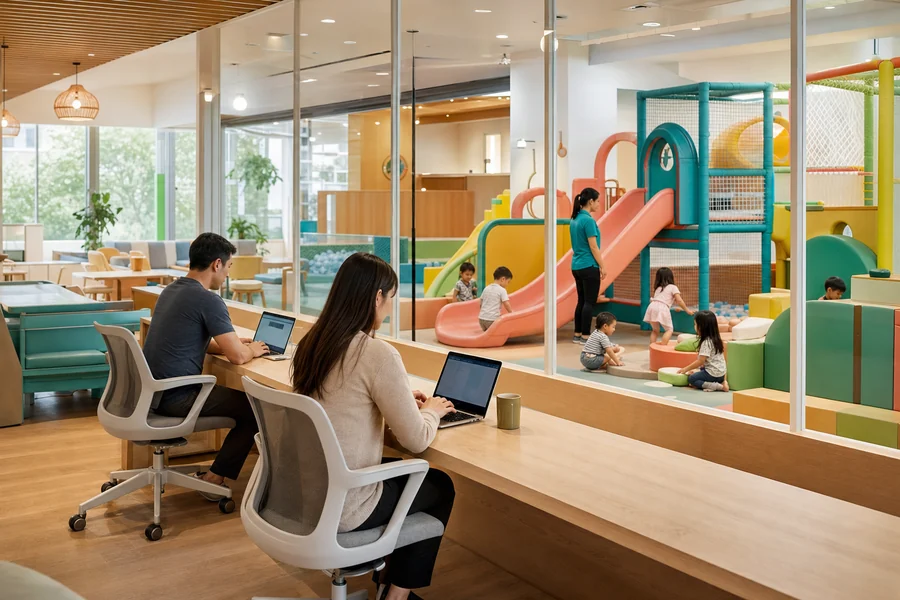
Your play area is packed on weekends and after school, then sits nearly empty on weekday mornings. Meanwhile, the local remote-working parent is stuck at home trying to answer emails with a toddler climbing the couch — and paying nobody for the privilege.
That mismatch is expensive. Empty floor space and idle staff still cost you rent and wages, and the summer or mid-week slowdown can quietly erase a good month. Most operators try to fix it with another party package or a discount that trains customers to wait for sales.
A coworking indoor playground solves the gap from the other direction. You give parents a comfortable, quiet-enough place to work while their children play in a supervised zone, and you sell that access as memberships, pass packs, or day passes. It fills your slow hours, adds a recurring revenue stream that childcare demand keeps steady year-round, and brings a new, higher-spending audience through your door. The rest of this guide covers who it’s for, how to lay it out, what to charge, and the mistakes that sink it.
Why add coworking to an indoor playground?
Childcare is a need, not a luxury — and needs hold up better in a soft economy than premium parties and unlimited memberships. Adding a work zone lets you serve that need without becoming a licensed daycare, because parents stay on-site the whole time.
It’s also low barrier to entry. Since caregivers remain in the building, most operators don’t need new childcare licensing, and insurers will often approve it with a supplemental waiver on top of your normal facility waiver. Always confirm this with your own insurer and a local attorney, since rules vary by country and state.
The revenue logic is strong for four reasons:
- It smooths out seasonality. Indoor play is highly seasonal, but the need for childcare is not. A coworking offer can carry you through the summer slump and quiet weekday mornings.
- It uses space and staff you’re already paying for. Off-peak hours become billable hours instead of dead time.
- It attracts new, higher-spending customers. Remote workers, freelancers, and small-business owners often have more disposable income — and once they’re in the door, they buy coffee, classes, and parties too.
- It opens B2B sales. You can approach local employers about buying coworking packages as a perk for their remote staff, which is often easier than selling to individuals one at a time.
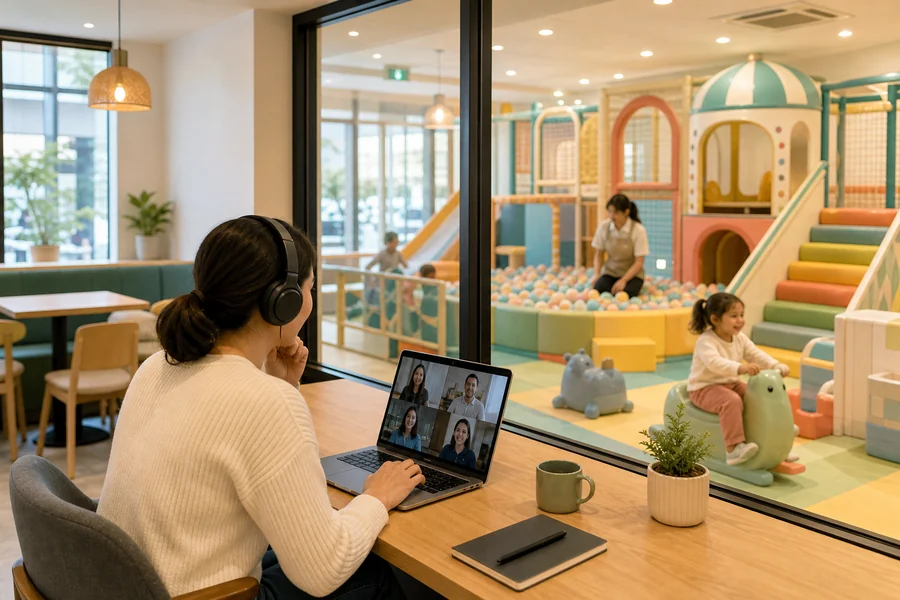
If you’re still deciding what kind of venue you’re building, it helps to understand the different types of play cafe and which model fits your space before you commit floor plans to a work zone.
Who a coworking play cafe is actually for
Don’t assume it’s only stay-at-home parents. The people most likely to pay for a coworking play cafe include:
- Working parents and caregivers who work from home or freelance and need a few focused hours.
- Entrepreneurs and small-business owners who’d rather have childcare on-site than juggle an office lease and a daycare drop-off.
- Students and freelancers who want a quiet, productive spot close to home.
- Local community groups who might book the space for meetings when it’s not busy.
Knowing which of these groups actually exists in your area — and will pay a fair price — is the whole ballgame. It’s the difference between a profitable program and a nicely furnished corner nobody uses.
Validate before you build: run a pilot
The single biggest mistake is a full build-out before you’ve proven demand. Adding coworking simply doesn’t fit every space or every market, and the wrong build-out can make your play cafe startup costs harder to recover. Test it first with a small pilot.
A workable pilot looks like this:
- Lean on current customers first. People who already know and trust you are far easier to enroll than cold locals.
- Set clear objectives. Decide what success means — a target number of users, or specific feedback on the space and pricing.
- Run it for at least a few months. One or two weeks won’t give you real data. Give the offer time to catch on.
- Offer an incentive. A founding-member discount or a few free trial hours pulls in early sign-ups.
- Gather feedback from customers and staff. Your team will notice friction you can’t see — especially around supervision and flow.
- Analyze the patterns. Which days and hours had demand? What session length worked best for everyone?
- Adjust, then roll out in phases. Fix the space, forms, and messaging before you market to people who’ve never visited.
Treat the pilot as your research lab. It tells you whether to expand, tweak, or quietly shelve the idea — before you’ve spent real money on it.
Designing the space: separation is everything
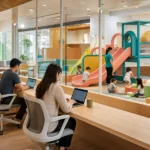
Here’s the hard-won lesson operators repeat: if parents are always in their child’s line of sight, the model breaks. Kids see mom or dad, want them, and you get tantrums, interruptions, and frustrated staff. A work zone only works when there’s real separation between work and play.
When you plan a coworking space with childcare, design for these elements:
- Visual and physical separation. Use a glass partition, a dedicated room, or a smart layout so parents can work without being a constant target — while staff keep clear sightlines on the children.
- A supervised, age-appropriate play zone. Very young toddlers are high-needs and demand more staff. Match the play area and staffing to the ages you actually serve, especially if the core attraction is a toddler and soft play area.
- Comfort and amenities. Ergonomic seating, real desks, reliable high-speed Wi-Fi, and plenty of power outlets are non-negotiable for people trying to work. For venues built around adult dwell time, the parent lounge and cafe zone deserves the same design attention as the play structure.
- Quiet options. Consider a soundproof pod or a small enclosed room for phone calls and video meetings.
- Clear identification. Wristbands, name tags, or lanyards help staff and other guests tell coworking members apart at a glance.
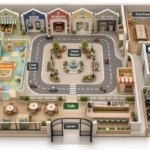
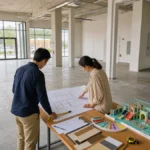
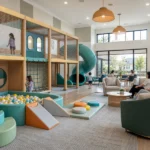
This is where the layout has to do double duty — a great parent-facing play space and a functional work environment. Getting the zones, sightlines, and partitions right at the design stage is far cheaper than retrofitting later. Koalaplay plans exactly these trade-offs into its Play Café space design and layout process, balancing supervision, parent seating, and separated zones from the first floor plan. If the venue needs stronger repeat-visit value, a role play zone and pretend-play corner can sit near the play side without disturbing the work side.
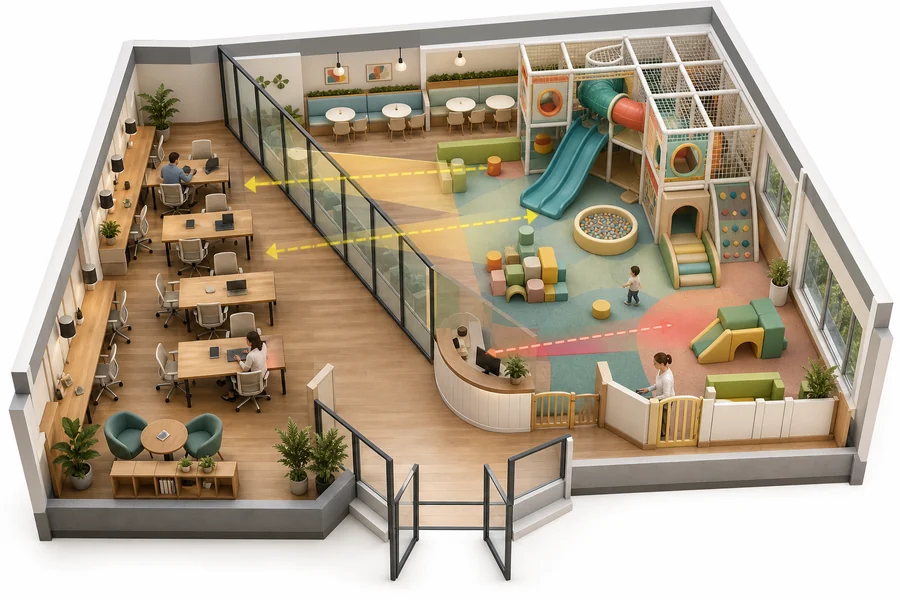
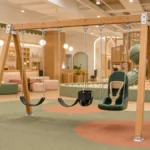
If you’re specifying the play side of the room, matching structures to your ceiling height, columns, and age mix matters as much as the work furniture — this is where custom indoor playground equipment built for your floor plan keeps the two zones working together instead of fighting for space.
Pricing your coworking indoor playground
Flexibility attracts people, but leaning too hard on single day passes will sink you. Coworking adds staffing and preplanning costs, so you need reliable, recurring revenue to cover them. Structure your offers to push customers toward commitment.
A proven three-offer structure:
| Offer | Who it’s for | How it’s priced |
|---|---|---|
| Monthly membership | Regular users needing consistent access | Best per-hour value; your anchor offer |
| Pass pack | People who come 1–2 times a week | A discount off the drop-in rate |
| Family package | Part-time workers, freelancers, students | Bundles coworking hours with open play |
| Drop-in / day pass | New, curious visitors only | Priced highest per hour, to steer people to the above |
The rule of thumb: make the single drop-in the most expensive per hour so it nudges regulars toward memberships and packs. Set actual prices against your local market — research what nearby coworking spaces and childcare options charge, make sure your rate covers amenities and staff, and keep it consistent with your other offerings. Build in a healthy margin so the program funds not just its direct costs but operating overhead and reinvestment; Koalaplay’s play cafe membership pricing guide is a useful companion when you shape the offer menu.
Get the technology and operations right
You’ll want booking-and-management software to handle reservations, memberships, and payments without manual chaos. On the amenities side, dependable Wi-Fi, a printer, and virtual-meeting-friendly quiet spaces do a lot to justify a premium price.
On operations, plan for the details that protect you and your guests: a supplemental coworking waiver, clear on-site rules (parents stay in the building, handle their own child’s toileting, and step in for behavior issues), and possibly enhanced staff training or background checks depending on local requirements. Loop in your insurer and attorney early — this is a new revenue stream, and you want it covered properly.
Because a coworking zone leans on your café and seating as much as your play equipment, it pays to think of the whole room as one system. Koalaplay’s end-to-end design, manufacturing, and installation service is built around that commercial-operations view rather than just shipping equipment. If your venue has a strong brand concept, the custom theme design stage can make the work zone, cafe, and play area feel connected instead of patched together.
Common mistakes to avoid
- Building before validating. No pilot, no data, no idea whether locals will pay. This is the most expensive error.
- No separation of zones. Parents in constant eye-contact with their kids equals constant interruptions.
- Over-relying on day passes. Unpredictable revenue can’t cover predictable staffing costs.
- Ignoring your real demographics. If few people work remotely in your area, the model may not sustain itself — validate first.
- Cutting corners on safety and materials. A commercial family space lives and dies on trust; equipment that meets recognized safety standards protects both children and your reputation.
On that last point, insist on structures and surfaces made to recognized commercial standards. Koalaplay documents its materials and safety-standard compliance (referencing frameworks such as ASTM and EN 1176) so operators can back up safety claims to parents and inspectors.
Frequently Asked Questions
Do I need a childcare license to add coworking to my indoor playground? Usually not, because parents stay on-site the entire time rather than dropping children off. That said, rules vary by country and state, so confirm with a local attorney and your insurer before launching. Most insurers approve it with a supplemental waiver added to your standard facility waiver.
How much space do I need for a coworking zone? Less than you’d think — the key is separation, not square footage. Even a partitioned corner or a small dedicated room can work if it keeps parents out of their children’s constant sightline while staff maintain supervision. A manufacturer can assess your specific floor plan, ceiling height, and columns before you commit.
What should I charge for a coworking play cafe membership? Price against your local market. Make the single drop-in the most expensive per hour, then offer better per-hour value through monthly memberships and pass packs to encourage recurring commitment. Always cover your amenity and staffing costs and build in margin for overhead and reinvestment.
Why do some coworking indoor playgrounds fail? The most common reasons are launching without a pilot, poor zone separation that leads to constant child interruptions, relying too heavily on unpredictable day passes, and weak local demand for remote-work childcare. Validating demand and designing real separation solve most of these before they start.
Is coworking a good fit for every indoor playground? No. It works best where there’s genuine local remote-work demand, an age mix that doesn’t require overwhelming staff ratios, and a layout that allows true separation of work and play. A short pilot is the safest way to find out whether your market and space qualify.
Ready to design a work zone that actually works?
A coworking indoor playground can turn your slowest hours into steady, recurring revenue — but only if the layout, zoning, and equipment are built for it from the start. That’s the part most operators get wrong, and the part that’s hardest to fix after opening.
Koalaplay helps commercial operators plan exactly this: separated work-and-play zones, supervision sightlines, parent seating, and custom play structures sized to your floor plan — with a free initial design and budget breakdown. Tell us about your space and get a free quote and preliminary layout, and we’ll help you build a coworking zone that pays for itself.
References
- How to Add Co-working To An Indoor Playground Or Play Cafe Business — Michele Caruana / Play Cafe Academy — https://www.michelecaruana.com/blog/add-coworking-to-your-indoor-playground
- 6 Types of Play Cafe Explained (+ Which One to Open) — Koalaplay — https://koalaplayground.com/types-of-play-cafe/
- 10+ Coworking and Childcare Spaces to Visit — Optix — https://www.optixapp.com/blog/top-childcare-and-coworking-spaces/
- Incredible Co-Working Spaces That Also Offer Childcare — Tinybeans — https://tinybeans.com/co-working-spaces-that-offer-child-care/
- Combine Work and Play at Alexandria’s New Play Café — Northern Virginia Magazine — https://northernvirginiamag.com/family/2025/02/13/combine-work-and-play-at-alexandrias-new-play-cafe/
- Koalaplay Play Café Solutions — Koalaplay — https://koalaplayground.com/play-cafe/




 English
 Spanish
 German