
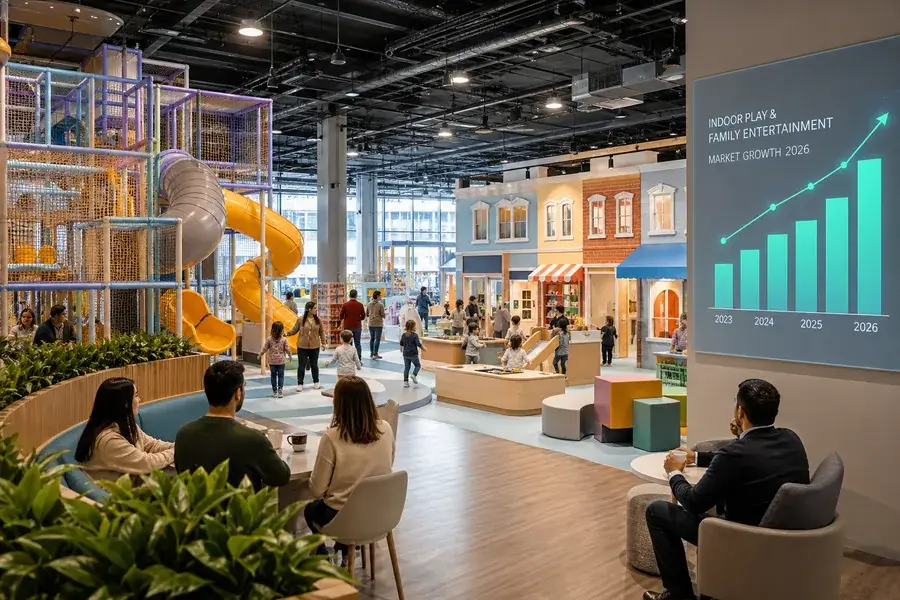
Indoor playground projects are getting more serious in 2026 and 2027. A few years ago, many investors treated soft play as a small add-on for malls, cafes, schools, or community spaces. Now, more operators see it as a traffic engine, a family membership product, and a reason for parents to return every week.
That growth also creates pressure. Rent is higher, parents expect cleaner and safer spaces, and children get bored quickly if a venue feels like a generic slide-and-ball-pit room. A profitable indoor playground now needs better planning, stronger theming, age zoning, parent comfort, birthday revenue, and equipment that can survive daily commercial use.
The short answer: the indoor playground industry is booming because families want weather-proof active play, landlords want experience-based tenants, and operators want repeatable family revenue models. The strongest opportunities are in play cafes, family entertainment centers, daycare and preschool spaces, mall entertainment, role play cities, toddler soft play, and mixed-use community venues.
Why the Indoor Playground Industry Is Growing Now
Several forces are pushing the market forward at the same time.
Parents are looking for indoor options that feel safer, cleaner, and easier to supervise than crowded outdoor parks. In hot, cold, rainy, or polluted seasons, an indoor venue gives families a predictable place to play. For cities with dense apartments and limited private outdoor space, this matters even more.
Commercial landlords also need family traffic. Shopping centers, food courts, mixed-use developments, hotels, and community malls are adding entertainment uses because pure retail is no longer enough. A well-planned indoor playground can increase dwell time, support food and beverage spending, and give families a reason to choose one destination over another.
At the same time, the business model has improved. Operators are not limited to one-time admission. Many venues now combine entry tickets, memberships, birthday parties, private events, cafe sales, daycare partnerships, school trips, and branded merchandise. This makes a strong indoor playground concept more resilient than a simple pay-to-play room.
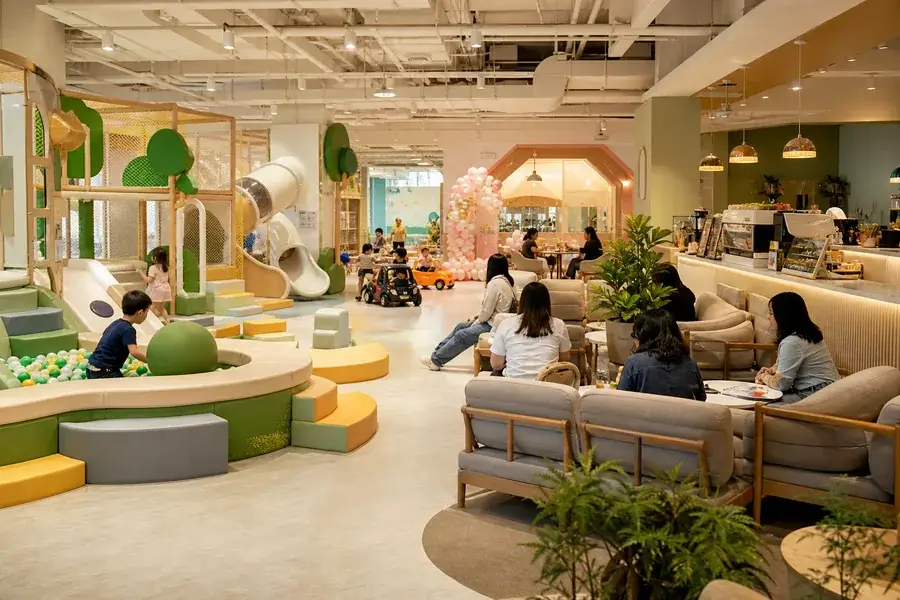
For buyers comparing concepts, Koalaplay’s play cafe solution is a useful example of how play equipment, parent seating, cafe flow, birthday areas, and sightlines can work together instead of being planned as separate pieces.
The Biggest Trends for 2026 and 2027
The next wave of indoor playground growth is less about adding more equipment and more about designing a better family experience.
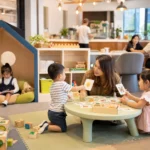
Play cafes are becoming more operationally mature. Parents want visibility, comfortable seating, food and drinks, clean restrooms, stroller access, and easy party booking. A good play cafe layout puts parent comfort and child movement in the same plan.
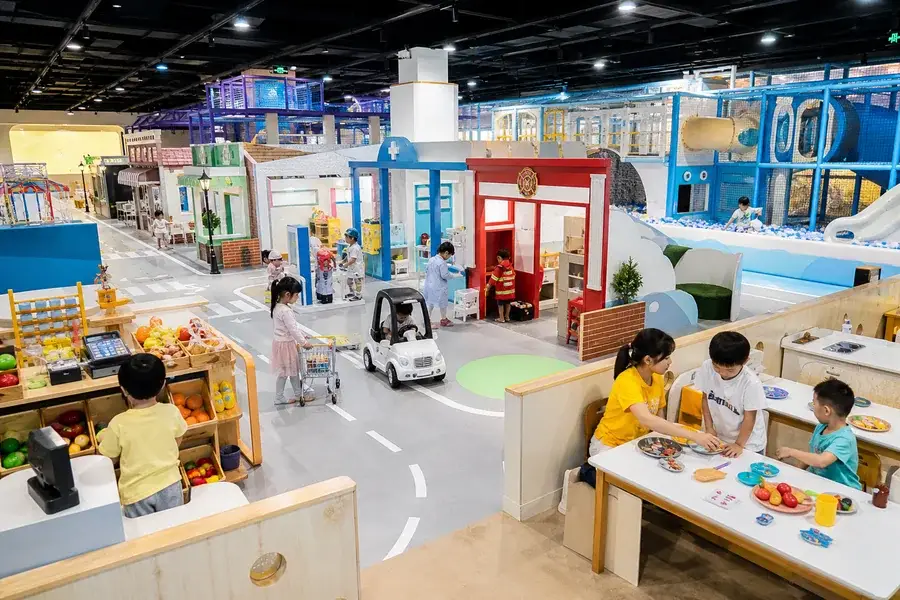
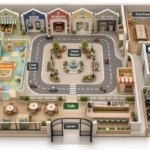
Role play and mini-city themes are gaining value. Pretend play areas such as supermarkets, kitchens, hospitals, beauty salons, repair shops, police stations, and fire stations create storytelling. Children stay longer because the play changes every visit. Operators benefit because these scenes support classes, parties, seasonal events, and social media content.
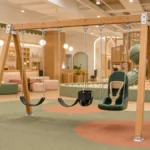
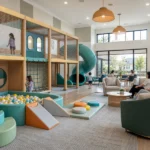
Toddler zones are becoming more specialized. Families with children under six need lower heights, softer transitions, simple climbing, sensory panels, clear age separation, and calmer color design. This is why toddler soft play is often a smart choice for daycare, preschool, and cafe-based venues.
Hybrid venues are replacing single-purpose rooms. Many new projects combine soft play, role play, ninja elements, trampolines, climbing, birthday rooms, cafe seating, and retail corners. The best mix depends on floor area, ceiling height, target age, supervision plan, and staffing.
Safety and maintenance are now sales points. Parents notice worn vinyl, loose netting, dirty ball pits, poor ventilation, and blind spots. Operators who plan cleaning access, spare parts, inspection routines, and material quality from day one protect their brand as well as their budget.
Koalaplay’s material and quality information explains why commercial buyers should look beyond visual style and ask about structure, padding, netting, surfacing, and long-term use.
Where the Best Opportunities Are
The indoor playground industry is broad, so the best opportunity depends on the venue type.
For a cafe owner, the opportunity is not only ticket sales. It is longer parent stay, repeat weekday visits, birthday bookings, and higher food and drink conversion. A smaller play cafe can win if the layout is clean, the parent sightlines are strong, and the equipment is matched to the age group.
For a mall or shopping center, the opportunity is traffic. A family attraction can turn dead space into a destination and help surrounding tenants. The key is to create an entrance, pricing model, and party offer that actually pulls families into the property.
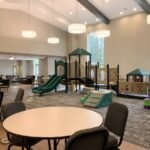
For a daycare, preschool, or early learning center, the opportunity is differentiation. Indoor play equipment can support gross motor development, rainy-day activity, parent tours, and after-school programs. In this setting, age zoning and easy supervision matter more than dramatic height.
For a larger family entertainment center, the opportunity is segmentation. Younger children may need soft play and pretend play, while older children want ninja courses, climbing, slides, and challenge zones. A smart FEC does not force every age into the same equipment.
Koalaplay’s indoor playground equipment page shows how different equipment families can support different commercial venue types.
What Is Driving Investor Interest
Investors are paying attention because indoor playgrounds sit at the intersection of several durable needs: children need active play, parents need reliable family destinations, and commercial spaces need experience-led traffic.
Market reports for indoor children’s playground equipment continue to point toward multi-year growth, while industry groups such as IAAPA treat family entertainment centers and location-based entertainment as important parts of the attractions ecosystem. Those signals do not mean every project will succeed. They do mean the category is no longer a niche idea.
The projects with the best chance usually share five traits:
- A clear target age range.
- A layout that supports parent visibility and staff supervision.
- A revenue plan beyond basic admission.
- Commercial-grade materials and documented safety thinking.
- A theme that makes the venue memorable without making maintenance difficult.
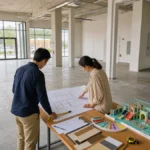
From Koalaplay’s project experience, early planning usually prevents the most expensive mistakes. When clients send a floor plan before choosing equipment, it is easier to protect exits, avoid blind spots, reserve party space, plan cafe seating, and keep the play structure realistic for the ceiling height.
Design Choices That Matter More Than Size
A bigger indoor playground is not automatically better. A 100 square meter play cafe with the right flow can outperform a larger room with poor visibility and confusing zones.
Start with age zoning. Toddlers need soft, low, simple equipment. Preschool children need pretend play, sensory panels, small slides, and safe climbing. Older children need challenge, speed, and variety. Mixing all ages in one structure often creates safety concerns and weakens the experience for everyone.
Next, plan the parent journey. Parents should know where to check in, where to sit, where to store shoes, where to watch children, and how to reach restrooms or party rooms without crossing high-energy play paths.
Then, plan operations. Staff need access for cleaning, inspection, first aid, party setup, and daily closing. Ball pits, tunnels, net bridges, and role play houses should be fun, but they also need to be maintainable.
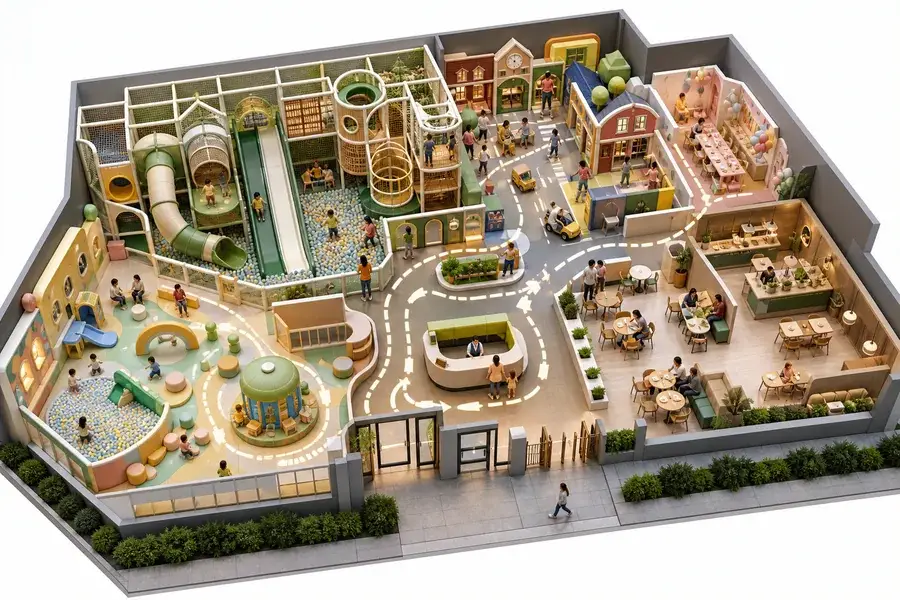
For custom projects, Koalaplay’s service process is useful because it starts with layout, theme, manufacturing, shipping, installation, and after-sales support instead of treating equipment as a standalone purchase.
Safety, Standards, and Buyer Confidence
Safety expectations are rising. Buyers should ask suppliers about materials, structure, padding, netting, anchoring, fire-related documentation where relevant, age suitability, and the standards used for design reference.
For soft contained play equipment, ASTM F1918 is one of the key references in the industry. The U.S. CPSC Public Playground Safety Handbook is also widely used for playground safety guidance, even though buyers still need to follow local rules, building codes, fire requirements, and insurance requirements in their own country or city.
This is especially important in 2026 and 2027 because families compare venues quickly. A beautiful venue can lose trust if it feels dirty, poorly supervised, or badly maintained. Safety is not only a compliance topic. It is part of the customer experience.
How to Choose the Right Concept for Your Venue
If you are planning a new project, do not start by asking, "What equipment is popular?" Start with these questions:
- Who is the main age group?
- Is the goal ticket revenue, cafe revenue, birthday parties, membership, school use, or mall traffic?
- How many parents need seating at peak time?
- What is the ceiling height?
- Where are exits, columns, windows, restrooms, and fire routes?
- What theme will make the space memorable in photos and repeat visits?
- Who will clean, inspect, and operate the venue every day?
For play cafes, consider combining a toddler area, role play corner, soft climbing, parent seating, and party space. For larger FECs, consider a mix of indoor sports park elements and softer zones for younger siblings. For early education projects, consider daycare-focused equipment such as daycare playground equipment.
What 2026 and 2027 Operators Should Watch
The strongest operators will not chase every trend. They will choose a clear concept and execute it well.
Watch for more premium play cafes, more themed role play streets, more indoor playgrounds inside malls, more sensory-friendly areas, more mixed-age FEC layouts, and more demand for supplier documentation. Also watch for stronger competition. As the category grows, a generic space becomes easier to copy.
Your edge should come from the full venue experience: layout, theme, safety, cleaning, parent comfort, birthday operations, staff visibility, and equipment durability. The equipment matters, but the business system around it matters just as much.
Plan Your Indoor Playground Project With Koalaplay
Koalaplay provides turnkey indoor playground and play cafe solutions for commercial family venues worldwide. If you are planning a new venue for 2026 or 2027, send your site size, ceiling height, target age range, country, preferred theme, budget direction, and installation needs.
Our team can help you turn an empty floor plan into a practical play concept, including layout planning, custom theme design, equipment manufacturing, shipping support, installation guidance, and after-sales support. You can start through the Koalaplay contact page.
FAQ
Is the indoor playground industry still growing in 2026?
Yes. Demand is supported by family entertainment, play cafes, mall experience tenants, daycare upgrades, and weather-proof active play. Growth is strongest when the venue has a clear audience and a strong operating model.
What type of indoor playground has the best business opportunity?
Play cafes, themed role play venues, toddler soft play centers, mall-based family attractions, and mixed-use family entertainment centers are all strong options. The best choice depends on space, target age, rent, staffing, and local family demand.
How much space do I need for a commercial indoor playground?
Small play cafes can start with compact areas, while FEC projects may need much larger footprints. Instead of choosing by size alone, plan around age zones, parent seating, party rooms, sightlines, circulation, and maintenance access.
What should I ask an indoor playground supplier?
Ask for layout support, material details, safety references, customization options, production timeline, shipping support, installation guidance, warranty terms, spare parts, and examples of similar commercial projects.
Why are play cafes popular with new operators?
Play cafes combine children’s play with parent comfort and food or beverage revenue. They can support repeat visits, birthday parties, weekday traffic, and a more lifestyle-oriented family experience.
Related Koalaplay Resources
- Play Cafe Solutions
- Indoor Playground Equipment
- Indoor Sports Park
- Daycare Playground Equipment
- Material and Quality
- Service Process
- Contact Koalaplay
 English
 Spanish
 German