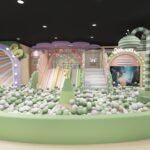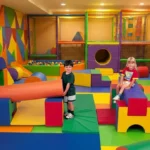
Indoor playgrounds and play cafés are designed to feel effortless for families—but the “easy” experience depends on decisions hidden underfoot. Flooring and surfacing affect how safe a space feels, how fast it can be cleaned between sessions, and how well the venue performs during peak hours.
For operators, surfacing is not a decorative finish. It influences fall-risk control, accessibility routes, noise, durability, and even opening speed (because rework is expensive once equipment is installed). It also shapes operating cost through maintenance labor, replacement cycles, and downtime.
Playground surfacing should be selected by fall height, use zone, and daily operations. Prioritize impact attenuation under elevated play, slip resistance near entrances and café edges, and cleanability for high-traffic routes. Compare systems by lifecycle cost (not just purchase price), and verify ASTM/ADA documentation for the installed system—not only the top layer.
Why Playground Flooring Choices Matter More Than Most Operators Expect
Most operators don’t lose money because the surfacing “looks bad.” They lose money because surfacing mistakes show up as:
- More incidents and complaints (especially at slide exits and busy transitions)
- Slower cleaning resets between sessions (labor adds up fast)
- Seam lifting and edge curling that turn into trip hazards
- Stains and odor retention that hurt your “clean venue” impression
- Unexpected repairs after only 6–12 months of real traffic
In short, your flooring influences the customer experience, your staffing workload, and your liability exposure—all at the same time.
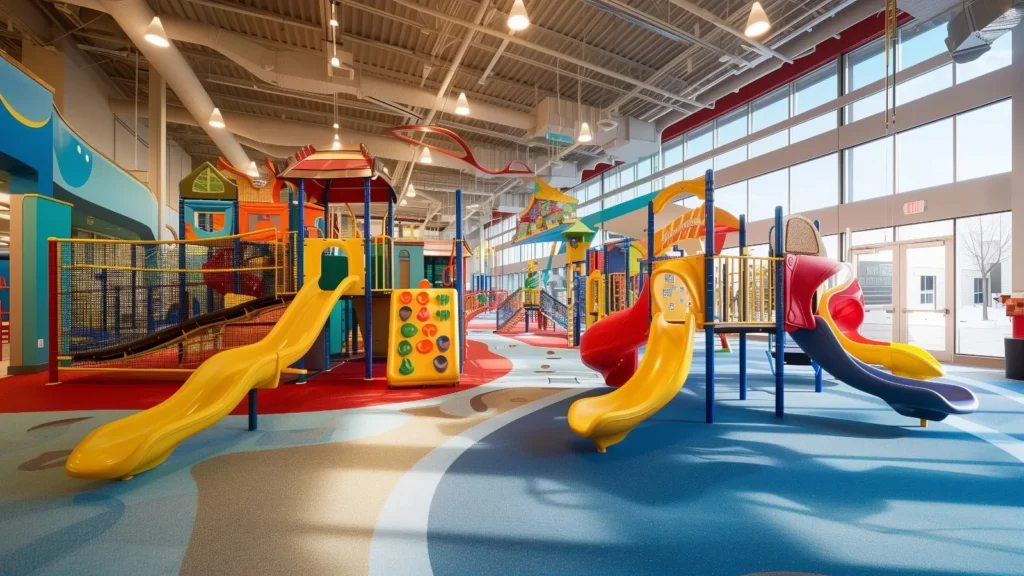
How do you match surfacing to fall height and safety standards?
Many buyers assume “soft = safe.” In reality, the same material can perform very differently depending on thickness, sub-base, installation, and how it ages.
A reliable decision workflow looks like this:
Play equipment fall height → Use zone map → Surfacing system → Thickness + base → Installation detailing → Maintenance routine
1) Identify fall height ranges by zone
Indoor play structures often include platforms and elements from roughly 2–6.5 ft (0.6–2.0 m) depending on the design. Higher fall heights generally require higher-performing surfacing systems.
Typical indoor risk areas include:
- Under elevated decks
- Climber exits and landing points
- Slide run-outs and side exits
- Entry/exit gates where kids sprint and stop suddenly
2) Separate “use zones” from “circulation zones”
This is where indoor projects win or lose.
- Use zones: falling is expected → impact attenuation is the priority
- Circulation zones: falling is less likely → slip resistance + cleaning speed become the priority
A smart venue typically uses more than one surfacing type:
- A high-performance impact surface under play equipment
- A more “facility-friendly” finish for café edges, corridors, and party routes
- A toddler surface that prioritizes comfort, hygiene, and noise reduction
3) Ask for system-based documentation (not marketing claims)
If a supplier says, “It’s safe,” your next question should be:
Safe for what fall height, with what thickness, on what base, and tested to what method?
For U.S. commercial projects, surfacing is commonly evaluated using:
- ASTM F1292 (impact attenuation in use zones)
- ASTM F1951 (accessibility evaluation for routes around play areas where applicable)
- CPSC guidance for playground safety planning and hazard reduction (commonly referenced by inspectors and risk programs)
You don’t need to become a standards expert—but you should require proof that the installed system matches your use zones.
Quick reference table: safety-focused surfacing comparison
| Surface category | Typical best use | Key advantages | Common risks if misapplied |
|---|---|---|---|
| Unitary rubber (poured-in-place / tiles) | Elevated play use zones + accessible routes | Consistent surface, easier accessibility, less daily raking | Higher upfront cost; poor base prep can cause cracking or edge lift |
| Engineered wood fiber (EWF) / wood chips | Outdoor use zones (where allowed) | Lower initial cost, natural look | Requires frequent depth maintenance; displacement under swings/landings |
| Artificial turf (play-grade system) | Mixed zones, aesthetic theming, moderate heights | Good visual design, comfortable walking | Needs correct shock pad/base; seam/infilling maintenance |
| Indoor EVA/foam + carpet/vinyl overlays (commercial grade) | Toddler zones + low-height soft play | Cleanable, quiet, comfortable | Not suitable for higher fall heights unless system is verified for impact needs |
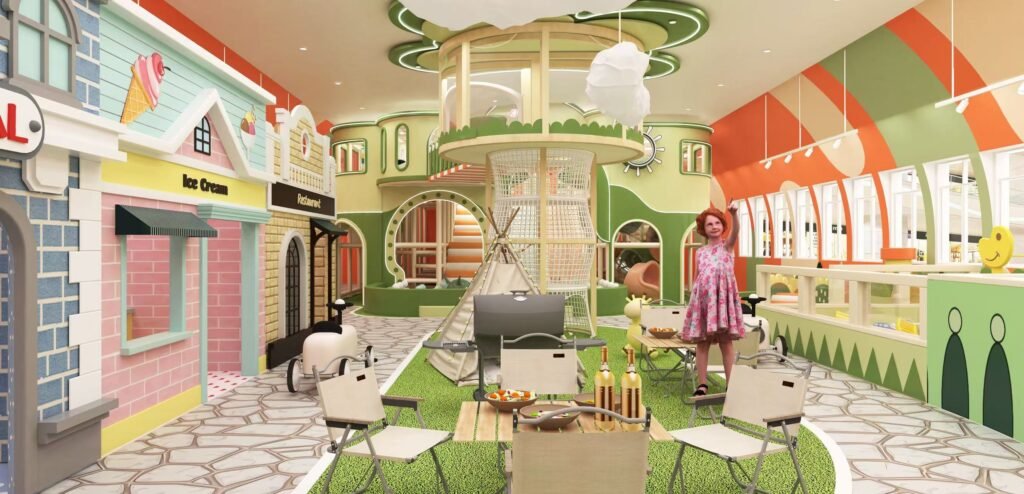
If you’re planning a commercial venue, like a play cafe, surfacing should be reviewed alongside your zoning and circulation plan. This is also where a supplier’s CAD layout and 3D rendering can prevent late changes—see how zoning decisions affect safety and operations in our Play Cafe Solution Page ,or Contact Koalaplay Team for more information.
Which playground flooring types work best for indoor vs outdoor venues?
A common misunderstanding is to copy an outdoor playground surface into an indoor space (or the opposite). Indoor venues face different constraints: cleaning speed, noise, odor sensitivity, HVAC humidity control, and a higher expectation of “hospital-clean” appearance—especially for play cafés and malls.
For indoor venues, prioritize cleanability, seam control, slip resistance, and noise reduction—then select impact-rated systems specifically for the fall heights in your indoor use zones. For outdoor venues, focus on drainage performance, UV/weather resistance, and ongoing depth/compaction management.
Indoor and outdoor projects often share the same safety intent, but they fail for different reasons. Indoors, the biggest operational pain points are staining, seam lifting, edge trip hazards, and cleaning time. Outdoors, it’s usually drainage failure, erosion, and loss of loose-fill depth.
From a supplier’s perspective, we typically break down indoor surfacing into three layers of decision:
1) Top layer: what families touch and see
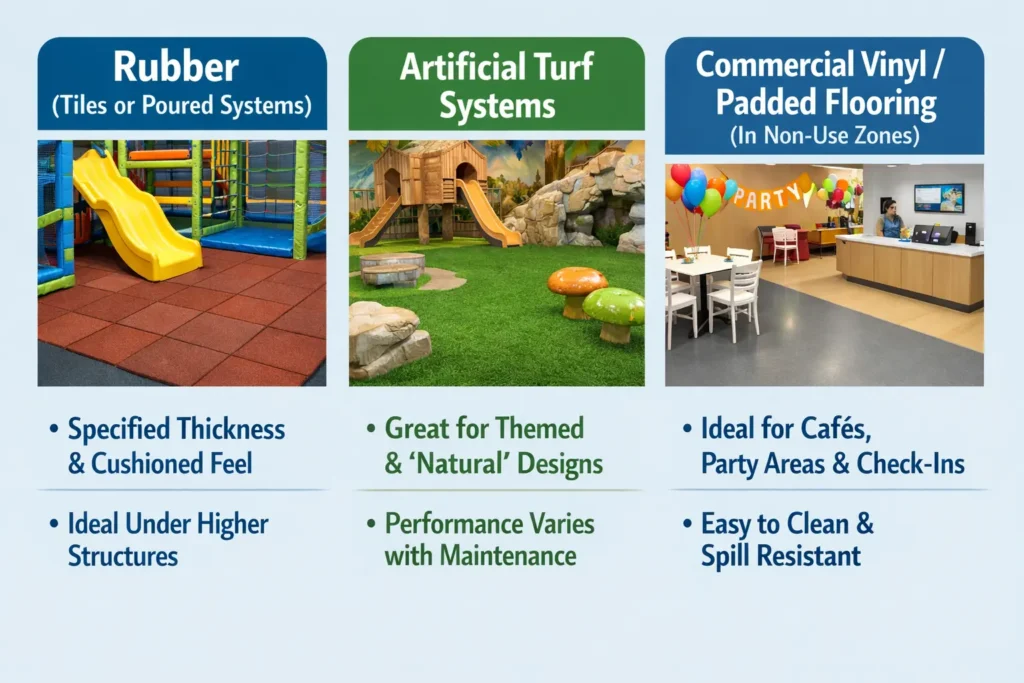
- Rubber (tiles or poured systems): often used under higher structures because it can be specified with known thickness and consistent walking feel.
- Artificial turf systems: popular for themed environments and “natural” design language; performance depends heavily on the underlayment (shock pad/base).
- Commercial vinyl or padded flooring (in non-use zones): efficient for café edges, party corridors, and check-in zones where spills happen.
2) Base and transitions: where failures start
Edges, thresholds, and transitions between surfaces cause most issues. A “good” material can become a bad installation if:
- the base is not flat and stable,
- seams are placed in high-turn areas,
- transitions create a toe-catching lip, or
- water/cleaning chemicals migrate into joints.
3) Operations: what your staff can realistically maintain
A surface that requires 30–45 minutes of daily grooming may be fine outdoors, but it becomes a staffing cost indoors. In many play cafés, operators aim for 10–20 minutes per session for reset cleaning (varies by size and rules). Surfacing that supports fast vacuuming/mopping and clear visual inspection often wins.
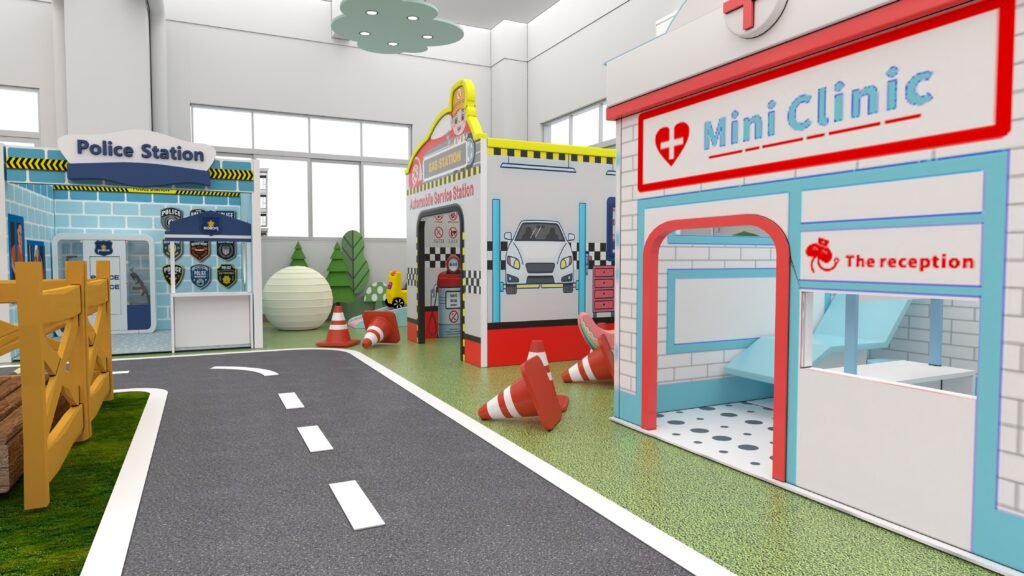
Indoor venues are different because:
- Parents expect a “hospital-clean” look in photos and reviews
- Food spills happen daily near café seating
- Reset cleaning must be fast and repeatable
- Seam failures show up faster due to pivot turns and indoor traffic patterns
- Noise control can affect how long families stay
Outdoor venues are different because:
- Drainage and weathering are constant threats
- Loose-fill systems displace faster in wind and rain
- UV exposure and temperature swings accelerate aging
Indoor surfacing failures usually come from stains, seams, and transitions.
Outdoor surfacing failures usually come from drainage, erosion, and depth loss.If your venue combines play and food, your surfacing plan should align with your business model and customer flow. For a broader view of how play cafés structure zones and operations, see The Complete Guide to Play Cafes: Concept, Business Model, and Future Trends.
The Best Playground Flooring Options for Indoor Commercial Venues
Below are the most common commercial-grade systems used in indoor playgrounds and play cafés, with operator-focused guidance.
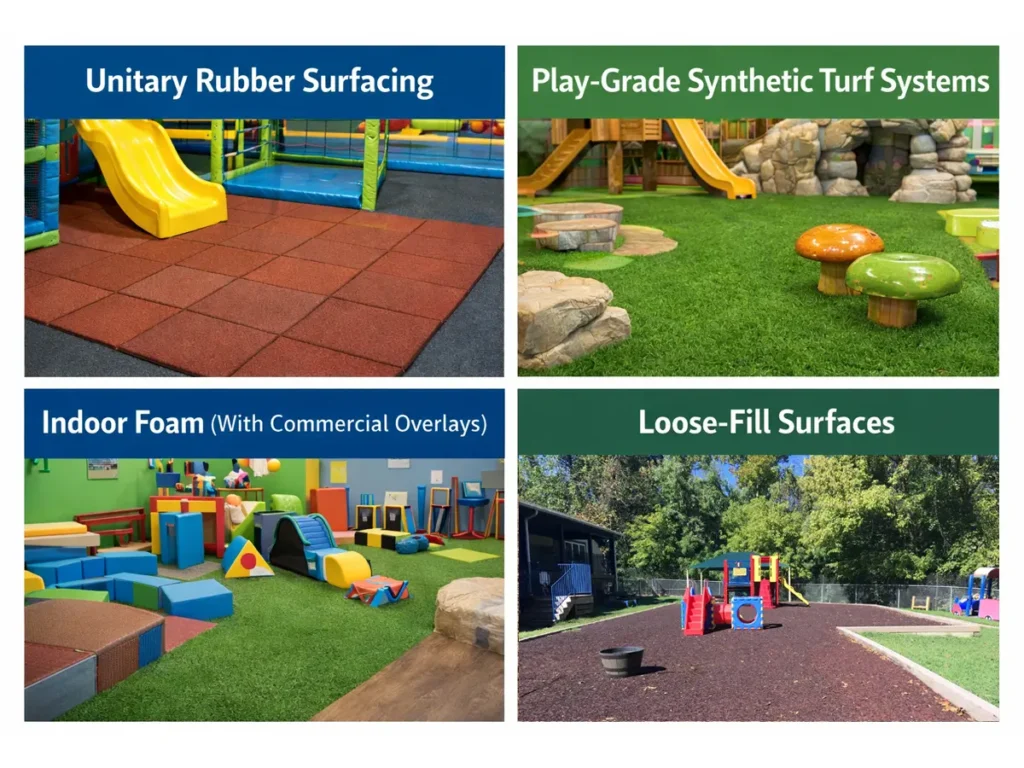
1) Unitary Rubber Surfacing (Poured-In-Place or Rubber Tiles)
Best for: elevated play use zones, high-traffic paths, accessible routes
Why operators choose it: consistent feel, easy inspection, fast cleaning
Where it performs well
- Under large play structures
- Around climbing elements and landing zones
- Along high-traffic circulation routes if a uniform look is preferred
Common risks if misapplied
- Poor subfloor prep can lead to cracking, bubbling, or tile edge lift
- Bad transitions create toe-catching lips
- Edges can fail faster if carts roll over them repeatedly
Operator note: Rubber is often a “safe bet” for commercial venues because it’s predictable. But it only stays predictable if the base is flat and transitions are detailed correctly.
2) Play-Grade Synthetic Turf Systems (With Shock Pad)
Best for: themed environments, moderate-height play zones, comfortable walking areas
Why operators choose it: looks warm, supports branding, hides minor dust between cleanings
Where it performs well
- Themed play spaces with “natural” design language
- Moderate impact zones when the shock pad system is properly specified
- Areas where you want a softer visual feel compared to rubber
Common risks if misapplied
- Turf alone is not a safety solution—the pad and base do the safety work
- Seams fail if placed in pivot-heavy corners or at tight turning points
- Some designs trap crumbs in the pile, increasing cleaning time
Operator note: Turf can be an excellent indoor choice, but it must be engineered as a complete system and installed with seam discipline.
3) Indoor Foam / EVA Systems (Often With Commercial Overlays)
Best for: toddler zones and low-height soft play
Why operators choose it: quiet, comfortable, kid-friendly, fast reset cleaning when specified correctly
Where it performs well
- Toddler play rooms
- Parent-and-me areas
- Low-height equipment zones with predictable movement patterns
Common risks if misapplied
- Not suitable for higher fall heights unless performance is verified
- Low-grade foam dents permanently under rolling loads
- Seams can open if heavy carts or frequent dragging loads occur
Operator note: Foam is often the best “business choice” for toddlers: it reduces noise, improves comfort, and feels premium to families—if you keep it contained to the right zone.
4) Loose-Fill Surfaces (Mainly Outdoor Use)
Loose-fill options include engineered wood fiber, mulch, sand, pea gravel, and shredded rubber. These systems are common outdoors, but for indoor play cafés they typically create operational problems:
- Migration into café areas and corridors
- Slow cleaning and constant pickup
- Inconsistent depth = inconsistent safety performance
- Accessibility difficulties without frequent grooming
Operator note: If your venue includes food service, loose-fill almost always increases labor and mess. For indoor commercial environments, unitary systems tend to align better with expectations.
What should you check in installation, sub-base, and project timeline?
Buyers often focus on the surface “material,” but many real-world failures come from base preparation and coordination with installation sequencing. If the surfacing is installed too early (before heavy equipment placement) or too late (after finishing trades), you risk damage, delays, and rework.
A reliable approach is to lock the layout early, confirm base requirements by surface system, and coordinate installation order with equipment delivery. Typical commercial timelines run in stages—design approval, production, shipping, installation, and inspection readiness—often spanning 6–14+ weeks depending on scope and logistics.
1) Flatness and stability
Small dips become big hazards when kids run at full speed. Even high-quality surfacing will fail early if installed over an unstable base.
2) Moisture management (indoors)
If you’re on a concrete slab, moisture can shorten adhesive life and increase seam problems. It’s worth addressing before installation because you only want to fix this once.
3) Transitions and thresholds
Transitions between surfaces are where incidents happen:
- rubber to turf
- turf to café flooring
- toddler zone edges
- entry mats and thresholds
Rule of thumb: transitions should feel boring.
If it catches a toe today, it becomes a complaint tomorrow.
4) Installation sequencing
A common mistake is installing surfacing at the wrong time:
- Too early → damaged during equipment placement
- Too late → rushed workmanship, weak seams, messy detailing
Best practice: lock layout early, then coordinate a sequence that protects the finished surface.
Timeline & coordination table (operator-friendly view)
| Stage | What to confirm | Why it matters |
|---|---|---|
| Layout approval | Use zones, fall heights, transitions | Prevents late surfacing changes and edge conflicts |
| Base preparation | Flatness, moisture control, drainage slope (outdoor) | Base errors lead to cracks, bubbles, seam lift |
| Installation sequencing | Heavy equipment first vs surfacing first (by system) | Avoids damage and rework, protects warranty terms |
| Handover checks | Seams, edges, trip points, cleaning compatibility | Reduces early complaints and incident risk |
If you’re unsure how to evaluate project risk and cost exposure during build-out, the decision logic is similar to overall venue planning—see How to Evaluate Whether an Indoor Playground Can Be Profitable: A Complete Guide.
How do you budget, maintain, and extend the lifecycle of playground surfacing?
A frequent buyer concern is choosing the “cheapest” surface and then paying more later through replacements, labor, and downtime. Surfacing is a lifecycle decision: cleaning effort, inspection frequency, repairability, and replacement cycles often matter more than initial price.
Budget surfacing by lifecycle cost: combine purchase + base work + installation + maintenance labor + expected repair/replacement cycle. Plan daily/weekly/monthly checks to keep performance consistent, especially in high-impact and high-traffic zones.
From a manufacturer and operator-support perspective, we encourage a simple lifecycle model:
1) Upfront cost buckets (typical ranges, market dependent):
- Surface material + system: can vary widely (often the biggest variable).
- Base/subfloor preparation: commonly underestimated; expect it to be a meaningful share of total flooring cost.
- Installation labor: higher for complex seams, transitions, and tight schedules.
- Ongoing maintenance: staff time + consumables + periodic repairs.
2) Maintenance frequency (practical ranges):
- Daily: visual check for lifted edges, gaps, debris, spills; spot clean and dry.
- Weekly: deeper clean; check seams/thresholds; verify high-wear landings under slides and swing/entry areas.
- Monthly/quarterly: measure loose-fill depth (if used), check sub-base settlement signs, document repairs.
- Annually: plan a more formal inspection and refresh cycle; consider field testing where required by your market and risk policy.
3) Material compatibility and cleaning reality
Food + play venues need surfacing that tolerates frequent cleaning. Also check that the surface system is compatible with your chemical choices (disinfectants, degreasers) and that the texture does not trap crumbs and dust.
Maintenance Plan: What Staff Can Actually Do During Peak Hours
A good surfacing system should fit your staffing reality.
Daily (5–15 minutes depending on size)
- Spot clean spills and sticky areas immediately
- Quick visual check for lifted edges or open seams
- Dry wet zones near café boundaries
Weekly
- Deep clean high-traffic routes and slide exits
- Check seams, thresholds, and corners
- Inspect entry mats and transition strips
Monthly / quarterly
- Document wear patterns and schedule patch repairs early
- Re-check problem corners where kids pivot and stop
- Review cleaning chemicals and confirm compatibility
Operator note: “Low maintenance” should mean low staff time, not just “it lasts a long time.”
Maintenance checklist table (simple, staff-friendly)
| Frequency | What to check | Typical action |
|---|---|---|
| Daily | Spills, loose debris, lifted edges, trip points | Spot clean, dry, cordon off if needed |
| Weekly | Seam integrity, entry mats, wear at landings | Deep clean; tighten/repair transitions |
| Monthly | High-impact zones, under slides/climbs, corners | Document wear; schedule patch/repair |
| Quarterly/Annual | System condition review, replacement planning | Budget refresh; consider third-party inspection policy |
Surfacing choice also connects to your overall insurance and risk planning, especially for commercial venues. For a broader operator perspective, see The Ultimate Guide to Comprehensive Insurance for Indoor Playgrounds.
Accessibility: What “ADA-Friendly” Looks Like in Real Use
If your venue is open to the public, accessibility isn’t optional. And the key point is simple:
The surface must stay usable over time, not only on opening day.
In practice, accessibility is often impacted by:
- seams and edge curling
- loose transitions and small openings that catch wheels
- slippery zones near entry/café traffic
- uneven patches after repairs
This is another reason unitary systems are commonly used in indoor commercial venues: they support consistent movement and inspection.
The Most Common Indoor Mistakes (And How to Avoid Them)
Using one surface everywhere
Most successful venues use at least two: a safety-rated play zone surface and a cleanable circulation/café surface.
Placing seams in the wrong areas
Avoid pivot corners, entry pinch points, and high-turn zones.
Forgetting rolling loads
Strollers, cleaning carts, and party setups stress edges more than you expect.
Choosing texture without thinking about crumbs and sanitation
Some “grippy” surfaces become slow to clean.
No documentation, no plan
If you can’t verify performance and maintenance needs, you’re guessing.
Conclusion
Playground flooring and surfacing decisions are easiest when you treat them as a system: fall height + use zone + base prep + installation sequencing + maintenance routine. Indoors, cleanability, seam control, and slip resistance often drive operations; outdoors, drainage and depth management are frequent failure points. Compare options by lifecycle cost and staffing reality, not only by material price.
If you’d like a practical starting point, share your floor plan and ceiling height and we can suggest a basic zoning approach (use zones vs circulation zones) and the surfacing types that typically fit each area. If you prefer, request a simple budget checklist/BOM template to structure your flooring and surfacing cost plan.
References
- ASTM International. (2022). ASTM F1292-22: Standard Specification for Impact Attenuation of Surfacing Materials Within the Use Zone of Playground Equipment. https://www.astm.org/f1292-22.html
- ASTM International. (2021). ASTM F1951-21: Standard Specification for Determination of Accessibility of Surface Systems Under and Around Playground Equipment. https://www.astm.org/f1951-21.html
- U.S. Consumer Product Safety Commission. (2025). Public Playground Safety Handbook (Pub. No. 325). https://www.cpsc.gov/s3fs-public/325_PublicPlaygroundSafetyHandbook2025_7-30-25_1.pdf
- European Committee for Standardization. (2018). EN 1177:2018 Impact attenuating playground surfacing—Methods of test for determination of impact attenuation. https://knowledge.bsigroup.com/products/impact-attenuating-playground-surfacing-methods-of-test-for-determination-of-impact-attenuation
- U.S. Access Board. (n.d.). ABA Guide: Chapter 10—Play Surfaces. https://www.access-board.gov/aba/guides/chapter-10-play-surfaces/
- U.S. Consumer Product Safety Commission. Public Playground Safety Handbook (Pub. 325).
- ASTM International. ASTM F1292: Impact Attenuation of Surfacing Materials Within the Use Zone of Playground Equipment.
- ASTM International. ASTM F1951: Determination of Accessibility of Surface Systems Under and Around Playground Equipment.
- U.S. Access Board. ADA Guide: Play Areas / Play Surfaces.