A soft play rental business provides portable, toddler-safe indoor play setups for events. To start, choose a target age group (often 1–5), build 2–3 standardized packages, price to cover delivery/setup/cleaning, and operate with inspection + sanitation checklists. Then grow inventory based on booking data and venue feedback, not trends.
“Buy a set and rent it out” rarely works long-term. Your real product is a repeatable service system—safe setup, clear boundaries, fast loading, reliable arrival windows, and a cleaning workflow that holds up on busy weekends. Those operational details decide whether you earn repeat bookings or spend your time handling complaints and repairs.
This guide explains what soft play rental is, why it works, how profitability is built, what ages to target, whether you need a warehouse, how to choose the right supplier (and how KoalaPlay supports your project), and how to market consistently without burning your budget.
What is a soft play rental business?
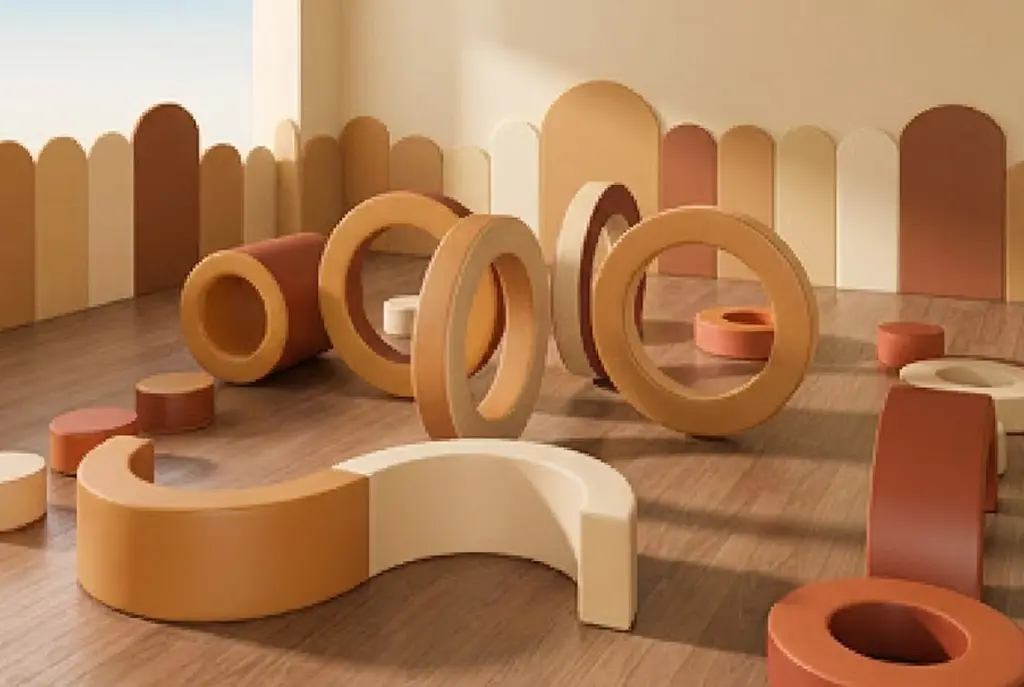
A soft play rental business supplies temporary, event-based play setups for young children. Instead of running a fixed indoor play center, you deliver soft play equipment to the customer’s venue, set it up for a specific time window, and remove it after the event.
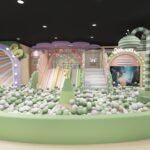
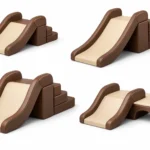
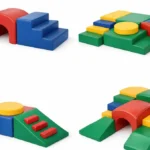
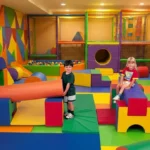
Most rental packages include items like foam climbers, small slides, ball pits, crawl tunnels, padded mats, and themed play pieces. These setups are commonly used for birthday parties, community events, school or daycare activities, and family gatherings. The rental provider typically handles transportation, assembly, safety checks, and pickup, making it a turnkey option for parents and event organizers who want a safe, photo-friendly play area without buying equipment or hosting at a dedicated facility.
what are the benefits of soft play rental business?
A common misunderstanding is that rentals are “passive income.” They aren’t. But the model is attractive because it can scale faster than a fixed venue if you standardize operations.
Key benefits (when executed professionally):
- Reliable demand segment: toddler and preschool events happen year-round, and many families rebook for siblings and friends.
- Modular scaling: you can start with one core kit, then expand into a second kit or themed upgrades once utilization is consistent.
- Flexible customer mix: private birthdays, community events, studio/café pop-ups, and weekday sessions through partners.
- Add-on revenue without doubling complexity: extra fencing panels, an expanded mat perimeter, a ball pit upgrade, or a themed photo backdrop.
Operationally, soft play can be easier to maintain than some heavy structures because it’s portable and inspectable—you can spot wear and fix issues before the next event, as long as you have a disciplined routine.
Is a soft play rental business profitable?
The most common profitability mistake is pricing based only on “equipment cost ÷ number of rentals.” In reality, your profit is determined by utilization, route efficiency, cleaning time, and repair rate—especially after the first 8–12 weeks when wear patterns become obvious.
A soft play rental business can be profitable when you standardize packages, limit service radius early, and track cost-per-booking (labor + transport + cleaning + repairs). Many operators aim for consistent weekend utilization first, then add weekday bookings through partner venues and recurring toddler programs.
To evaluate profitability like a professional operator, you need three numbers: (1) bookings per month, (2) gross margin per booking, (3) inventory payback period. A realistic early-stage model might look like:
- Launch phase (Month 1–2): 4–8 bookings/month (learning + reviews)
- Stabilize (Month 3–6): 10–18 bookings/month (repeat + referrals)
- Scale (Month 6+): 18–30+ bookings/month (routes + venue partners)
What drives the margin
- Delivery and setup time: If your standard package takes 90 minutes to load + install + pick up, your labor cost rises fast.
- Cleaning intensity: Ball pits and white finishes look great but require stronger cleaning discipline.
- Damage and missing parts: Frequent count-in/count-out and clear rules reduce losses.
- Downtime: A torn seam or missing set piece can block multiple bookings.
| Profit lever | Typical target range | Practical action you can control |
|---|---|---|
| Setup + pickup time per job | ~60–150 minutes total | Pack by zone, label bins, standardize layouts |
| Cleaning + drying time per job | ~45–120 minutes | “Clean-as-you-unload” workflow, quick-dry fans |
| Service radius | ~10–25 miles base | Zone-based delivery fees beyond base radius |
| Inventory payback goal | ~3–12 months (depends) | Expand only after 8–12 weeks of booking data |
For deeper thinking on utilization and business-model logic (especially if you’re also considering a fixed venue later), this is helpful: How to Evaluate Whether an Indoor Playground Can Be Profitable: A Complete Guide.
What target audience age should you focus on?
New businesses often try to serve everyone—toddlers, big kids, and mixed-age parties—with one set. That usually creates safety conflicts, weak boundaries, and dissatisfied parents because the zone doesn’t feel truly “age-right.”
For most soft play rental startups, the most reliable target market is ages 1–5, with the core “sweet spot” around 1–3 for contained play and 3–5 for climbing + role-play add-ons.
From a manufacturer and buyer-evaluation perspective, age targeting affects everything: piece height, fall-risk perception, layout density, supervision needs, and the venue types that will approve your setup. Toddlers need controlled entry, softer edges, lower profiles, and clear separation from food and traffic paths. Older kids need higher challenge and more space, which pushes you toward larger footprints and higher transport costs.
Practical age-based packaging logic
- 1–2 years: smaller shapes, fewer “climb points,” more open crawling space, sensory panels, small rocker/ride-on
- 3–5 years: add stairs + small slide, more structured obstacle flow, basic role-play corner
- Mixed ages (optional later): separate lane or timed rules—avoid mixing toddlers with high-energy play in one zone
A strong operational tip is to design “session comfort,” not maximum density. Overcrowding reduces perceived safety and increases cleaning load. A practical early rule is to aim for one adult supervision line-of-sight across the entire zone, without visual blockers.
Do you need to rent or buy a warehouse for storage?
Storage is not just “where you keep things.” It affects how fast you load, how clean you stay, and how often parts go missing. Many early operators start at home and later move into rented storage once bookings are consistent.
A practical decision path:
- Start (0–10 bookings/month): home garage or dedicated room can work if it stays dry, clean, and organized.
- Growth (10–25 bookings/month): small rented storage or small warehouse improves dispatch speed and cleanliness control.
- Scale (25+ bookings/month or multiple crews): larger warehouse becomes useful for multiple packages, décor inventory, and staff workflows.
The real requirement is workflow separation:
- Dirty-return zone: quick inspection, stain treatment, count-in
- Clean/dry zone: wipe-down, disinfection when appropriate, drying
- Pack-ready zone: each package counted, labeled, and route-ready
If you’re building long-term operations discipline, understanding risk categories (liability, property, transport) is useful: The Ultimate Guide to Comprehensive Insurance for Indoor Playgrounds.
| Storage option | When it fits | Watch-outs |
|---|---|---|
| Dedicated home space | Early testing phase | Humidity, contamination, slower loading |
| Self-storage unit | 10–20 bookings/month | Limited cleaning space, access hours |
| Small warehouse | Growing demand | Insurance requirements, utilities, safety rules |
| Buying a warehouse | Mature operations | High fixed cost, location risk, long-term commitment |
How do you find a right supplier and indoor soft play equipment—and how can KoalaPlay help?
A common failure pattern is choosing equipment based on photos instead of durability, cleanability, and packing logic. The result is frequent seam splits, staining, unstable layouts, or a kit that looks great but takes too long to load.
Choose a supplier who can support commercial-grade materials, modular design, consistent quality control, and documentation that helps you operate safely and professionally.
From a buyer-evaluation perspective, ask suppliers about:
- Material system: wipeable, abrasion-resistant finishes; non-toxic material declarations where applicable
- Seam and reinforcement strategy: wear points, stitching density, high-stress corner reinforcement
- Modularity: can you reconfigure layouts without needing more pieces?
- Packing and transport: stackability, protective packaging, replacement part availability
- Documentation: layout suggestions, packing list/BOM, care and maintenance guidance
KoalaPlay can support soft play rental operators in a “solution” way—meaning we don’t only ship products. We help you define packages and layout logic that match your target ages and venue types, then build equipment sets that are practical to operate:
- Package planning: compact / standard / premium sets designed around real footprints
- Layout and zoning suggestions: entry control, boundary design, supervision sightlines
- Commercial durability focus: materials and build details aligned with frequent transport and cleaning
- Consistent deliverables: packing list, basic zoning guidance, and replacement support as your fleet grows
If you want to see how a professional manufacturer thinks about product categories and quality expectations, this is a useful reference point: Best Children’s Playground Equipment Manufacturer.
For more design idea of indoor playground equipment, click here.
| Supplier checklist | What “good” looks like | Why it matters in rentals |
|---|---|---|
| Materials + finish | Wipeable, durable, consistent color batches | Faster cleaning; fewer complaints |
| Build quality | Reinforced seams + stable bases | Lower repair rate and downtime |
| Modularity | Multiple layouts from one kit | Higher utilization per asset |
| Spares support | Replaceable pieces/parts | Avoid canceling bookings |
| Documentation | Packing list + care guide | Staff training and consistency |
How do you market your soft play rental business?
Many owners rely only on Instagram photos and get stuck with “likes but not bookings.” Soft play rental marketing works best when you treat it like local services: visibility, trust signals, and frictionless booking.
Your marketing should be built around three assets: (1) packages, (2) proof, (3) partners.
1) Packages (clarity sells)
- Publish 2–3 packages with exact footprints, age range, what’s included, and what you need from the venue.
- Use consistent naming (Compact / Standard / Premium) so customers self-select.
2) Proof (trust sells)
- Collect reviews early (first 10–20 bookings) and display them everywhere.
- Post “real setup photos” with a clean, consistent angle so parents can visualize scale.
- Show your cleaning and inspection discipline without overexplaining (a simple checklist photo works).
3) Partners (weekdays sell)
- Partner with cafés, studios, community centers for weekday sessions.
- Offer predictable scheduling windows and revenue-share options if your local market supports it.
Channels that usually perform for rentals
- Google Business Profile + local SEO pages (service areas, “soft play rental near me” intent)
- Short-form video showing setup transformation (arrival → clean zone → ready to play)
- Venue partnerships and referral agreements
- Parent community groups (with clear booking links, not just DMs)
For content ideas, you can also study how play cafés attract repeat visits and program demand—then adapt those mechanics into pop-up sessions and partner events. This article can support that thinking: Play Cafe Trends: Shape the Future of Play Cafe.
Conclusion
A soft play rental business is profitable and scalable when you treat it as a standardized service—not a collection of cute equipment. Start with a clear age target (often 1–5), launch 2–3 repeatable packages with defined footprints, and price to cover delivery, setup, cleaning, and repairs. Use checklists to protect quality: inspection before every job, count-in/count-out, and a consistent cleaning routine. Scale storage only when volume forces it, and expand inventory based on 8–12 weeks of real booking data. If you share your typical venue types plus a simple floor plan and ceiling height, we can suggest a basic zoning layout and starter package sizing—or you can request a budget checklist/BOM template for planning your first purchase.
References
ASTM International. (2021). ASTM F1918-21: Standard Safety Performance Specification for Soft Contained Play Equipment. https://www.astm.org/f1918-21.html
Centers for Disease Control and Prevention. (2024). When and How to Clean and Disinfect a Facility. https://www.cdc.gov/hygiene/about/when-and-how-to-clean-and-disinfect-a-facility.html
U.S. Small Business Administration. (2025). Choose a business structure. https://www.sba.gov/business-guide/launch-your-business/choose-business-structure
Internal Revenue Service. (2025). Get an employer identification number (EIN). https://www.irs.gov/businesses/small-businesses-self-employed/get-an-employer-identification-number