
Indoor playground refurbishment is often the smartest investment because it improves the parts of your venue that customers notice first: safety, cleanliness, color, play value, and traffic flow. A full rebuild can be expensive and disruptive. A focused refurbishment can refresh the same business faster, with less downtime and a clearer return.
For play cafes, family entertainment centers, daycare playrooms, mall play areas, and indoor soft play parks, the real question is not “Should we replace everything?” The better question is, “Which upgrades will protect safety, extend equipment life, and make families excited to return?”
The answer usually starts with an audit. Check worn padding, torn vinyl, loose netting, faded themes, damaged foam, floor condition, hygiene pain points, lighting, and bottlenecks in the layout. Then separate urgent safety repairs from visual upgrades and revenue improvements.
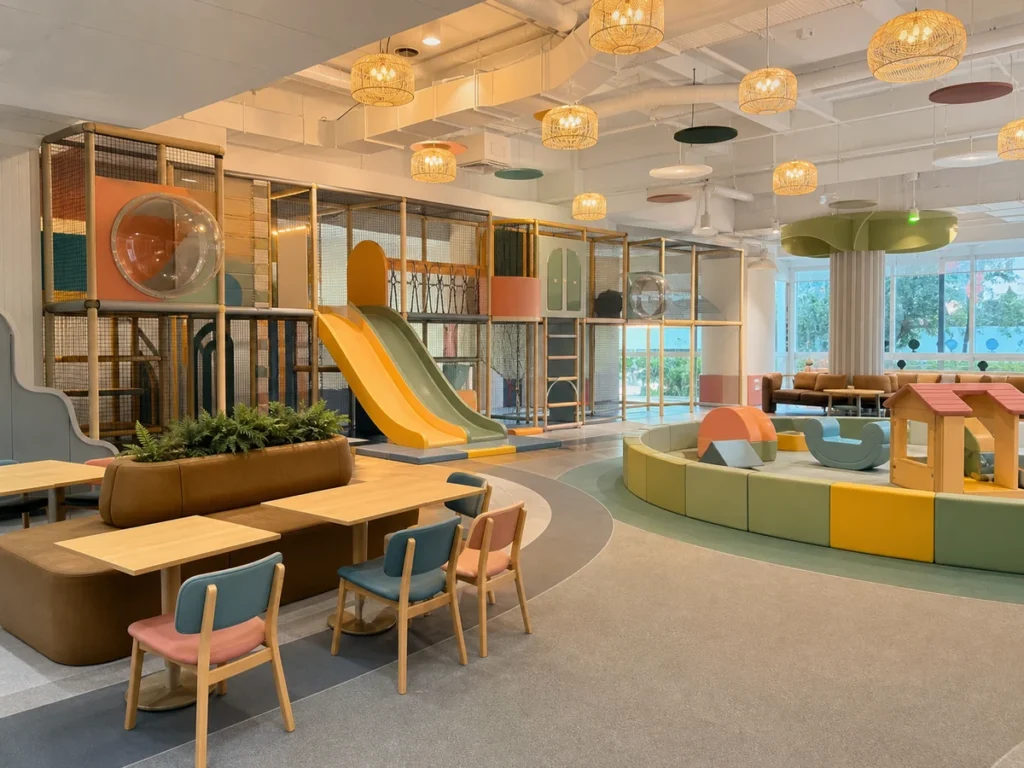
What Indoor Playground Refurbishment Really Means
Indoor playground refurbishment is the planned repair, refresh, and improvement of an existing play space. It can include soft play re-covering, foam replacement, net replacement, platform repair, new floor mats, repainting, updated wall graphics, new toddler equipment, improved signage, and layout changes.
It is different from normal maintenance. Maintenance keeps the venue working. Refurbishment makes the venue feel renewed.
It is also different from a full rebuild. A rebuild starts again from the structure, layout, and theme. Refurbishment keeps what still works and upgrades the weak points.
For many operators, this is the best middle path. You can protect the original investment while making the venue more competitive.
Why Refurbishment Often Beats a Full Replacement
A complete new indoor playground can be the right decision when the structure is outdated, poorly designed, or no longer suitable for the target age group. But if the frame, layout, and major play routes are still strong, refurbishment can deliver more value per dollar.
| Decision | Choose refurbishment when | Choose full replacement when |
|---|---|---|
| Equipment condition | Frame and core structure are usable | Major structure has serious damage or poor compliance |
| Brand appeal | Theme looks tired but layout still works | Concept no longer fits the market |
| Downtime | You need phased work and faster reopening | You can close for a larger build |
| Budget | You want targeted ROI | You need a new business model or major expansion |
| Safety | Issues are local and repairable | Risks are widespread or structural |
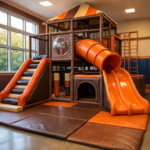
The smartest operators do not spend evenly across the whole playground. They spend where customers feel the difference and where risk is highest. If your venue needs a new activity mix, Koalaplay’s guide to different types of indoor playground structures can help compare soft play, climbing, role play, ninja courses, and toddler zones before you decide what to keep.
The Safety Case Comes First
Safety is the first reason to refurbish. Soft play areas experience constant friction, climbing, jumping, pulling, and cleaning. Over time, even good materials can show wear.
Common safety-related refurbishment triggers include:
- Torn vinyl or exposed foam.
- Loose netting, cable ties, or connectors.
- Worn edge padding on platforms, posts, and slide entries.
- Cracked plastic panels or sharp damaged parts.
- Floor mats that shift, curl, or lose impact performance.
- Poor sightlines for parents and staff.
- Missing or faded safety signs.
- Areas that are hard to clean properly.
ASTM F1918 covers soft contained play equipment and is designed to reduce the chance of serious injury in these systems. RoSPA also recommends documented inspection routines for indoor soft play, including daily pre-opening checks, weekly detailed checks, and independent annual inspections.
Refurbishment should be linked to inspection records. If a report mentions damaged padding, loose fittings, weak visibility, or worn surfacing, do not treat those as cosmetic notes. Treat them as a practical work list.
The Customer Experience Case Is Just as Important
Parents notice wear quickly. They may not know the material name or the original installation date, but they see dirty corners, faded colors, damaged foam, and tired theming. These details affect trust.
Children also respond to novelty. A play space does not need to become bigger every year, but it should feel alive. New role-play corners, fresh colors, cleaner floor zones, new sensory panels, or a toddler activity upgrade can make the same venue feel new again.
Koalaplay Team experience: when we review refurbishment requests, the strongest results often come from combining “invisible” safety work with one clear visual moment. For example, re-cover high-contact pads, replace netting, repair floor mats, then add a new entrance feature, photo wall, or role play zone. Parents see the upgrade immediately, while the operator also fixes deeper wear issues.
Refurbishment Can Improve Revenue Without Expanding Space
Many indoor playground businesses cannot expand their square footage. Rent is high, mall units are fixed, and daycare rooms have strict space limits. Refurbishment lets you earn more from the same footprint.
The most useful revenue upgrades are usually:
- A stronger toddler zone for weekday morning traffic.
- Better parent seating sightlines so adults stay longer.
- More role-play elements for repeat visits and birthday parties.
- A cleaner entrance and shoe-changing flow.
- New photo-friendly theme points for social sharing.
- Better separation between toddlers and older children.
- A party room refresh that supports premium packages.
This is why refurbishment is not only a repair project. It is also a business design project. If your venue depends on adults staying longer, review how a parent lounge and cafe zone can support better sightlines, seating, and dwell time.
For owners planning a larger upgrade, Koalaplay’s custom indoor playground design and build page is a useful starting point for layout, theme, and project planning.
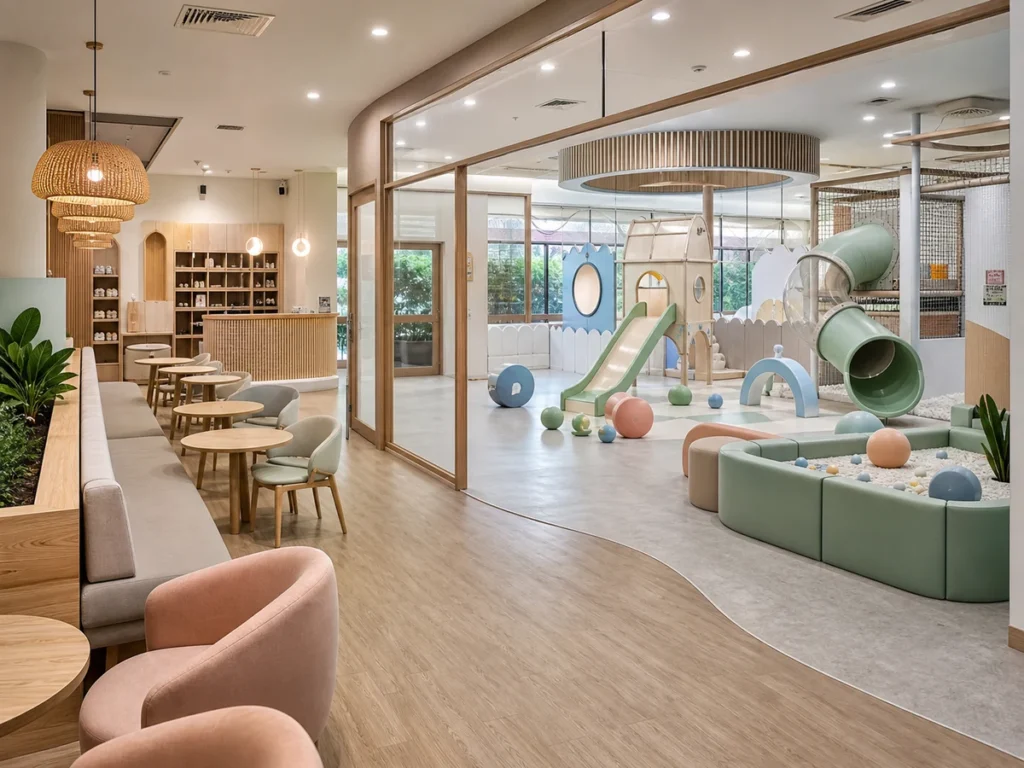
What to Inspect Before You Spend Money
Start with a simple audit before asking for quotations. A clear audit prevents random spending and helps suppliers give more accurate advice.
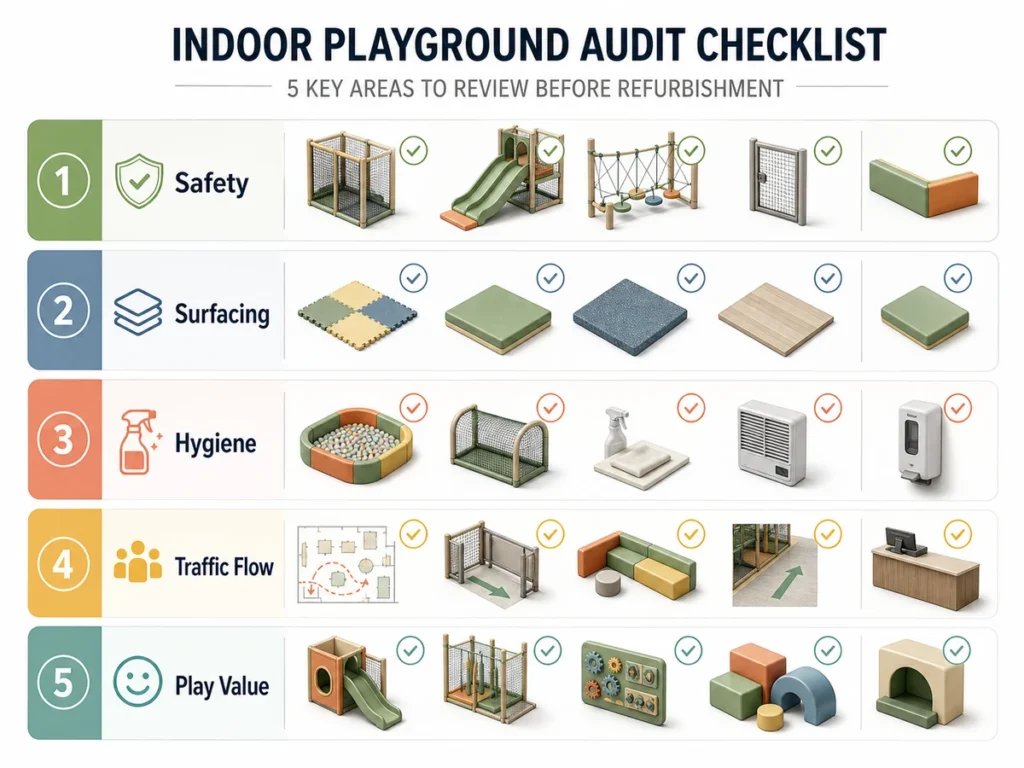
1. Safety and Structure
Check the frame, platforms, netting, slides, tubes, bridges, fasteners, and all padded collision points. Look for movement, gaps, broken panels, loose stitching, exposed foam, rust, missing caps, and sharp edges.
If you are unsure, arrange a qualified inspection first. Refurbishment should never hide structural problems under new colors.
2. Surfacing and Impact Areas
Flooring is one of the most important refurbishment items. Check whether mats are flat, stable, easy to clean, and suitable for the play activity above them. Pay special attention to slide exits, climbing exits, ball pit entries, trampoline transitions, and toddler crawl areas.
3. Hygiene and Cleaning Access
CDC cleaning guidance for facilities emphasizes cleaning high-touch surfaces regularly and cleaning surfaces before sanitizing or disinfecting. In an indoor playground, that means your refurbishment should make cleaning easier, not harder.
Look for dead corners, fabric materials that hold odor, damaged seams, poorly drained ball pits, and play features that staff cannot reach. A beautiful venue that is hard to clean will become a maintenance problem.
4. Play Value
Ask where children spend the most time. Also ask where they get bored quickly. Good refurbishment adds value to weak zones.
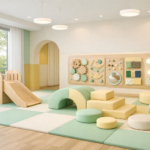
Examples include adding interactive panels, a pretend-play shop, sensory wall, mini climbing route, toddler balance path, or quieter play corner. Koalaplay’s toddler and soft play area category and soft play area procurement guide for toddlers can help owners think through age-appropriate soft play elements.
5. Traffic Flow
Watch families move through the space. Are children blocking slide exits? Are parents unable to see the toddler zone? Is the shoe area crowded? Does the party traffic cross the main play entrance?
Small layout changes can reduce staff stress and make the venue feel more organized.
High-ROI Refurbishment Ideas
Not every upgrade has the same value. The best options depend on your venue age, customer base, and budget.
Re-Cover High-Contact Soft Play Parts
Vinyl and PVC covers take daily abuse. Re-covering worn foam blocks, posts, steps, and barriers can quickly improve appearance and safety. Use durable, cleanable materials and match the original foam density where impact protection matters.
Replace Netting and Edge Padding
Netting does important safety work, but it is easy for customers to overlook until it looks dirty or loose. Fresh netting, post padding, and platform edge covers can make the space look cleaner and more carefully managed.
Refresh the Theme
A new theme layer can change customer perception without replacing every play item. Wall graphics, entrance arches, color coordination, character-free scenic elements, LED accents, and new signs can make the playground feel current. If the existing layout works but the story feels outdated, compare theme directions such as candy and macaron indoor playground equipment or natural-style concepts before changing the whole structure.
For equipment and theme references, see Koalaplay’s commercial indoor playground equipment solutions.
Add Modular Play Features
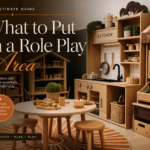
Modular upgrades are useful when the main structure still works. Add a role-play house, sensory panel, mini obstacle route, soft blocks, climbing ramp, or interactive feature. This approach is especially useful for play cafes that need repeat visit value. For a deeper idea list, Koalaplay’s blog on what to put in a role play area shows how pretend-play details can support longer engagement.
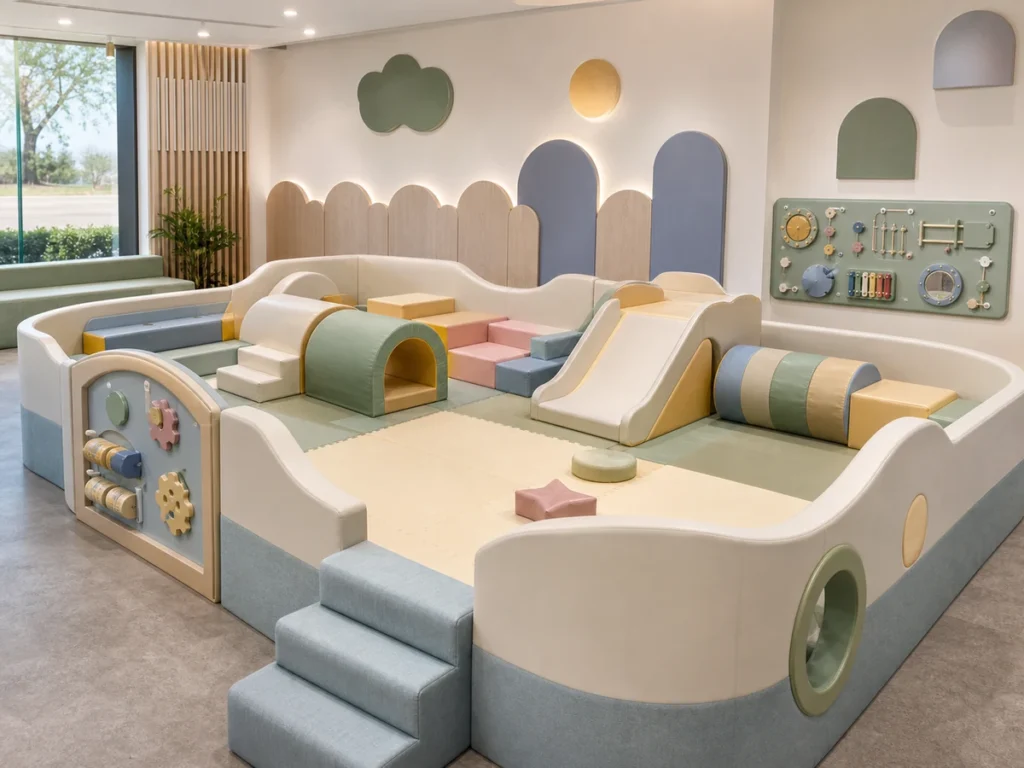
Upgrade Parent Visibility
Parents relax when they can see their children. Consider lower partitions in toddler zones, improved seating angles, better lighting, transparent panels, or clearer staff monitoring points.
Improve Materials Where Wear Is Highest
Do not choose materials only by appearance. For refurbishment, material quality affects cleaning, repair frequency, and long-term cost. Koalaplay’s material quality page explains common playground materials such as galvanized steel frames, floor foam, connectors, and padding components.
A Practical Refurbishment Budget Framework
Exact costs depend on country, labor, shipping, material choice, site size, and how much custom fabrication is needed. Instead of guessing a universal price, divide the budget into four groups.
Must-Fix Safety Work
This includes damaged padding, unsafe flooring, loose netting, broken parts, exposed foam, sharp edges, weak fixings, and inspection findings. Fund this first.
Guest-Facing Visual Work
This includes re-covering, color changes, wall graphics, lighting, entrance upgrades, sign refreshes, and photo zones. These upgrades help customers notice the investment.
Revenue Work
This includes party room improvements, toddler zone upgrades, role-play additions, cafe flow improvements, and features that support repeat visits. If the refurbishment is part of a broader cafe model, the indoor play cafe manufacturer guide is a more useful reference than a generic equipment list.
Maintenance Work
This includes easier-cleaning surfaces, replaceable covers, spare parts, access panels, storage, and staff inspection tools. These upgrades reduce future operating stress.
If the budget is limited, do the safety work first, then choose one guest-facing improvement that customers will clearly see.
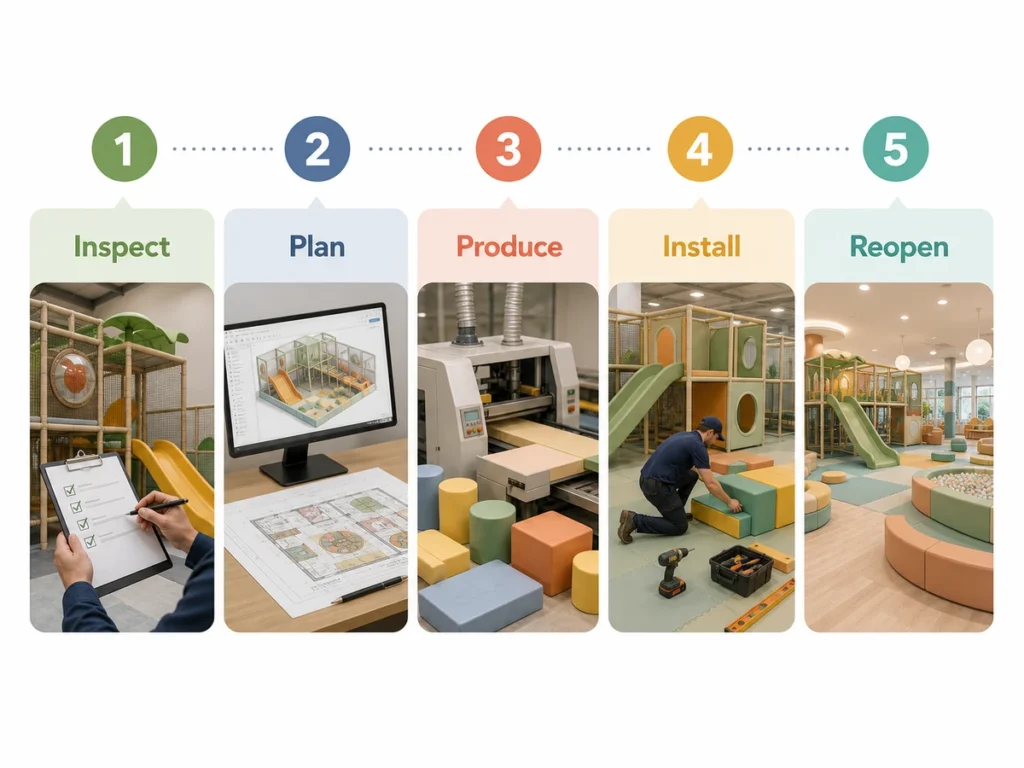
How to Plan a Refurbishment Without Closing Too Long
Downtime is one of the biggest concerns for operators. A good refurbishment plan can often be staged.
- Inspect and document all problems with photos.
- Confirm which repairs require custom parts.
- Approve materials, colors, and drawings before production.
- Pre-produce covers, panels, and modular equipment.
- Schedule installation during low-traffic days.
- Close only the necessary zones where possible.
- Reopen with clear photos and a simple announcement.
For larger projects, Koalaplay’s service process can help owners understand the steps from consultation and design to production, shipping, and installation support.
What to Ask a Refurbishment Supplier
A good supplier should help you make decisions, not only quote replacement parts.
Ask these questions:
- Which items are safety-critical and which are cosmetic?
- Can the existing frame and layout still be used?
- Which materials will be easiest to clean in daily operation?
- Can covers, pads, and netting be replaced in phases?
- Do you provide drawings or marked photos before production?
- What parts should we keep as future spares?
- How should staff inspect the refurbished areas?
- What warranty or after-sales support applies to new parts?
Koalaplay’s warranty service page is worth reviewing when planning replacement parts and long-term support.
When Refurbishment Is Not Enough
Refurbishment is powerful, but it is not magic. A full redesign may be better if the playground has major structural issues, poor original layout, wrong age targeting, severe visibility problems, or a theme that no longer matches the business model.
For example, a venue that started as a large active play center may need a calmer play cafe model with stronger toddler, role-play, and parent lounge areas. In that case, a partial refurbishment may not solve the deeper business problem.
The best approach is honest diagnosis. Repair what is worth saving. Replace what limits safety, cleaning, supervision, or revenue.
Related Guides
- Different types of indoor playground structures
- What to put in a role play area
- Soft play area procurement for toddlers
- Indoor play cafe manufacturer guide
FAQ
How often should an indoor playground be refurbished?
There is no single schedule. High-traffic venues may need visible refreshes every few years and safety repairs whenever inspections find damage. Daily, weekly, and annual inspection records should guide the timing.
Is soft play refurbishment cheaper than buying new equipment?
Often yes, if the core structure is still sound. Re-covering, net replacement, floor upgrades, and modular additions can cost less than a full rebuild. If the structure or layout is poor, replacement may be better.
Can I keep my playground open during refurbishment?
Sometimes. Small repairs and modular upgrades may be staged by zone. Work involving surfacing, major structures, or safety-critical access may require temporary closure of part or all of the venue.
What is the best first upgrade for an old indoor playground?
Start with safety and cleanliness. Replace torn covers, loose netting, worn floor mats, and damaged padding first. Then add one visible feature such as a refreshed entrance, toddler zone, or role-play attraction.
Does refurbishment help with customer reviews?
It can. Parents often comment on cleanliness, safety, freshness, and whether children stay engaged. A well-planned refurbishment improves these visible parts of the customer experience.
Plan Your Playground Refurbishment With Koalaplay
If your indoor playground looks tired but still has business potential, refurbishment may be the most practical next step. Koalaplay can help review your site photos, age range, layout, theme direction, material needs, and upgrade goals.
To start, send your site size, target age range, current photos or videos, budget range, country or location, preferred theme, and whether you need installation guidance. The Koalaplay team can help you decide what to repair, what to refresh, and what to redesign.
You can reach the team through the Koalaplay contact page.
References
- ASTM F1918-21 Standard Safety Performance Specification for Soft Contained Play Equipment
- CPSC Public Playground Safety Handbook
- RoSPA Indoor Soft Play Advice
- RoSPA Inspection and Maintenance of Playgrounds
- CDC Cleaning and Disinfecting Guidance
- CDC Cleaning and Disinfecting Early Care and Education Settings


 English
 Spanish
 German