
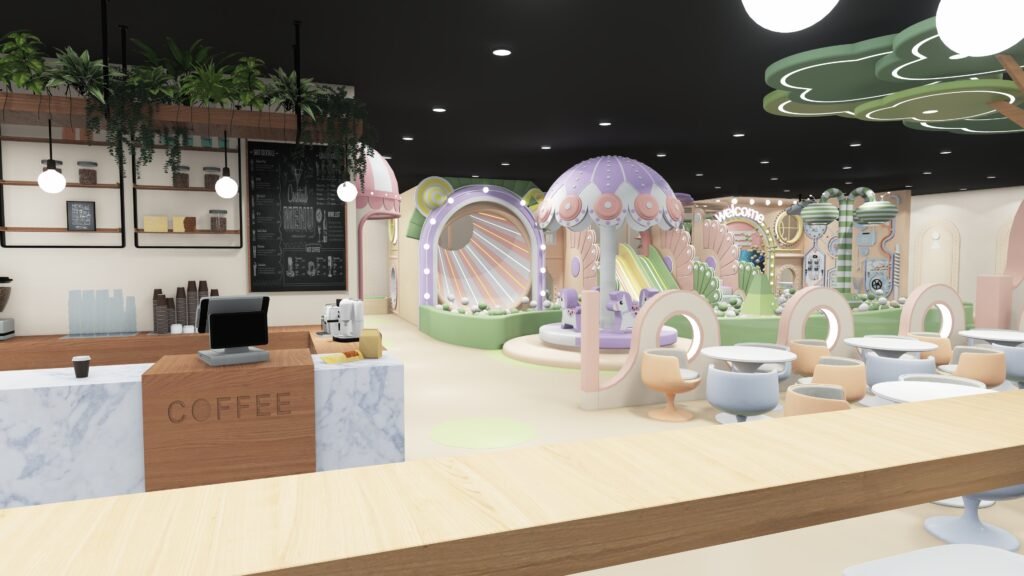
At Koalaplay, we frequently consult with daycare owners who want to build engaging, safe indoor play areas but struggle with where to start and how to allocate their budget. Knowing exactly what to buy, how much it should cost, and which items are absolute necessities can save you thousands of dollars and ensure your facility passes safety inspections. This article breaks down our comprehensive daycare playground equipment procurement list, giving you a clear roadmap for outfitting your space.
When you are opening a new childcare facility or upgrading an existing one, the indoor play area is often the deciding factor for parents touring your center. However, outfitting this space requires more than just picking colorful toys from a catalog. It requires a strategic approach to balancing developmental value, safety compliance, and budget constraints. In this guide, we will provide a line-by-item breakdown of the equipment you need, categorized by play zones, complete with estimated costs and priority levels.
Budget Overview for a Complete Daycare Playground
Before diving into specific items, it is helpful to understand how a typical budget is distributed across different play zones. Based on a standard 300-500 square foot indoor daycare area, a total equipment budget of approximately $20,000 provides a high-quality, fully compliant environment.
Here is how that budget is typically allocated:
| Play Zone Category | Estimated Budget (USD) | Budget Share |
| Soft Play Zone | $7,870 | 39.0% |
| Role Play Zone | $5,300 | 26.3% |
| Sensory Zone | $3,480 | 17.2% |
| Safety Infrastructure | $2,490 | 12.3% |
| Reading & Quiet Zone | $1,050 | 5.2% |
This budget assumes you are purchasing commercial-grade, factory-direct equipment. For a more detailed breakdown of overall startup costs, including facility renovations and operations, review our play cafe investment cost guide.
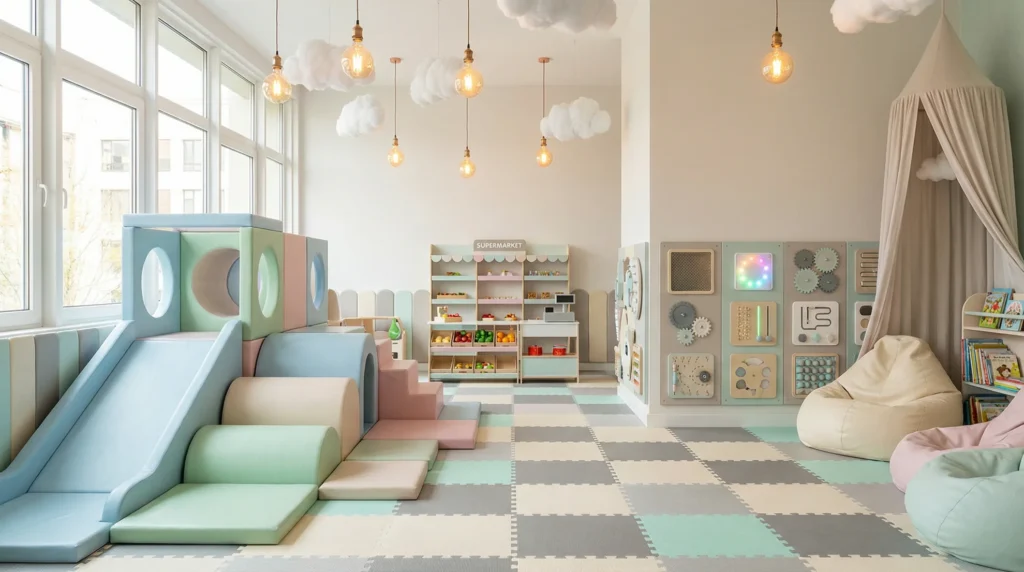
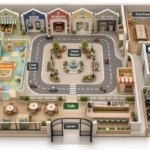
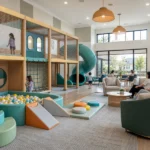
Caption: A modern daycare indoor playground requires a balanced budget across soft play, role play, and safety infrastructure.
1. The Soft Play Zone Procurement List (39% of Budget)
The Soft Play Zone requires the largest portion of your budget because it serves as the primary area for gross motor skill development. For this zone, durability and safety are paramount. Children will climb, slide, jump, and crawl here daily, so residential-grade equipment will not suffice.
Must-Buy Equipment
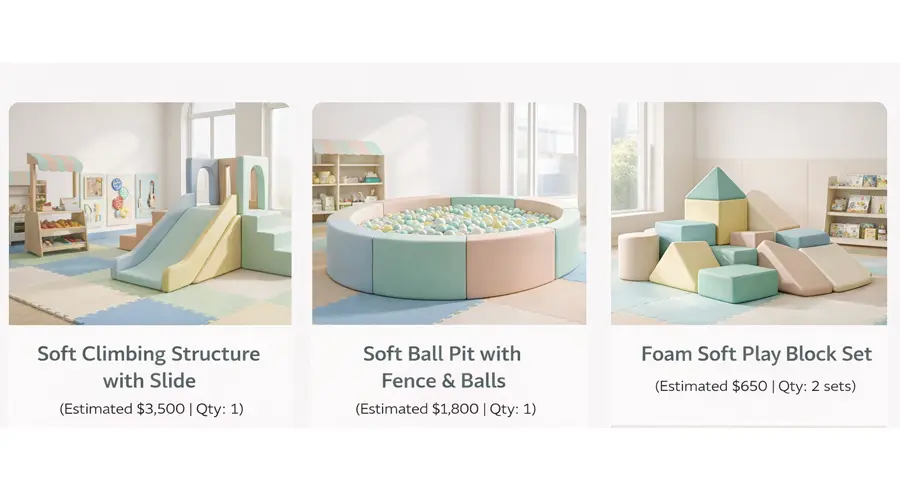
- Soft Climbing Structure with Slide: (Estimated $3,500 | Qty: 1) This is the centerpiece of your playground. Look for structures designed specifically for toddlers (1-5 years) with rounded edges and high-density foam. It should encourage climbing and sliding while maintaining a low fall height.
- Soft Ball Pit with Fence & Balls: (Estimated $1,800 | Qty: 1) A major attraction for children 1-4 years old. Ensure the balls are crush-proof and the surrounding fence is heavily padded.
- Foam Soft Play Block Set: (Estimated $650 | Qty: 2 sets) Essential for open-ended, creative building play. These blocks help develop spatial awareness and teamwork.
Recommended Equipment
- Soft Play Tunnel / Rainbow Arch: (Estimated $480 | Qty: 1) Excellent for encouraging crawling and spatial exploration in younger toddlers.
- Soft Foam Rockers (Animal/Car shapes): (Estimated $220 | Qty: 2) Great for balance and vestibular development for infants and young toddlers.
- Mini Trampoline with Safety Handle: (Estimated $350 | Qty: 1) Provides a safe outlet for high-energy jumping, crucial for gross motor development.
At Koalaplay, our toddler soft play equipment is engineered specifically for commercial daycare use, ensuring it withstands heavy daily use while meeting all ASTM safety standards.
2. The Role Play Zone Procurement List (26% of Budget)
Role play areas are critical for social and cognitive development and are a massive selling point during parent tours. These immersive environments allow children to practice real-world scenarios, build vocabulary, and learn empathy.
Must-Buy Equipment
•Mini Market / Grocery Store Set: (Estimated $2,200 | Qty: 1) Highly interactive, allowing multiple children to play simultaneously as cashiers, shoppers, or stockers.
•Kids Clinic / Doctor Play Set: (Estimated $1,800 | Qty: 1) Excellent for empathy building and helping children overcome anxiety about real doctor visits.
Recommended Equipment
•Kids Kitchen Play Set: (Estimated $980 | Qty: 1) A classic role play setup that encourages cooperative play and fine motor skills.
•Dress-Up Costume & Props Box: (Estimated $320 | Qty: 1) Enhances the immersive experience of the other role play areas.
We highly recommend incorporating our colorful supermarket playset or children’s role play hospital to create a premium, engaging environment that sets your daycare apart from competitors.
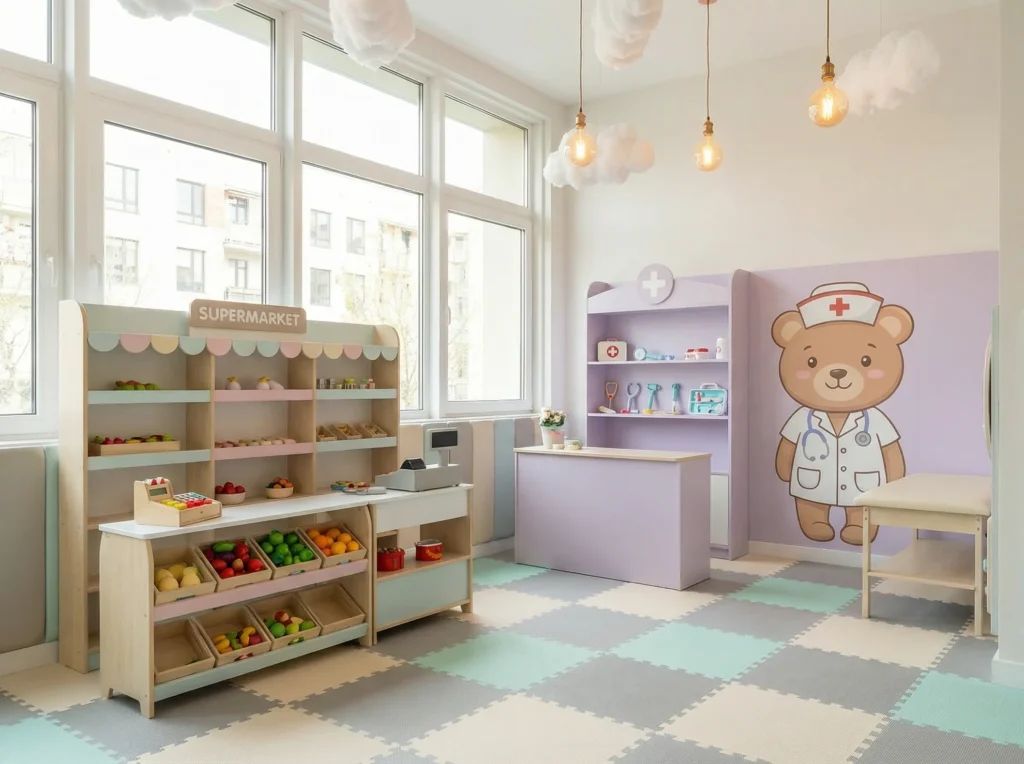
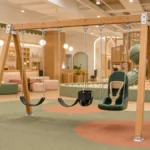
Caption: Immersive role play areas like this pastel market and clinic are essential additions to your procurement list.
3. The Sensory & Cognitive Zone Procurement List (17% of Budget)
Sensory play is crucial for early brain development. This zone focuses on tactile, auditory, and visual stimulation, often utilizing wall space to maximize your floor plan.
Must-Buy Equipment
•Sensory Wall Panels (Sound/Tactile): (Estimated $750 | Qty: 2) These panels save space while providing crucial fine motor and cognitive challenges for infants and toddlers.
•Foam Puzzle Floor Mats (Colorful): (Estimated $18 each | Qty: 20) While primarily for safety, brightly colored puzzle mats also serve a cognitive function, teaching color recognition and spatial reasoning.
Recommended Equipment
•Interactive Musical Percussion Wall: (Estimated $1,200 | Qty: 1) Allows children to explore sound and rhythm safely without loose instruments that can become tripping hazards.
•Sand & Water Sensory Table: (Estimated $420 | Qty: 1) Provides essential tactile feedback. Look for models with secure lids when not in use.
For more information on integrating sensory elements, explore our sensory play panels designed for commercial environments.
4. The Reading & Quiet Zone Procurement List (5% of Budget)
Every active play area needs a designated quiet space where children can decompress, read, or rest. This zone should be located away from the high-energy soft play and trampoline areas.
Must-Buy Equipment
•Kids Bean Bag Chairs: (Estimated $85 each | Qty: 4) Comfortable, low-to-the-ground seating that is easy to move and clean.
•Low-Height Kids Bookshelf: (Estimated $280 | Qty: 2) Must be forward-facing so pre-readers can select books by their covers, and low enough to prevent climbing hazards.
Recommended Equipment
•Reading Tent / Teepee: (Estimated $150 | Qty: 1) Provides a cozy, enclosed space for children who need a break from sensory input.
5. Safety Infrastructure: Non-Negotiable Investments (12% of Budget)
You cannot open a daycare playground without proper safety infrastructure. This category is the most critical for liability protection and regulatory compliance.
Must-Buy Equipment
•Rubber Safety Mats (Fall Zone): (Estimated $720 for 6 mats) Must be at least 50mm thick and cover the areas under all climbing equipment to absorb impact.
•Corner & Edge Foam Guards: (Estimated $180) To cover any exposed wall corners, structural pillars, or sharp edges on furniture.
•Soft Play Area Divider Fences: (Estimated $520 for 2) Essential for separating the infant/crawler zone from the active toddler zone to prevent accidental collisions.
•Adult Supervision Padded Benches: (Estimated $880 for 4) Comfortable seating placed along the perimeter for teachers to maintain clear sightlines of the entire play area.
Recommended Equipment
•Child-Safe Unbreakable Mirrors: (Estimated $190 for 2) Made of acrylic, these promote self-recognition in infants without the shattering risk of glass.
For more information on selecting the right safety surfaces, read our guide to playground flooring and surfacing.
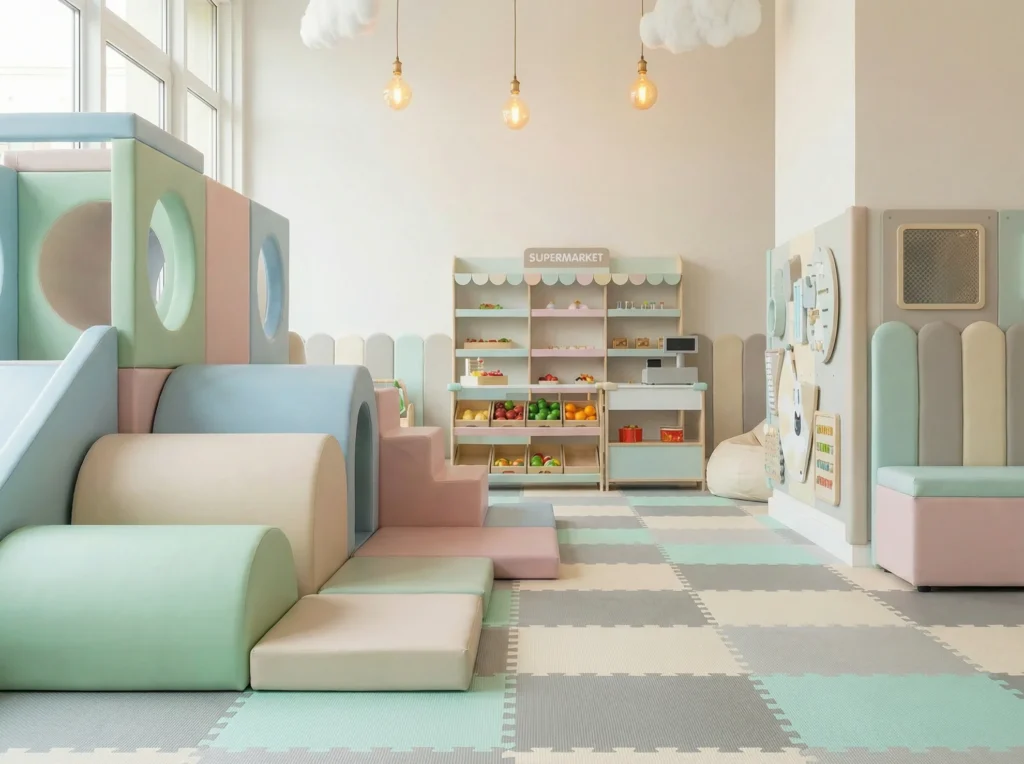
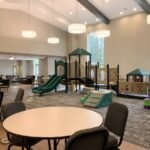
Caption: Proper safety infrastructure, including thick foam mats and padded edges, must be at the top of your procurement list.
Safety & Compliance Checklist
Purchasing the equipment is only half the battle; ensuring it meets industry standards is equally important. Your procurement strategy must align with safety regulations to pass local inspections.
Key Compliance Areas to Verify:
1.Materials: Ensure all soft padding is fire retardant (UL 94 V-0 standard) and all plastics/foams are non-toxic, lead-free, and BPA-free (ASTM F963 / EN 71).
2.Dimensions: To prevent head entrapment, all openings must be less than 3.5 inches or greater than 9 inches. Toddler equipment height should generally not exceed 32 inches (ASTM F2373).
3.Surfacing: Impact-absorbing mats in fall zones must meet ASTM F1292 standards for impact attenuation.
4.Hygiene: Select equipment with commercial-grade vinyl covers that can withstand daily sanitization with CDC-approved cleaning agents.
Supplier Evaluation Criteria
When executing your procurement list, choosing the right manufacturer is just as important as choosing the right equipment. A cheap upfront price can lead to massive replacement costs and liability issues down the road. Your supplier evaluation should weigh several factors:
1.Safety Certification (25% Weight): The supplier must provide valid ASTM F2373 / CPSC / EN 71 compliance documents for their products.
2.Product Quality (25% Weight): Look for high-density foam (≥40kg/m³) and a minimum 5-year commercial lifespan.
3.After-Sales Service (20% Weight): Ensure they offer at least a 2-year warranty and readily available replacement parts.
4.Customization (15% Weight): The ability to customize colors and themes to match your daycare’s branding.
5.Logistics & Installation (15% Weight): Reliable delivery timelines and clear installation guidance.
If you are considering overseas manufacturers to stretch your budget and get factory-direct pricing, review our comprehensive guide on how to import indoor playground equipment from China.
Download the Complete Procurement List & Checklist
To make your planning process as seamless as possible, we have compiled all 22 essential and recommended items, along with a 23-point safety compliance checklist, into a single, easy-to-use guide.
Koalaplay Daycare Center Procurement Guide & Checklist
Download this free PDF to get the complete itemized list, budget breakdowns, and supplier evaluation scorecards.
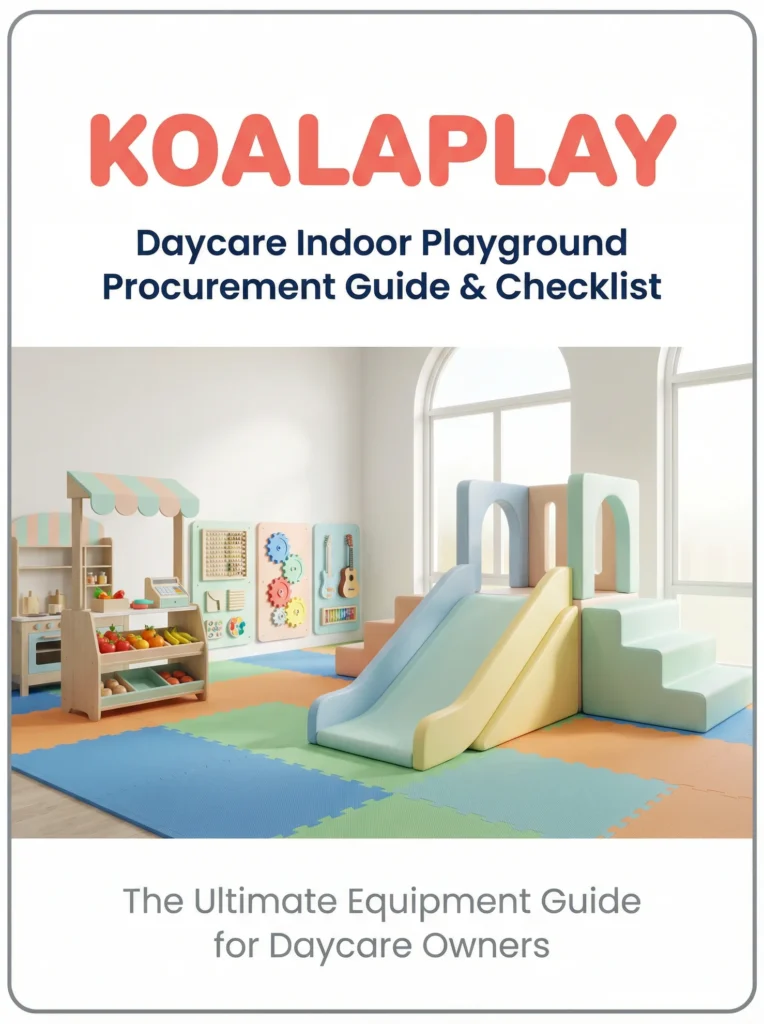
Download Daycare Indoor Playground Procurement File
This practical guide gives you a clear, step-by-step checklist to avoid costly mistakes and make confident decisions.
What You’ll Learn
- ✔ How to choose age-appropriate indoor playground equipment
- ✔ Key safety and compliance considerations (ASTM / EN standards)
- ✔ Space zoning strategies for better supervision and flow
- ✔ Budget planning and cost breakdown insights
- ✔ Common mistakes daycare owners make — and how to avoid them
Conclusion
Building a daycare playground requires strategic budgeting and a clear understanding of what equipment provides the best return on investment in terms of child development and safety. By following this detailed procurement list, you can confidently outfit your space with the right mix of soft play, role play, sensory activities, and safety infrastructure. Investing in high-quality, commercial-grade equipment not only protects the children in your care but also serves as a powerful marketing tool to attract new enrollments.
Ready to source your equipment? Contact the Koalaplay team today to discuss your daycare’s specific needs and get a customized quote.
Frequently Asked Questions
What is the most important item on a daycare playground procurement list?
The most critical items are safety infrastructure (impact-absorbing mats, edge guards) and age-appropriate soft play climbing structures that comply with ASTM F2373 standards. Without these foundational safety elements, the rest of the playground cannot operate legally or safely.
How much of my budget should go toward safety surfacing?
Typically, 10% to 15% of your total equipment budget should be allocated to safety infrastructure. This includes high-density EVA foam or rubber mats specifically rated for the fall heights of your climbing equipment.
Can I buy residential play equipment for my daycare to save money?
No. Daycare centers must use commercial-grade equipment that meets strict CPSC and ASTM standards for public use, durability, and fire retardancy. Residential equipment is not built to withstand the daily wear and tear of dozens of children, will not pass safety inspections, and poses a significant liability risk to your business.
How do I clean and maintain commercial soft play equipment?
Commercial soft play equipment is covered in durable PVC or vinyl. It should be wiped down daily with non-toxic, CDC-approved sanitizers. Ball pits require weekly deep cleaning, and all structural connections should be inspected monthly for wear or loosening.




 English
 Spanish
 German