
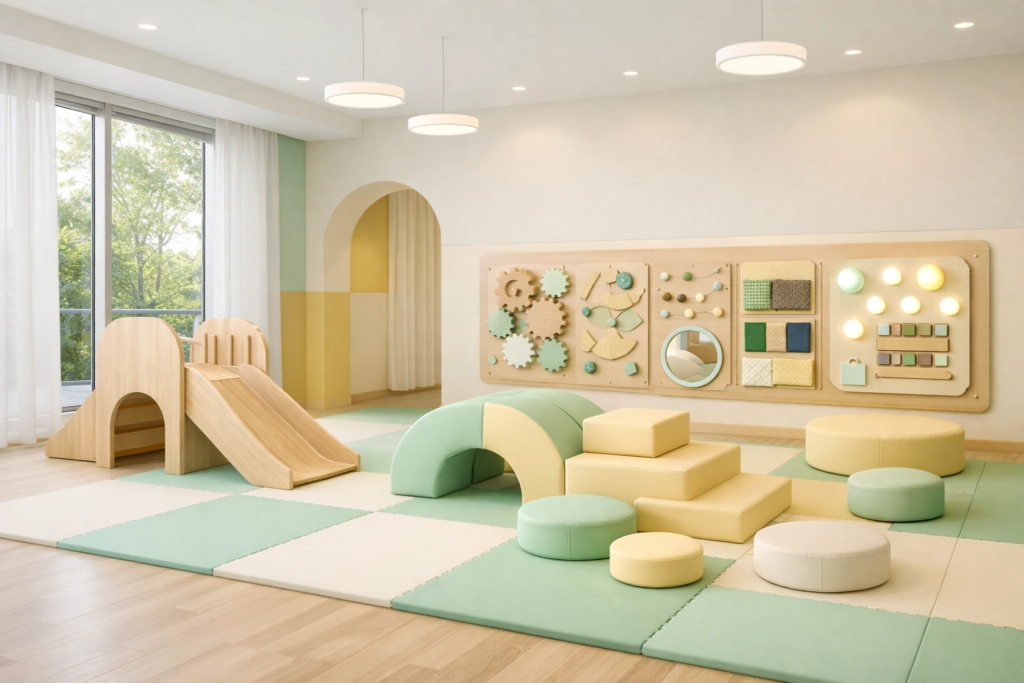
Many daycare operators face a frustrating bottleneck: they know that a high-quality play area is essential for child development and enrollment, yet they are constrained by a footprint of less than 500 square feet. This lack of space often leads to overcrowded rooms, limited physical activity for children, and a “cluttered” aesthetic that can deter prospective parents during tours. Without a strategic approach to a small space indoor playground for daycare, you risk failing local licensing inspections, increasing injury rates due to poor traffic flow, and missing out on the competitive edge that a professional play zone provides.
The most effective way to implement a small space indoor playground for daycare in under 500 sq ft is to shift from horizontal expansion to vertical and wall-integrated solutions. By utilizing multi-level soft play structures, sensory wall panels, and modular zoning, you can accommodate up to 10-15 children simultaneously while meeting strict safety standards like ASTM F1918. Success depends on prioritizing high-traffic durability, clear sightlines for supervision, and equipment that serves multiple developmental purposes.
The Challenges of Designing a Small Space Indoor Playground for Daycare
Operating a daycare in an urban environment or a converted residential space often means every square inch is precious. When planning a small space indoor playground for daycare, operators typically encounter three primary hurdles that can derail a project if not addressed early.
1.Licensing and Square Footage Requirements: Most state and provincial regulators require between 35 to 50 square feet of usable indoor space per child. In a 500 sq ft room, this theoretically allows for 10-14 children. However, once you add fixed equipment, cubbies, and mandatory emergency exit paths, that “usable” space shrinks rapidly.
2.Acoustic and Sensory Overload: In small, enclosed areas, the noise from active play can become deafening. Without acoustic treatment or “quiet zones,” the environment can become overstimulating for both children and staff, leading to increased stress and behavioral issues.
3.The “Storage vs. Play” Conflict: Daycares need massive amounts of storage for mats, toys, and supplies. Often, play areas are sacrificed to make room for shelving. A professional small space indoor playground for daycare must integrate storage into the play structure itself to solve this conflict.
Maximizing ROI with a Small Space Play Area for Daycare
For a daycare business, an indoor playground is not just a cost—it is a marketing asset and an operational tool. To maximize your Return on Investment (ROI) in a footprint under 500 sq ft, you must choose equipment that offers the highest “play-value-per-square-foot.”
Verticality: The Only Way is Up
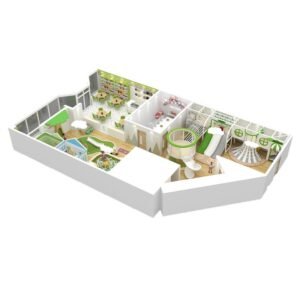
In a 400 or 500 sq ft room, a single-level play mat is a waste of potential. A two-level contained play structure can effectively double your play area. While the footprint remains 150 sq ft, the children have 300 sq ft of exploratory space. This vertical approach allows for slides, crawl tunnels, and observation bubbles that keep children engaged for longer periods.
Wall-Integrated Play
Wall space is the most underutilized asset in small daycares. By installing high-quality sensory panels, gear walls, and tactile puzzles, you create “activity stations” that take up zero floor space. This keeps the center of the room open for circulation and group activities, which is critical for maintaining safety and meeting fire codes.
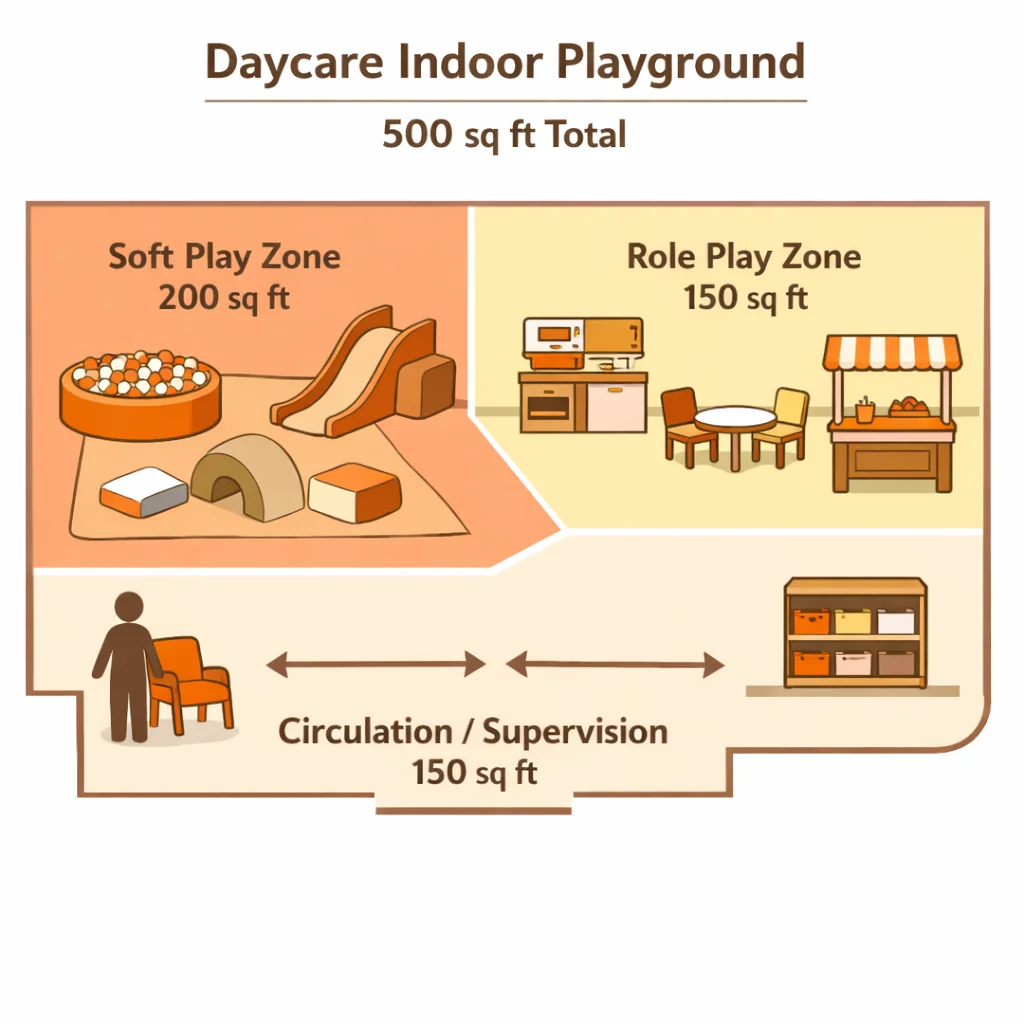
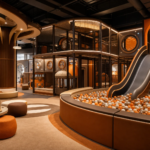
A professional zoning plan for a 500 sq ft daycare indoor playground, balancing active play, sensory exploration, and supervision.
Strategic Zoning for a Small Space Daycare playground
Even in a small room, “open plan” is often a recipe for chaos. Effective zoning creates a sense of order and allows children to engage in different types of play without interfering with one another.
| Zone Type | Recommended Sq Ft | Equipment Focus |
| Active Soft Play | 200 – 250 | Multi-level climbers, soft slides, ball pits. |
| Sensory & Quiet | 50 – 80 | Wall panels, tactile mats, soft seating. |
| Role Play Corner | 80 – 120 | Mini-kitchens, dress-up, “tiny town” elements. |
| Circulation & Safety | 50 – 100 | Clear paths to exits, supervision seating. |
By following this zoning logic, a small space indoor playground for daycare feels intentional rather than accidental. It allows a teacher to supervise the active zone while another child engages in quiet sensory play, reducing the overall “energy” of the room to a manageable level.
Safety Standards for Small Space Indoor Playground for Daycare
In a compact environment, the risk of collisions is higher. Therefore, your equipment must meet the most rigorous commercial standards. At Koalaplay, we emphasize that “small” should never mean “low quality.”
• ASTM F1918 Compliance: This is the North American standard for soft contained play equipment. It covers everything from the strength of the netting to the “head entrapment” risks in small openings.
•Fire Retardant Materials: In a 500 sq ft space, fire spreads quickly. All foam, vinyl, and plastic components must be fire-rated (Class A or equivalent) to ensure the safety of the children and compliance with local building codes.
•Non-Toxic Surfaces: Children in daycares often explore with their mouths. Our materials are lead-free, phthalate-free, and easy to sanitize with standard commercial cleaners.
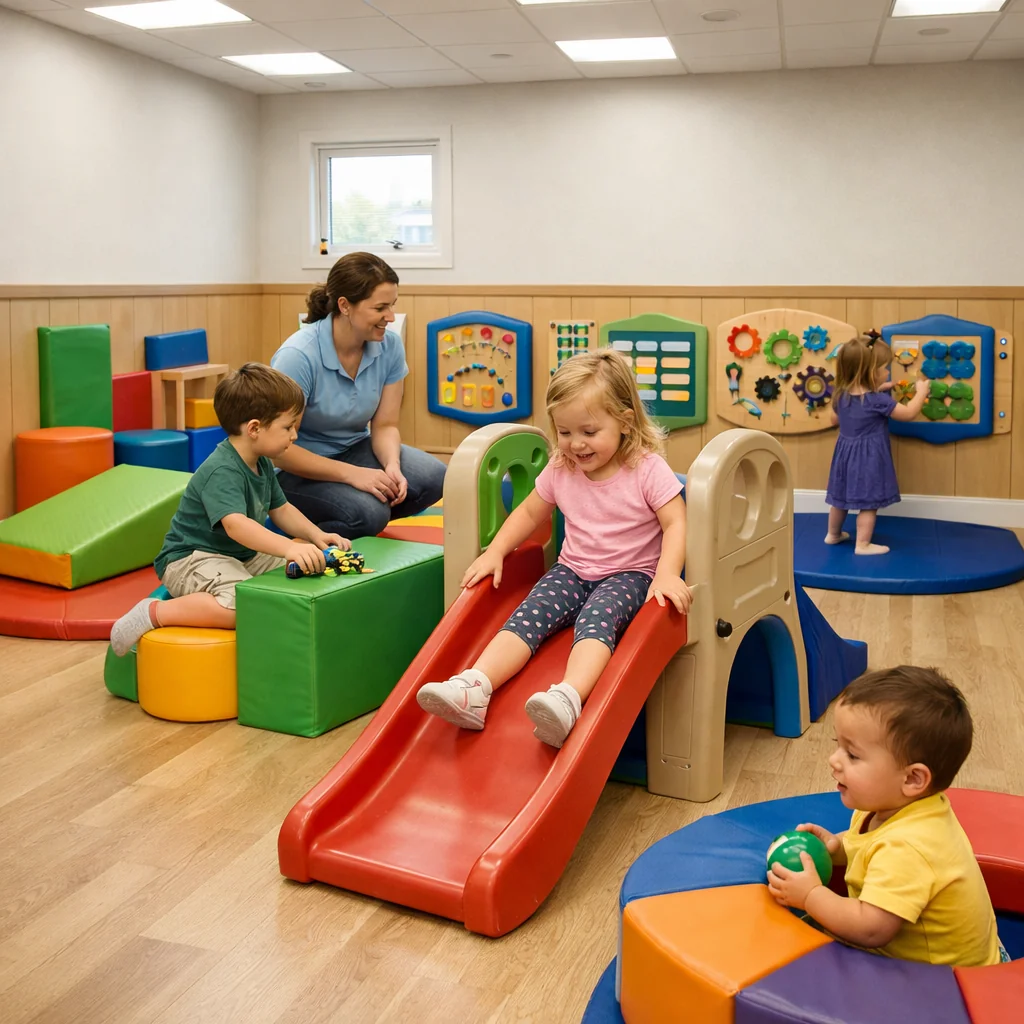
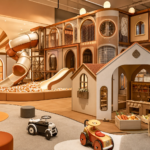
A compact daycare play area that utilizes soft padding and clear sightlines to ensure maximum safety in a small footprint.
Why Choose Koalaplay for Your Small Space Indoor Playground for Daycare?
As a leading indoor play cafe manufacturer for commercial venues, Koalaplay understands the unique constraints of the daycare market. We don’t just sell equipment; we provide spatial solutions.
Factory-Direct Expertise
Because we operate our own manufacturing facility, we can customize equipment to fit your exact room dimensions. If you have an awkward pillar or a low ceiling in your 450 sq ft room, we can design a structure that wraps around those obstacles, ensuring no space is wasted.
Durability for High-Traffic Use
Daycare equipment is used for 8-10 hours a day, 5 days a week. Residential-grade toys will fall apart in months. Koalaplay uses high-density foam (30kg/m³+), heavy-duty 0.55mm PVC vinyl, and reinforced stitching to ensure your investment lasts for years, not weeks.
Comprehensive Support
From the initial 3D design consultation to the final installation checklist, our team guides you through the process. We help you navigate local regulations and ensure that your small space indoor playground for daycare is a source of pride for your business.
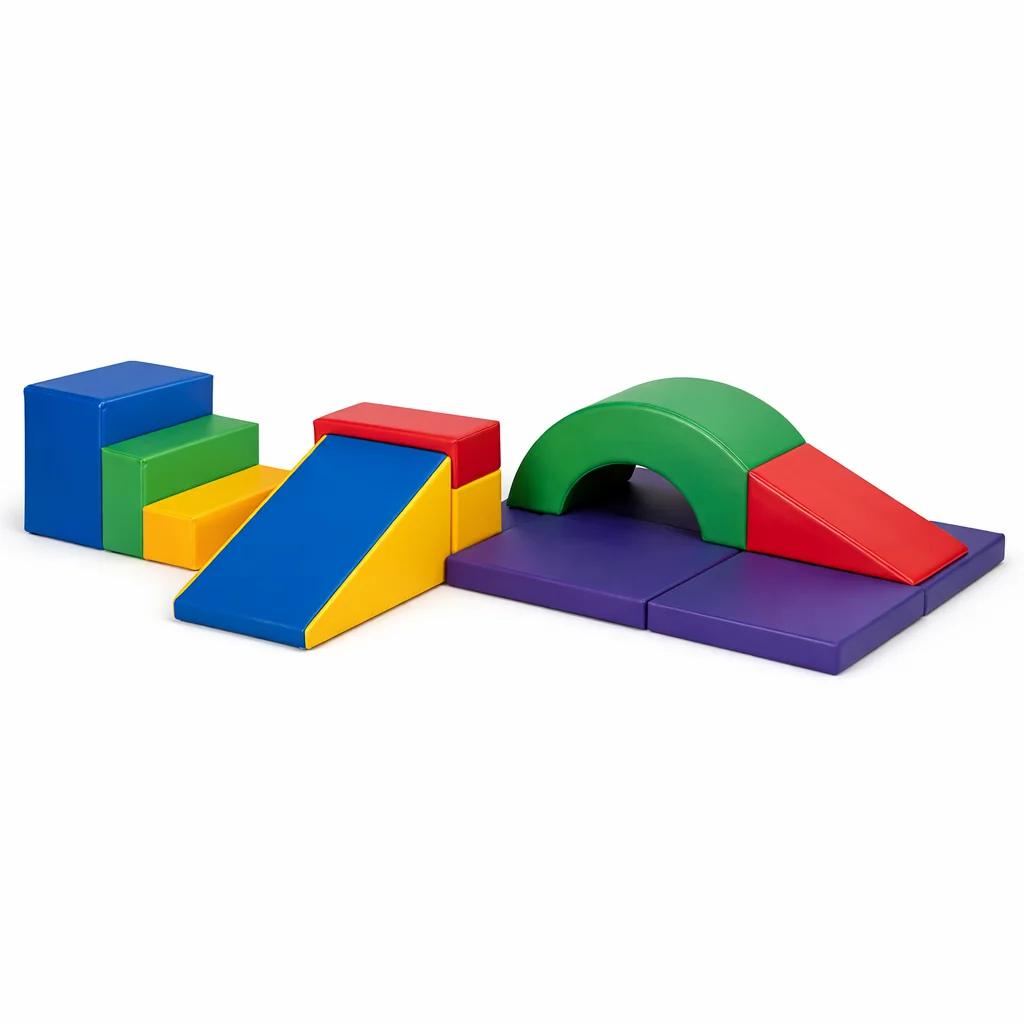
High-durability soft play components from Koalaplay, designed for the rigorous daily use of a commercial daycare environment.
Common Mistakes to Avoid in Small Play Areas
1.Over-equipping the Space: It is tempting to cram in every cool feature. However, a small space indoor playground for daycare needs “breathing room.” If the space is too crowded, children cannot move safely, and the risk of injury increases.
2.Ignoring Maintenance Access: Even in a small structure, you need to be able to get inside to clean the ball pit or wipe down the tunnels. Ensure your design includes “zip-access” points for staff.
3.Poor Lighting: Small spaces can feel “cave-like” if not properly lit. Use bright, warm LED lighting to make the area feel larger and more inviting to parents.
Conclusion
Designing a small space indoor playground for daycare under 500 sq ft requires a shift in perspective. By embracing verticality, integrating wall-based activities, and adhering to strict zoning and safety standards, you can create a world-class play environment that belies its small footprint. This investment not only supports the physical and cognitive development of the children in your care but also serves as a powerful engine for business growth and parent satisfaction.
At Koalaplay, we specialize in making small spaces feel limitless. Whether you are starting a new daycare or upgrading an existing one, our team is ready to help you plan, design, and install the perfect play solution. and take the first step toward transforming your daycare.
Frequently Asked Questions
How many children can fit in a 500 sq ft indoor playground?
Depending on the layout and local licensing, a 500 sq ft small space indoor playground for daycare can typically accommodate 10-15 children safely. Utilizing multi-level structures is key to maximizing this capacity.
What is the most durable material for daycare play equipment?
Commercial-grade 0.55mm PVC vinyl and high-density foam are the industry standards. These materials are tear-resistant, fire-retardant, and easy to disinfect, making them perfect for high-traffic daycare use.
Does a small indoor playground need professional installation?
While some modular soft play items are “plug-and-play,” any contained structure or multi-level climber should be professionally installed to ensure it meets ASTM and building code safety requirements.
How do I clean a small indoor playground daily?
Use a non-toxic, hospital-grade disinfectant spray and microfiber cloths. For ball pits, we recommend using a ball cleaning machine or a mesh bag system for regular sanitization.





 English
 Spanish
 German