
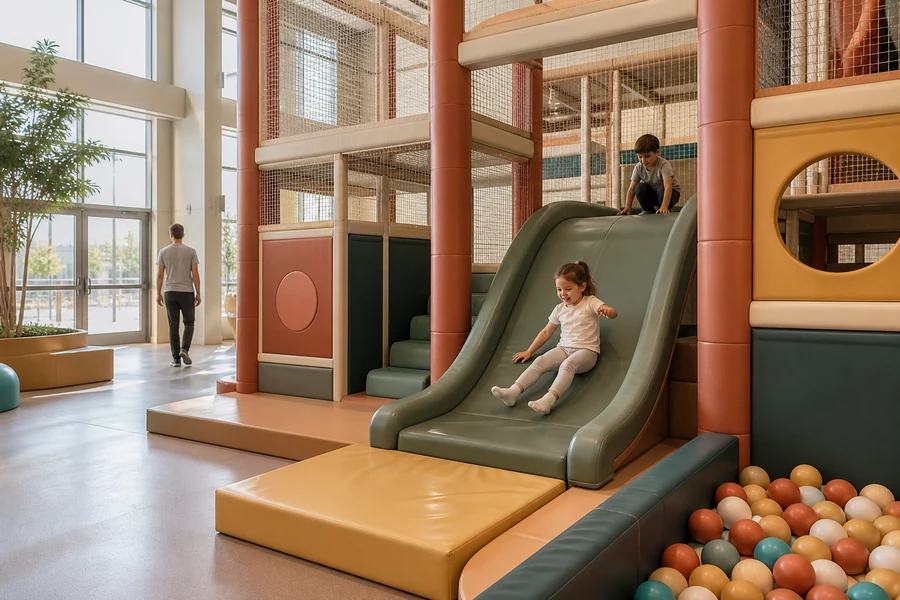
A quote comes back for your new soft play area and it lists “high-density foam padding” as if that settles the matter. It doesn’t. Foam is not one material — it’s a family of very different products, and the one hiding under a generic label can be the difference between padding that holds up for years and padding that goes soft, damp, or brittle before your warranty period ends.
Get the foam wrong and the costs show up later, not on day one. A column padded with the wrong foam compresses under repeated impact, loses its cushioning, and fails an inspection. A supplier who used open-cell foam somewhere it can’t be wiped down or dried out has handed you a mold problem waiting to happen. None of this shows up on a spec sheet that just says “foam” — you have to know which one, and why.
The short version: most commercial soft play structures — columns, decking, slides, climbers — are built with EPE (expanded polyethylene) foam, because it holds its shape under repeated impact, resists moisture, and takes fire-retardant treatment well. EVA foam is the right call for play mats and flooring. PU (polyurethane) foam belongs in loose crash pads and soft-fill cushioning, not structural padding. This guide walks through why, with real manufacturing specs, so you know what to ask your supplier before you sign off on a quote.
What EPE, EVA, and PU foam actually are
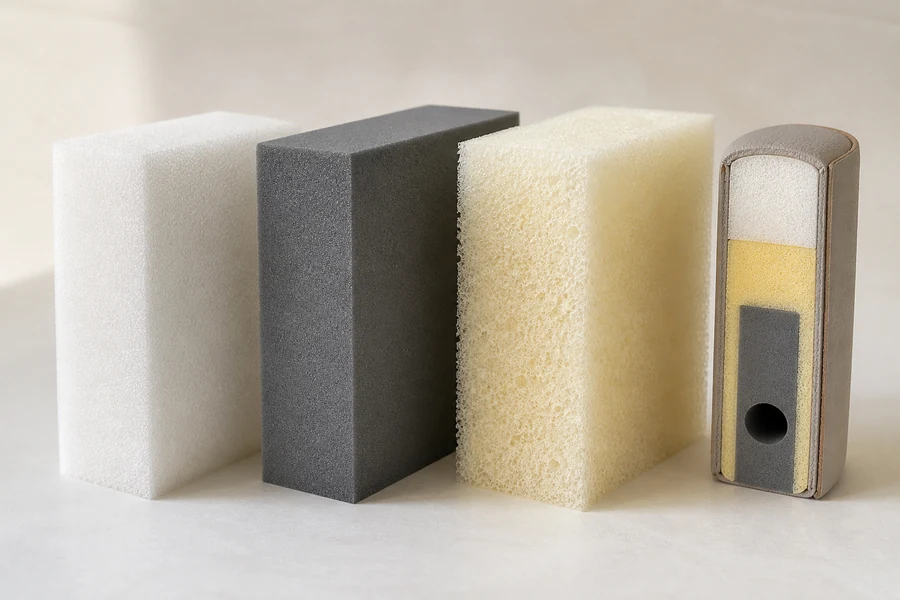
These three materials look similar in a photo but behave very differently once children are climbing, falling, and landing on them every day.
EPE (Expanded Polyethylene)
EPE is a closed-cell foam, meaning its bubbles are sealed off from each other rather than open and connected. That closed structure is what makes it resist water and hold its shape instead of soaking up moisture like a sponge. It’s light for its density, which matters when you’re padding tall columns or wide decking panels, and it takes fire-retardant treatment reliably — a requirement most commercial soft play equipment has to meet.
EVA (Ethylene-Vinyl Acetate)
EVA is also closed-cell, but it has a rubbery, springier feel than EPE. That’s why it shows up so often as play mat flooring, tumble mats, and anti-fatigue surfaces — it’s firm enough to walk and run on, cleans easily, and resists cracking under foot traffic. It’s less common as the core padding inside a structural column or slide.
PU (Polyurethane) foam
PU foam is open-cell — its bubbles are interconnected, which is what gives it that extremely soft, sink-in feel. That same openness means it absorbs moisture and compresses permanently under repeated weight instead of springing back. It’s a good match for loose crash pads, gym pits, and soft toy filling. It’s a poor match for anything that needs to hold its shape under daily impact for years.
EPE vs EVA vs PU: side-by-side comparison for soft play use
| EPE Foam | EVA Foam | PU Foam | |
|---|---|---|---|
| Cell structure | Closed-cell | Closed-cell | Open-cell |
| Typical soft play use | Structural padding (columns, decking, slides, climbers) | Mats, flooring, anti-fatigue surfaces | Loose crash pads, soft-fill cushioning |
| Water/moisture resistance | High | High | Low (absorbs moisture) |
| Fire-retardant treatment | Treats reliably | Treats reliably | Harder to treat consistently |
| Weight for the volume | Light | Moderate | Light, but compresses over time |
| Feel | Firm, supportive | Firm, springy | Very soft, sinks under weight |
| Commercial durability | Holds shape under repeated impact | Holds shape underfoot | Compresses and needs earlier replacement |
Treat the density, cost, and lifespan figures you’ll see quoted elsewhere online with some caution — exact numbers vary by manufacturer, foam grade, and region, and there’s no single industry-wide standard for them. What’s consistent across the market is the *pattern* of use: EPE for structure, EVA for flooring, PU for loose cushioning.
Turn a generic foam label into a real project specification
Send your component list, target age range, country, and cleaning routine. We’ll help you check which parts need structural EPE, where EVA makes sense, and where loose PU cushioning is appropriate.
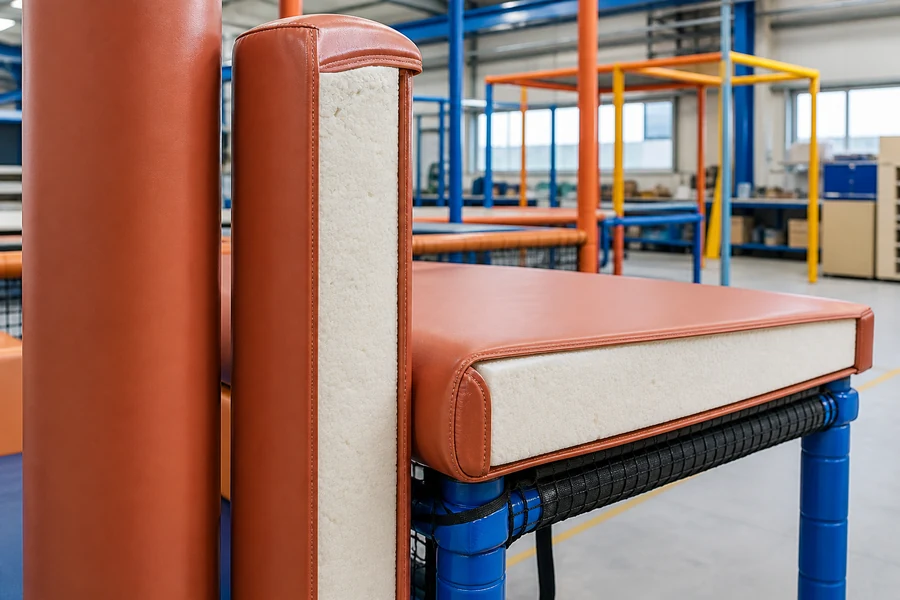
Why most soft play manufacturers build structural padding with EPE
The logic is straightforward once you see it from a manufacturing standpoint. Soft play structures are large — columns, ramps, and decking panels cover a lot of surface area — so the padding material needs a good strength-to-weight ratio, or the whole structure gets heavy and expensive to ship and install. EPE delivers that.
It also has to survive a commercial environment: sanitized daily, sometimes exposed to spilled drinks or humid indoor air, and touched by dozens of children an hour. Closed-cell EPE doesn’t absorb that moisture the way open-cell PU does, which matters both for hygiene and for keeping the foam from breaking down internally.
At KoalaPlay, that’s reflected directly in how the equipment is built: decking platforms use 50mm high-resilience EPE foam, sponge columns and padding use high-density, fire-retardant EPE with a PVC outer layer, and trampoline safety pads use 70mm shock-absorbent EPE. It’s not a marketing detail — it’s the same reason most commercial manufacturers converge on EPE for the parts that take the most repeated impact.
Where EVA and PU foam still make sense
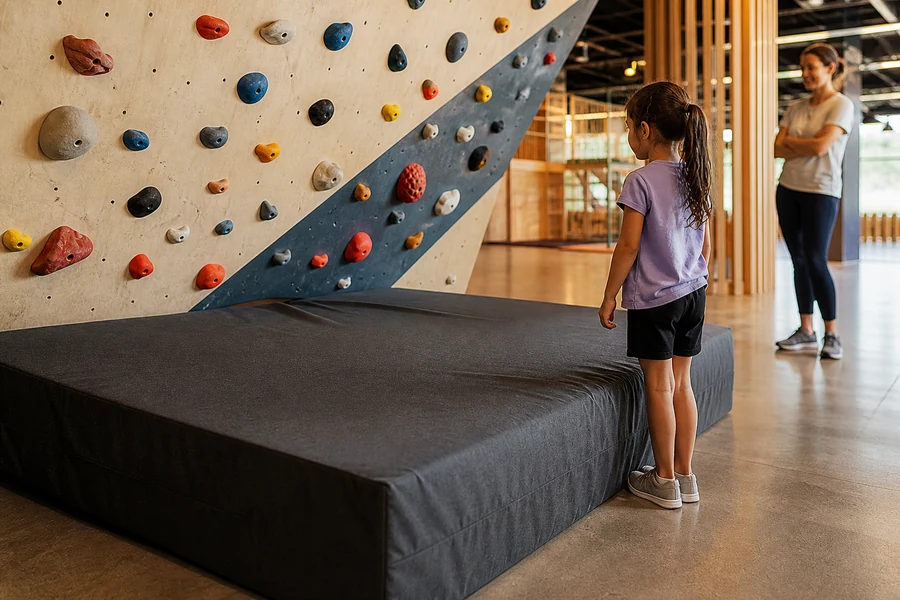
None of this means EVA or PU foam are inferior materials — they’re just built for different jobs, and a good soft play project usually uses more than one foam type.
EVA earns its place in flooring and mats. Its closed-cell, rubber-like surface holds up to constant foot traffic, cleans easily between sessions, and gives a firmer, more stable footing than an open-cell foam would underfoot. If a supplier specs EVA for your play area flooring or tumble mats, that’s a reasonable, well-matched choice — as covered in KoalaPlay’s guide to soft play vs. hard play equipment, flooring and structural padding wear differently and often need separate replacement schedules.
PU foam earns its place in loose, high-cushion applications — crash pads, ball pit surrounds, and soft-fill toys, where its extreme softness and open-cell “give” are exactly what you want. What it’s not built for is structural, high-traffic contact surfaces. If a quote lists PU foam as the padding inside a climbing column or slide tower, that’s worth asking about directly — it’s a sign the supplier may be using a cheaper, shorter-lived material where a denser, moisture-resistant one belongs.
Safety standards and certifications to ask about, regardless of material
The foam type is only half the picture. Whatever material a supplier uses, ask for documentation, not just a name on a spec sheet. The standards that matter most depend on where the equipment will operate:
- EN 1176 — the primary playground safety standard across Europe.
- ASTM F1918 and ASTM F1487 — US standards covering soft-contained play equipment and public playground equipment.
- GB 6675-2023 — China’s national toy and children’s product safety standard, relevant if your equipment is manufactured there.
- Fire-retardant certification for the foam and its outer covering, since most jurisdictions require this for commercial indoor play equipment.
- Third-party testing, from an independent lab such as SGS or TÜV, confirming the material actually passed the standards it’s supposed to meet.
A supplier who can hand you real test reports against these standards — not just claim compliance — is a stronger sign of quality than any specific foam brand name.
How to choose the right padding material for your project
Match the material to the job it’s actually doing, not the other way around:
- Columns, slides, climbers, and decking: specify EPE (or an equivalent high-density, closed-cell, fire-retardant foam) and ask for the thickness used at contact points.
- Play area flooring and tumble mats: EVA is the standard, practical choice — ask about wear resistance and cleaning requirements.
- Loose crash pads or soft-fill cushioning: PU foam is appropriate, but plan for a shorter replacement cycle than structural padding.
- High-traffic commercial settings: weigh total cost of ownership, not just sticker price — a denser foam that lasts longer often costs less over 5+ years than a cheaper one you’re replacing every season.
- Any climate with humidity: prioritize closed-cell foams (EPE, EVA) over open-cell PU wherever the padding can’t be dried out easily.
Before you finalize a quote, ask your supplier three things: which foam type is used in which component, what thickness and density it’s built to, and what certification or test reports back that up. If you’re comparing quotes or want to see how KoalaPlay specs this out on real projects — including equipment cost ranges and how they apply to toddler and soft play areas — that’s a useful side-by-side to work from.
Three ways to build your indoor playground
Koalaplay builds projects three ways: Select a ready-made design from our library, Adapt a proven design to your floor plan, theme, and colors, or Create a fully original design. Most venues choose Adapt—it puts the budget into the guest experience while using proven structure and components.
Not sure which route fits? Send your floor plan and opening date. If full custom is genuinely the better call, we’ll say so.
Frequently Asked Questions
Is EPE foam safe for children?
Yes, when it’s manufactured to commercial standards. EPE used in soft play equipment is typically non-toxic and fire-retardant treated, and reputable manufacturers test it against standards like EN 1176 or ASTM F1918. Ask your supplier for the specific test documentation rather than taking “safe” as a given.
How long does soft play foam padding last?
It depends heavily on the foam type and traffic volume. Dense, closed-cell foam like EPE used in structural padding is built to hold up under years of daily commercial use, while loose PU crash pads and cushions typically need replacing sooner because open-cell foam compresses permanently under repeated weight. Ask your supplier for their expected replacement interval rather than relying on a general industry number.
Can soft play foam get wet or grow mold?
Closed-cell foams like EPE and EVA resist moisture absorption, which is why they’re preferred for structural padding and flooring in environments that get cleaned and sanitized daily. Open-cell PU foam absorbs moisture more readily, so it needs better ventilation and is more prone to mold if it’s used somewhere damp or hard to dry.
What foam does KoalaPlay use in its soft play equipment?
KoalaPlay builds structural components — decking, sponge columns, and trampoline safety pads — with high-density EPE foam, using thicknesses such as 50mm for decking and 70mm for trampoline pads, with fire-retardant treatment and PVC outer covering. Full specs are listed on the Material & Quality page.
Get a spec sheet, not just a quote
If a supplier’s quote just says “foam padding” without naming the material, thickness, or standard it’s tested against, ask before you sign. The right foam in the right place is what keeps your equipment safe, compliant, and cost-effective over its full lifespan — not just on installation day.
KoalaPlay builds soft play structures around high-density, fire-retardant EPE foam and can walk you through the material specs and test reports for your project. Talk to the KoalaPlay team or request a catalog to see exactly what’s inside the equipment you’re comparing.
References
- Material & Quality — KoalaPlay — https://koalaplayground.com/material-quality/
- What is Soft Foam Climber — KoalaPlay — https://koalaplayground.com/soft-foam-climber/
- Soft Play vs Hard Play Equipment — KoalaPlay — https://koalaplayground.com/soft-play-vs-hard-play-equipment/
- Indoor Playground Equipment Cost: Complete Price Guide 2026 — KoalaPlay — https://koalaplayground.com/indoor-playground-equipment-cost-2026/
- Best Soft Play Options for Commercial Indoor Playgrounds — Far Kids Island — https://www.farkidsisland.com/guides/best-soft-play-options-commercial-indoor-playgrounds/
- EVA vs PE vs PU: Know Your Foam Matting Materials — Greatmats — https://www.greatmats.com/foam-flooring/eva-vs-pe-vs-pu-know-your-foam-matting-materials.php
- Safety Pads: The Ultimate Guide to Impact Protection for Play Areas — SoftPlayToys4kids — https://softplaytoys4kids.co.uk/2026/07/19/safety-pads-the-ultimate-guide-to-impact-protection-for-play-areas/
- Expanded polyethylene — Wikipedia — https://en.wikipedia.org/wiki/Expanded_polyethylene








 English
 Spanish
 German