
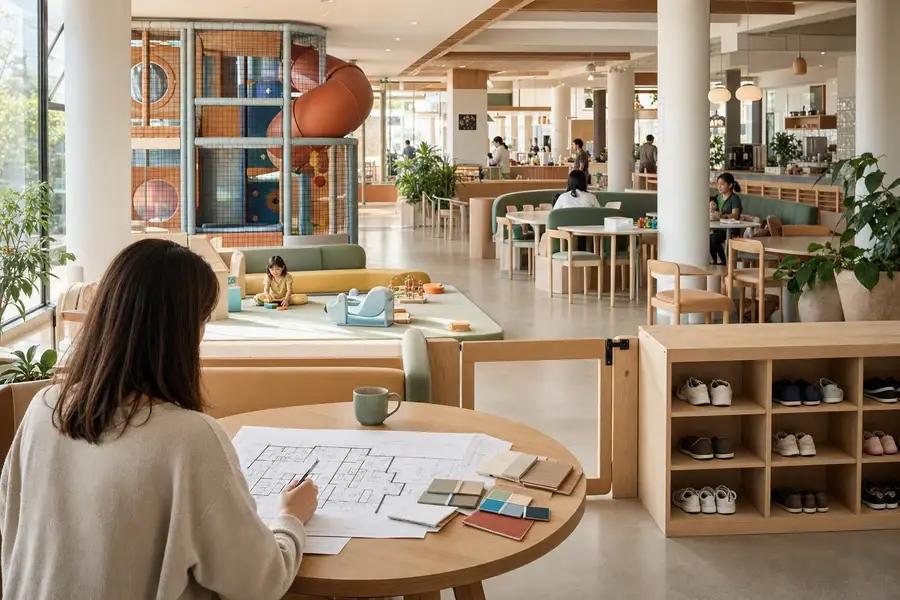
Searching for a play cafe franchise usually means you want a safer, clearer way to enter an unfamiliar business. A ready-made brand, operating manual, training program, and supplier list can sound reassuring when you are planning a venue that combines children’s play with food service.
The danger is assuming that a franchise removes the hardest work. You may still be responsible for the lease, local permits, construction surprises, staffing, food safety, playground maintenance, insurance, and day-to-day sales. Franchise fees and operating rules can add another layer of cost without solving every local problem.
The right choice depends on what the franchise can prove. Choose a franchise when its brand creates real demand in your market, its systems have worked across comparable locations, and the support is worth the total fees and limits on control. Choose an independent play cafe when local identity, design freedom, supplier choice, and the ability to adapt matter more—and build your own support team before committing to a site.
Who Searches for a Play Cafe Franchise—and What Do They Need?
Most readers exploring this topic are not experienced franchise investors. They are often parents who have seen a gap in their community, café owners considering a family concept, early-years professionals planning a new venture, or investors looking for a weather-resistant leisure business.
Their real questions are usually more practical than “Which brand should I buy?”
- Can this concept work in my city and in the space I can afford?
- How much support will I actually receive after signing?
- What will the full project cost—not only the franchise fee?
- Who handles the play layout, kitchen coordination, permits, shipping, and installation?
- Can I change the menu, pricing, parties, memberships, or play offer later?
- What happens if the location underperforms or I want to sell?
Before comparing brands, define the concept you want to run. Koalaplay’s guide to the six common types of play cafe can help you distinguish a toddler café, role-play venue, party-led model, larger indoor playground café, and other formats. A franchise built for one model may be a poor fit for another.
Is a Play Cafe Franchise Right for You?
A franchise is not automatically safer, and an independent business is not automatically cheaper. They simply put the risk in different places.
A franchise gives you a system—but also rules
You may get an established name, training, operating manuals, and a set visual style. In return, you may need to use approved suppliers, follow required processes, pay royalties, and ask for approval before changing the menu, play offer, or local marketing.
This route suits you when the brand is already trusted by families in your area and its support is strong enough to justify the fees and limits.
An independent play cafe gives you more control
You own the local brand and choose the theme, layout, suppliers, pricing, parties, and memberships. You do not pay franchise royalties. But you need to build the right support team yourself.
This route suits you when your local idea is the main attraction, or when you need a layout and business model that does not fit a standard franchise package.
The U.S. Small Business Administration puts the trade-off simply: franchising can give you more guidance, but less control. Ask whether the franchisor’s name already creates demand in your target area. If you still need to introduce the concept, build local awareness, and create community partnerships yourself, be clear about what the brand is adding.
Send Koalaplay your floor plan, ceiling height, target age group, and budget. We can help you see what the play area could realistically support before you commit to an equipment scope.
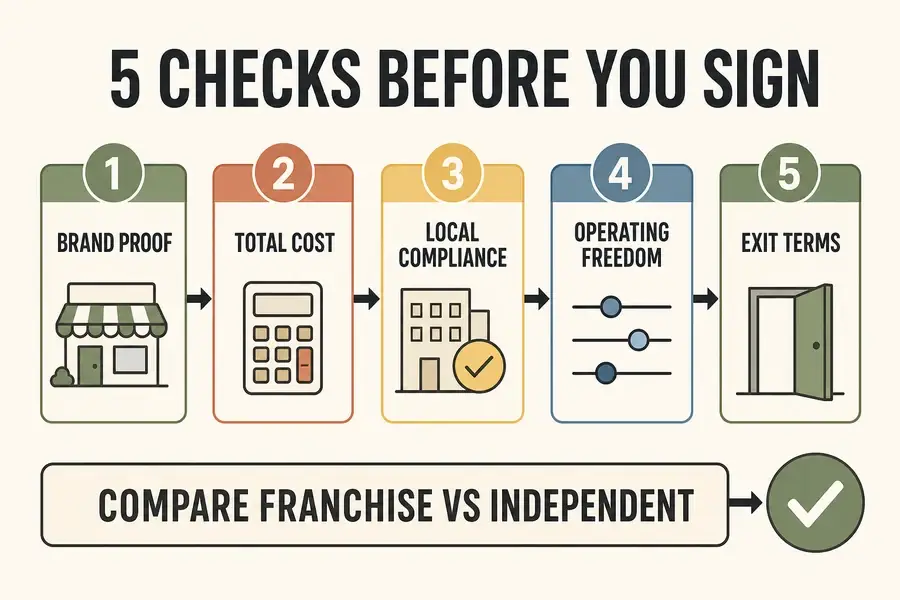
What a Play Cafe Franchise May Not Solve
Site feasibility
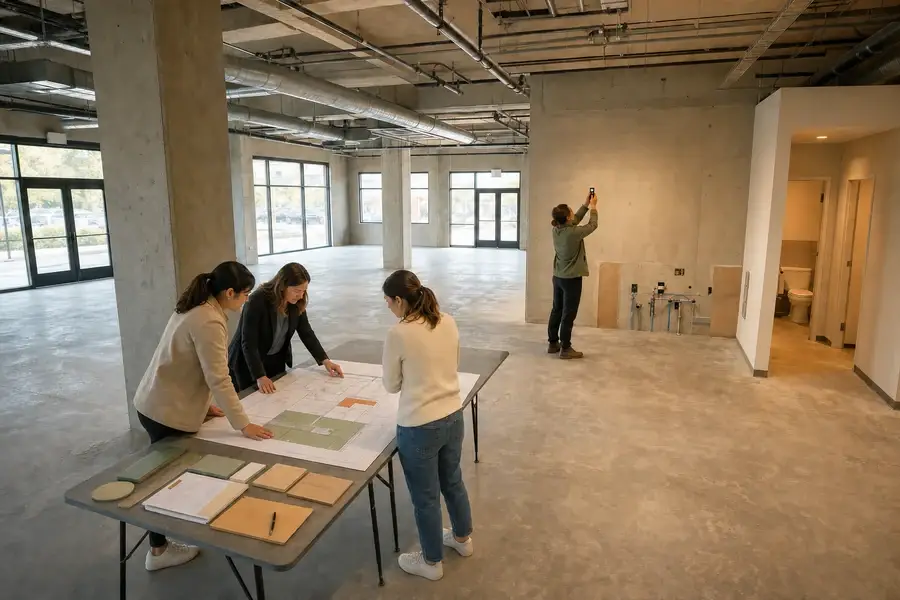
A franchisor may approve a location without solving every issue inside it. Ceiling height, columns, exits, utilities, toilets, fire systems, access, parking, delivery access, and landlord restrictions all affect the design and budget.
Do not sign a lease based on total square footage alone. Walk through the site with a contractor, confirm the permitted use, and test the floor plan first. Koalaplay’s play cafe site selection guide covers the checks to make before committing.
Local approvals
A play cafe combines two businesses under one roof: children’s play and food service. Local authorities may review zoning, building work, fire safety, occupancy, accessibility, food handling, and signage. The exact rules depend on your country and city.
A brand manual cannot replace your architect, contractor, local authority, insurer, health department, or safety adviser. Ask which approvals the franchisor supports—and which tasks are still yours.
A layout that works in your building
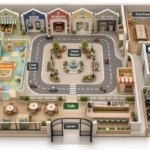
Copying a standard layout into a different building can create blind spots, tight walkways, poor views, slow café service, or too much equipment for the safe capacity. A good plan gives every key area a place: check-in, shoes, age zones, parent seating, café service, toilets, parties, cleaning, and staff movement.
That is where a project-based designer or manufacturer can help. The aim is not to fill every corner. It is to make the building and the business model work together.
The Real Cost of a Play Cafe Franchise
The franchise fee is only one part of the investment. The Federal Trade Commission notes that franchise buyers may also pay for rent, building work, equipment, licences, insurance, stock, promotion, royalties, and advertising contributions.
Build your budget in separate categories:
- Franchise fee, legal review, training, travel, and pre-opening requirements.
- Lease deposit, rent during construction, professional fees, and permits.
- Building work, electrical capacity, HVAC, plumbing, fire protection, and accessibility.
- Play equipment, safety flooring, barriers, seating, storage, and installation.
- Café equipment, counters, refrigeration, washing, extraction, and smallwares.
- Freight, duties, local delivery, installation access, and contingency.
- Insurance, software, staffing, cleaning supplies, marketing, and working capital.
- Ongoing royalties, marketing fund payments, required purchases, and technology fees.
Published estimates for play cafe startups vary widely because a small toddler studio in a fitted retail unit is not comparable to a large multi-zone venue in a raw shell. Use ranges only after defining the site and scope. Koalaplay’s play cafe startup cost guide explains the main cost drivers and shows why layout, approvals, manufacturing, freight, and installation need to be planned together.
Then compare two realistic multi-year plans: one franchise model and one independent model. Use conservative sales assumptions. Include rent, labour, food costs, maintenance, royalties, marketing, finance costs, taxes, and working capital. Judge a franchise by the extra value or risk reduction it can realistically create—not by the polish of its sales presentation.
Review the Franchise Disclosure Document Before You Pay
In the United States, the FTC says a prospective franchisee must receive the Franchise Disclosure Document at least 14 days before being asked to sign a contract or pay the franchisor or an affiliate. The FDD has 23 numbered items. Read all of them and use a qualified franchise attorney and accountant for the legal and financial review.
Pay particular attention to:
- Items 5–7: initial fees, estimated investment, and ongoing costs.
- Items 8 and 12: supplier restrictions, products or services you may offer, and territory rights.
- Item 11: advertising, training, systems, and continuing support.
- Item 17: renewal, termination, transfer, dispute resolution, and post-termination obligations.
- Item 19: any financial performance representations the franchisor chooses to make.
- Item 20: outlet openings, closures, transfers, and contact information for current and former franchisees.
Rules differ outside the United States, so get advice for the jurisdiction where you will operate. The practical principle is universal: understand the agreement, verify the numbers, and know how you can exit before you enter.
Questions to Ask Every Play Cafe Franchisor
Use these questions in interviews and then compare the answers with the written agreement:
- How many comparable locations have operated through more than one full seasonal cycle?
- Which locations have closed, transferred, or been reacquired, and why?
- Can I speak privately with current and former franchisees selected from the disclosure list?
- What support is included for site analysis, local permitting, kitchen planning, playground design, and opening inspections?
- Who pays when local requirements force a redesign or construction change?
- Are equipment, software, food, and marketing vendors mandatory? What markups or rebates apply?
- Can I introduce local products, memberships, camps, events, partnerships, or party packages?
- What territory protection do I receive, including digital sales and future locations?
- What happens if promised support is delayed or unavailable?
- What are the renewal, sale, transfer, personal guarantee, non-compete, and termination terms?
Ask franchisees about weekly reality, not only opening day. How responsive is support? Which budget lines were inaccurate? How much local marketing is still required? Which rules help consistency, and which ones prevent useful local changes?
The Independent Alternative: Support Without Franchise Control
An independent play cafe does not mean doing everything alone. It means choosing the experts you need while keeping control of your brand and decisions.
Your team may include a broker, architect, code consultant, attorney, accountant, kitchen designer, contractor, insurer, playground supplier, installer, and booking-software provider. They need to work from one approved floor plan.
Koalaplay is a design-and-manufacturing partner, not a play cafe franchise. For an independent project—or a franchise that allows outside equipment support—we can turn your floor plan, age group, theme, and budget into a practical play layout, concept drawings, custom equipment, packing, shipping, installation guidance, and after-sales support. See the Koalaplay service process.
We help with the play-space part of the project. You will still need local experts for legal, food-service, construction, finance, permits, and regulatory approvals.
Share the usable dimensions, ceiling height, target age range, country, preferred theme, and budget. Koalaplay can help you plan the play area around real operating needs.
How Koalaplay Helps Reduce Project Risk
The most useful time to involve an equipment partner is before the lease and equipment scope are fixed. Early review can reveal whether the usable area, ceiling, columns, exits, and parent sightlines support the intended concept.
A structured project process can help you:
- compare several zoning options before construction begins;
- separate toddlers from faster or older-child play routes;
- protect views from café seating and staff positions;
- reserve space for check-in, shoes, strollers, parties, storage, and cleaning;
- coordinate equipment footprints with the architect and contractor;
- choose cleanable, maintainable materials and request supporting documentation;
- align the equipment scope with a realistic budget and phased plan;
- prepare numbered parts, packing information, and installation guidance;
- plan spare parts and maintenance after opening.
Koalaplay’s material and quality overview can be used as a starting point for supplier questions, but buyers should still request the documentation relevant to their project and market. In the United States, ASTM F1918 is a key voluntary standard for soft contained play equipment, while other equipment categories and jurisdictions may use different standards or rules.
A Simple Decision Rule
Do not buy a play cafe franchise because starting independently feels confusing. Buy it only if the franchise can demonstrate value that is difficult or uneconomical to build yourself.
Choose the franchise route when you can verify strong brand demand, repeatable unit performance, useful training, capable field support, fair supplier economics, workable local flexibility, and acceptable exit terms.
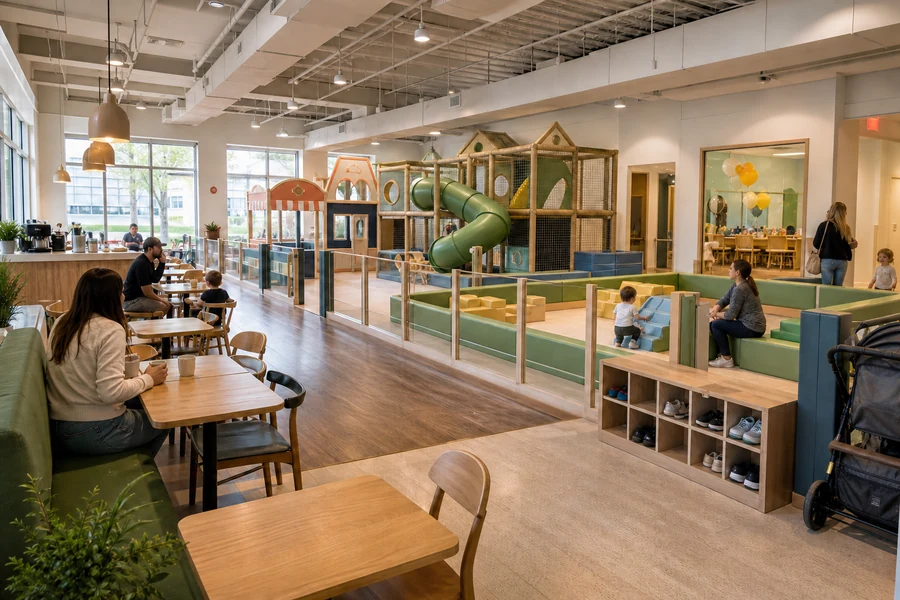
Choose the independent route when your local concept is the advantage, you want control over the design and revenue mix, and you are prepared to assemble qualified support. In either case, validate the market and building before committing, model the full investment, and design the venue around real operations rather than presentation images.
Frequently Asked Questions
Is a play cafe franchise a good investment?
It can be, but there is no automatic guarantee. The result depends on local demand, total investment, rent, labor, revenue mix, brand strength, fees, contract terms, and the quality of support. Test the franchise against an independent financial model and have the documents reviewed professionally.
How much does a play cafe franchise cost?
There is no reliable universal figure. The total includes more than the franchise fee: property, fit-out, professional services, permits, play equipment, café equipment, freight, installation, insurance, software, marketing, and working capital can all be substantial. Request a location-specific budget and confirm what each estimate excludes.
Is an independent play cafe cheaper than a franchise?
It avoids franchise fees and royalties, but it still requires investment in branding, design, procedures, training, marketing, and professional advice. The better comparison is the full multi-year cash requirement and the value created by each route.
What should I ask existing franchisees?
Ask about actual opening cost, construction delays, franchisor response times, lead quality, required suppliers, seasonal performance, owner workload, profitability, and what they would change. Speak with former franchisees as well as successful current owners.
Can Koalaplay help me open an independent play cafe?
Yes, Koalaplay can support the play-space portion of an independent project through concept planning, custom design, equipment manufacturing, shipping, installation guidance, and after-sales support. You will still need local professionals for the lease, business plan, building work, café systems, insurance, permits, and regulatory approvals.
Evaluate Your Space Before Choosing a Franchise
If you already have a floor plan—or are comparing two locations—send Koalaplay the usable dimensions, ceiling height, columns, entrances, exits, target age range, concept, and equipment budget. We can provide an initial play-area review so you understand what each site can realistically support before you finalise the equipment scope.
Start with your space, not a catalogue. Tell us about your site, family audience, theme, budget, and installation needs, and we will help you take the next practical step.
References
- Read This Before Joining a Play Cafe Franchise Program — Michele Caruana / Play Cafe Academy.
- A Consumer’s Guide to Buying a Franchise — U.S. Federal Trade Commission.
- Buy an Existing Business or Franchise — U.S. Small Business Administration.
- ASTM F1918-21: Soft Contained Play Equipment — ASTM International.
- Playground Equipment Business Guidance — U.S. Consumer Product Safety Commission.
- Your Guide to Opening a Play Cafe — WellnessLiving.




 English
 Spanish
 German