
The indoor playground industry is booming. As parents increasingly prioritize screen-free, physical activities for their children, the demand for safe, engaging play spaces has never been higher. However, while the market is ripe with opportunity, many new owners make the same costly mistakes during the planning and launch phases.
If you are researching how to start an indoor playground, you have likely read the standard advice: write a business plan, do market research, and find a location. While those steps are necessary, they do not tell the whole story. At Koalaplay, we have partnered with hundreds of entrepreneurs globally to design, manufacture, and install commercial play spaces. We have seen firsthand what separates a struggling venue from a highly profitable one.
Here is Koalaplay’s best, no-nonsense indoor playground business advice that goes beyond the basics to help you build a sustainable, lucrative business.
Indoor Playground Business Advice 1 : Start With the Right Space, Not Just a Cheap Lease
One of the most common mistakes new owners make is signing a lease simply because the rent is low. A cheap building is often cheap for a reason, and retrofitting an inadequate space can quickly drain your startup capital.
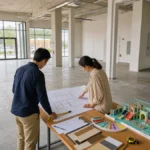
When evaluating potential locations, ceiling height is just as important as square footage. To install a multi-level soft play structure that appeals to older children, you need a minimum ceiling clearance of 15 feet (4.5 meters). Anything lower restricts you to toddler-only equipment, which severely limits your target demographic.
Furthermore, before signing any paperwork, verify the local zoning laws. Many industrial warehouses offer great ceiling heights and cheap rent but are not zoned for commercial assembly or family entertainment. Securing a zoning variance can take months and delay your opening. For a deeper dive into choosing the perfect building, read our comprehensive Site Selection Guide for Kids Cafe Play Area.
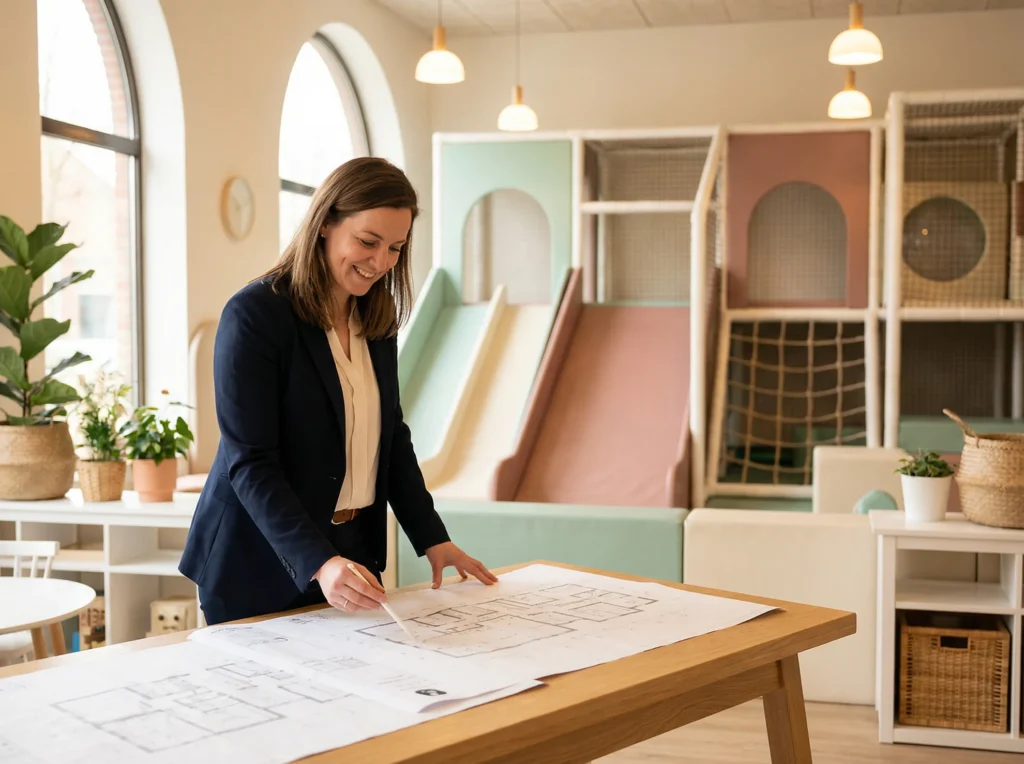
Careful spatial planning and site selection are the foundational steps of a profitable indoor playground business.
2. Design for Revenue, Not Just Fun (The Zone Strategy)
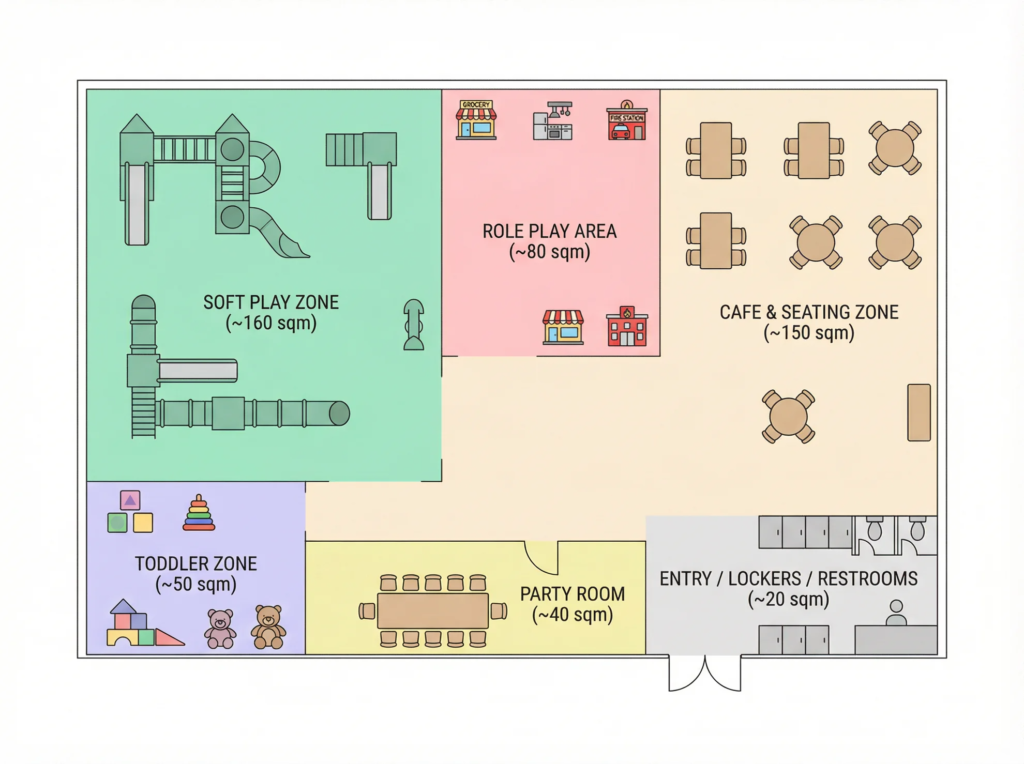
A common piece of indoor playground business advice is to “make it fun.” While true, your primary goal as a business owner is to make it profitable. Every square foot of your facility needs to earn its keep. To achieve this, you must design your space using a strategic “Zone Strategy.”
Do not throw all your equipment into one massive room. Instead, segment the playground into distinct areas tailored to different age groups and play styles:
•The Active Zone: This houses your main multi-level soft play structure, slides, and ball pits. It burns off high energy for kids aged 4 to 10.
•The Toddler Zone: A strictly enclosed, safe area with low-height foam climbers designed specifically for ages 0 to 3. This keeps babies safe from running older children.
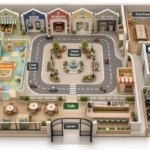
•The Imaginative Zone: A dedicated role-play area.
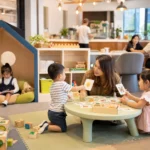
Why is the role-play area so important? Because it drastically increases customer dwell time. Children love to mimic adult life. A well-designed miniature town—complete with a tiny supermarket, a pretend bakery, or a doctor’s clinic—keeps children engaged long after they have tired of climbing. The longer a family stays in your facility, the more likely the parents are to purchase food and beverages. Learn more about how strategic layouts drive income in our guide to Profitable Play Cafe Design.
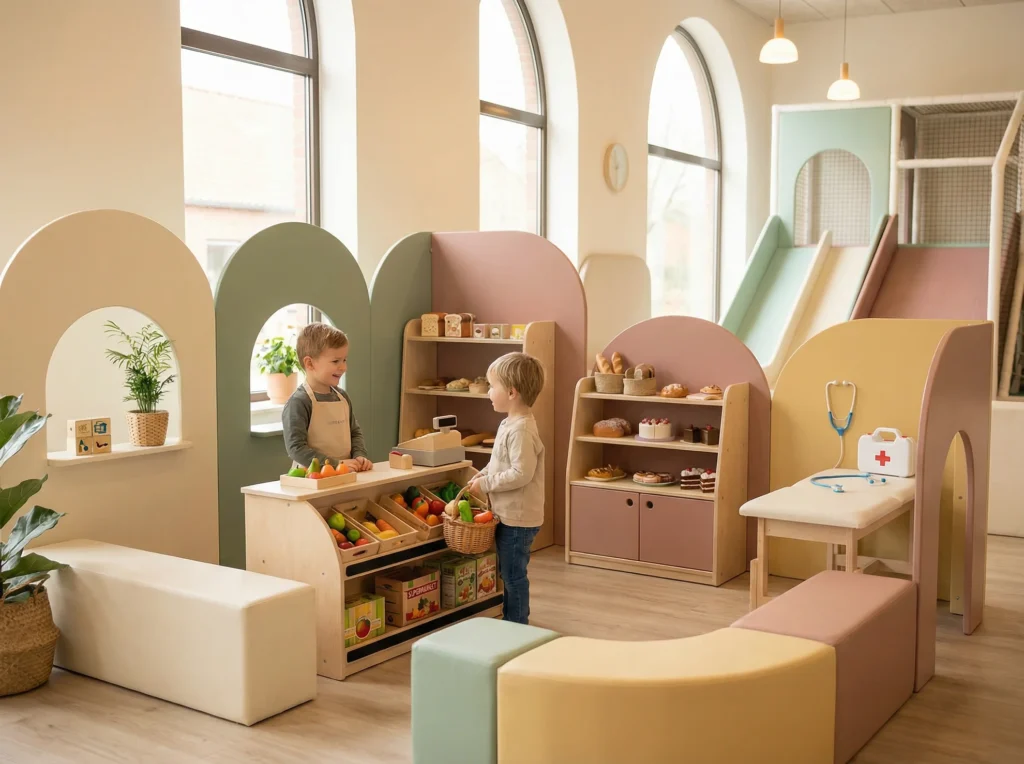
A dedicated role-play zone encourages imaginative play, significantly increasing the time families spend at your venue.
3. Add a Cafe Component (Even a Small One)
If there is one piece of indoor playground business advice you must take, it is this: Do not skip the cafe.
Many owners view the cafe as an afterthought or a hassle, but food and beverage (F&B) sales are typically the highest-margin revenue stream in a play facility. While admission tickets get families through the door, the cafe dictates your profitability. A parent might pay $15 for a child’s entry, but they will easily spend another $20 on lattes, pastries, and healthy snacks while they wait.
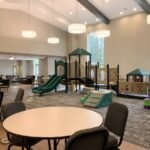
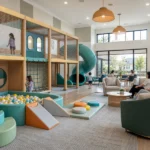
When integrating a cafe, you must follow the “Sightline Rule.” Parents must be able to sit at a cafe table, enjoy their coffee, and have a clear, unobstructed view of the play structures. If parents cannot see their children from the seating area, they will not sit down, and they will not buy food. They will hover near the equipment instead.
If you are worried about the budget required to build a kitchen, start small. You do not need a full restaurant menu. A high-quality espresso machine, pre-packaged healthy snacks, and a display fridge for local baked goods are enough to generate significant daily revenue. You can explore the exact numbers in our Cost to Start a Play Cafe 2026 breakdown.
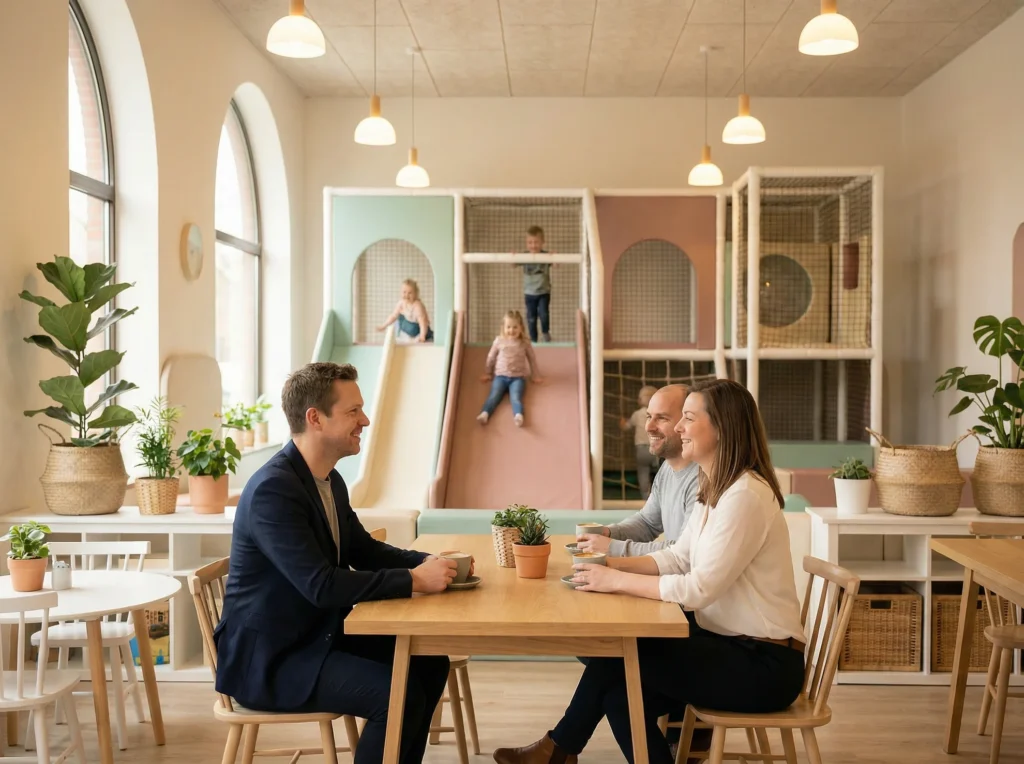
Implementing the “Sightline Rule”: Parents will stay longer and spend more on food and beverages if they can comfortably supervise their children from the cafe seating.
4. Do Not Rely on Open Play Alone
Relying solely on daily “open play” admission tickets is a fast track to cash flow problems. Open play revenue is notoriously fickle. It fluctuates wildly based on the weather, the season, and the school calendar. A rainy Saturday might bring in record profits, but a sunny Tuesday in May could result in an empty facility.
To build a resilient business, you must focus on recurring revenue and high-ticket bookings.
•Memberships: Offer monthly or annual memberships. This provides your business with predictable, guaranteed income every month, regardless of foot traffic.
•Birthday Parties: Private weekend birthday parties should be the financial backbone of your business. By offering tiered party packages that include food, decorations, and a dedicated host, you can generate thousands of dollars in a single weekend.
•Special Events: Host ticketed events such as “Princess Meet-and-Greets,” “Sensory-Friendly Mornings,” or holiday-themed parties to drive traffic during notoriously slow periods.
To manage capacity and ensure a premium experience during busy times, consider implementing structured play blocks. Read our advice on Play Cafe Timed Sessions and Capacity to learn how to maximize throughput without overcrowding.
5. Choose Equipment That Earns Its Keep (The Quality Trap)
When capital is tight, it is tempting to buy the cheapest indoor playground equipment you can find. This is the most expensive mistake you can make. Cheap equipment breaks down quickly, looks worn out within months, and poses severe safety liabilities.
Your equipment is the core product you are selling. It must be built to withstand rigorous daily use. When vetting manufacturers, ensure their products comply with strict international safety standards, such as ASTM F1918-12 for soft contained play equipment .
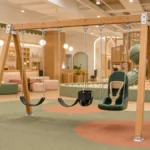
Beyond durability, aesthetic appeal is now a critical business strategy. Modern parents—specifically millennials and Gen Z—are drawn to visually pleasing environments. The days of chaotic, primary-colored plastic tubes are fading. Today’s most successful play cafes feature sophisticated, Scandinavian-inspired designs with pastel palettes (think sage green, dusty rose, and warm cream).
A beautifully designed space becomes a marketing tool. When your playground is “Instagram-worthy,” parents will naturally take photos and share them on social media, providing you with free, highly effective word-of-mouth advertising. As a leading Indoor Play Cafe Manufacturer for Commercial Venues, Koalaplay specializes in creating these high-quality, aesthetically stunning environments.
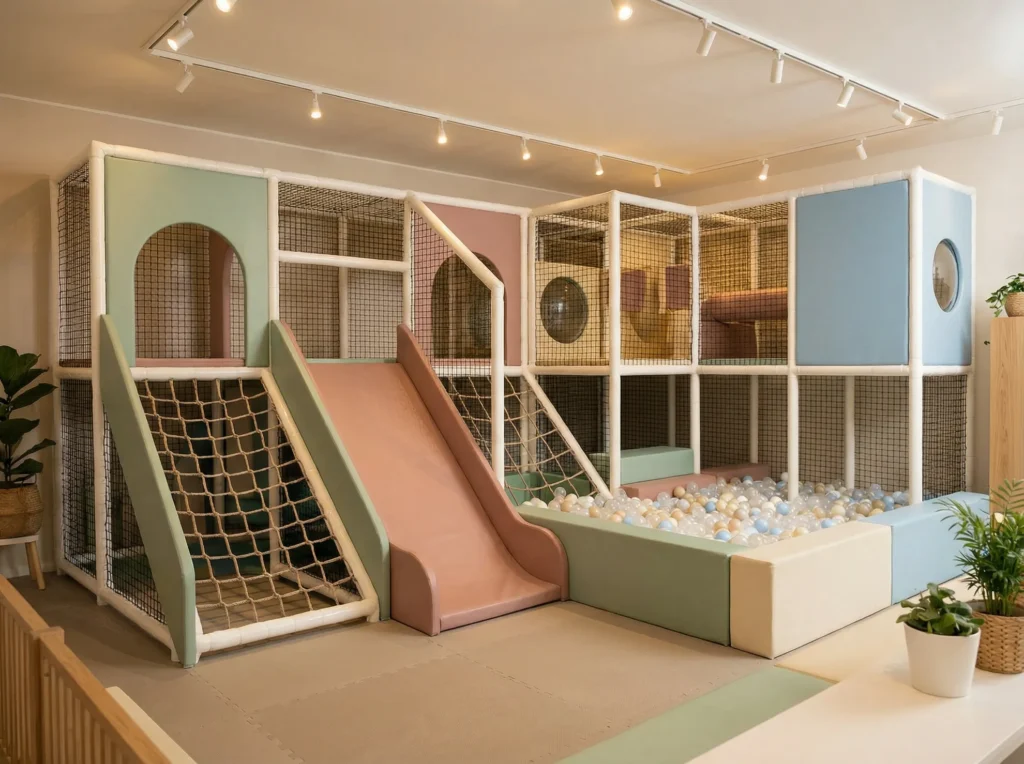
Investing in high-quality, aesthetically pleasing equipment not only ensures safety but also turns your venue into a highly shareable, photo-worthy destination.
6. Get the Right Insurance From Day One
Insurance is not an area where you can cut corners. A standard general liability policy is not enough to protect an indoor playground business. Because children are engaging in physical activity on commercial equipment, your risk profile is unique.
You must secure a comprehensive insurance package before you open your doors. This should include:
•General Liability: Covers basic slip-and-fall accidents.
•Product Liability: Protects you if a piece of equipment fails and causes injury.
•Commercial Property Insurance: Covers damage to your building and the expensive playground equipment inside due to fire, theft, or natural disasters.
Always require parents to sign a digital liability waiver before their children enter the play area. For a complete breakdown of the policies you need, review The Ultimate Guide to Comprehensive Insurance for Indoor Playgrounds.
7. Partner with a Reliable Manufacturer
Finally, who you choose to build your playground will dictate your launch timeline and your long-term success. Working with a middleman or a local reseller often means paying a 30% to 50% markup for the exact same equipment you could buy direct from a factory.
However, if you choose to buy direct, you must partner with a manufacturer that offers end-to-end support. A reliable partner will not just ship you a container of parts; they will provide custom 3D layout designs, handle the complex logistics of international shipping, and send a professional team to install the equipment safely.
At Koalaplay, we pride ourselves on being that partner. We provide comprehensive solutions from the initial design concept to the final safety inspection. If you are ready to take the next step, read our Practical Guide on How to Start an Indoor Playground Business.
Conclusion
Opening an indoor playground is a complex but incredibly rewarding endeavor. By choosing the right space, designing strategic play zones, integrating a high-visibility cafe, diversifying your revenue streams, and investing in premium, aesthetic equipment, you set yourself up for long-term profitability.
Do not treat your indoor playground just as a place for kids to run wild; treat it as a premium family hospitality venue. If you build a space that parents love just as much as the children do, your business will thrive.
Ready to bring your vision to life? The Koalaplay team is here to help. Contact us today for a free layout consultation and a customized equipment quote.
Frequently Asked Questions (FAQ)
Is an indoor playground a profitable business?
Yes, an indoor playground can be highly profitable if managed correctly. Profitability relies on diversifying revenue streams—such as adding a cafe, hosting weekend birthday parties, and selling monthly memberships—rather than relying solely on daily open play tickets.
How much space do I need for a profitable play cafe?
While sizes vary, a “sweet spot” for a profitable play cafe is typically between 3,000 and 5,500 square feet (roughly 300 to 500 square meters). This provides enough room for a main soft play structure, a toddler zone, a role-play area, and a profitable cafe seating section.
What are the biggest hidden costs when opening an indoor playground?
The most common hidden costs include facility renovations (such as upgrading HVAC systems or adding commercial restrooms), international shipping and customs duties for the equipment, and professional installation fees.
References
[2] American Heart Association. (2024). Recommendations for Physical Activity in Children. Retrieved from AHA official guidelines regarding the importance of daily physical exertion to combat childhood obesity.


 English
 Spanish
 German