
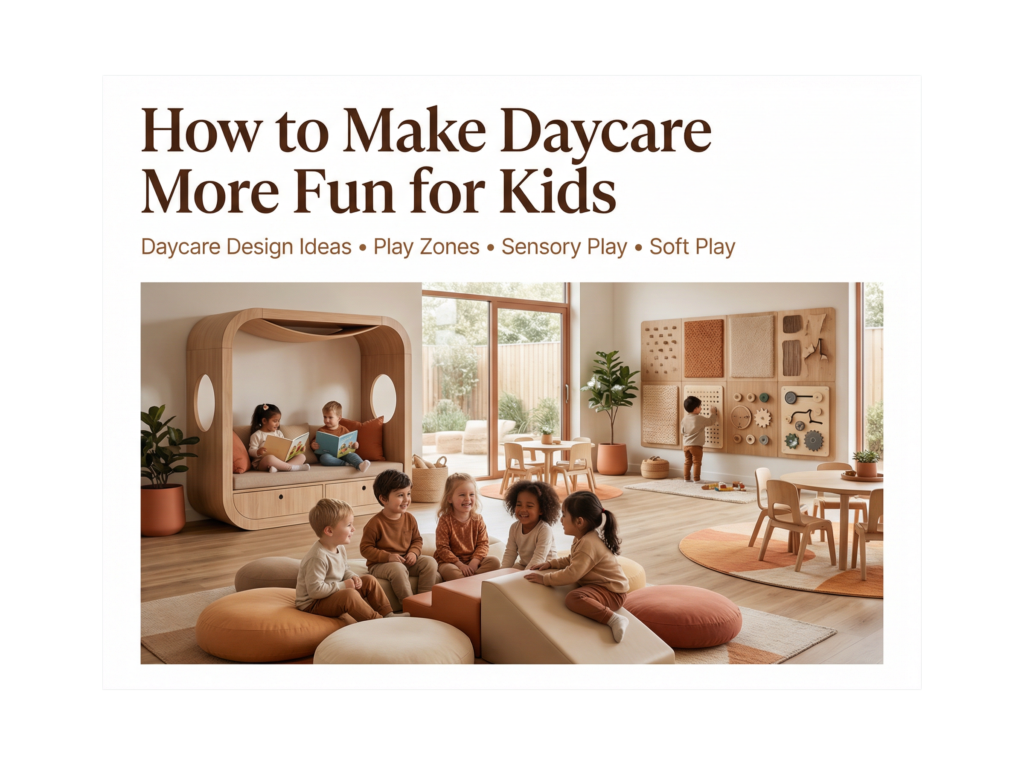
Muchos responsables de guarderías notan el mismo problema al cabo de unos meses: los niños dejan de responder a la sala como al principio. Los juguetes siguen ahí, el horario sigue siendo completo y el personal sigue esforzándose al máximo, pero la energía decae. Cuando el entorno parece repetitivo, los niños pasan más rápido de una actividad a otra, la capacidad de atención se acorta y pueden surgir problemas de comportamiento. Puede que las familias no lo digan directamente, pero pueden sentir cuando una guardería es funcional en lugar de atractiva.
Una guardería resulta más divertida para los niños cuando combina el movimiento diario, jugar a fingir, El objetivo no es añadir más juguetes, sino crear experiencias sensoriales, pequeñas sorpresas y zonas de juego flexibles que se adapten a la edad y el nivel de energía de los niños. El objetivo no es añadir más juguetes. El objetivo es hacer que el entorno sea más fácil de explorar, más fácil de rotar y más gratificante de utilizar cada día.
Esa distinción es importante. Las investigaciones de Head Start demuestran que el juego favorece el desarrollo del cerebro, el lenguaje, las habilidades sociales, la resolución de problemas y las relaciones . Los CDC también señalan que los niños de 3 a 5 años deben mantenerse físicamente activos durante todo el día. En otras palabras, la “diversión” no es un extra decorativo en las guarderías. Un entorno divertido bien diseñado favorece directamente el desarrollo, el ritmo diario y la satisfacción de los padres.
Por qué algunas guarderías dejan de ser divertidas
La mayoría de las guarderías resultan menos atractivas por una sencilla razón: todo permanece en el mismo sitio y sirve para lo mismo todos los días. Una estantería llena de juguetes no crea automáticamente un juego significativo. Los niños responden mejor cuando la sala les ofrece distintas formas de moverse, imaginar, construir, calmarse e interactuar con otros niños.
Los mejores artículos sobre este tema suelen centrarse en listas de actividades. Esas listas son útiles, pero suelen pasar por alto el aspecto operativo. El propietario de una guardería no sólo necesita nuevas ideas de manualidades. Necesita un sistema repetible que mantenga fresca la sala sin crear el caos entre el personal. Aquí es donde importa la planificación del espacio.
Nuestro equipo suele fijarse primero en cuatro factores.
| Factor | Por qué es importante | Orientación práctica |
| Variedad | La repetición disminuye la curiosidad | Mezcla el movimiento, los sentidos, el juego simbólico y el juego tranquilo en una misma habitación |
| Visibilidad | El personal debe supervisar con facilidad | Utilizar zonas claras en lugar de estaciones de actividades dispersas |
| Rotación | Los niños se comprometen más con “menos” cuando cambia | Rote los artículos sueltos semanalmente en lugar de exponer todo a la vez |
| Edad de ajuste | Un nivel de desafío incorrecto genera aburrimiento o frustración | Funciones de juego adaptadas a niños pequeños, preescolares o de edades mixtas |
1. Crear zonas de juego claras en lugar de una habitación abierta
La forma más rápida de hacer que la guardería sea más divertida para los niños es dejar de tratar la habitación como una zona de juego plana. Los niños utilizan el espacio de forma diferente según su estado de ánimo y su etapa de desarrollo. Un rincón de movimiento, un rincón de juego simulado, un rincón sensorial y un rincón de calma dan a los niños una razón diferente para participar.
Este planteamiento también ayuda al personal. Cuando una sala tiene zonas claras, los profesores pueden guiar las transiciones con más facilidad y reducir las aglomeraciones en torno a un elemento popular. El debate de NAEYC sobre el aprendizaje lúdico es útil en este caso porque explica que los niños aprenden mejor en entornos activos, significativos, socialmente interactivos y atractivos. Una sala dividida en zonas favorece exactamente ese tipo de experiencia.
Si está planificando una actualización más amplia, le resultará útil revisar soluciones para parques infantiles de interior para ver cómo las distintas áreas de actividad pueden funcionar juntas sin sobrecargar la sala.
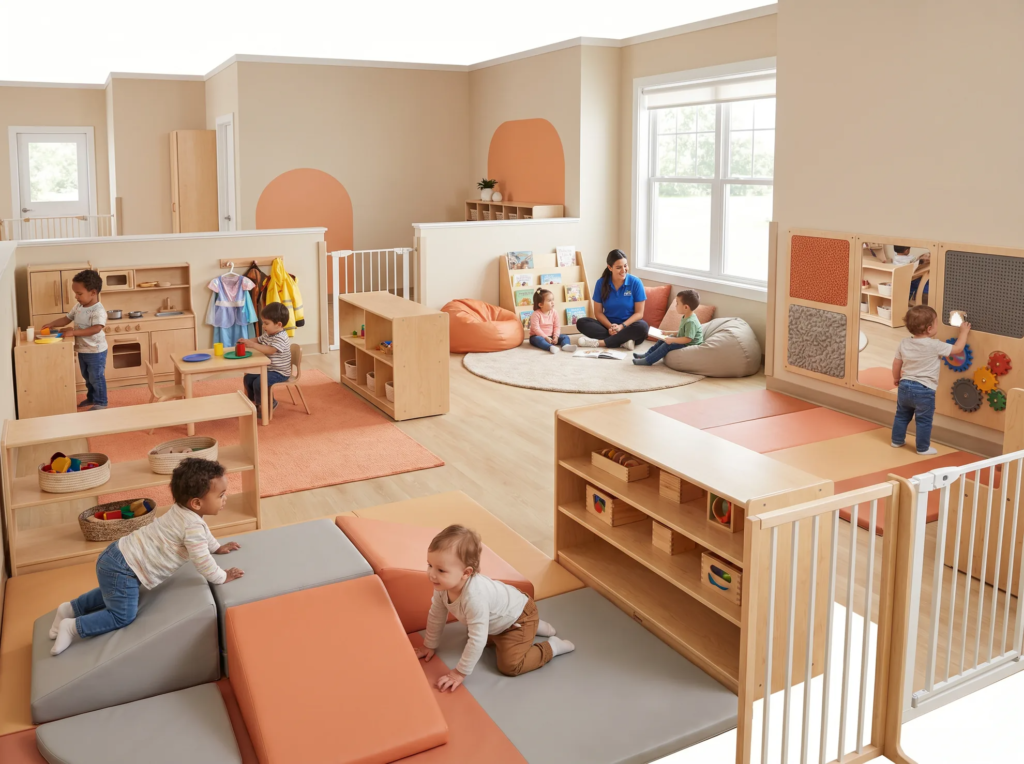
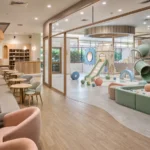
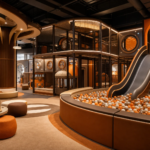
Referencias reales que muestran cómo las zonas separadas para el movimiento, el juego simulado y el juego tranquilo facilitan la exploración y la supervisión de la habitación.
2. Añadir oportunidades de movimiento que los niños puedan utilizar a diario
Muchas guarderías intentan hacer el día más divertido añadiendo acontecimientos especiales. Eso puede ayudar, pero el movimiento diario suele tener un efecto mayor. Los niños pequeños necesitan oportunidades para trepar, gatear, dar pasos, mantener el equilibrio y deslizarse a lo largo del día, no sólo durante el tiempo que pasan al aire libre. Cuando el movimiento se integra en el ambiente interior, los niños liberan energía de forma productiva y vuelven a tareas más tranquilas más dispuestos a concentrarse.
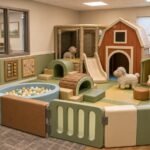
Esto no requiere una gran instalación comercial en todos los casos. Incluso una zona compacta de motricidad gruesa puede cambiar el ambiente de la habitación. Rampas blandas, pequeños escaladores, peldaños, o elementos de juego para niños pequeños ofrecen a los niños más pequeños un nivel de desafío seguro al tiempo que mantienen el entorno visualmente cálido y fácil de limpiar.
Cuando el trazado lo permite, túneles para gatear también son valiosos porque crean movimiento, emoción en el escondite y un principio y un final claros para la experiencia de juego. Esa simple sensación de progresión suele mantener la atención durante más tiempo que los juguetes estáticos.
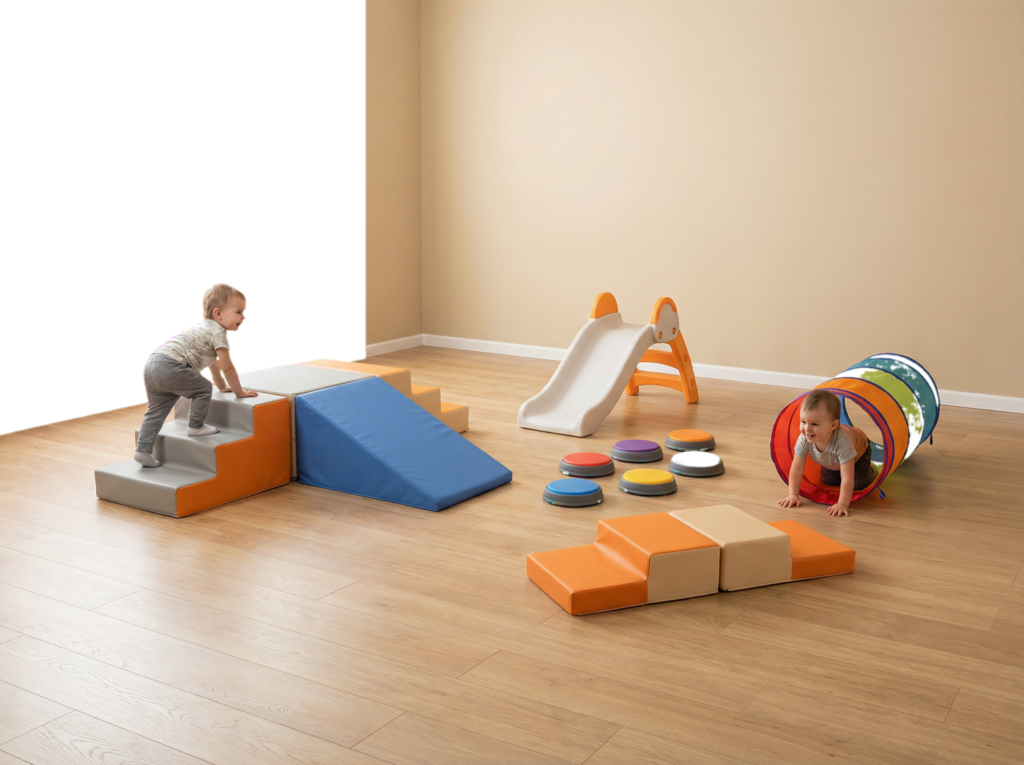
Imagen de identificación del equipo que muestra juegos blandos de baja altura que favorecen la escalada, el equilibrio y el movimiento seguro en interiores para los niños pequeños.
3. Utiliza el juego de simulación para dar vida a la habitación
Los niños no necesitan novedades constantes. Necesitan entornos que les permitan convertirse en alguien, construir algo o representar un mundo conocido. Los juegos de simulación funcionan especialmente bien porque combinan el lenguaje, la interacción social, la resolución de problemas y el ensayo emocional. Un espacio de guardería resulta más divertido cuando los niños pueden pasar de ser usuarios pasivos de juguetes a creadores activos de historias.
Un rincón de juegos de rol no tiene por qué ser complicado. Un mini mercado, una cocina, una clínica, un taller o un café de lectura pueden funcionar bien si los objetos son visibles y el montaje es intencionado. Si quieres saber por qué esto es importante desde el punto de vista del desarrollo, puedes consultar la guía de Koalaplay sobre por qué es importante fingir es un útil recurso de apoyo.
La clave está en evitar montajes débiles, con muy poco atrezzo o demasiado desorden. Los niños participan más cuando la escena es reconocible y hay suficientes papeles para la interacción del grupo. En la práctica, eso significa menos juguetes al azar y más historias de juego completas.
4. Facilitar el inicio y la reanudación del juego sensorial
El juego sensorial es una de las formas más eficaces de renovar una guardería sin rediseñar todo el espacio. Funciona porque invita a la interacción inmediata. Los niños no necesitan largas instrucciones para tocar, girar, deslizar, clasificar, presionar o trazar. Esta baja barrera de entrada es muy valiosa en las guarderías más concurridas.
Sin embargo, no todas las características sensoriales son igual de útiles en un entorno comercial. Los cubos sensoriales sueltos pueden exigir una limpieza que algunos operarios no pueden realizar varias veces al día. Las opciones montadas y duraderas suelen ser una mejor opción a largo plazo. Por ejemplo, paneles murales sensoriales pueden añadir valor motriz, visual y exploratorio sin ocupar mucho espacio.
Una buena zona sensorial debe incluir elementos activos y tranquilizadores. Los tableros de texturas, las piezas giratorias, los espejos, la interacción luminosa y los elementos sencillos de causa-efecto ayudan. Las mejores instalaciones no están sobrediseñadas. A los niños les resulta fácil acercarse a ellos por sí solos y al personal le resulta fácil mantenerlos.
5. Rotar los materiales en lugar de comprar más y más artículos
Uno de los errores más comunes en las guarderías es intentar resolver el aburrimiento con volumen. Más cubos, más juguetes y más adornos pueden hacer que la habitación resulte más ruidosa y menos concentrada. En muchos casos, la diversión mejora cuando los niños ven menos cosas a la vez.
Un sencillo sistema de rotación funciona mejor. Mantenga estables las zonas principales, pero cambie el atrezzo suelto, los accesorios temáticos, los libros y el material de mesa cada semana o cada dos semanas. Esto aporta novedad a la sala sin eliminar los elementos conocidos. También ayuda al personal a planificar en función de temas, estaciones o intereses actuales.
Si su entorno actual está abarrotado o anticuado, incluso un pequeño cambio puede ayudarle. El artículo de Koalaplay sobre ideas rápidas para renovar el entorno ofrece una forma útil de pensar en las mejoras visibles que mejoran la sensación que transmite un espacio sin tener que reconstruirlo por completo.
6. Adecuar el nivel de diversión al grupo de edad
Lo que resulta emocionante para un niño pequeño puede parecer aburrido para un preescolar mayor. Al mismo tiempo, los equipos o actividades diseñados para niños mayores pueden resultar inseguros o frustrantes para los más pequeños. Las guarderías más agradables suelen ser las que consiguen este equilibrio.
Para ello, hay que tener muy en cuenta la altura de los escalones, el tamaño de los agarres, la anchura del espacio de gateo, la complejidad sensorial, la dificultad de los juegos de rol y el número de niños que pueden jugar a la vez. Cuando los operadores se saltan este paso, suelen crear espacios que parecen atractivos en las fotos, pero que no funcionan bien en la vida real.
Para un enfoque más estructurado, ayuda revisar cómo elegir juegos infantiles adecuados a la edad. No es sólo una cuestión de seguridad. También es una cuestión de compromiso. Los niños permanecen más tiempo en las actividades cuando el reto les parece alcanzable pero no demasiado fácil.
7. Dar a los niños pequeñas opciones a lo largo del día
Una guardería resulta más divertida cuando los niños tienen sensación de control. Esto no significa libertad ilimitada. Significa ofrecer dos o tres opciones significativas dentro de una rutina bien organizada. Las investigaciones sobre el juego guiado resumidas por la NAEYC sugieren que los niños aprenden bien cuando los adultos establecen un contexto intencionado, pero preservando la autonomía del niño. .
En la práctica, eso puede significar elegir entre la mesa de arte y la pared sensorial, seleccionar un set de atrezzo para el rincón de juegos de simulación o decidir si empezar en una zona de movimiento o en un rincón de lectura. Estas pequeñas decisiones aumentan el sentido de pertenencia, reducen la resistencia y hacen que el día resulte menos repetitivo.
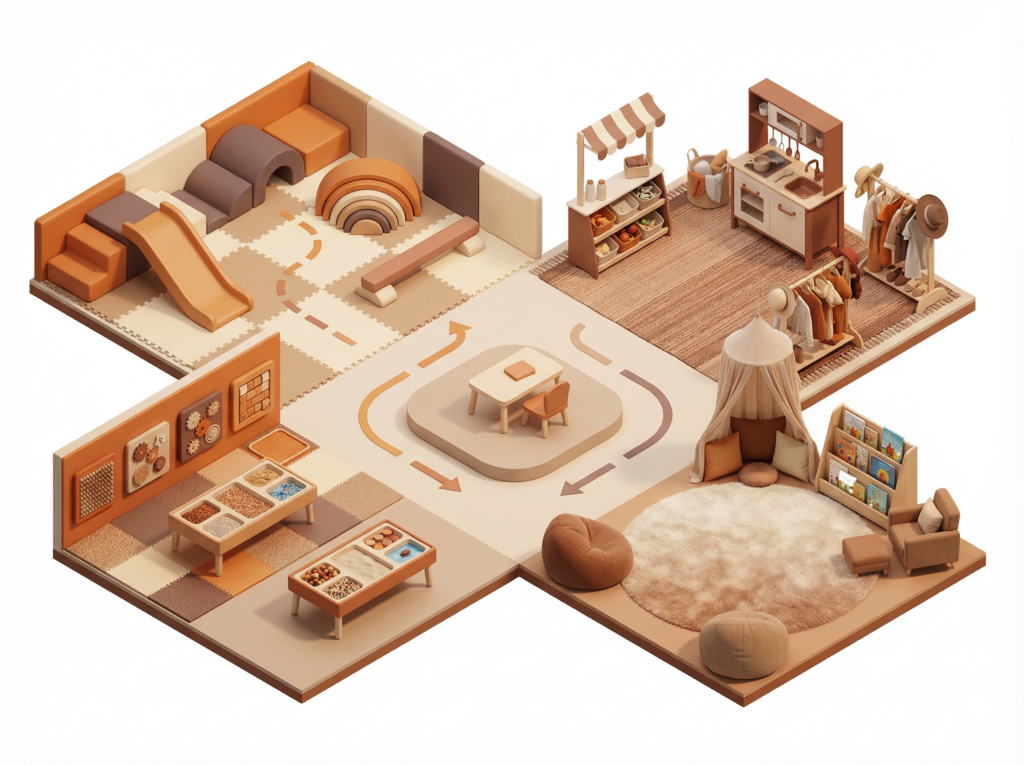
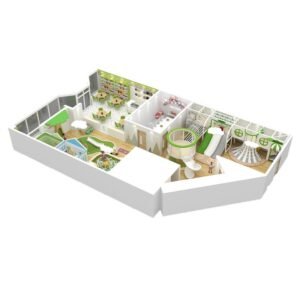
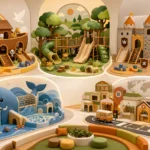
una infografía sencilla o un diseño visual en 3D para mostrar cómo pueden organizarse el movimiento, el juego simbólico, el juego sensorial y el juego tranquilo en un plano de la habitación legible.
Errores de los responsables de guarderías al intentar añadir más diversión
El primer error es confundir estimulación con compromiso. Los colores brillantes y las estanterías abarrotadas pueden parecer energéticos, pero no siempre ayudan a los niños a jugar mejor. El segundo error es añadir actividades sin mejorar la fluidez. Si los niños no pueden moverse con naturalidad de una zona a otra, la habitación sigue resultando frustrante. El tercer error consiste en comprar elementos difíciles de limpiar, supervisar o utilizar para distintos grupos de edad.
Un enfoque más sólido consiste en plantearse una pregunta más práctica: ¿qué tipo de juego queremos que se produzca aquí y qué parte de la sala lo facilita? Una vez aclarada esta cuestión, las decisiones de diseño resultan más sencillas.
Conclusión
Si quiere que la guardería sea más divertida para los niños, empiece por el entorno y no por la lista de la compra. Los niños responden mejor a los espacios que favorecen el movimiento, el juego simbólico, la exploración sensorial, la interacción social y las pequeñas elecciones cotidianas. Estos elementos son los que hacen que la habitación resulte activa, fresca y significativa a lo largo del tiempo.
Para los propietarios de guarderías, el verdadero objetivo es crear diversión sostenible. La guardería debe ser atractiva para los niños, manejable para el personal y tranquilizadora para las familias. Cuando estos tres resultados se alinean, la guardería se siente mejor al usarla y más fuerte al presentarla.
Si usted está planeando una actualización de la guardería, nuestro equipo en Koalaplay puede ayudar a evaluar la lógica de diseño, la zonificación de la actividad, y el ajuste del equipo para un entorno más atractivo para los niños.
Preguntas frecuentes
¿Qué actividades hacen que la guardería sea más divertida para los niños?
Las mejores actividades combinan movimiento, imaginación, estímulos sensoriales e interacción social. En la práctica, eso significa mezclar elementos para trepar y gatear con estaciones de juego simulado, paredes sensoriales, cubos de rotación temáticos, música y rincones tranquilos.
¿Cómo puedo hacer que la guardería sea divertida sin gastar demasiado dinero?
Comience por la zonificación y la rotación antes de comprar grandes cantidades de material nuevo. Reorganizar la sala, rotar los accesorios, mejorar la visibilidad y añadir algunos elementos de juego duraderos suele generar un cambio mayor que comprar más juguetes sueltos.
¿Qué tipo de equipamiento para guarderías mantiene a los niños ocupados durante más tiempo?
Los equipos que permiten un uso abierto suelen dar mejores resultados. Los trepadores blandos, los túneles de gateo, los paneles sensoriales y los juegos de simulación funcionan bien porque los niños pueden utilizarlos de distintas maneras a lo largo del día.
Referencias
[1] La importancia del juego en la primera infancia | HeadStart.gov
[2] Actividad infantil: Una visión general | CDC
[3] El poder del aprendizaje lúdico en el entorno de la primera infancia | NAEYC



 English
 Spanish
 German