The indoor playground industry is undergoing a massive transformation. Gone are the days when a warehouse filled with primary-colored plastic was the only option for family entertainment. Today, parents and investors alike are turning their attention to a more refined, profitable, and community-driven concept: the play cafe.
However, as the market matures, the definition of a play cafe has expanded. If you are an entrepreneur or investor researching the complete guide to play cafes, you will quickly realize that there is no “one-size-fits-all” approach. Different locations, target demographics, and investment levels require entirely different business models.
At Koalaplay, as a professional indoor play cafe manufacturer, we have helped hundreds of global clients design, manufacture, and install successful venues. In this article, we will break down the 6 distinct types of play cafe, exploring their unique business models, target audiences, and equipment needs, so you can decide which concept is the perfect fit for your next venture.
Why the Play Cafe Business Model is Evolving
Before diving into the specific categories, it is important to understand why the market is fragmenting into different types of play cafe. The evolution is driven by changing consumer demands. Modern millennial and Gen Z parents are seeking aesthetically pleasing environments where they can genuinely relax, work, or socialize while their children engage in safe, meaningful play .
This shift has created a demand for highly specialized venues. A neighborhood with a high concentration of remote-working parents will naturally support a different type of play cafe than a premium tourist shopping mall. Understanding these play cafe trends is the first step in ensuring your investment yields a high return.
The 6 Main Types of Play Cafe
Let us explore the six primary categories dominating the market today.
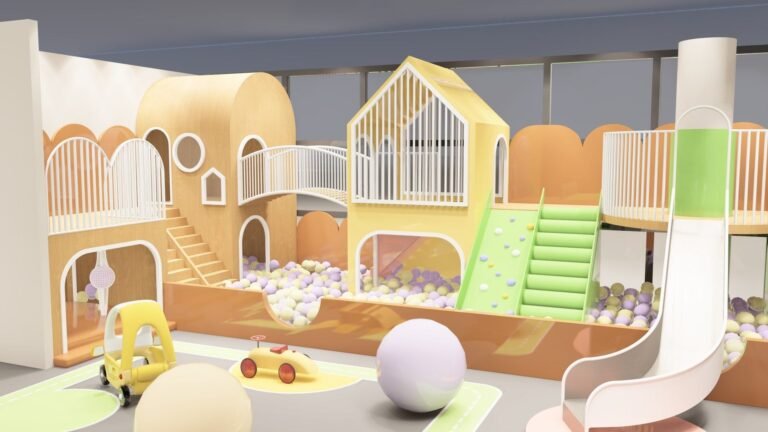
1. The Classic Soft Play Cafe
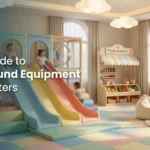
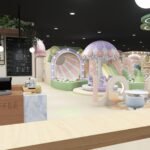
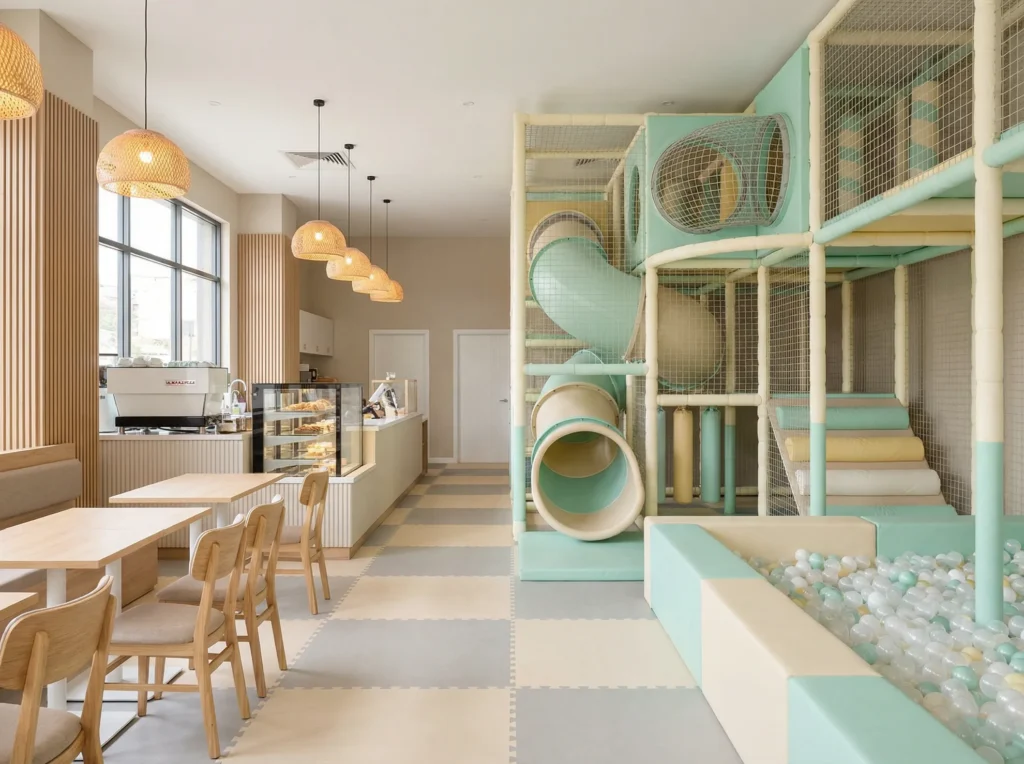
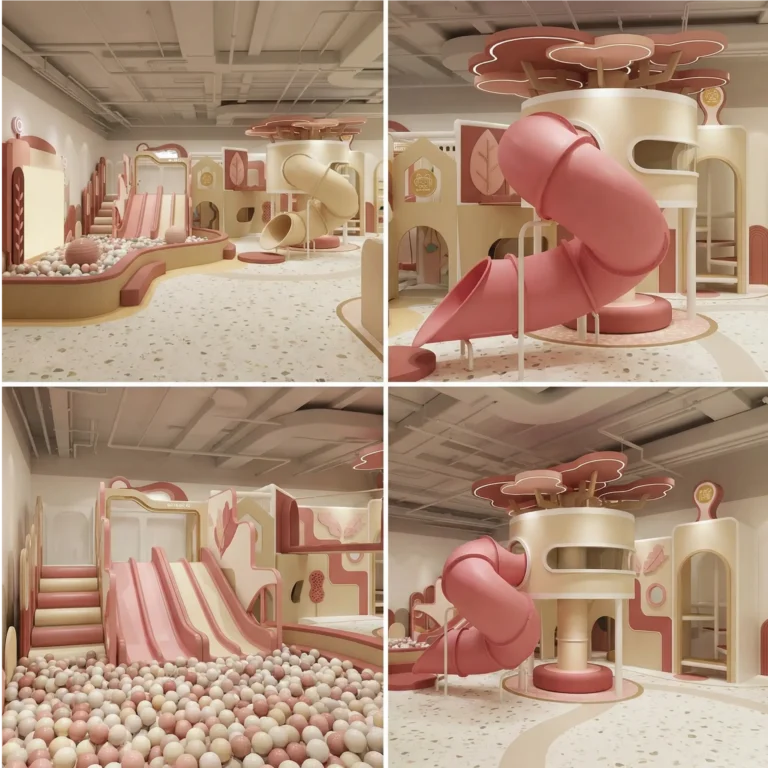
The classic soft play cafe is the most recognizable and widely adopted model globally. It strikes a balance between active physical play for children and a comfortable seating area for adults.
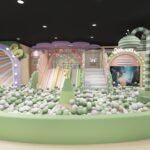
In this model, the play area is usually dominated by a multi-level soft play structure featuring slides, ball pits, foam obstacles, and climbing frames. The cafe area is positioned strategically to offer parents clear sightlines into the play structure.
•Target Audience: Families with children aged 1 to 8 years old.
•Primary Revenue Streams: Hourly entry fees, food and beverage (F&B) sales, and standard birthday party packages.
•Best Locations: Suburban strip malls, family-centric residential neighborhoods, and community centers.
•Equipment Focus: Durable, easy-to-clean commercial soft play structures. We recommend using pastel or muted color palettes to maintain a premium feel that appeals to adults.
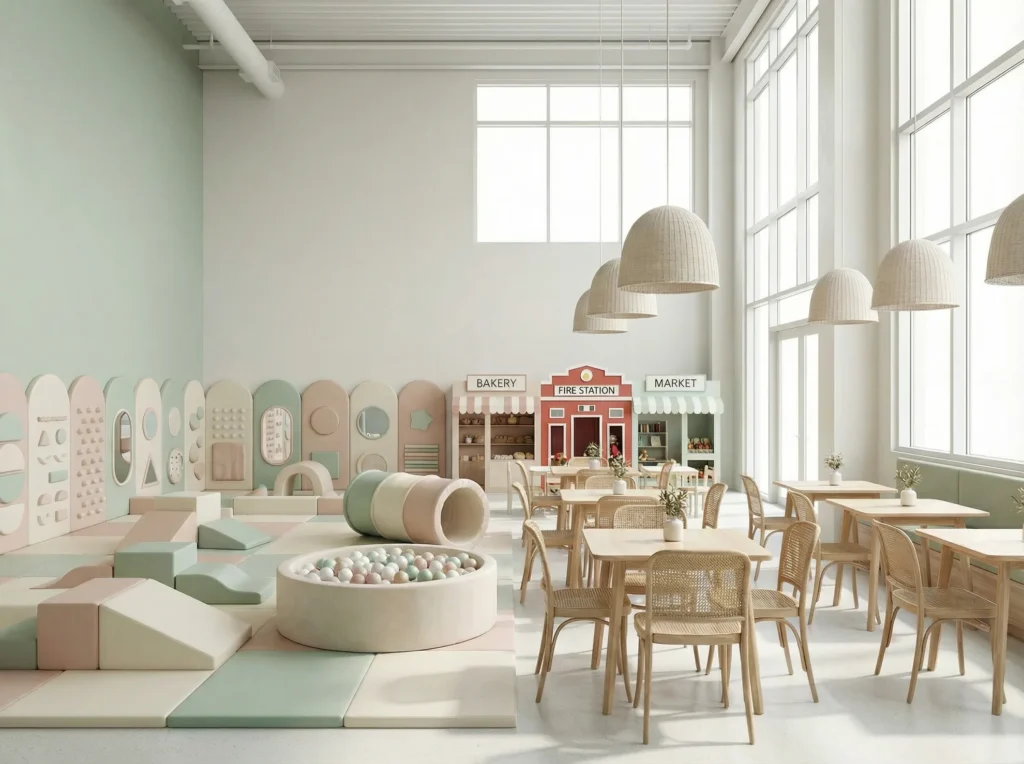
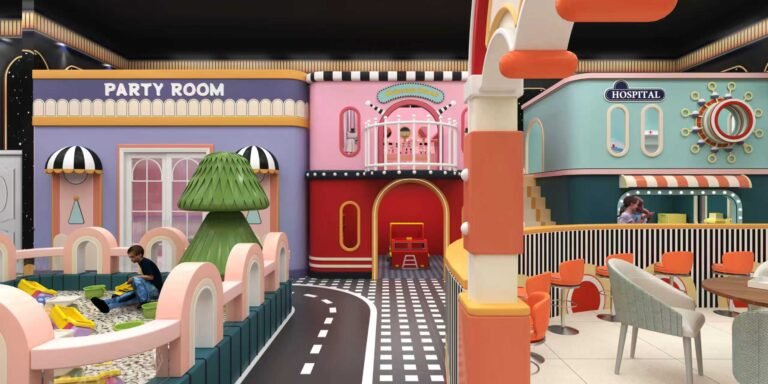
2. The Role Play Cafe (Mini City)
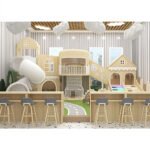
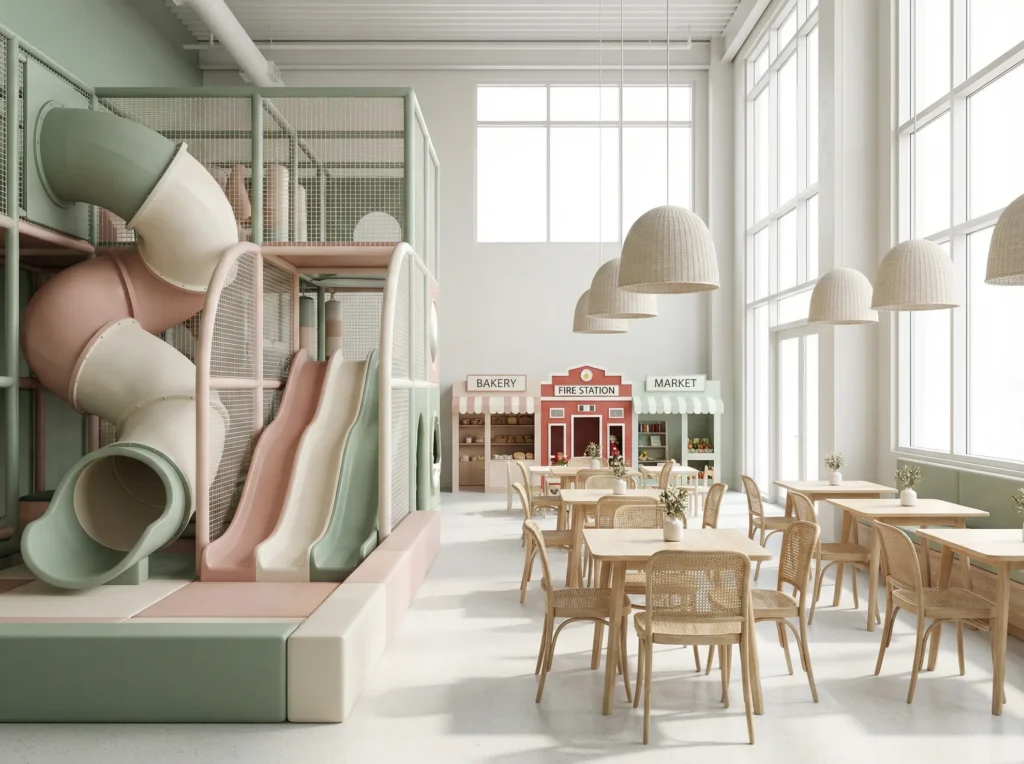
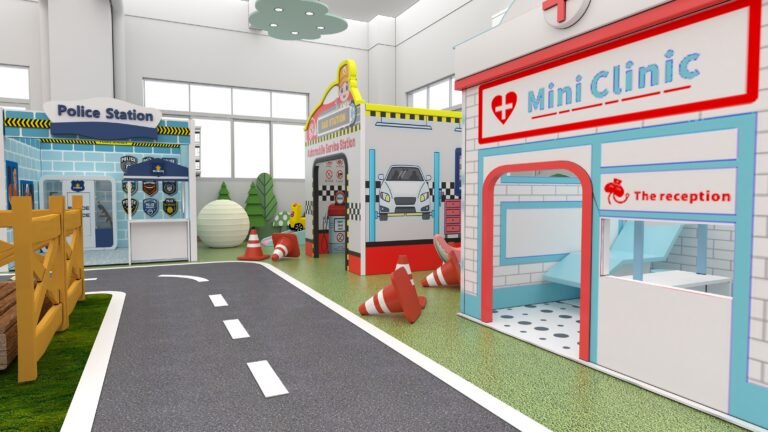
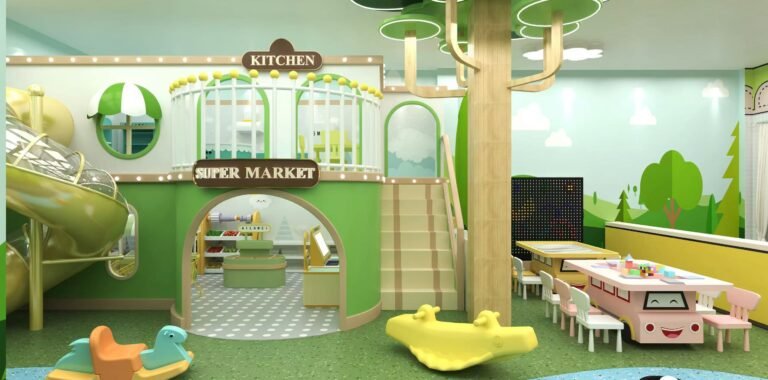
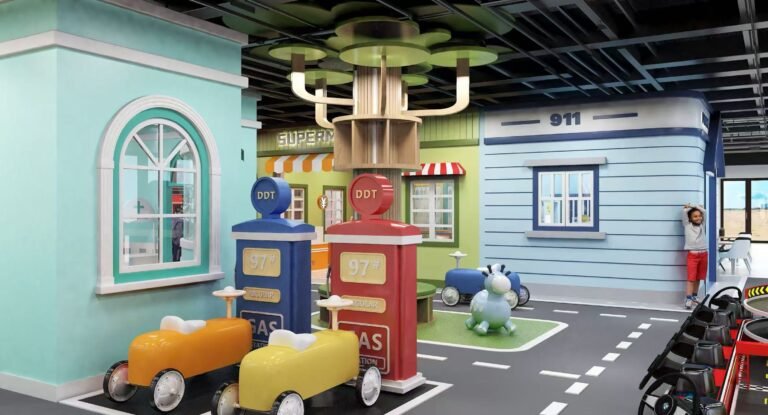
The role play cafe, sometimes called a “pretend town” or “mini city,” is rapidly gaining popularity for its high educational value and Instagram-worthy aesthetics. Instead of focusing on physical exertion, this type of play cafe focuses on imaginative and dramatic play.
The space is divided into miniature, child-sized storefronts—such as a tiny supermarket, a veterinary clinic, a fire station, or a bakery. Children can dress up in costumes and interact with realistic, scaled-down props.
- Target Audience: Children aged 2 to 7 years old.
- Primary Revenue Streams: Premium entry fees, high-end F&B, and exclusive, highly-themed birthday parties.
- Best Locations: Urban shopping malls, premium retail districts, and affluent neighborhoods.
- Equipment Focus: High-quality, custom-built wooden playhouses and safe props. Partnering with a specialized children’s role-playing equipment manufacturer is crucial to ensure the mini city is both durable and visually stunning.
3. The Toddler-Focused Play Cafe
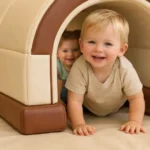
Many traditional indoor playgrounds are overwhelming and potentially unsafe for babies and toddlers due to the presence of older, more boisterous children. The toddler-focused play cafe solves this problem by strictly limiting entry to children under the age of 3 or 4.
These venues are designed to be exceptionally calm, clean, and safe. The equipment is kept low to the ground, focusing on sensory exploration and early motor skill development.
- Target Audience: Parents of infants and toddlers (ages 0-3).
- Primary Revenue Streams: Monthly memberships (as parents of toddlers tend to visit multiple times a week), specialty coffee, and parent-and-me classes.
- Best Locations: Quiet residential areas, near pediatric clinics, or adjacent to maternity retail stores.
- Equipment Focus: Thick safety flooring, low-height foam climbers, sensory wall panels, and toddler soft play equipment with zero hard edges.
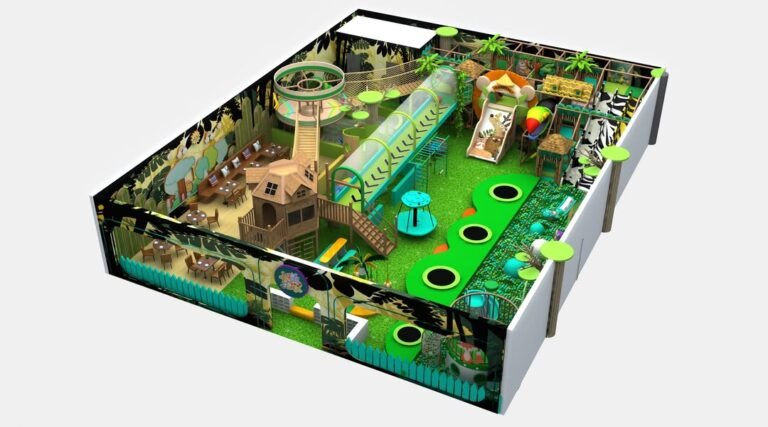
4. The Themed / Immersive Play Cafe
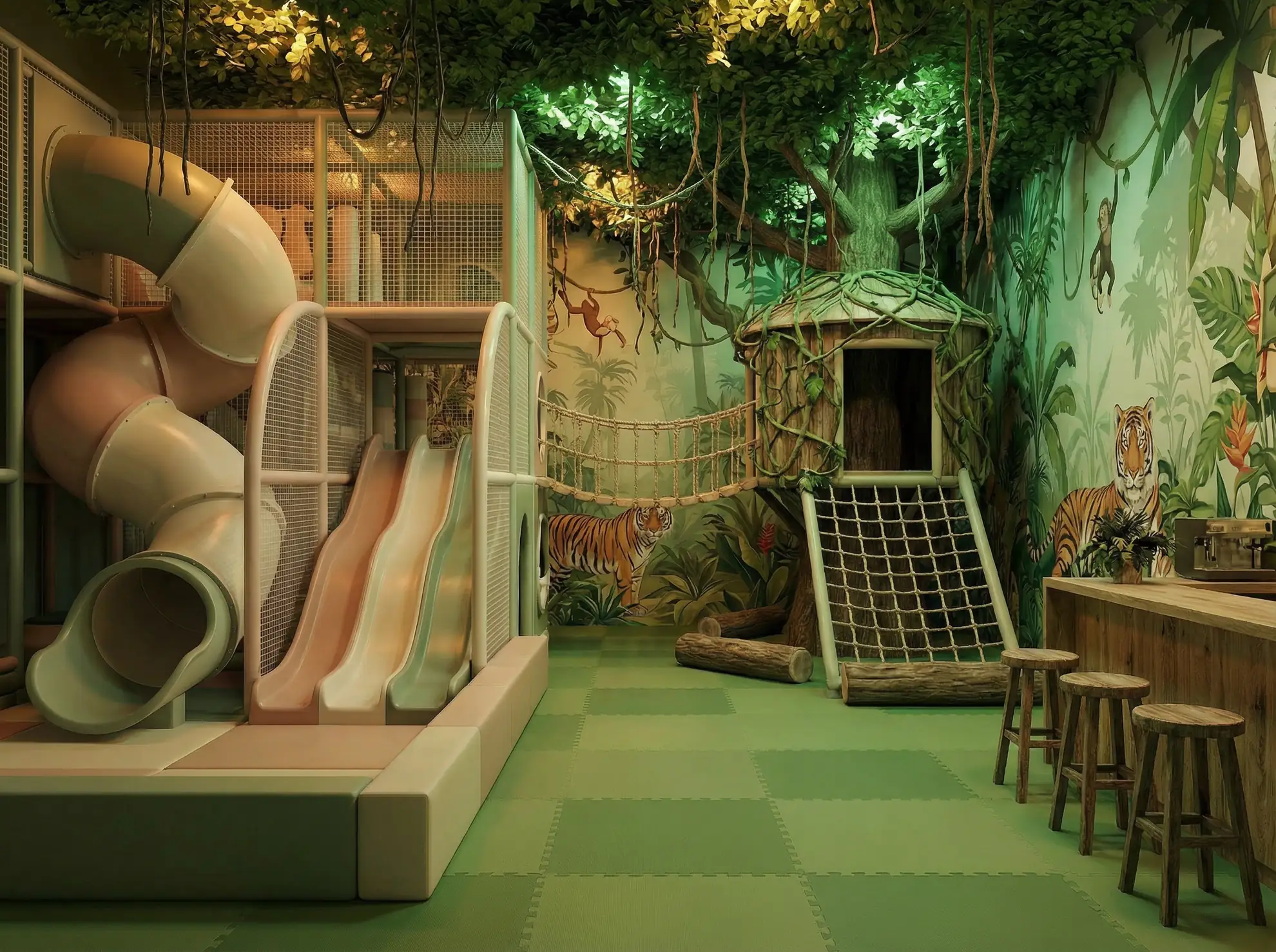
For investors looking to create a destination venue that draws visitors from outside the immediate neighborhood, the themed play cafe is the ultimate choice. These venues transport families into a completely different world the moment they step through the door.
Whether the theme is a magical enchanted forest, a futuristic space station, a candy wonderland, or a deep-sea adventure, every element of the cafe—from the play equipment to the menu and the staff uniforms—aligns with the central concept.
•Target Audience: Families with children of all ages seeking a unique weekend experience.
•Primary Revenue Streams: Higher-priced entry tickets, themed merchandise, themed F&B, and corporate event hire.
•Best Locations: Large shopping centers, tourist districts, and major entertainment hubs.
•Equipment Focus: Highly customized, bespoke play structures. You will need to explore popular indoor playground themes and work with a manufacturer capable of producing custom fiberglass and thematic decor.
5. The Hybrid Coworking Play Cafe
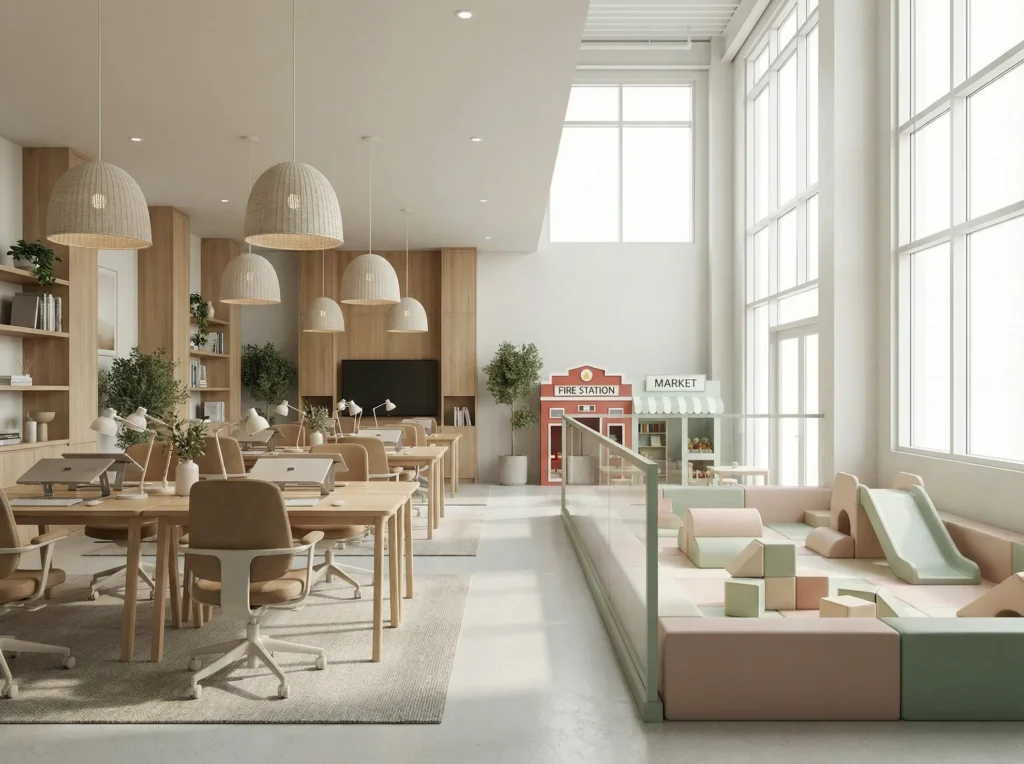
The rise of remote work has birthed a completely new category: the hybrid coworking play cafe. This model addresses the direct pain point of work-from-home parents who lack reliable childcare but still need to answer emails or attend virtual meetings.
These venues are split into two distinct zones separated by sound-dampening glass. On one side is a professional, quiet coworking space with ergonomic desks and high-speed Wi-Fi. On the other side is a supervised play area where trained staff engage with the children.
•Target Audience: Remote workers, freelancers, and entrepreneurs with young children.
•Primary Revenue Streams: Hourly or daily desk rental fees, monthly coworking memberships, and premium coffee sales.
•Best Locations: Urban residential hubs, co-living communities, and tech-centric city districts.
•Equipment Focus: A mix of professional office furniture for adults and engaging, self-directed play equipment for children to minimize the need for constant parental intervention.
6. The STEM / Educational Play Cafe
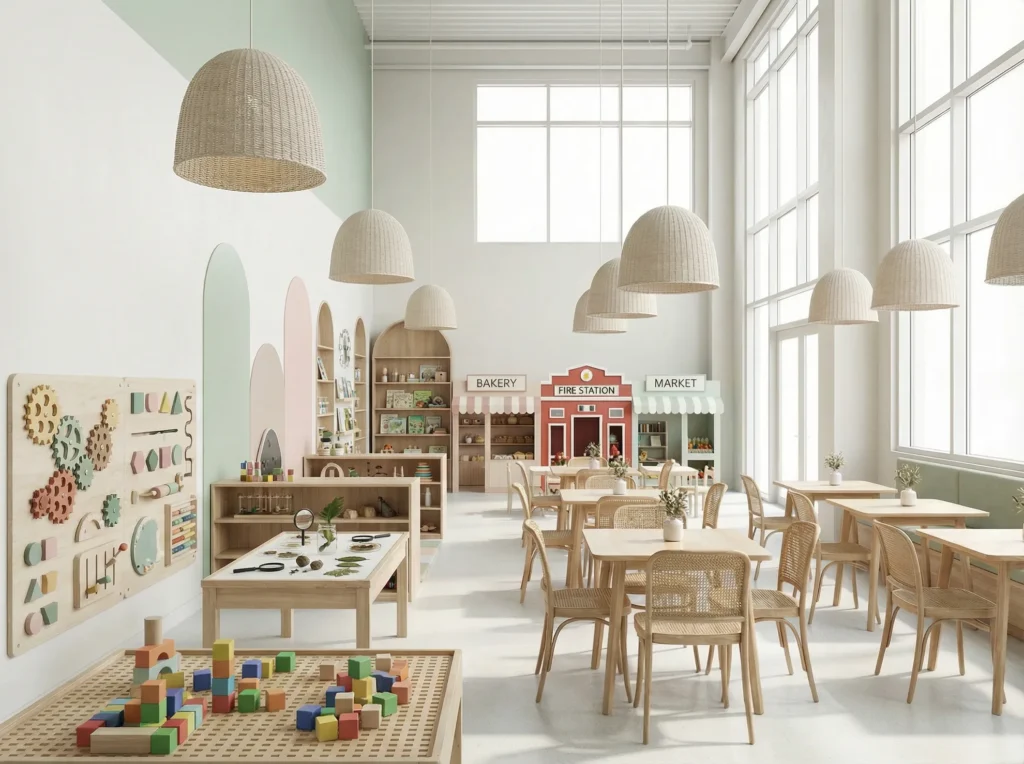
As parents become increasingly focused on early childhood education, the STEM (Science, Technology, Engineering, and Mathematics) play cafe is emerging as a highly profitable niche.
Instead of physical climbing structures, these cafes feature interactive learning stations. You will find magnetic gear walls, water play tables, giant building blocks, and light tables. The environment feels more like a modern children’s museum combined with a high-end coffee shop.
•Target Audience: Education-conscious parents with children aged 2 to 8.
•Primary Revenue Streams: Entry fees, structured educational workshops (e.g., beginner robotics or art classes), and retail sales of educational toys.
•Best Locations: Affluent suburban neighborhoods and areas near highly-rated elementary schools.
•Equipment Focus: Interactive wall panels, modular building systems, and Montessori-inspired wooden play stations.
Comparison Table: Which Play Cafe Type is Right for You?
To help you decide which business model aligns with your investment goals, we have summarized the key differences in the table below:
| Play Cafe Type | Target Age | Investment Level | Best Location | Primary Revenue Driver |
| Classic Soft Play | 1-8 | Medium | Suburban / Strip Malls | Entry Fees + Parties |
| Role Play (Mini City) | 2-7 | Medium to High | Urban Malls | Premium Entry + Parties |
| Toddler-Focused | 0-3 | Low to Medium | Residential Areas | Memberships + Coffee |
| Themed / Immersive | All Ages | High | Tourist / Major Hubs | Destination Ticketing |
| Hybrid Coworking | 1-6 | Medium | Tech / Urban Hubs | Desk Rentals / Memberships |
| STEM / Educational | 2-8 | Medium | Affluent Suburbs | Workshops + Retail |
Note: For a detailed breakdown of financial requirements, please refer to our guide on the cost to start a play cafe.


How to Choose the Right Equipment for Your Play Cafe
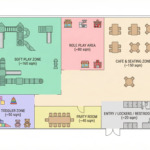
Selecting the type of play cafe you want to open dictates your entire profitable play cafe design strategy. A coworking model requires acoustic planning and self-directed toys, while a classic soft play model requires high-capacity physical structures.
Regardless of the type you choose, safety, durability, and aesthetics must remain your top priorities. At Koalaplay, we do not just sell equipment; we act as your factory-direct partner to design a layout that maximizes your floor space, optimizes operational flow, and perfectly matches your chosen business model.
Conclusion
The play cafe industry is no longer a monolith. By understanding the different types of play cafe—from the imaginative Role Play Mini City to the practical Hybrid Coworking space—you can tailor your business to meet the specific needs of your local community.
Choosing a distinct niche not only helps you stand out from the competition but also allows you to optimize your pricing, marketing, and equipment investments. If you are ready to turn your play cafe vision into reality, contact our team at Koalaplay today for a free consultation and custom design proposal.
Frequently Asked Questions (FAQ)
Q: Can I combine multiple types of play cafe into one venue?
A: Yes, absolutely! Many successful venues combine elements. For example, you might have a primary Classic Soft Play structure but dedicate a quiet corner to a Toddler-Focused zone, or integrate a small Role Play supermarket into a STEM cafe. The key is ensuring you have enough square footage to separate the zones safely.
Q: Which type of play cafe is the most profitable?
A: Profitability depends heavily on your location and operational execution. Themed Play Cafes often command the highest ticket prices, while Hybrid Coworking Cafes generate reliable, recurring monthly revenue through memberships.
Q: How much space do I need to open a role play cafe?
A: A dedicated role play mini city typically requires between 1,500 to 3,000 square feet just for the play area to fit 4 to 6 distinct storefronts comfortably, plus additional space for the cafe seating and restrooms.
Q: Are STEM play cafes harder to maintain?
A: STEM and educational cafes require a different type of maintenance. While there is less wear-and-tear on large physical structures, there are more loose parts (like blocks, magnets, or puzzle pieces) that staff must constantly organize and sanitize throughout the day.
References
[1] Global Wellness Institute. (2024). The Shift in Family Entertainment: How Millennial Parents are Redefining Play Spaces. Retrieved from industry market reports.