
Atracciones de circuito de cuerdas convierten el espacio vertical en una experiencia de aventura estructurada. Añaden desafío, movimiento y un fuerte impacto visual a los centros de entretenimiento familiar, parques de aventura cubiertos, patios de recreo de centros comerciales y otros espacios más grandes. atracciones infantiles cubiertas proyectos.
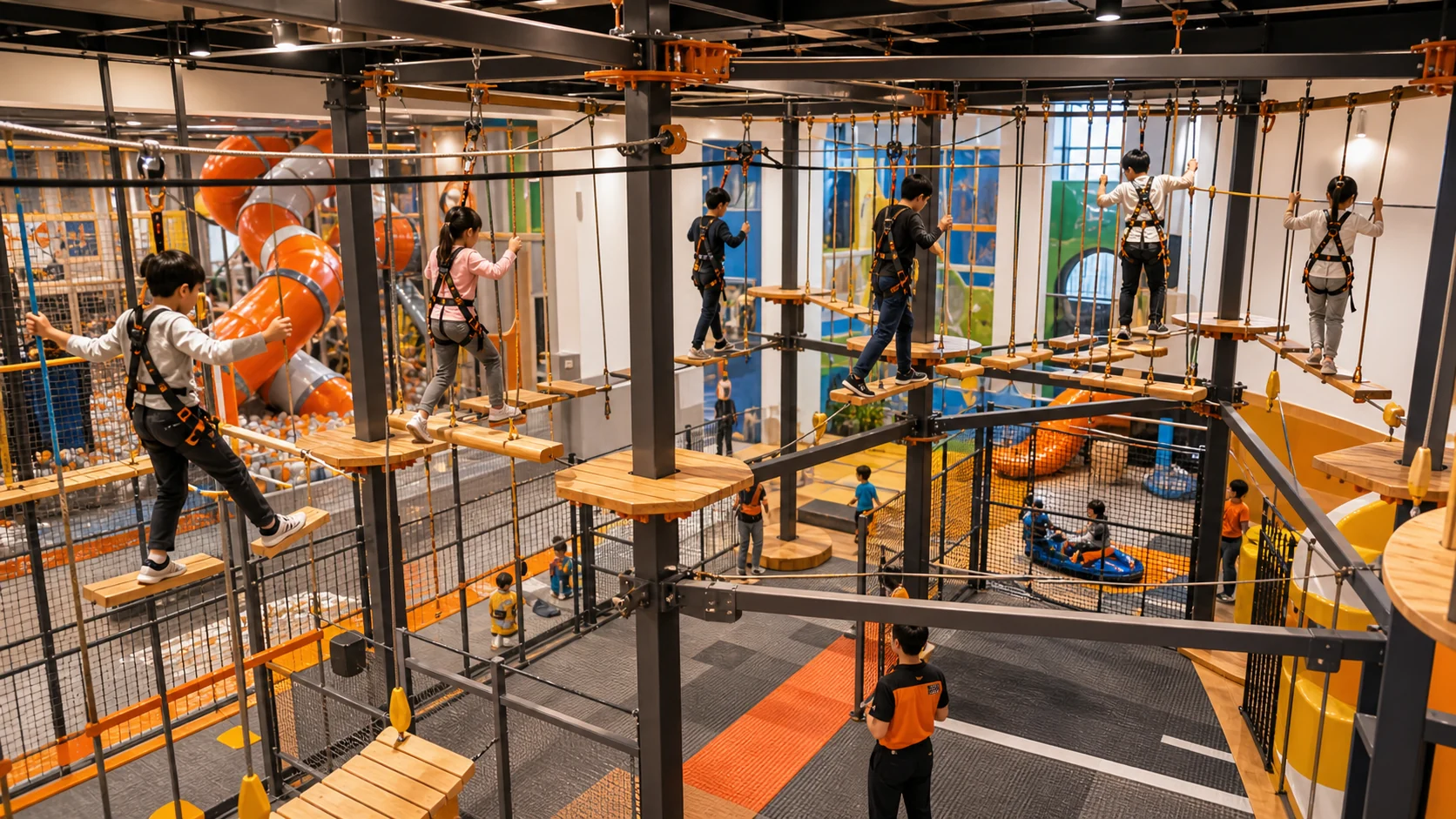
¿Qué es una atracción de circuito de cuerdas?
Una atracción de circuito de cuerdas es un recorrido de aventura elevado o de baja altura compuesto por puentes, vigas de equilibrio, redes de carga, escalones oscilantes, plataformas y otros elementos de desafío. En los recintos cubiertos comerciales, suele construirse con una estructura de soporte de acero, líneas de seguridad, sistemas de arnés, puntos de entrada controlados y supervisión del personal.
A diferencia de una simple estructura de escalada, un circuito de cuerdas crea un recorrido de desafío guiado. Los niños se mueven de un elemento al siguiente, lo que hace que la atracción tenga un propósito y sea fácil de manejar como parte de un conjunto más amplio. juegos infantiles de interior comerciales plan.
¿Por qué añadir un circuito de cuerdas a un parque infantil cubierto?
Utiliza el espacio vertical
Un circuito de cuerdas puede aumentar la capacidad de juego por encima del suelo, lo que resulta muy útil cuando el local tiene una buena altura de techo pero una superficie limitada.
Crea una aventura visible
Los puentes elevados y las plataformas son fáciles de ver para las familias desde el otro lado del recinto, lo que ayuda a que la atracción se convierta en un ancla visual.
Apoya a los niños mayores
Los circuitos de cuerdas ofrecen a los niños en edad escolar y a los adolescentes una actividad más estimulante que los juegos infantiles, los juegos blandos o los simples toboganes.
Fomenta la repetición de visitas
Diferentes rutas, niveles de dificultad y retos para fomentar la confianza hacen que la actividad sea repetible para los clientes que vuelven.
Principales tipos de circuitos de cuerdas de interior
Los circuitos de cuerdas pueden diseñarse para diferentes edades, alturas de techo y conceptos de recinto. La clave está en adaptar el nivel de dificultad a la supervisión, el sistema de seguridad y el flujo de tráfico previsto.
| Tipo | Mejor uso | Notas de planificación |
|---|---|---|
| Recorrido de cuerda baja | Niños más pequeños, parques infantiles compactos de interior | Menor altura, supervisión más fácil, a menudo combinado con suelo blando o protección de red. |
| Recorrido de cuerdas elevadas | FEC, centros comerciales, parques de aventuras | Requiere una estructura sólida, altura libre, uso de arneses, control del personal y zonas de caída protegidas. |
| Curso neto | Lugares familiares de edades mixtas | Utiliza redes cerradas para crear una experiencia de escalada y travesía más libre con menos manipulación del arnés. |
| Curso de aventura en torre | Grandes centros deportivos o de aventura cubiertos | Combina varios niveles, escalada, cuerdas, plataformas y, a veces, toboganes o salidas tipo tirolina. |
Consideraciones clave sobre el diseño
La primera cuestión de planificación es la altura. Un circuito de cuerdas necesita suficiente altura libre para la estructura, las plataformas, la línea de seguridad, el movimiento de los participantes y el espacio libre para la iluminación o los aspersores. Si el circuito de cuerdas forma parte de un proyecto más amplio, debe revisarse junto con el proyecto general. diseño personalizado de parques infantiles de interior.
- Confirme la altura libre del techo, vigas, conductos, iluminación y ubicación de los rociadores.
- Separe los recorridos de entrada, colocación de arneses, espera y salida de la circulación principal.
- Elija la dificultad de los elementos en función de la edad, la estatura y el nivel de confianza del objetivo.
- Planifique las líneas de visión del personal para que los operarios puedan controlar todo el recorrido.
- Reservar espacio para el almacenamiento del arnés, la inspección y las comprobaciones de funcionamiento diarias.
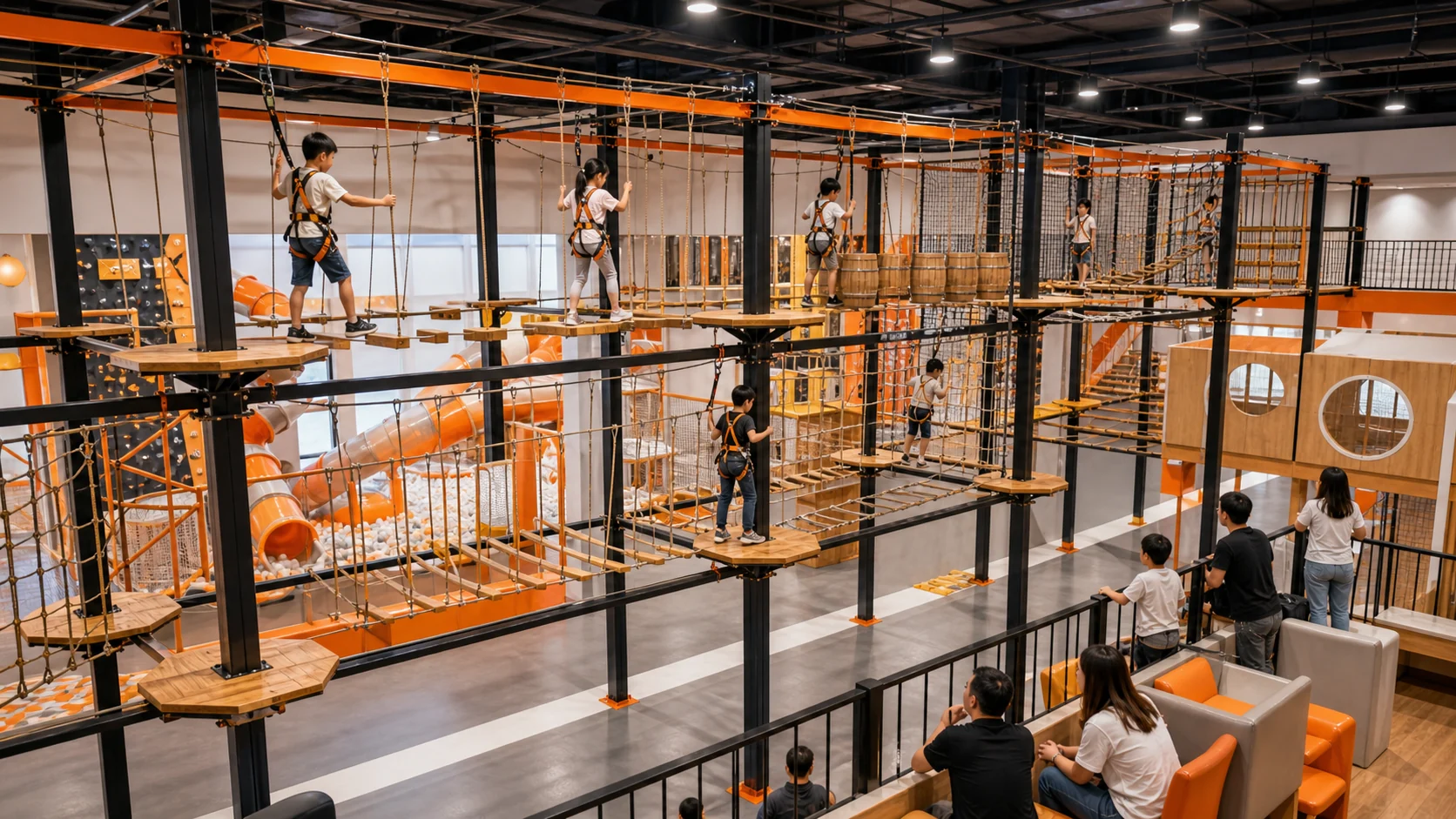
Los mejores tipos de instalaciones para los circuitos de cuerdas
Los circuitos de cuerdas funcionan mejor en lugares que quieren una identidad de aventura más fuerte y tienen altura suficiente para construir hacia arriba. Son especialmente útiles para centros de ocio familiar, parques infantiles de centros comerciales, parques de aventura cubiertos y grandes instalaciones de ocio. parque deportivo cubierto conceptos.
Cómo combinar circuitos de cuerdas con otras atracciones
Las atracciones con circuitos de cuerdas funcionan bien como puente entre los juegos blandos tradicionales y las actividades de aventura más energéticas. Pueden situarse junto a rocódromos, circuitos ninja, zonas de camas elásticas, toboganes o estructuras de juego multinivel.
- Acompañe los cursos de cuerda con estructuras para parques infantiles de interior para crear un juego de capas y una mayor profundidad visual.
- Añada muros de escalada o redes de carga para una ruta de aventura más atlética.
- Utilice un recorrido de red o un sendero de cuerda baja cerca de las zonas más jóvenes cuando no sea adecuado utilizar el arnés.
- Coloque la visión de los padres debajo o al lado del recorrido para que la atracción se sienta segura y sea fácil de supervisar.
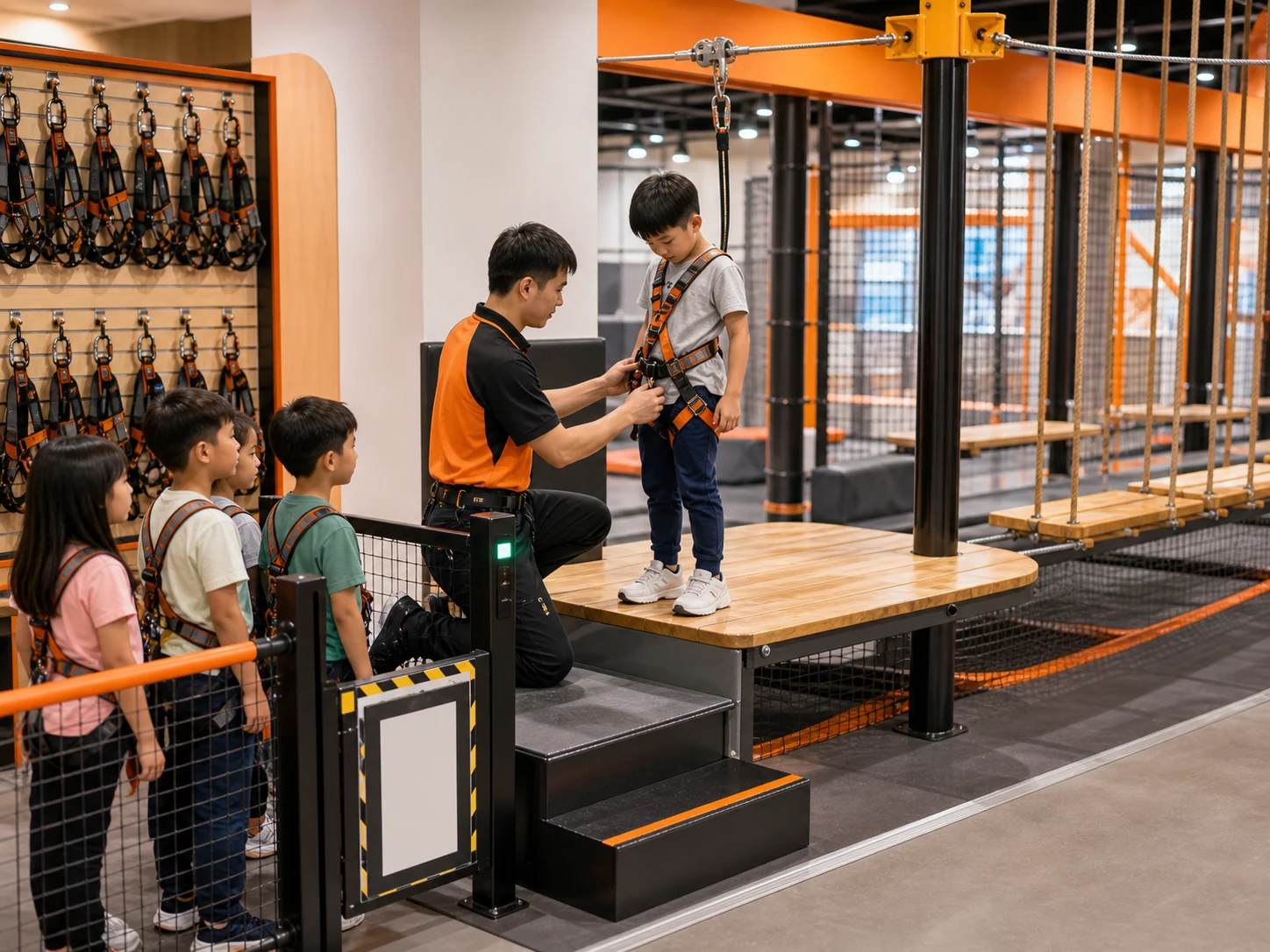
Qué planificar antes de comprar
Antes de elegir la estructura, los operadores deben confirmar la altura del techo, el rango de edad objetivo, el nivel de desafío, la capacidad del recorrido, el sistema de seguridad, el flujo de trabajo del personal y las necesidades de inspección. Definir estos requisitos en una fase temprana del proceso de servicio facilita el diseño, la producción y la instalación.
- Altura libre y condiciones estructurales de apoyo
- Recorrido bajo, recorrido con arnés, recorrido con red o formato de torre de aventura
- Plataforma de entrada, punto de salida, cola y zona de observación para padres
- Sistema de arnés, línea de seguridad, funcionamiento del personal y rutina de inspección
Lista de comprobación de seguridad y funcionamiento
Un circuito de cuerdas es una atracción supervisada, por lo que el funcionamiento diario es tan importante como la propia estructura. Para el acolchado, las redes, los materiales de superficie y la documentación de calidad, revise la documentación del proveedor. material y calidad información antes de confirmar la producción.
Comprobar el ajuste del arnés
El personal debe confirmar la talla, el ajuste, las hebillas, los puntos de conexión y la preparación de los participantes antes de la entrada.
Flujo de entrada de control
Limite el número de participantes en cada ruta para que las plataformas y los elementos de desafío no estén abarrotados.
Inspeccione los elementos a diario
Compruebe las cuerdas, redes, pernos, plataformas, cables, acolchado y desgaste visible antes de abrir la atracción.
Procedimientos de rescate de trenes
Los operadores necesitan un plan claro para ayudar a los participantes nerviosos, gestionar las paradas y cerrar la ruta con seguridad.
Preguntas frecuentes sobre los circuitos de cuerdas
¿Todos los cursos de cuerdas necesitan arneses?
No. Los recorridos de desafío elevados suelen utilizar sistemas de arnés, mientras que algunos recorridos con cuerdas bajas o recorridos con redes cerradas pueden utilizar otros métodos de protección.
¿Qué grupo de edad es mejor?
La mayoría de los recorridos completos de cuerda son adecuados para niños en edad escolar, adolescentes y usuarios familiares. Los niños más pequeños suelen necesitar elementos más sencillos y de menor altura.
¿Un curso de cuerda es bueno para el ROI?
Puede ser fuerte cuando el local tiene suficiente altura, buena supervisión, ubicación visible y un modelo de entradas o paquetes que soporte el coste del personal.
¿Dónde puedo consultar las preguntas más generales sobre el proyecto?
Si tiene preguntas sobre pedidos, envíos, instalación, garantía y servicio posventa, consulte la página Koalaplay FAQ.
Recursos de planificación relacionados
Si está comparando atracciones de aventura, estas páginas pueden ayudarle a planificar el conjunto del recinto antes de finalizar el recorrido de cuerdas.
Planifique una atracción de circuito de cuerdas para su lugar de celebración
Comparta su plano, altura libre, grupo de edad objetivo y combinación de atracciones preferida. Un diseño personalizado puede mostrar si un circuito de cuerdas se adapta a su espacio y cómo puede conectarse con zonas de escalada, juegos blandos, trampolines o aventura.
Contacte con nosotros para un diseño personalizado
 English
 Spanish
 German