
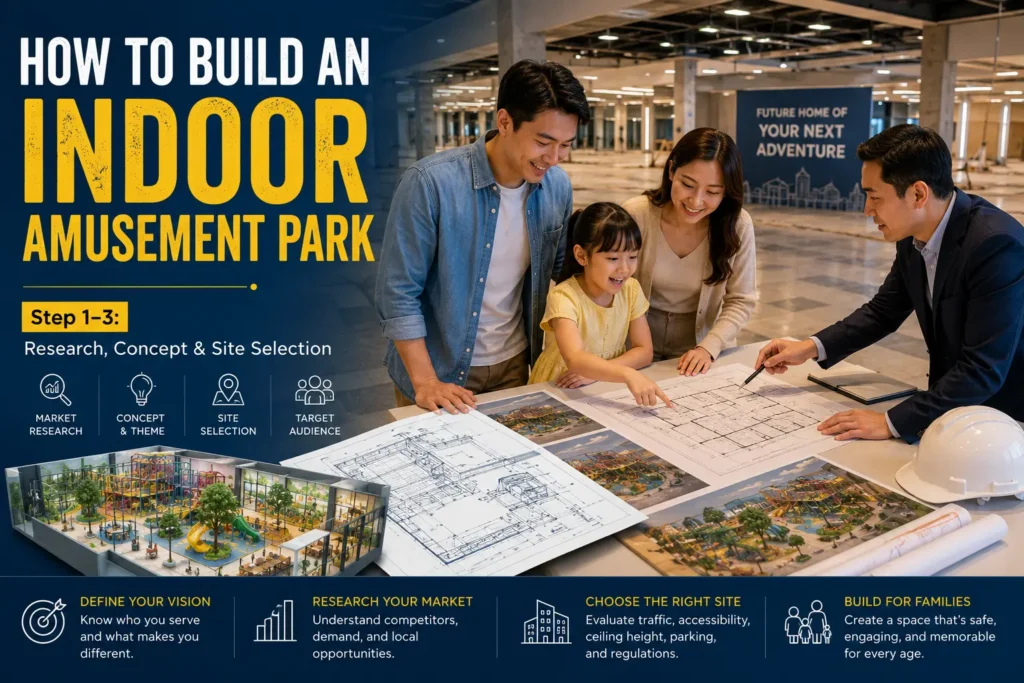
Most people who want to open an indoor amusement park already have the passion — they’re just not sure where to start. Site first or concept first? How much does it really cost? Which equipment categories drive repeat visits? The process has a lot of moving parts, and the order matters.
Getting the steps wrong is expensive. Investors who lock in a space before nailing the concept end up redesigning layouts mid-build. Operators who buy equipment before understanding local safety codes face costly retrofits. First-time park owners who skip soft openings often spend months recovering from avoidable operational problems.
This guide lays out the full process for building an indoor amusement park in 2026 — from your first market research call to opening day and beyond. Whether you’re planning a 3,000 sq ft soft play café, a 15,000 sq ft family entertainment center, or anything in between, the steps are the same. The scale and budget just change.
Step 1: Start with a Clear Vision and Market Research before you build an amusement park
Before you sign a lease or talk to a single equipment supplier, define what you are building and for whom. Indoor amusement parks serve very different audiences depending on concept: a toddler-focused soft play café draws families with children under 5; a ninja warrior and trampoline FEC targets 6–14-year-olds; an all-ages entertainment center blends attractions for mixed groups.
Answer these questions early:
- What is your primary age demographic (under 5, 5–12, teens, mixed family)?
- Is there a gap in your local market — too many trampoline parks, not enough sensory or creative play?
- What is the catchment radius? Indoor parks typically draw from 5–15 miles in suburban markets.
- Is your area weather-dependent? One major advantage of indoor parks is year-round revenue regardless of season.
Visit local competitors. Note their pricing, capacity, busiest hours, and what visitors complain about in reviews. That gap is often your concept.
Step 2: Define Your Concept and Theme
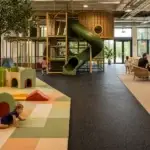
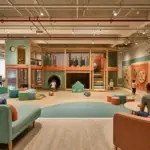
A strong theme turns a play space into an experience that guests talk about and return to. Generic equipment in a white room can work, but a coherent theme — jungle adventure, underwater world, space mission, ninja dojo, farm village — drives social media sharing, birthday party bookings, and repeat visits.
Popular indoor playground themes for 2026 are covered in depth in this guide to the year’s most in-demand playground concepts — themes like biophilic jungle, STEM discovery, and immersive fantasy worlds are leading bookings.
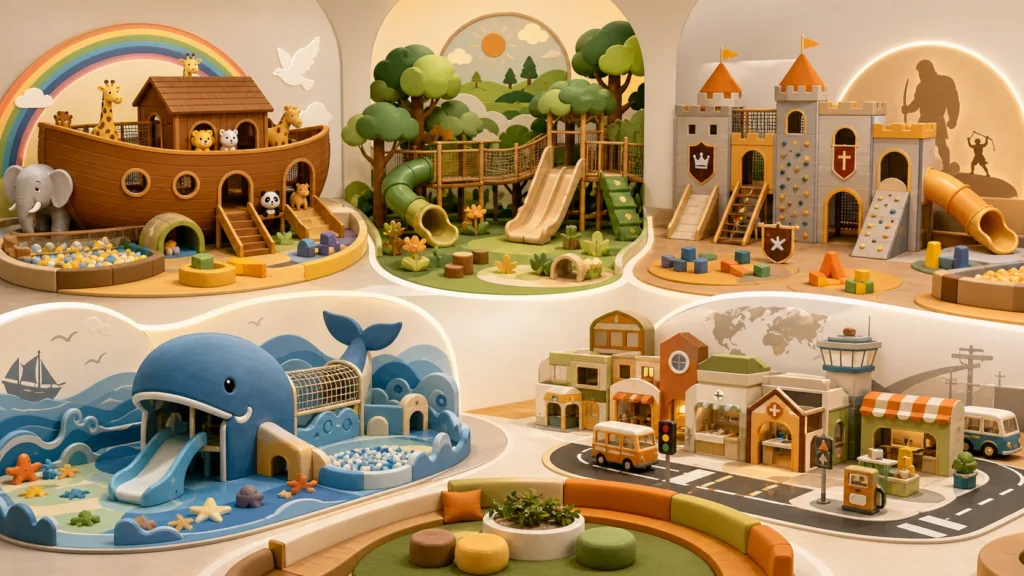
Your theme should guide everything downstream: equipment color palettes, signage, staff uniforms, party room décor, and even your social media content. Decide on the theme before you finalize equipment specs — retrofitting a theme onto installed equipment always costs more than building with it from the start.
Step 3: Site Selection and Feasibility Study
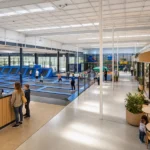
Indoor amusement parks can operate in shopping malls, standalone retail buildings, warehouses, and mixed-use developments. Each has trade-offs.
Shopping malls offer built-in foot traffic and parking, but lease costs are high and tenant restrictions may limit structural changes. Standalone buildings give more design freedom and often lower rent per square foot, but require stronger marketing to drive traffic.
Key site requirements to evaluate:
- Floor area: A minimum of 3,000 sq ft for a boutique soft play café; 8,000–20,000+ sq ft for a full FEC with multiple zones.
- Ceiling height: Soft play structures typically need 14–18 ft clearance; trampoline parks need 20–24 ft minimum.
- HVAC: Active play generates significant body heat. Ventilation must handle high-occupancy loads — factor this into build-out cost.
- Fire egress: Local fire codes dictate maximum occupancy and exit placement. Confirm with your fire marshal before signing a lease.
- Parking: At least 1 space per 150–200 sq ft of play area is a common planning benchmark for family venues.
Commission a basic feasibility study before committing to a lease. It should include a traffic and catchment analysis, competitive mapping, and a preliminary capacity model.
Step 4: Budgeting and Financing
Indoor amusement parks are meaningful capital investments. Budget conservatively and add a 15–20% contingency from the start. The table below shows indicative cost ranges for a mid-size indoor park (5,000–10,000 sq ft) in a typical US or Australian market:
| Cost Category | Indicative Range | Notes |
|---|---|---|
| Lease deposit & rent (first 6 months) | $30,000–$120,000 | Varies heavily by market and size |
| Build-out & HVAC | $50,000–$200,000 | Ceiling, flooring, electrical, bathrooms |
| Soft play structure | $40,000–$150,000 | Size, custom theming, and materials |
| Trampoline zone | $80,000–$250,000 | Court size, safety enclosures, foam pits |
| Ninja warrior course | $30,000–$100,000 | Module count and complexity |
| Climbing walls | $15,000–$60,000 | Auto-belay vs. bouldering walls |
| Sensory / toddler area | $10,000–$40,000 | Ball pits, sensory panels, foam blocks |
| Interactive digital play | $20,000–$80,000 | Projection floors, AR walls, VR stations |
| Arcade / redemption | $20,000–$100,000 | Machine count and mix |
| POS, ticketing, waivers | $5,000–$20,000 | Software + hardware |
| Pre-opening marketing | $10,000–$30,000 | Social media, local PR, influencers |
| Working capital (12 months) | $100,000–$300,000 | Wages, utilities, inventory, contingency |
Ranges based on industry operator data and supplier quotes. Your actual costs will depend on location, build complexity, and equipment specification.
Financing options include personal equity, bank loans, SBA loans (US), private investors, and vendor financing offered by some equipment manufacturers. Phased builds — opening core attractions first and adding zones in year 2 — reduce initial capital requirements while testing market response.
Step 5: Master Planning and Layout Design
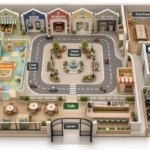
A well-designed layout does two things: it moves guests safely through the space, and it maximizes dwell time and per-visit spend. Poor layouts create bottlenecks at entry, leave quiet zones that underperform, and make supervision difficult.
Core layout principles for indoor amusement parks:
- Zoning by age: Keep toddler areas physically separated from big-kid zones. Parents of young children need to see their child at all times — low barriers and sight lines matter.
- Parent seating: Comfortable, visible seating close to play zones improves dwell time and spend at food and beverage counters.
- Entry flow: Ticketing, waiver signing, and sock purchase should happen before guests enter the play area — not during.
- Party rooms: Locate birthday party rooms so groups can move in and out without crossing active play areas.
- Staff positioning: Design supervisor stations with clear sight lines to every zone.
Work with a playground designer who can model guest flow before construction starts. For a useful breakdown of individual play features and how they fit into a cohesive layout, KoalaPlay’s play features resource is a practical starting point.
Step 6: Selecting Indoor Playground Equipment
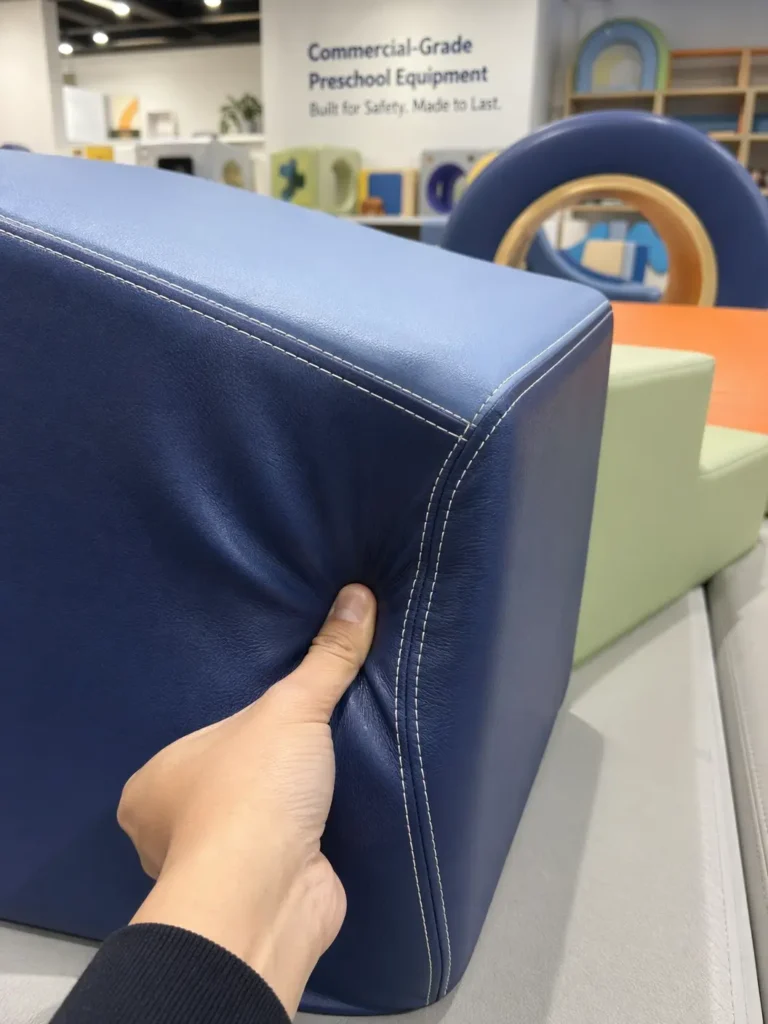
The right equipment mix depends on your target age range, available square footage, and budget. The table below compares major indoor playground equipment categories:
| Equipment Category | Target Age | Typical Capacity | Space Needed | Avg. Lead Time |
|---|---|---|---|---|
| Soft play structure | 2–10 yrs | 30–80 children | 800–3,000 sq ft | 6–12 weeks |
| Trampoline park courts | 5–adult | 20–60 per session | 2,000–8,000 sq ft | 8–14 weeks |
| Ninja warrior course | 6–16 yrs | 10–30 per session | 1,000–3,000 sq ft | 6–10 weeks |
| Climbing wall (bouldering) | 5–adult | 10–20 | 400–1,500 sq ft | 4–8 weeks |
| Sensory / toddler zone | 0–4 yrs | 15–40 | 300–800 sq ft | 4–8 weeks |
| Interactive digital play | All ages | 10–30 | 200–600 sq ft | 4–10 weeks |
| Role play / pretend play | 2–8 yrs | 15–40 | 300–800 sq ft | 6–10 weeks |
Lead times are manufacturing + shipping estimates and vary by supplier location and order volume.
A role play area — think miniature supermarkets, fire stations, or kitchens — is one of the highest dwell-time zones in a toddler-focused park, with strong repeat-visit value because children engage differently with it at each developmental stage.
Choose equipment suppliers who hold internationally recognized safety certifications (ASTM F1918, EN1176, or both), offer on-site installation, and provide spare parts and after-sales support. Beware of the lowest-cost options — materials and structural integrity are not always visible from a product photo.
Step 7: Safety Standards and Compliance
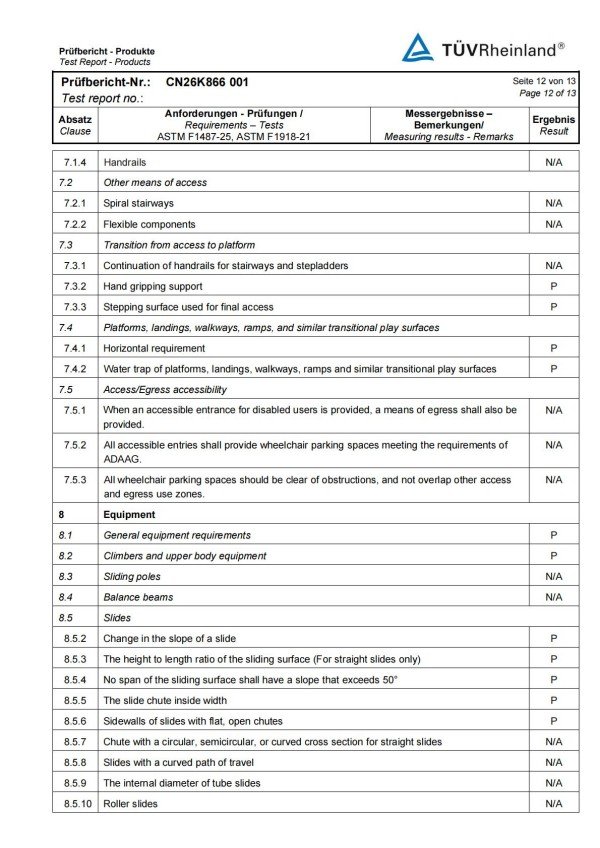
Safety compliance is non-negotiable for insurance, permits, and long-term operation. The key standards that govern indoor amusement parks are:
- ASTM F1918 (USA): Standard Safety Performance Specification for Soft Contained Play Equipment. Covers material requirements, structural durability, entrapment hazards, visibility lines, and air circulation within soft play structures. Applies broadly to enclosed play environments serving ages 2–12.
- ASTM F1487 (USA): Covers outdoor playground equipment, sometimes referenced for indoor climbing and play structures.
- EN1176 (Europe/Australia/global): The European standard for playground equipment. EN1176-10 covers indoor playgrounds specifically. Governs structural strength, fall zones, entrapment, and protrusion hazards.
- CPSC Public Playground Safety Handbook (USA): Published by the US Consumer Product Safety Commission — the baseline reference for US operators and inspectors.
Beyond equipment standards, your venue must comply with local building codes, fire safety regulations (exit signage, sprinkler systems, occupancy limits), and health and safety requirements for commercial recreational facilities. In most jurisdictions, you will need a commercial occupancy permit before opening.
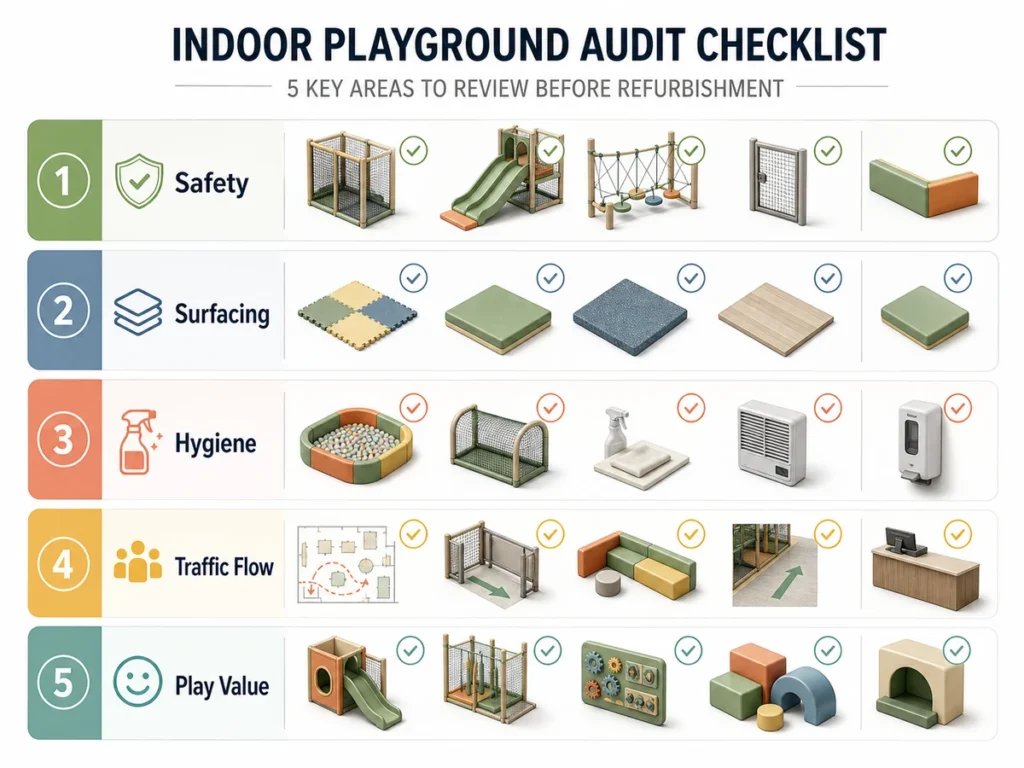
Operators are required to conduct visual safety checks daily, functional checks monthly, and full third-party audits at least annually. Keep records — they matter for insurance claims and regulatory inspections.
Step 8: Construction and Equipment Installation
Indoor build-outs are typically faster than outdoor parks, but timing still requires careful coordination between your contractor and equipment suppliers.
Typical installation sequence:
- Shell preparation — flooring, ceiling, electrical rough-in, HVAC installation, partition walls, bathrooms.
- Safety flooring — pour-in-place rubber, interlocking foam tiles, or carpet (zone-dependent) before any equipment installation.
- Large equipment first — soft play structures and trampoline courts are installed before smaller features to allow crane access and maneuvering space.
- Secondary zones — climbing walls, ninja courses, sensory areas installed in sequence.
- Theming and décor — applied last so it isn’t damaged during heavy installation.
- Cabling and digital systems — AV, POS, waiver kiosks, and interactive play tech installed in the final 2–3 weeks.
From signed contract to installation complete, most mid-size indoor parks take 3–6 months. Equipment lead times (manufacturing + shipping) are the most common cause of delays — order early and build lead time into your lease negotiation.
Step 9: Staffing and Operations
Indoor amusement parks are labor-intensive businesses. Staff quality directly affects safety, guest satisfaction, and repeat visits.
Core roles to hire for before opening:
- Park manager / operations manager (hire 3–4 months early to influence layout decisions)
- Ride / zone supervisors (typically 1 per active zone during open hours)
- Front desk / ticketing (waivers, check-in, sock sales)
- Birthday party hosts
- Cleaning and maintenance technicians
For waiver management, use a digital waiver system — paper waivers slow check-in and create compliance risks. Set staff-to-supervised-children ratios according to your local regulatory requirements; most jurisdictions specify a minimum, but best practice in busy sessions is 1 supervisor per 15–20 children in active zones.
Birthday party packages are among the highest-margin revenue streams for indoor parks. Design your party room workflow and packages before you hire your first party host.
Understanding what makes an indoor playground business succeed — from staffing structure to community engagement — is well worth reviewing before your first hire.
Step 10: Marketing, Memberships, and Revenue Optimization
Marketing should start 3–6 months before opening, not the week before. Build your audience while you build your park.
An effective pre-opening and ongoing marketing mix for indoor amusement parks includes:
- Social media content — behind-the-scenes build photos, theme reveals, equipment previews. Instagram and TikTok are the primary channels for family venues.
- Local influencer / parent blogger partnerships — invite local family influencers to a preview session.
- School and childcare group bookings — B2B sales. Approach early childhood centers and primary schools with group packages.
- Birthday party bookings — open your calendar 3 months before grand opening and fill it.
- Membership programs — monthly flat-fee memberships improve cash flow predictability and reduce churn. Offer 3–4 tiers.
- Dynamic pricing — off-peak (weekday morning) pricing drives visits from stay-at-home parents and childcare groups without cannibalizing weekend revenue.
Ancillary revenue streams — café, party packages, photo services, retail (toys, branded merchandise) — commonly account for 30–50% of total guest spend at well-run indoor parks.
Step 11: Soft Opening and Grand Opening
Before you invite the public, run a soft opening with invited guests — staff families, influencers, local community groups — at controlled capacity. This is your operational rehearsal.
Use the soft opening to identify:
- Bottlenecks at check-in and waiver signing
- Supervision blind spots in the layout
- Café service throughput at peak occupancy
- Signage gaps (guests asking staff for directions = a waiver opportunity)
- Any equipment issues before high-volume use
Run the soft opening for 1–2 weeks. Collect feedback actively. Then, with operational proof in hand, execute your grand opening with full PR, social media, and local advertising support.
Step 12: Maintenance and Lifecycle Planning
Indoor playground equipment is built to be durable, but it requires consistent care to stay safe and attractive. A maintenance plan should be in place from day one.
- Daily: Visual inspection of all play surfaces, padding, netting, and fasteners. Remove damaged elements from service immediately.
- Monthly: Functional checks of all mechanical elements, structural connections, and safety padding condition.
- Annual: Full third-party audit by a certified playground inspector. Required by most insurers.
- 5–7 years: Major soft play structure refurbishment (foam replacement, padding, theming refresh).
- 10–15 years: Full equipment lifecycle replacement, depending on use intensity and materials.
Sustainability measures — LED lighting, energy-efficient HVAC, water-efficient bathrooms — reduce operating costs and have become a meaningful point of difference in family markets that value environmental responsibility.
Cost and Timeline Comparison: Typical Project Phases
| Project Phase | Typical Timeframe | Approx. % of CapEx |
|---|---|---|
| Concept, research & feasibility | 1–3 months | 1–2% |
| Design, permitting & lease | 2–4 months | 2–5% |
| Build-out & construction | 2–5 months | 25–45% |
| Equipment procurement & installation | 3–6 months (overlapping) | 30–55% |
| Pre-opening marketing & staff training | 1–2 months | 3–8% |
Ranges reflect small to large indoor park projects. Phases overlap significantly — permitting and equipment ordering typically happen in parallel with build-out.
Why Choose KoalaPlay for Your Indoor Amusement Park
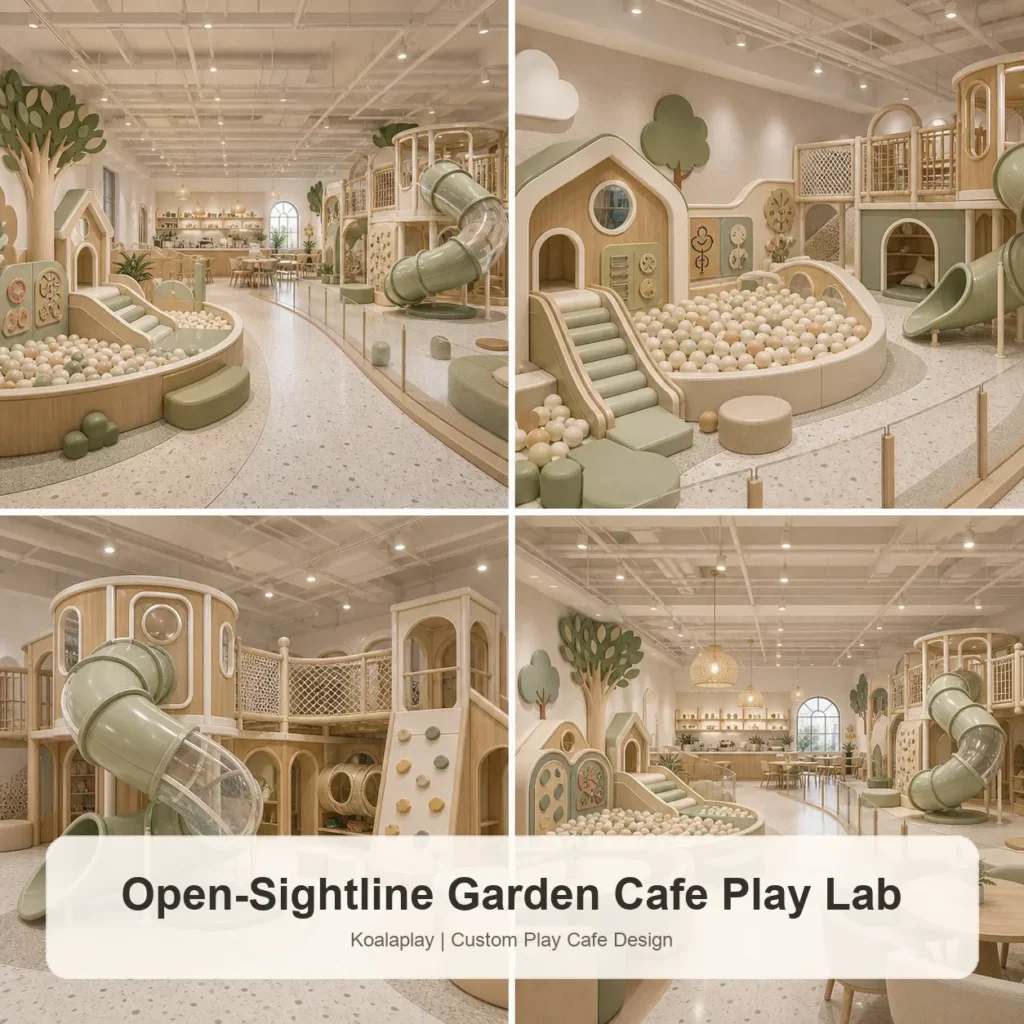
KoalaPlay is a specialist indoor playground equipment manufacturer and supplier with projects across multiple markets. The company’s focus is exclusively on indoor play — soft play structures, sensory zones, role play areas, climbing features, and themed custom environments — which means every product is designed around indoor operating realities: ceiling heights, HVAC loads, fire egress, and daily supervision by venue staff.
Key reasons operators choose KoalaPlay:
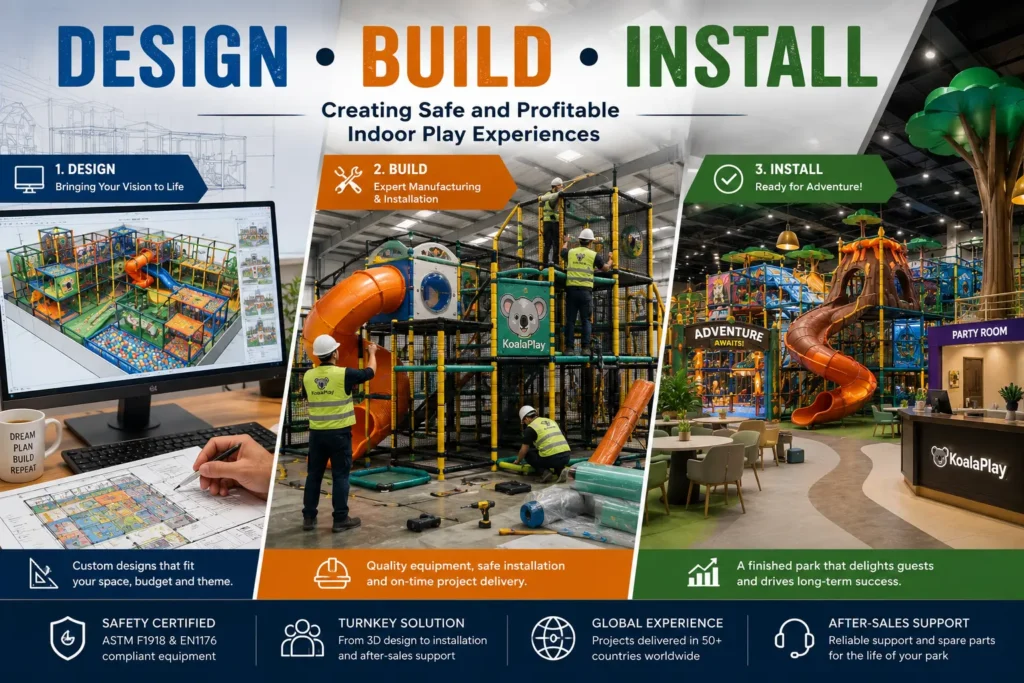
- Custom design and theming — equipment is designed to fit your space and theme, not the other way around. KoalaPlay works from your floor plan.
- Safety certifications — equipment meets ASTM F1918 and EN1176 standards, with documentation for your local regulatory requirements.
- Turnkey installation — KoalaPlay provides installation supervision, reducing coordination risk between your contractor and equipment supplier.
- After-sales support — spare parts availability and technical support for the life of the equipment.
- Global project experience — completed projects across Asia-Pacific, the Middle East, and beyond.
If you are exploring what to include — including how different indoor playground terminology maps to physical zones and equipment categories — KoalaPlay’s resource library is a practical reference for first-time park owners.
To discuss your project, request a custom floor plan, or get a quote, contact KoalaPlay
Final Checklist Before You Open
Use this checklist in the 2–4 weeks before your soft opening:
- All equipment supplier commissioning sign-offs received and filed
- Safety inspection completed and compliance documentation in hand
- All staff trained — safety procedures, emergency response, guest service
- Digital waiver system live and tested end-to-end
- Ticketing, POS, and membership software tested at volume
- Party room bookings open with packages published
- Café menu finalized and supply chain tested for peak-day service
- Fire safety inspection passed and occupancy certificate issued
- Insurance policy in place (liability, property, workers’ comp)
- Grand opening marketing calendar scheduled and posts queued
- Social media profiles active, bio updated, booking link live
Frequently Asked Questions
How much does it cost to build an indoor amusement park?
Total startup costs for a small indoor park (3,000–5,000 sq ft) typically range from $150,000 to $400,000 including equipment, build-out, and working capital. Mid-size facilities (8,000–15,000 sq ft) with multiple attraction zones commonly require $500,000 to $1.5 million or more. Location, lease terms, equipment quality, and theming depth are the biggest variables.
How long does it take to build an indoor amusement park?
From signed lease to grand opening, most indoor amusement parks take 4–8 months. Equipment manufacturing and shipping lead times (typically 6–14 weeks depending on complexity and supplier location) are the most common schedule driver. Start the equipment procurement process as early as possible.
What safety standards apply to an indoor amusement park?
In the US, ASTM F1918 governs soft contained play equipment, and CPSC guidelines set the baseline for commercial play areas. In Europe and many other markets, EN1176 (especially EN1176-10 for indoor play) applies. Your equipment supplier should provide certification documentation, and your local authority will specify which standards are required for your permits.
Do I need a trampoline park to open an indoor amusement park?
No. Trampoline courts are a popular attraction, but they carry higher insurance premiums, require significant ceiling height (20–24 ft minimum), and have stricter supervision requirements. Many successful indoor parks operate without trampolines — focusing instead on soft play, climbing, ninja courses, and role play zones that can work in standard commercial ceiling heights of 14–18 ft.
What is the most profitable revenue stream for an indoor playground?
Birthday party packages consistently rank among the highest-margin offerings for indoor parks — high average spend per booking, predictable demand, and low incremental cost per party. Membership programs come second for cash flow stability. Weekday group bookings (childcare centers, school holiday programs) are underutilized by many operators and can significantly improve weekday occupancy.
Get a Quote for Your Indoor Amusement Park
Ready to move from concept to build? KoalaPlay works with investors and operators at every stage — from initial floor plan concepts through to equipment installation and opening support.
Visit koalaplayground.com to explore play features, review completed projects, and request a custom quote for your venue size and budget.
References
- ASTM F1918 Standard Safety Performance Specification for Soft Contained Play Equipment — ASTM International — https://www.astm.org/f1918-12r21.html
- CPSC Public Playground Safety Handbook (2024 edition) — US Consumer Product Safety Commission — https://www.cpsc.gov/s3fs-public/325_PublicPlaygroundSafetyHandbook2025_7-30-25_1.pdf
- Understanding ASTM & EN1176 Safety Standards for Indoor Playgrounds — Oplay Solution — https://www.oplaysolution.com/the-non-negotiables-understanding-astm-en-1176-safety-standards-for-indoor-playgrounds/
- Indoor Playground Safety Standards Explained: ASTM F1487 vs ASTM F1918 — ToyMakerInChina Blog (2026) — https://blog.toymakerinchina.com/2026/04/indoor-playground-safety-standards.html
- How Much Does It Cost to Start an Indoor Playground in 2026 — HanlinPlayground — https://hanlinplayground.com/how-much-does-it-cost-to-start-an-indoor-playground-in-2026/
- How to Open an Indoor Playground: Costs, Profit & Steps — ROLLER Software — https://www.roller.software/blog/open-indoor-playground
- Indoor Playground Cost Guide 2025: Startup Budget & Investment Breakdown — SanXiu Playground — https://sanxiuplayground.com/indoor-playground-cost-how-much-you-need-to-open-a-play-center-in-the-usa/
- How to Open a Trampoline Park (2026): Cost, ROI & Setup Guide — UnpoweredGames — https://www.unpoweredgames.com/how-to-open-a-trampoline-park-business-guide
- IAAPA — International Association of Amusement Parks and Attractions — industry data and FEC benchmarks — https://www.iaapa.org
- Guidelines, Standards and Best Practices — National Program for Playground Safety — https://playgroundsafety.uni.edu/safetm-resources/guidelines-standards-and-best-practices
 English
 Spanish
 German